Iran Tensions Rise as Four Tankers Divert in Red Sea After Houthi Threats
Iran tensions have escalated sharply as four more tankers changed course in the Red Sea on Wednesday after Iran-aligned Houthis threatened the southern route, compounding Iran’s near-total blockade of the Strait of Hormuz and driving oil prices higher. [1] U.S. Secretary of State Marco Rubio stated that Iran is not serious about peace talks amid the mounting disruptions. [1]
Escalating Threats to Red Sea Shipping
Four more tankers changed course in the Red Sea on Wednesday after Houthis threatened the southern route, on top of disruptions the previous day, with Pakistan condemning the action while still backing negotiations. [1] The Houthis’ threat on Tuesday to Saudi oil shipments heading south to the Bab el-Mandeb Strait past areas of the coast they control comes on top of Iran’s near-total blockade of the Strait of Hormuz in the Gulf. [1] Oil prices rose to a near six-week high on Wednesday, with Brent crude futures up 2.45% at $93.24 a barrel at 1323 GMT, after hitting $95.47 earlier. [1] U.S. gasoline prices have climbed back over $4 a gallon. [1] The Houthi-run SABA news agency claimed six vessels had altered course after receiving warnings from the group. [3] Saudi Arabia has increasingly relied on Red Sea export routes to transport oil to international markets, with millions of barrels per day heading to the kingdom’s Red Sea port of Yanbu to avoid the Strait of Hormuz. [1] If shipments cannot pass through the Red Sea’s southern Bab el-Mandeb Strait, they have only the northern route out via the Suez Canal, which adds weeks to the journey. [1] Around 12% of global trade and roughly one-quarter of worldwide container traffic normally pass through the Bab el-Mandeb route. [3]
Rubio's Assessment of Iran Talks
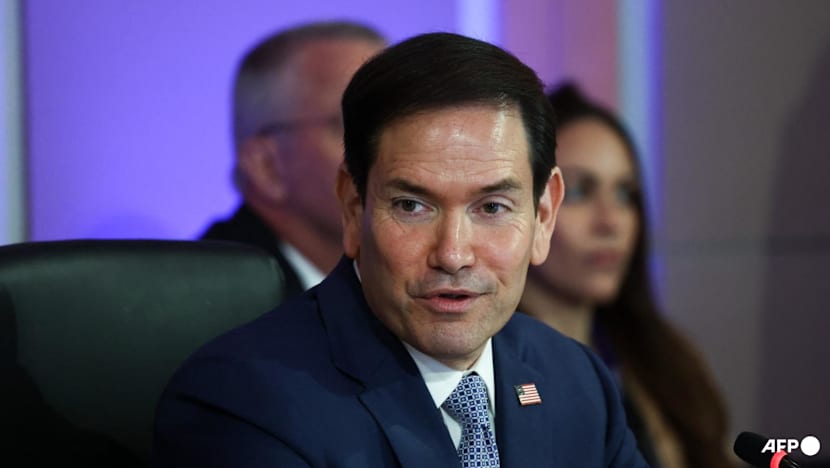
U.S. Secretary of State Marco Rubio said Iran was not serious about peace talks, and Pakistan, which has been mediating, condemned the disruption to a second critical energy route. [1] Rubio accused Iran of flying members of its Islamic Revolutionary Guard Corps into Yemen, saying Tehran’s actions helped ignite a renewed confrontation between Saudi Arabia and the Iran-backed Houthi rebels. [3] “They decided to send direct flights from Tehran into Yemen, carrying IRGC elements and others into the country,” Rubio told reporters. [3] Rubio said the U.S. remains open to talks but will protect its interests and those of allies if Iran is not serious. [1] “The problem we’re having right now is that they’re not serious about talks. If they’re serious, we’re serious. If they’re not, then we will do what’s necessary to protect our interests, and also the interests of our allies,” he said at a meeting of Southeast Asian foreign ministers in Manila. [1] Rubio warned that allowing Iran to control the Strait of Hormuz, collect tolls and attack ships that refused to comply would set a dangerous precedent for international waterways around the world. [3] “If we create a precedent in the Middle East where a nation state can decide that they are going to control an international waterway, charge a toll and if you don’t pay them blow up your ships, we have created a very dangerous precedent which will repeat itself in other parts of the world, including in this region,” Rubio said. [3] Rubio also noted that Iran’s support for the Houthis reflects a broader pattern of backing armed groups across the Middle East. [3]
Trump's Warnings and U.S. Military Strikes
President Trump threatened to destroy a bridge or power plant in Iran, including those near Tehran, every time Iran shoots at a ship in the Strait of Hormuz. [1] In a post on Truth Social, Trump said the targets would include locations next to or within the capital city of Tehran. [5] “From this point forward, any time the Islamic Republic of Iran shoots at a ship in the Strait of Hormuz, whether it be by Missile, Rocket, Drone, or any other device or weapon, the United States will bomb and destroy one bridge or power plant, including those located next to, or in, the capital city of Tehran,” Trump said. [5] The U.S. conducted its 11th straight night of strikes on Iran, hitting sites in Bushehr province near the nuclear plant and in Hamadan province. [1] Three locations in Iran’s Bushehr province, home to Iran’s only nuclear power plant, were hit, an official told Iran’s state news agency IRNA, including an electricity post close to the plant. [1] Iranian media also said the United States targeted locations in Kabudarahang county in the central Hamadan province. [1] U.S. Central Command said the latest targets included aircraft hangars and drone storage sites. [3]
Iranian Responses and Casualty Reports
Iranian officials reported 53 civilians killed and 592 wounded this month from the strikes. [1] An Iranian health ministry official said 53 civilians had been killed and 592 wounded this month. [1] The U.S. says it never targets civilians. [1] Explosions were heard over Tehran from air defenses, and Iran claimed strikes on U.S. assets in Jordan, Bahrain, and Kuwait, which those countries said they intercepted. [1] In the 11th straight night of U.S. bombing of Iran, Tehran residents reported explosions in the early hours of Wednesday from air defences activated over the capital, Iran’s semi-official Fars news agency said. [1] Iran’s army said it struck accommodation and storage facilities at the U.S. Al Azraq Air Base in Jordan, targeted warehouses and aircraft maintenance hangars at Sheikh Isa Air Base in Bahrain, and also targeted Camp Doha in Kuwait. [1] Jordan, Kuwait and Bahrain all said they had intercepted Iranian attacks. [1] Iranian media also cited parliamentary National Security and Foreign Policy Committee spokesperson Hasan Qashqavi as saying Trump was in a “quagmire”. [1]
Diplomatic Efforts and Analyst Views
Mediators proposed a 10-day ceasefire to salvage a June interim agreement, which analysts described as Iran creating leverage for negotiations. [1] Mediators have presented Iran with a proposal for a 10-day ceasefire, a senior Iranian official told Reuters on Monday. [1] Analysts said the new threat to shipping from the Houthis on Tuesday was a tactical move by Iran. [1] “Tehran is trying to create leverage for a negotiation,” said Mahmoud Shehrah, associate fellow, Middle East and North Africa Programme at Britain’s Chatham House think tank. [1] The proposal aims to salvage an interim ceasefire agreement signed by Washington and Tehran in June. [1] Iran’s Interior Minister Eskandar Momeni visited Pakistan this week and asked it to continue its mediating efforts. [1] Pakistan said on Wednesday that it would, but that the safety of shipping must be assured. [1] Iran has insisted on maintaining control over the Strait of Hormuz that it established during the war launched by the U.S. and Israel on February 28. [1] Rubio said allowing such control would set a dangerous precedent for the world, including Southeast Asia. [1]
Broader Regional and Economic Fallout
The war has killed thousands of people and Iran’s restrictions on energy shipments from Gulf states have driven inflation worldwide. [1] Trump said earlier that 18 U.S. service members had been killed in the war so far, including four in Iranian attacks on U.S. military bases in Jordan and Iraq over the last few days. [1] Rubio said Iran’s support for the Houthis reflects a broader pattern of backing armed groups across the Middle East. [3] “The Houthis, Hezbollah, the militias in Iraq, Hamas — this is what Iran spends its money on,” Rubio said. [3] “It’s not on its people. It’s on supporting terrorist organizations and destabilizing actors in the region.” [3]
What to watch next: The U.S. military carried out an 11th consecutive night of strikes against targets in Iran, while mediators continue efforts on a 10-day ceasefire proposal amid ongoing Houthi threats to Red Sea shipping. [3]