US Remains Open to Iran Negotiations but Says Tehran Is Not Serious as Strikes Continue
US Secretary of State Marco Rubio stated that the United States remains open to negotiations with Iran but accused Tehran of not being serious about talks, as American strikes on Iran entered an 11th consecutive night.
US Open to Iran Talks but Questions Tehran’s Seriousness
US Secretary of State Marco Rubio said his country is willing to negotiate an end to the war on Iran but accuses Tehran of not being “serious” about talks. “The United States remains open and willing to engage in positive and constructive negotiations and discussions, provided that the commitments made are honoured,” Rubio said about Iran at an Association of Southeast Asian Nations (ASEAN) meeting in Manila on Wednesday [1]. “The problem we’re having right now is that they’re not serious about talks. If they’re serious, we’re serious. If they’re not, then we will do what’s necessary to protect our interests and also the interests of our allies,” he added in the Philippine capital [1]. Rubio stressed that Iran must honor any commitments for talks to succeed and that the US will protect its interests and those of its allies if Iran is not serious [1]. Rubio also discussed the US’s relationship with ASEAN member states, saying it is a matter of national interest for Washington and that the security and prosperity of the US and Southeast Asia are closely interconnected [1]. “I believe very much that the future and the story of the 21st century will be written in this region and by how events unfold here,” he said [1].
11th Night of US Strikes on Iran
This comes as the US launched attacks against Iran for an eleventh consecutive night, with explosions heard in several parts of the country [1]. Fifty people have been killed and 500 wounded in the recent US attacks on Iran, a health ministry official said [1]. Iran’s Khatam Al-Anbiya military command said in a statement on Tuesday that it would “consider it as an expansion of war in the region” if such an attack were carried out [1]. The statement said it could lead to strikes on “all the interests of America, its allies and supporters” [1]. The conflict is disrupting two of the world’s most important energy transport routes [1]. Iran promised it would retaliate [1]. Iran’s Khatam Al-Anbiya military command warned of expanded regional war if the US carries out further strikes [1]. Both Washington and Tehran have sent signals that the door to diplomacy is not fully closed [3].
Concerns Over Iranian Control of Strait of Hormuz
As the war continues to disrupt two of the world’s most important routes for the transport of energy, Rubio stressed that he was against Iranian control over the Strait of Hormuz [1]. “If we create a precedent in the Middle East where a nation state can decide that they are going to control an international waterway, charge a toll, and if you don’t pay them blow up your ships, we have created a very dangerous precedent, which will repeat itself in other parts of the world, including in this region,” he said [1]. “At its core, it’s very simple. Iran demands the right, which they do not have under any existing legal mechanism, to control the transit of traffic through the Strait of Hormuz,” he said [1]. “There is a fundamental principle about freedom of navigation that is threatened,” he added [1]. “That cannot be allowed to happen” [1]. The US opposes Iranian control over the Strait of Hormuz, warning it sets a dangerous precedent for international waterways and threatens freedom of navigation [1].
Trump Renews Nuclear Site Threats
On Tuesday, US President Donald Trump renewed his threats to, again, attack Iran’s nuclear facilities at Natanz “pretty soon” [1]. Iran promised it would retaliate [1]. Iran’s Khatam Al-Anbiya military command said in a statement on Tuesday that it would “consider it as an expansion of war in the region” if such an attack were carried out [1]. The statement said it could lead to strikes on “all the interests of America, its allies and supporters” [1]. Trump renewed threats to attack Iran’s nuclear facilities at Natanz, prompting Iran to warn of retaliation and potential strikes on all US, allied, and supporter interests in the region [1]. Iran’s Foreign Ministry spokesman said the country knows its diplomatic duties and will not spare any effort [3]. Both sides have indicated that diplomacy remains possible even as military pressure continues [3].
US Bolsters Regional Military Posture
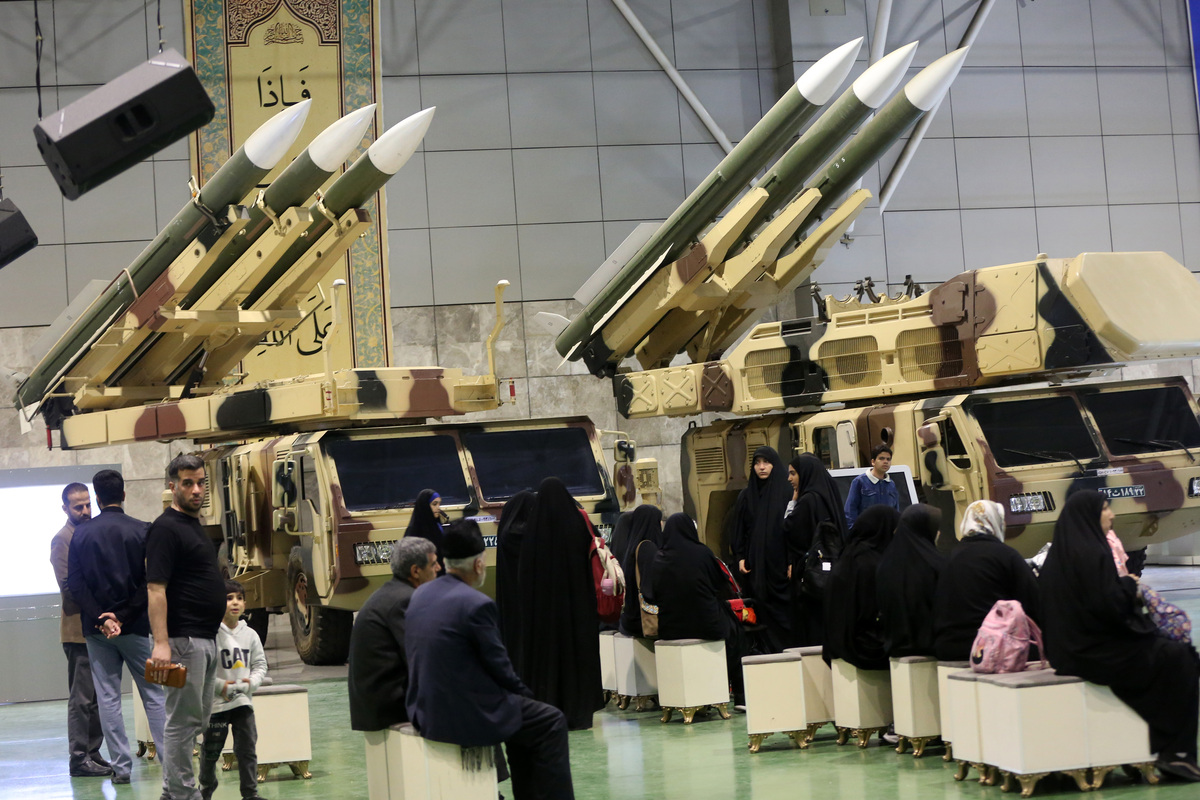
Washington has decided to send additional warplanes from bases in Europe to the Middle East [3]. Reports indicate F-16 aircraft from Germany and F-35 aircraft from the United Kingdom are being deployed to the region, along with aerial refueling aircraft [3]. The United States and Israel are discussing the placement of additional US military refueling aircraft at Ben-Gurion Airport in Israel, with the fleet that is being prepared potentially reaching 40 aircraft [4]. The United Kingdom’s new prime minister Andy Burnham approved the use of British military bases by the US to support operations against Iran, continuing the policy of the previous government [4]. The UK government classifies the use of the bases as part of defensive operations rather than direct involvement in armed conflict [4]. A US official speaking to the Washington Post said the American military does not have sufficient missile and munitions stocks to sustain a prolonged or full-scale war against Iran, noting rapid depletion especially in interceptor missiles and long-range precision-guided munitions [3]. The official stated that operations cannot be sustained safely with current resources [3]. Pentagon concerns over munitions stocks for sustained conflict have been raised amid these deployments [3].
Broader Global Context
Rubio also discussed the US’s relationship with ASEAN member states, saying it is a matter of national interest for Washington and that the security and prosperity of the US and Southeast Asia are closely interconnected [1]. “I believe very much that the future and the story of the 21st century will be written in this region and by how events unfold here,” he said [1]. In parallel developments, Ukraine regained control of 700 square kilometers of territory this year, according to the outgoing commander of Ukraine’s armed forces [2]. Indonesia ratified defense cooperation agreements with Turkey and Malaysia on Tuesday, strengthening legal foundations for capacity building, information sharing, and defense industry cooperation [5]. The ratifications followed legislative approval required under Indonesian law for agreements on defense and national security [5].
What to watch next: Further US aircraft movements from Europe, potential placement of up to 40 refueling aircraft in Israel, and any Iranian responses to renewed threats against Natanz facilities remain key developments to monitor.