
US Embassies Warn Americans to Prepare for Iran Conflict Escalation
US embassies across the Middle East have issued security alerts urging American citizens to prepare for possible escalation in the Iran-US conflict, following President Trump's renewed threats to strike Iran and Iranian warnings of retaliation against regional energy infrastructure.
US Embassies Issue Regional Security Alerts
United States embassies across the Middle East have warned American citizens to remain on high alert over the possibility of an “unforeseen escalation” in the regional conflict, urging them to be prepared to leave affected countries if the security situation deteriorates. [4] The security alert, issued on Saturday by US embassies in Bahrain, Iraq, Israel, Jordan, Kuwait, Lebanon, Oman, Qatar, Saudi Arabia and the United Arab Emirates, came a day after US President Donald Trump threatened that Iran would be hit “very hard.” [4] “Americans in the region should consider departing, or be prepared to depart should there be escalation,” the security alert stated. [4] The embassies advised US citizens to monitor flight schedules, comply with instructions from local authorities and prepare for possible travel disruptions. [4] “Americans currently in the Middle East should exercise caution and heightened vigilance and should be prepared for flight cancellations, periodic airspace closures, and potential travel disruptions,” the advisory said. [4] In Jordan, Americans were specifically warned against visiting US military bases, which have recently come under Iranian missile attacks, while those in Israel were advised to identify the nearest bomb shelters. [4] The US Embassy in Jerusalem described Iran as unpredictable. [4] “The Iranian regime is unpredictable, as seen by its recent decisions to attack areas in the region without warning or provocations as well as to expand attacks to areas not previously targeted, such as Egypt,” the embassy stated. [4] Meanwhile, the US Embassy in Beirut said it remained on “ordered departure status,” meaning non-emergency US government personnel continued to operate from outside Lebanon. [4] The ammáni, jeruzsálemi and bagdadi amerikai nagykövetség szombaton arra intette a Közel-Keleten tartózkodó amerikaiakat, hogy tájékozódjanak a rendelkezésre álló légi járatokról, és kövessék a helyi biztonsági hatóságok utasításait, mert a közel-keleti helyzet súlyosbodhat. [5] A felhívás szerint a térségben tartózkodóknak meg kell tervezniük a távozás lehetőségeit, valamint számítaniuk kell arra, hogy közlekedési zavarok alakulhatnak ki. [5] A nagykövetségek szerint járatokat törölhetnek, illetve átmeneti légtérzárak is bevezethetők. [5] Jordániában az MTI tájékoztatása szerint külön arra hívták fel az amerikai állampolgárok figyelmét, hogy kerüljék az amerikai katonai bázisok környékét, amelyek a közelmúltban ismét iráni rakétatámadások célpontjai voltak. [5]
Iran Warns of Retaliation Against Energy Targets
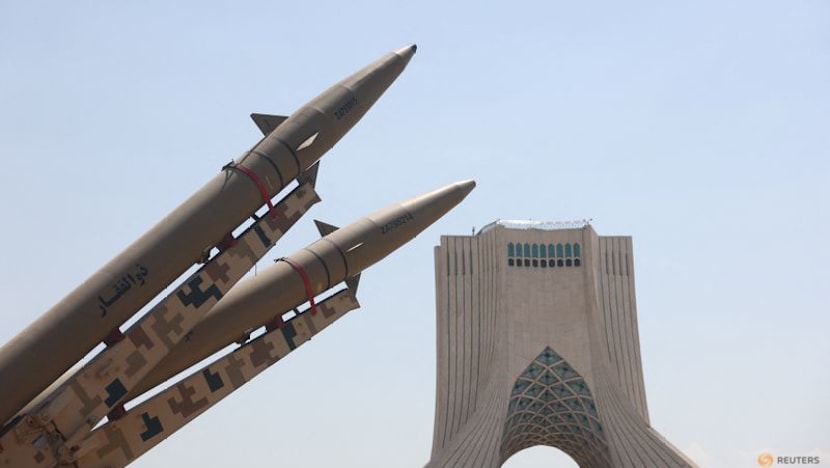
Iran warned this weekend against any “adventurous action” by the US and said it would retaliate decisively if American forces follow through on President Donald Trump's threats of fresh attacks on Iranian targets. [3] Iran's Foreign Minister Abbas Araghchi’s comments in separate phone calls on Saturday (Aug 1) with senior Turkish, Pakistani and Saudi officials came just hours after Kuwait's army said it destroyed hostile drones launched by Iran against several vital facilities. [3] Speaking to Pakistan's Army Chief Field Marshal Asim Munir and Turkish Foreign Minister Hakan Fidan, Araghchi said Iran would respond decisively to any "aggression" and discussed the consequences of “destabilising actions" by the US, as well as prospects for heightened regional insecurity, according to Araghchi's Telegram account. [3] Araghchi later told Saudi Foreign Minister Prince Faisal bin Farhan that any attacks by the US and Israel or participation by regional countries in such actions would be met with a “proportionate response”. [3] Nournews, a media outlet affiliated with Iran's top security body, said on Saturday that US attacks on Iranian energy infrastructure would prompt Iranian strikes on oil fields in Saudi Arabia and the United Arab Emirates, as well as the gas fields of Qatar and Israel, saying "all will be burned to ashes". [3] Iran’s military, however, accused Washington of worsening tensions in the region. [4] “Any country serving as defensive shield for criminal and aggressive America will be engulfed by the flames of war,” Ali Abdollahi, head of Iran’s military central command, said in a statement broadcast on state television. [4] Mohammad Mokhber, an adviser to Iran’s Supreme Leader, also warned against attacks on the country’s infrastructure. [4] “You calculate through military equations, but we respond with the logic of history,” he wrote on X. “Attacking Iran’s infrastructure directly awakens the fault lines on which 250 years of your hegemonic architecture have been built.” [4]
Recent Attacks and Maritime Incidents
A government facility in northern Kuwait and civilian property belonging to a company on Bubiyan Island were hit on Saturday, with falling shrapnel causing material damage but no casualties, the Kuwaiti army said. [3] Adding to the energy industry's concerns, Iran's Houthi allies in Yemen recently began threatening the Bab el-Mandeb, the strait at the other end of the Red Sea from the Suez Canal, another export route for Saudi crude. [3] The United Kingdom Maritime Trade Operations said on Saturday it had received reports of two maritime incidents off Oman, including one in which a tanker was struck by an unknown projectile that damaged the engine room. [3] In the other incident, the master of a tanker reported seeing a large splash and an explosion close to the vessel, though no damage was reported. [3] On Wednesday, a drone struck a US-owned gas vessel docked at an Egyptian port, triggering a fire. [4] Egyptian authorities have launched an investigation but have not blamed any group for the attack. [4] Separately, a British maritime agency reported on Saturday that an “unknown projectile” struck a tanker off the coast of Oman as tensions intensified around the Strait of Hormuz. [4]
Trump's Comments on Iran Negotiations and Strikes
At a Cabinet meeting on Friday at the Camp David retreat, Trump said he believed US negotiators, including his son-in-law Jared Kushner, special envoy Steve Witkoff and Secretary of State Marco Rubio, could still reach a deal with Iran. [3] But Trump also said he was losing faith in the Iranians, saying "they break their word so often" — a claim that Tehran has frequently levelled at Washington — and said he would be "hitting them". [3] The latest warnings came amid renewed exchanges of fire between Iran and the United States after a brief lull in fighting last month, although no overnight strikes were reported between Friday and Saturday. [4]
Conflict Background and Economic Impact
Iran and the United States have been at war since February 28. [4] Although a ceasefire briefly brought a period of calm, hostilities resumed after the truce collapsed, with both sides exchanging fresh attacks. [4] The prolonged conflict has disrupted lives across the Middle East for months and unsettled global energy markets. [4] The Middle East conflict erupted after the United States and Israel launched strikes on Iran, prompting retaliatory missile and drone attacks by Tehran across the region. [4] The two countries Juneban egyetértési memorandumot kötött, amely a harci cselekmények leállítását is előirányozta, de a katonai műveletek nem sokkal később újraindultak. [5] Oil prices have stayed high since US and Israeli forces started the war with strikes on Iran on Feb 28. [3] Benchmark Brent crude futures rose 24 per cent in July, and analysts polled by Reuters expect prices to rise further this year. [3] The risk of Iranian attacks has deterred most shipping through the Strait of Hormuz, an important conduit for global energy supplies, since the start of the conflict, sending shockwaves through the world economy. [3] Iran has maintained effective control over navigation through the strategic waterway since the conflict began, requiring ships to seek permission and pay transit fees before passage. [4] Maritime tracking firm Kpler said shipping traffic through the Strait of Hormuz had declined sharply. [4]
What to watch next: Operators are closely monitoring traffic volumes, routing behaviour and any diplomatic developments that could reshape risk across regional shipping lanes in the days ahead. [4]