Iran Tells Houthis to Ready Red Sea Closure if US Strikes Power Network
Amid rising Iran tensions, Iran has asked Yemen’s Houthi movement to prepare to close the Red Sea oil route if the United States strikes Iranian power infrastructure, as tensions escalate with US strikes near a children’s cancer hospital in Ahvaz and Iranian retaliatory attacks on US assets in Bahrain, Kuwait and Qatar.
Iran Requests Houthi Action on Red Sea
Iran has conveyed a request to the Houthis to stand ready to disrupt the Red Sea route if the US hits power infrastructure, with the Strait of Hormuz already shut, potentially disrupting both main Middle East oil export routes. [1] With the Strait of Hormuz already shut, a Houthi attack on vessels or ports in the Red Sea would leave the Middle East's two main oil export routes disrupted simultaneously. [1] The idea has been discussed within the Islamic Republic’s leadership, and the message has been conveyed to Iran’s Houthi allies, two senior Iranian sources and a regional source familiar with the matter said, speaking on condition of anonymity. [1] The sources said the Houthis had been informed recently of Tehran’s request, which has not been previously reported. [1]
US Strike Near Ahvaz Children’s Hospital
A US strike near Shahid Baqaei Hospital in Ahvaz forced the evacuation of 211 pediatric cancer patients, which Iran condemned as a barbaric attack and war crime. [2] Iran said a US strike near a children's cancer hospital in Ahvaz forced the evacuation of 211 young patients. [2] Iran on Thursday condemned a US strike near a children's cancer hospital in the southwestern city of Ahvaz as a "barbaric attack," saying it forced the emergency evacuation of 211 pediatric cancer patients. [2] Foreign Ministry spokesperson Esmaeil Baqaei said Shahid Baqaei Hospital, a specialised centre for children with cancer, was evacuated on Wednesday night after a US strike hit a nearby location. [2] Describing the incident as a "barbaric attack," Baqaei said it "caused severe suffering and anxiety" among hospitalised children and forced the emergency evacuation of 211 patients undergoing chemotherapy. [2] He also described the strike as a "cowardly war crime" against children and compared it to Israeli attacks on health care facilities. [2] "Those who ceaselessly preach human rights, yet deliberately turn a blind eye to the targeting of hospitals and health centres, have forfeited every shred of moral credibility," he added. [2] On Wednesday, Iran's Mehr News Agency reported that US strikes hit near the hospital, prompting the evacuation of children receiving cancer treatment. [2]
Iranian Army Warns of Surprises for US
Iran’s army warned the US to expect military surprises in weapons and geography if attacks and violations of a Pakistan-brokered memorandum of understanding continue. [2] Iran’s army warned Thursday that the US should expect military “surprises” if it continues attacking Iranian territory and violating a memorandum of understanding. [2] Army spokesperson Brig Gen Mohammad Akraminia said President Donald Trump would face unexpected action from the Iranian military if Washington continues its “adventurous" and "malicious” policies and attacks. [2] “US officials will face new and unexpected challenges from the army of the Islamic Republic of Iran, both in terms of weapons and the geography of the war, that they could never imagine. The United States should expect surprises from the army.” Akraminia told the Iranian Students’ News Agency (ISNA). [2] He argued that the US could not fully control developments even in areas where it claims military dominance. [2] Akraminia said Iranian vessels continue to sail from the Strait of Hormuz toward the Indian Ocean, warning: “Any threat by the US or its allies would draw an immediate and severe response” from Tehran. [2]
Iranian Retaliatory Attacks in Gulf States
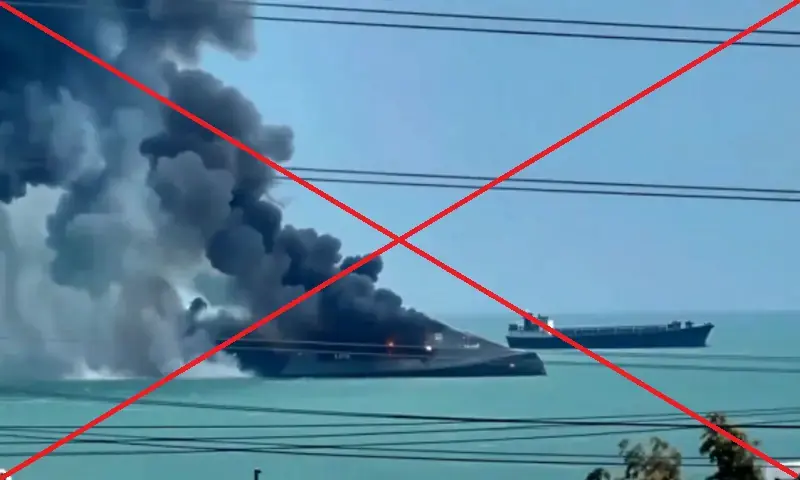
Iran launched retaliatory strikes on US helicopters and reconnaissance aircraft at Bahrain’s Shakir Airbase, prompting sirens across Bahrain and Kuwait; Kuwait intercepted Iranian missiles and drones while Qatar thwarted a missile attack. [5] Sirens sounded across Bahrain and Kuwait early Friday morning as Iran launched retaliatory strikes against US military infrastructure in the region, as the renewed conflict between the two countries enters its sixth day. [5] Bahrain’s Interior Ministry urged citizens to head to safe locations following the activation of sirens in a post to X/Twitter. [5] Iran's semi-official Tasnim News Agency reported that the target of the Iranian attack on Bahrain was US helicopters and reconnaissance aircraft located at the Shakir Airbase, the country's military airport. [5] “In response to the enemy’s hostile action of targeting urban infrastructure and innocent people, the Iranian Army, in the eleventh phase of the “Thunder” operation, targeted the location where helicopters and US military P8 surveillance aircraft are stationed,” said Tasnim ’s report, citing the Iranian army. [5] Iran's army added that it would respond “quickly and decisively” to any counter attacks from the US , stating that any retaliation would have a “heavy cost.” [5] In Kuwait, the nation's air defenses intercepted Iranian missiles and drones. [5] In a post on X, Kuwait 's army clarified that any explosions heard are a result of air defense systems intercepting incoming attacks. [5] Qatar says it thwarted missile attack, security threat over Qatar's Defense Ministry said on Friday its armed forces thwarted a missile attack, while the Interior Ministry said the security threat was over. [5] Several booms were heard in the capital Doha as a government security alert was sent to mobile phones, according to a witness. [5]
Trump’s Escalation and Upcoming Address
President Trump has ramped up airstrikes, reinstated a naval blockade on Iran, reversed a proposed fee on Strait of Hormuz cargo, and is scheduled to deliver a prime-time Speech to the Nation amid the crisis. [3] [4] U.S. President Donald Trump has ramped up airstrikes on Iran and threatened broader escalation, but there is little sign that a military strategy that has already failed to extract concessions from Tehran will succeed this time. [3] With the collapse of an interim ceasefire deal reached a month ago, Trump — unable to disentangle the U.S. from the unpopular war he started — finds himself in a bind as he seeks to break Iran’s grip on the vital Strait of Hormuz and bend a defiant Tehran to his will. [3] US President Donald Trump will deliver a prime-time “Speech to the Nation” on Thursday at 9pm Eastern Time, or 9am Hong Kong time on Friday. [4] Such addresses are typically reserved for major national moments. [4] During his second term, Trump has used them to highlight key priorities, including a year-end address in December, and a speech in April focused on the Iran conflict. [4] The address comes soon after Trump announced the reinstatement of a US naval blockade on Iran and reversed course on his proposed 20 per cent fee on cargo passing through the Strait of Hormuz, declaring the US the “guardian” of the critical waterway. [4]
Context of Ceasefire Collapse
The remarks came amid escalating tensions between the US and Iran over the Strait of Hormuz, as both sides continued exchanging attacks despite a Pakistan-brokered memorandum of understanding aimed at ending the conflict and reaching a lasting peace agreement. [2] Most analysts agree a major escalation by U.S. President Donald Trump regarding Iran would have little chance of being any more effective in forcing Tehran to change course than earlier phases of the war. [3] While the two sides have so far avoided a return to full-scale conflict, increasingly ominous developments have dimmed hopes of finding an off-ramp anytime soon in a crisis that has again driven up global oil prices and sent shockwaves through financial markets. [3] The remarks came amid escalating tensions between the US and Iran over the Strait of Hormuz, with the two sides exchanging attacks despite a Pakistani-mediated memorandum of understanding aimed at ending their conflict and reaching a lasting peace agreement. [2]
What to watch next: US President Donald Trump will deliver a prime-time “Speech to the Nation” on Thursday at 9pm Eastern Time, or 9am Hong Kong time on Friday, with the broadcast already being teased by briefed congressional allies as the most critical Oval Office address since the Cuban Missile Crisis of 1962.