
Iran Quds Force Commander Qaani Says Axis of Resistance Stronger After War
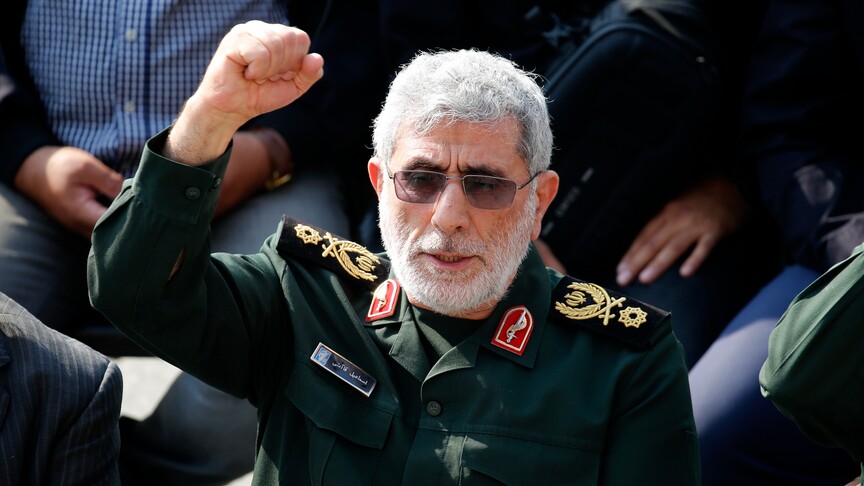
Iran's Quds Force commander Esmail Qaani has made his first public appearance since the outbreak of the Iran war on February 28, declaring that the axis of resistance has emerged stronger from the conflict. [1]
Qaani Reappears With Message of Strength
Iran Quds Force commander Esmail Qaani reappeared to deliver his first public remarks since the outbreak of war on February 28. [1] He stated that the axis of resistance emerged stronger during the war. [1] These comments represent the initial public statement from the Quds Force commander after the Iran war began. [1] The remarks focus on the resilience of aligned groups despite the extended period of hostilities that started on February 28. [1]
Heavy Losses Among Iranian Leadership
Since the start of hostilities in the Middle East on February 28, attacks by the United States and Israel killed Iran's Supreme Leader Ali Khamenei along with numerous senior political and military figures of the Islamic Republic. [3] Ali Khamenei, Supreme Leader since 1989, died on the first day of the war during an attack in Tehran that also claimed the lives of several family members. [3] Ali Larijani, head of the National Security Council, died on March 17 in an Israeli attack near Tehran that also killed several relatives. [3] Mohammad Pakpour, commander-in-chief of the Revolutionary Guard, died on the first day of the war. [3] Ali Shamkhani, advisor to the Supreme Leader, died on the first day of the war. [3] Esmail Khatib, Minister of Intelligence, died in an Israeli attack in Tehran on March 18. [3] Aziz Nasirzadeh, Minister of Defense, died in an airstrike on the first day of the war. [3] Gholamreza Soleimani, head of the Basij militia, died in an airstrike on March 17. [3] Esmail Ahmadi, Basij intelligence director, was killed in an attack on the night of March 16. [3] Ali Mohammad Naini, Revolutionary Guard spokesperson, died in what the Guard described as a cowardly attack by the United States and Israel. [3] Mohammad Shirazi, head of the Supreme Leader's military office, died on the first day of the war. [3] Abdolrahim Mousavi, chief of staff of the armed forces, died on the first day of the war. [3]
Rapid Succession and Resilience Shown
Despite the high-level losses during the Iran war that began on February 28, Tehran demonstrated resilience by quickly replacing assassinated leaders. [3] Mojtaba Khamenei succeeded his father as the new supreme leader after being injured but surviving the initial attack. [3] Mohammad Pakpour was replaced by former Interior and Defense Minister Ahmad Vahidi following his death on the first day of the war. [3] The pattern of rapid replacements continued across multiple command positions as the conflict extended beyond three months. [3]
Regional Leaders Welcome End of Conflict
Egyptian President Abdel Fattah El-Sisi hosted UAE President Sheikh Mohamed bin Zayed in Cairo, where both leaders welcomed the end of the Iran war and the reopening of the Strait of Hormuz. [2] The meeting included an expanded session of talks, a bilateral discussion, and an official luncheon at Al-Ittihadiya Palace. [2] El-Sisi stressed Egypt’s support for the stability, sovereignty, and security of the UAE and Gulf states, describing Gulf security as integral to Egypt’s national security. [2] Sheikh Mohamed praised the strength of relations between the two countries and expressed appreciation for Egypt’s support of the UAE and the wider Gulf region. [2]
Calls for Diplomacy and Arab Coordination
Sisi and Sheikh Mohamed emphasized the need for Arab coordination, diplomacy over military confrontation, and a focus on economic development and regional stability. [2] The leaders welcomed efforts to de-escalate tensions and stressed the importance of diplomacy in preserving regional stability. [2] They agreed on the need for continued coordination among Arab states to address common security challenges. [2] El-Sisi outlined Egypt’s vision for resolving regional crises through comprehensive political solutions rather than military confrontation, arguing that restoring stability would allow countries to focus on economic development. [2] The visit highlighted the close political and economic ties between Egypt and the UAE, with both leaders maintaining frequent consultations. [2]
What to watch next: Attention may center on the scheduled burial of Ali Khamenei on July 9 in Mashhad and ongoing Arab coordination efforts to maintain the reopening of the Strait of Hormuz.