
Iran War Sees US Strike Iranian Command Centers After Missile Attack on Jordan Base
The US and Iran exchanged missile barrages this week, reigniting direct hostilities in a five-month Iran war that has expanded to draw in US allies including Jordan, Kuwait, Saudi Arabia and Egypt.
Latest US and Iranian Missile Exchanges
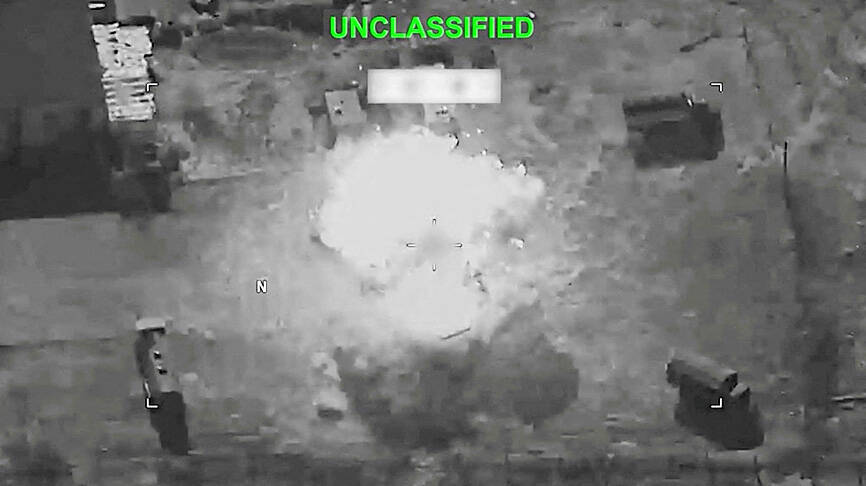
US Central Command conducted a heavy wave of strikes on Iranian Revolutionary Guard Corps targets including command centers, missile and drone facilities, and coastal defense sites in response to an Iranian missile attack on a US base in Jordan. [1] The US Central Command said in a social media post that the US struck dozens of targets belonging to the Iranian Revolutionary Guard Corps, including military command centers as well as missile and drone facilities, and coastal surveillance and defense sites. [1] Iran’s official Islamic Republic News Agency said three people were killed and two were wounded in a strike on the island of Qeshm, which lies just off the Iranian mainland in the Strait of Hormuz. [1] US President Donald Trump vowed to hit Iran very hard after it targeted the base. [1] Central Command said its latest strikes were a response to Iran’s launching ballistic missiles at US forces in the Middle East on Wednesday, when the Revolutionary Guard said it had targeted US military sites in Jordan. [2] The US military said it completed a heavy wave of strikes against Iran conducted in response to an earlier Iranian missile attack on a US base in Jordan. [1] Jordan’s military said it had shot down five Iranian missiles. [3] Iran has not publicly claimed responsibility for that attack. [2]
Involvement of Regional Allies
Jordan intercepted five Iranian missiles for the second consecutive day with no reported casualties, while an Iranian strike on a Chinese firm’s building in Kuwait killed one worker. [1] Jordan yesterday said it intercepted Iranian missiles for the second consecutive day, while Kuwait said a strike in the northern part of the country killed one person. [1] An Iranian strike yesterday hit a Chinese firm’s building in Kuwait, severely damaging the structure and killing a worker, Kuwait’s military said, hours after Jordan’s air defenses shot down five missiles launched from Iran. [1] No casualties were reported from Jordan’s interception, Jordan’s state-run Petra news agency said, quoting the spokesman for the country’s armed forces. [1] US and Saudi Arabia jointly struck Iran-backed militias in Iraq, killing at least 20 fighters and six Iranian advisers, marking Saudi Arabia’s first public involvement in strikes alongside the US. [1] The latest strikes in Iraq and Egypt threatened to draw more Middle Eastern countries into the conflict. [3] A drone attack, reportedly launched from Iran, struck Egypt’s port of Damietta, igniting fires on two ships including a US-owned gas storage tanker, marking Egypt’s first direct involvement. [2] For the first time since the conflict began in February, the authorities in Egypt said Thursday the country had come under attack, blaming an explosion at one of its ports the previous day on an unidentified drone. [2] The drone was reportedly launched from Iran, the New York Times reported on Thursday. [3] Earlier, Saudi Arabia also acknowledged direct involvement in the war for the first time, after conducting joint strikes with US forces on Iranian-backed militias in Iraq on Wednesday. [2] The joint US-Saudi attacks marked the first time Riyadh has publicly joined strikes alongside Washington. [3]
US strikes target Iranian Revolutionary Guard Corps command centers and missile facilities. — Source: bangkokpost
Impact on the Strait of Hormuz and Shipping
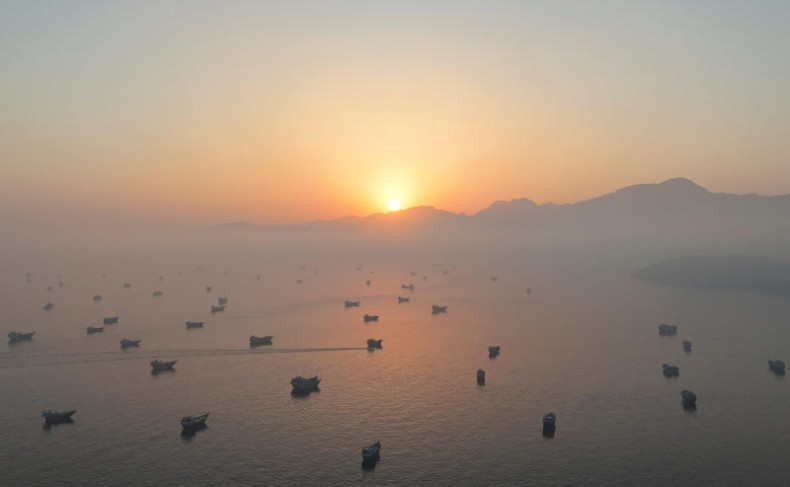
The fighting has centered on the Strait of Hormuz, a critical energy waterway, with ongoing risks to shipping, while diplomatic efforts by Pakistan and others continue but show no public progress. [1] Even as the fighting between the United States and Iran expanded beyond the jostle to control the Strait of Hormuz, a critical waterway for the world’s energy supplies, ships attempting to pass through it were still facing significant risks. [2] The Revolutionary Guard said early Thursday that a fire had broken out on a tanker attempting to transit the strait using an unauthorised passage. [2] Its statement, carried in Iranian state media, did not specify whether the fire had been caused by an attack. [2] Threats by the Iranian-backed Houthi militia against shipping in the Red Sea also stoked fears of a second choke point, injecting more volatility to energy markets. [2] After the Yemeni group claimed to target another Saudi oil tanker with missiles this week, insurers warned shipping companies navigating the Red Sea that they faced a heightened risk of attack. [2] Iran has most recently been concentrating its drone and missile attacks on Jordan, Kuwait and Bahrain, as well as targeting any commercial shipping that tries to slip through the Strait of Hormuz while avoiding Iran's new rules and routing. [5]
Diplomatic Mediation Efforts
Pakistan, which had helped broker an interim agreement to end the war, yesterday said that diplomatic efforts were continuing. [1] The negotiations between the parties are ongoing to normalize the situation, particularly the situation in the Strait of Hormuz, and as well to de-escalate, Pakistani Ministry of Foreign Affairs spokesman Tahir Andrabi told a news briefing. [1] Before the latest eruption, mediators had expressed optimism about bringing the US and Iran back to the negotiating table. [1] The Pakistan ministry of foreign affairs has assured that it is doing the maximum to bring Tehran and Washington back to the negotiating table and has expressed support for every initiative aimed at favoring the cessation of hostilities and the resumption of diplomatic confrontation. [4] Iran has confirmed that talks are still ongoing with Oman on the management of the Strait of Hormuz. [4] Italian Foreign Minister Antonio Tajani stated that Rome is increasingly a crossroads of peace, dialogue and diplomacy. [4]

US strikes target Iranian Revolutionary Guard Corps command centers and missile facilities. — Source: jerusalempost
Economic and Military Strain
The spiraling violence underscored the difficulty of winding down a five-month conflict that has sent the price of fuel and other basics soaring, jolted the world economy, and added to concerns about US stockpiles of weapons needed to defend its bases and allies. [1] US officials have privately cautioned that resuming major combat operations against Iran would carry risk given the negative impact on stocks of munitions. [3] The Center for Strategic and International Studies, a Washington-based think tank, estimated this week that the US military has fewer than 1,000 Patriot interceptor missiles and fewer than 250 THAAD interceptors. [3] Saudi Arabia is facing a difficult dilemma as it tries to stay out of the US-Iran war. [5] Its de facto ruler, the relatively young Crown Prince Mohammed Bin Salman, has embarked the country on a course known as Vision 2030. [5] His aim is to diversify the Kingdom away from its dependence on oil revenues and to create vibrant, modern domestic industries that will provide meaningful jobs for the hundreds of thousands of graduates and school leavers entering the job market each year. [5] Part of Vision 2030 involves attracting foreign investment. [5] Part of it also involves building things like data centres that are vulnerable to attack. [5] This is not going to work if Saudi Arabia finds itself under an enduring, long-term threat from drones fired across its southern border by the Houthis in Yemen or ballistic missiles fired directly by Iran. [5]
Iraqi Government Response
The strikes on Iraq expose a dangerous rift in that volatile country. [3] The Shi’ite-led government is one of the few in the world to balance close military and diplomatic ties with both Tehran and Washington, but those divided loyalties are a constant source of tension and frequent domestic unrest. [3] The office of Prime Minister Ali al-Zaidi, who took power just two months ago, urged the parties involved to avoid escalation and said he wanted to keep the country out of regional conflicts. [3] The Iraqi presidency denounced the strikes on the paramilitaries as an unacceptable attack and a flagrant violation of Iraq's sovereignty, while also calling for a halt to attacks by armed groups against Iraq's neighbors. [3] Baghdad has condemned the initiative harshly, defining it as a violation of its own national sovereignty. [4] Kataib Hezbollah has threatened a response. [4]
What to watch next: Ongoing diplomatic efforts by Pakistan and Oman to normalize the situation in the Strait of Hormuz continue without public signs of progress, while Saudi Arabia weighs further joint strikes or de-escalation amid repeated attacks on its territory.