
Indonesia Raises Earthquake Death Toll to 103 as Costa Rica Twin Quakes Trigger Aftershocks
A magnitude-7.7 earthquake that struck East Nusa Tenggara, Indonesia on August 15, 2026 has raised the death toll to 103 with 1,666 injured, while separate earthquakes rattled Costa Rica, Chile, Tonga and Albania amid heightened regional seismic activity.
Indonesia Earthquake Death Toll Climbs to 103
The death toll from the East Nusa Tenggara earthquake has increased to 103 as of Tuesday, according to the National Disaster Mitigation Agency. [3] There are three additional deaths, bringing the total to 103 today, BNPB Acting Head of the Disaster Data, Information, and Communication Center Berton SP Panjaitan said at a press conference on Tuesday. [3] The death toll from the earthquake that struck NTT on August 15, 2026, had reached 100 as of Monday. [3] The latest data puts the death toll at 103, comprising 41 in Manggarai, 34 in East Manggarai, 13 in Nagekeo, six in Sikka, five in Ngada, three in Ende, and one in West Manggarai. [3] By gender, men accounted for 45 percent of the fatalities, while women made up the remaining 55 percent. [3] By age group, 45 percent of those who died were elderly people, 37 percent were adults, 12 percent were children and adolescents, and the remainder were infants and toddlers. [3] Panjaitan also reported that the number of injured victims had risen to 1,666 as of Tuesday, compared with 1,603 recorded on Monday. [3] East Manggarai District has the highest number of injured victims, with 239 people suffering serious injuries and 404 people suffering minor injuries. [3] According to Panjaitan, the agency continues to update victim data as additional reports arrive from earthquake-affected areas. [3] A magnitude-7.7 earthquake struck NTT in the early hours of Saturday, prompting the Meteorology, Climatology and Geophysics Agency to issue a tsunami early warning that was lifted several hours later. [3] President Prabowo Subianto said the government was doing its utmost to support earthquake-affected communities in NTT by deploying relevant personnel to address conditions on the ground. [3] We want to ensure that people there receive prompt and comprehensive emergency assistance, Prabowo wrote on his personal Instagram account. [3]
Twin Morning Quakes Strike Central Costa Rica
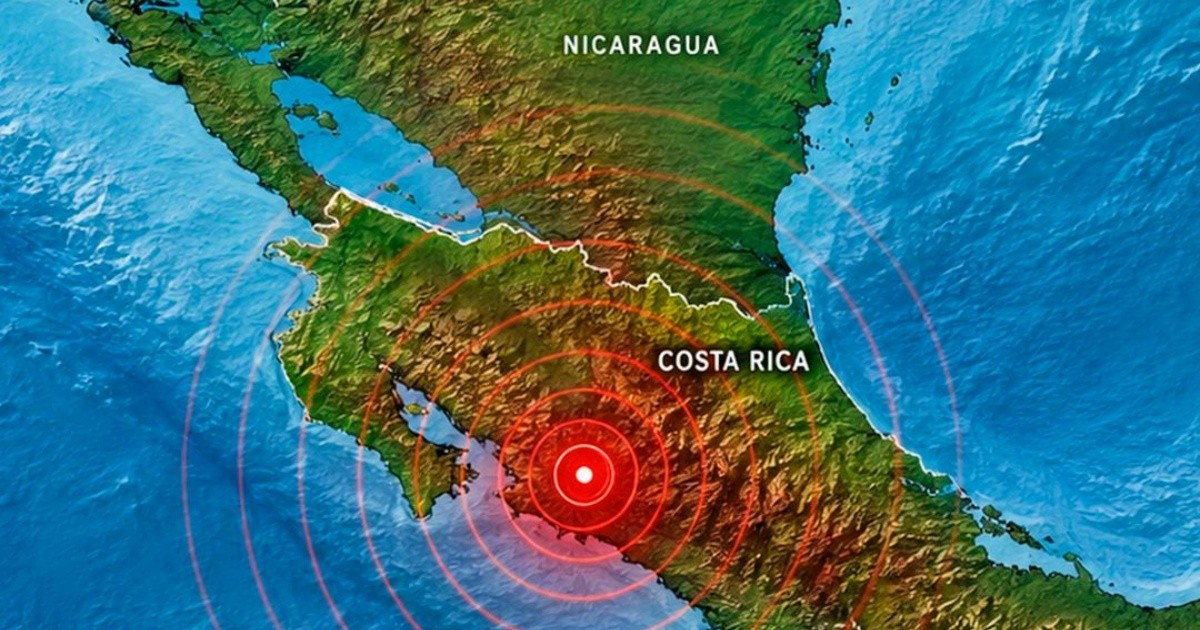
In the early hours of Monday, two earthquakes struck central Costa Rica just minutes apart, sparking widespread concern among residents of the Central Valley. [1] Fortunately, no injuries or casualties were reported, according to the National Seismological Network and the country's Volcanological and Seismological Observatory. [1] The initial quake occurred at 1:37 a.m. local time, with its epicenter near Coronado in San José province. [1] The National Seismological Network at the University of Costa Rica recorded a magnitude of 5.4, while the Volcanological and Seismological Observatory of Costa Rica reported it at 5.0, locating the epicenter eight kilometers northeast of San Isidro de Coronado. [1] The U.S. Geological Survey measured it at 4.9. [1] Mere minutes later, a second tremor was felt, with a magnitude ranging from 4.4 to 4.8 depending on the reporting agency, also centered in the Coronado area and occurring at a shallow depth. [1] Both quakes were felt in the Central Valley, home to San José and the country's other major cities. [1] The National Emergency Commission received just one report of structural damage to a wall in Vázquez de Coronado, as well as a downed power line pole in San Vicente de Moravia. [1] The CNE also warned of landslides along Route 32 near kilometer 30, advising drivers to proceed with caution. [1] Following the main quakes, the National Seismological Network recorded at least 23 significant aftershocks overnight, while the Volcanological and Seismological Observatory noted nearly 30, most of which were imperceptible to the public. [1]

Rescuers evacuate injured survivors following the magnitude-7.7 earthquake in East Nusa Tenggara. — Source: antaranews
Río Sucio Fault and Costa Rica's Seismic Setting
Sismologist Lepolt Linkimer from the National Seismological Network explained that the earthquakes originated from the Río Sucio Fault, a lateral fault stretching over 14 kilometers and capable of generating earthquakes exceeding magnitude six. [1] Linkimer described the sequence as the most significant seismic activity in the area over the past decade. [1] These are shallow earthquakes near a local fault, hence they were strongly felt by the population. They are sudden and very intense, the expert stated. [1] Linkimer also emphasized that Costa Rica is a highly seismic and vulnerable country, urging the public to adhere to safety guidelines. [1] The National Seismological Network attributed the quakes to faulting within the crust of the Caribbean and Panama plates. [1] The Central American nation lies on a complex tectonic boundary where the Caribbean continental plate converges with the Panama microplate, leading to an active fault system throughout the region. [1] As of 2026, Costa Rica had experienced 12 earthquakes above magnitude five before this incident, the strongest being a 5.7 magnitude event on April 15, with its epicenter in the Pacific off Playa Ostional in Guanacaste. [1] None of these caused damage or injuries, according to Agencia EFE. [1] The RSN at the University of Costa Rica annually detects thousands of seismic events within the national territory; in 2023, it recorded 4,438 events, 153 of which were felt by the population. [1]
Regional Seismic Activity in August 2026
The recent tremors occur amid intense regional seismic activity. [1] On August 20, a magnitude 7.2 quake struck Ayacucho, Peru, injuring three people. [1] Just days earlier, a catastrophic 7.4 magnitude earthquake devastated western Colombia on August 10, resulting in at least 294 fatalities and 320 missing, reported by the country's National Unit for Disaster Risk Management. [1] A magnitude 5.3 earthquake struck 239 km SE of Hihifo, Tonga at a depth of 10.0 km. [2] A magnitude 4.4 earthquake struck 15 km W of Lushnjë, Albania at a depth of 10.0 km. [5] During the present day, earthquakes of varied intensity have been recorded in different places across Chile, though most remain imperceptible because Chile sits at the boundary of the Nazca and South American tectonic plates. [4] On Tuesday, a magnitude 3.6 quake occurred 56 km north of Pica at 103 km depth, and another magnitude 3.6 event was located 24 km northeast of Linares at 99 km depth. [4]
Safety Guidance and Aftershock Monitoring
The National Emergency Commission warned of potential landslides and advised caution on affected routes. [1] Sismologist Lepolt Linkimer urged the public to adhere to safety guidelines given that Costa Rica is a highly seismic and vulnerable country. [1] The Service Nacional de Prevención y Respuesta ante Desastres delivered recommendations on how to act during a significant seismic movement. [4] These include maintaining calm and seeking a seismic protection place, protecting oneself under a firm element, cutting electrical energy and closing water and gas valves, moving away from buildings, poles and electrical cables if in the street, staying in place and protecting the head and neck with the arms if at a massive event, and reducing speed and stopping after exiting if driving in a tunnel, bridge or highway. [4] The National Disaster Mitigation Agency continues to update victim data as additional reports arrive from earthquake-affected areas in Indonesia. [3] The National Seismological Network and Volcanological and Seismological Observatory continue tracking aftershocks in Costa Rica. [1]
What to watch next: Officials in Costa Rica will continue monitoring aftershocks from the Río Sucio Fault sequence while Indonesia's National Disaster Mitigation Agency updates casualty figures from additional field reports.