Indonesia Quake Death Toll Reaches 103 as President Visits Nagekeo
A 7.7-magnitude earthquake struck Flores Island in Indonesia's East Nusa Tenggara province, killing 103 people and injuring 1,666 as of August 25, 2026, prompting a presidential visit and ongoing disaster response.
Indonesia Earthquake Death Toll Rises to 103
The National Disaster Mitigation Agency recorded that as of Tuesday the death toll from the 7.7 magnitude earthquake in Nagekeo had risen to 103. [4] The fatalities included 41 in Manggarai, 34 in East Manggarai, 13 in Nagekeo, six in Sikka, five in Ngada, three in Ende, and one in West Manggarai. [4] By gender, men accounted for 45 percent of the fatalities, while women made up the remaining 55 percent. [4] By age group, 45 percent of those who died were elderly people, 37 percent were adults, 12 percent were children and adolescents, and the remainder were infants and toddlers. [4] The number of injured victims had also risen to 1,666 as of Tuesday, compared with 1,603 recorded on Monday. [4] East Manggarai District recorded the highest number of injuries, with 239 people sustaining serious injuries and another 404 suffering minor injuries. [4] BNPB continues to update the casualty figures as new reports are received from earthquake-affected areas. [4]
President Prabowo Inspects Damage in Nagekeo
Indonesian President Prabowo Subianto visited residents affected by the 7.7-magnitude earthquake in Nagekeo, East Nusa Tenggara, while assuring optimal assistance and response from the government. [4] Prabowo arrived at Komodo International Airport in Labuan Bajo on Wednesday and went directly to Nagekeo District to inspect the conditions of the people affected by the Flores earthquake. [4] According to Minister of State Secretary Prasetyo Hadi, the head of state will directly observe the condition of the community and ensure proper disaster management along with fulfillment of resident needs. [4] This visit is also part of an effort to ensure effective coordination between the central government, regional governments, the military, the police, and all relevant agencies in responding to the earthquake on Flores Island, NTT. [4] On the occasion, the president also led a coordination meeting at the NTT Natural Disaster Management Command Post of the IX/Udayana Military Command in Nagekeo. [4] Prabowo is accompanied by several relevant ministers, including Minister of Public Works Dody Hanggodo, Minister of Energy and Mineral Resources Bahlil Lahadalia, Minister of Home Affairs Muhammad Tito Karnavian, and National Police Chief General Listyo Sigit. [4] Also in attendance were NTT Governor Melki Laka Lena and several regional heads. [4]

Rescue teams search rubble in Nagekeo after the 7.7-magnitude earthquake on Flores Island. — Source: japantimes
Japanese Radio Station Delivers Vital Post-Quake Information
A community radio station in Kumamoto Prefecture, which was struck by a powerful earthquake last month, is continuing to deliver vital information to local residents. [2] Staff members at the radio station in the city of Yatsushiro were forced to evacuate during a live broadcast because of the July 28 earthquake, but resumed operations the following day. [2] Yukiko Yamada, 46, a radio personality at FM Yatsushiro, urged listeners to ensure their safety while broadcasting live from the station inside the city office. [2] The powerful tremor knocked down shelves and scattered broken glass. [2] The seismic isolation device at the city office was also damaged, forcing the station to close on a temporary basis. [2] Yamada was also among staff members who had to evacuate outside. [2] She said she felt frustrated at not being able to broadcast, as she believes that the mission of radio is to provide disaster information. [2] She continued the live broadcast until just before evacuating, even while worrying about her parents, who live in Hikawa, a neighboring town hit hard by the earthquake. [2] Afterward, she was able to contact her parents by phone and confirmed their safety. [2] She returned to the microphone the day after the earthquake and has been striving to create programs that stay close to the hearts of affected people. [2] The station suspended its regular programming immediately after the earthquake and instead focused on broadcasting disaster-related information. [2] We only broadcast official information that we have confirmed directly with the municipal government, said Akemi Miyata, 60, who works in the station’s general affairs department. [2] The station continues to provide useful information to affected people, including warnings about economy class syndrome and heatstroke prevention measures. [2] It also features classical music and songs by the late Yatsushiro-native singer Aki Yashiro. [2] We hope this will refresh listeners even a little, Miyata said. [2] The station currently broadcasts live daily from 8 a.m. to 6 p.m. with about five staff members. [2] It’s scary to think that an earthquake might come again, Miyata said. [2] Nonetheless, she expressed her commitment to continuing her work, saying, We want to continue providing information for the people of Yatsushiro. [2]
Smaller Tremors Strike Chile, Colombia, and Russia
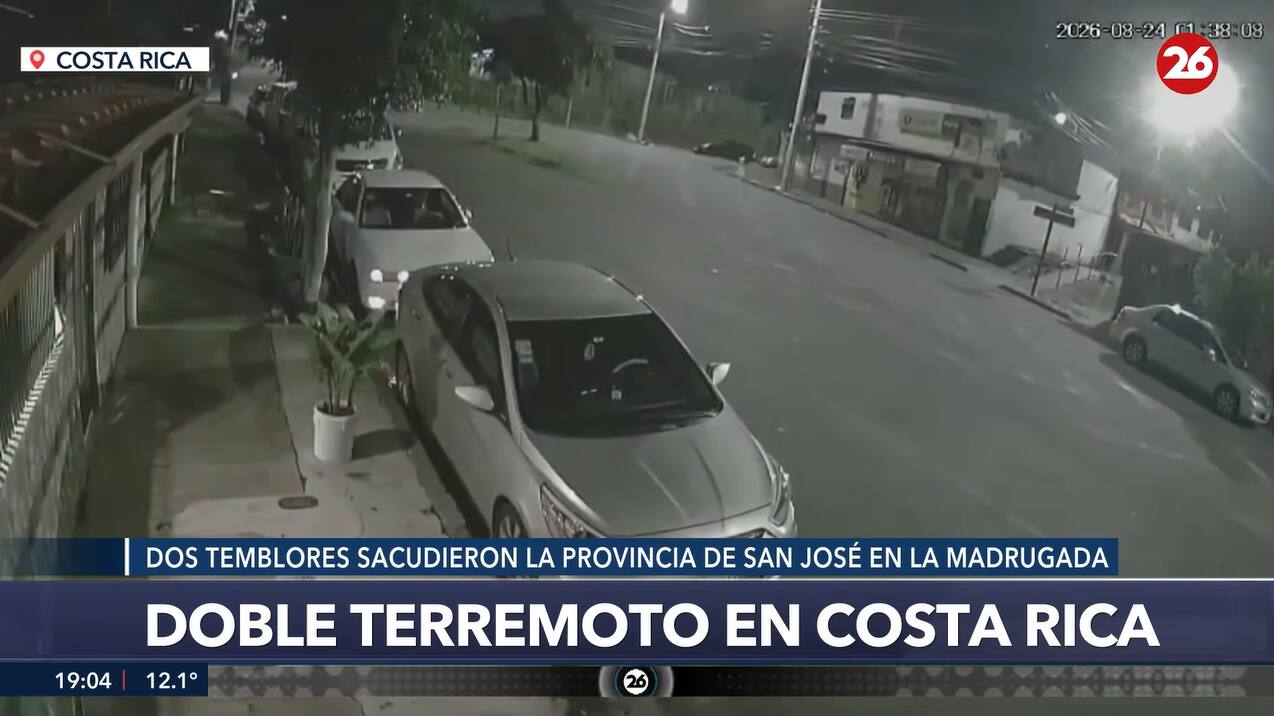
A magnitude 4.5 earthquake struck 37 km west of Taltal in Chile at a depth of 47 km on August 25, 2026, at 21:37:01 local time. [1] In Colombia, a magnitude 3.3 earthquake occurred at 10:22 p.m. local time on August 25, 2026, in Istmina, Chocó, at shallow depth. [3] This event followed a prior magnitude 7.4 earthquake on August 10 whose epicenter was near San José del Palmar. [3] In Russia, a magnitude 4.7 earthquake struck 82 km northeast of Otrada at a depth of 159.5 km. [5]
Chile's Seismic Risk and Emergency Preparedness
Chile is one of the countries with the greatest seismic activity in the world due to its location on the Pacific Ring of Fire where the Nazca and South American plates converge and attempt to interpose at a rate of 7 to 8 centimeters per year. [1] The friction between both blocks triggers deformation, which leads to the generation of seismic movements in Chile. [1] The National Disaster Prevention and Response Service recommends that citizens maintain an emergency backpack containing a bottle of water, alcohol gel, a radio or batteries, non-perishable food, clothing and shelter, a first aid kit, a flashlight and batteries, a battery-powered portable radio, a whistle, and an agenda with emergency contacts. [1] A seismic event can be classified as an earthquake in Chile when it presents structural damage or loss of human life and when it reaches an intensity of grade VII or higher on the Modified Mercalli scale. [1]
Ongoing Response Efforts Across Regions
BNPB continues to update the casualty figures as new reports are received from earthquake-affected areas. [4] The president led a coordination meeting at the NTT Natural Disaster Management Command Post to ensure effective coordination between the central government, regional governments, the military, the police, and all relevant agencies. [4] In Japan, the station suspended its regular programming immediately after the earthquake and instead focused on broadcasting disaster-related information while providing warnings about economy class syndrome and heatstroke prevention measures. [2] The station continues to broadcast live daily from 8 a.m. to 6 p.m. with about five staff members. [2]
What to watch next: Authorities in affected regions will continue monitoring aftershock activity and updating casualty figures while radio stations maintain daily broadcasts of confirmed safety information.