Indonesia Earthquake Kills One and Damages 841 Houses in Central Sulawesi
An Indonesia earthquake of magnitude 6.7 struck near Palu in Central Sulawesi on Tuesday, June 16, killing one person, injuring dozens, damaging hundreds of homes and infrastructure, and triggering numerous aftershocks while posing no tsunami threat.
Earthquake Overview and Seismic Details
The mainshock measured 6.7 in magnitude and occurred at 10:27 a.m. Western Indonesian Time on June 16 at a shallow depth on land. [1] The epicenter was located at coordinates 1.13 South Latitude and 120.23 East Longitude, or 42 kilometers southeast of Palu City, with the US Geological Survey reporting a depth of about 10 kilometers and a slightly variant location 43 kilometers east-southeast of Palu. [1][2] The National Disaster Mitigation Agency confirmed that because the event took place far inland rather than offshore, it carried no potential to generate a tsunami. [1] Tremors were felt across Palu as well as in parts of Poso District and Parigi Moutong. [1]
Casualties and Human Impact
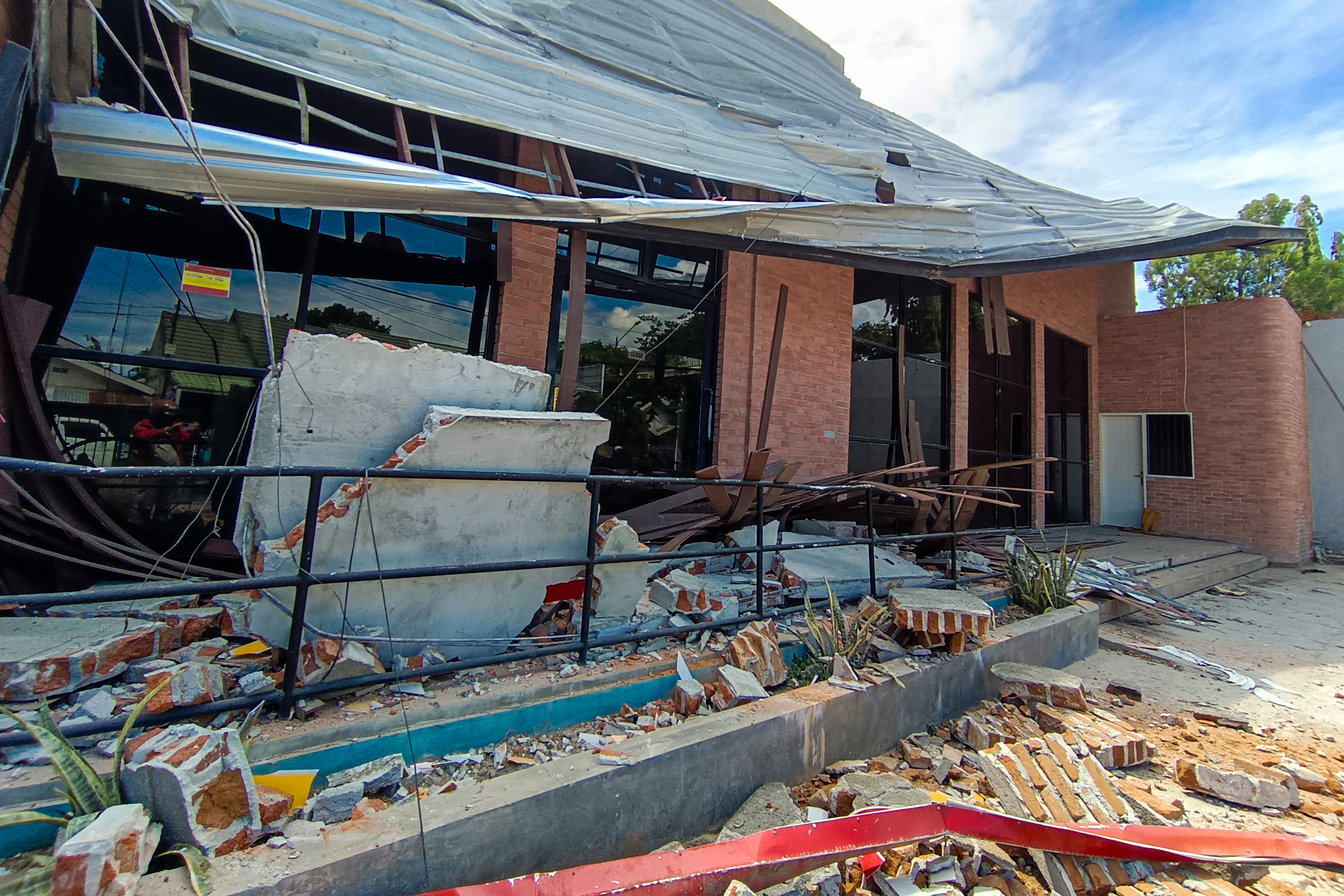
A damaged house stands amid debris following a magnitude 6.7 earthquake in Central Sulawesi, Indonesia. — Source: gdelt One fatality was recorded in Sigi District when a resident of Ampera Village, Palolo Subdistrict, died. [4] Overall injury figures range from 38 to 77 people, with 13 to 32 cases classified as serious and requiring hospitalization. [2][4] In Sigi District alone, 13 people were seriously injured while dozens more sustained minor wounds across multiple villages including Bora, Uwenuni, Kamarora, and West Sibalaya. [4] At least 109 people from 45 households were directly affected, and preliminary counts indicated 312 individuals had been displaced. [1][2] Hospitals in Palu evacuated patients, some still connected to IV drips, as a precaution during the strong shaking. [2]
Damage Assessment
The Regional Disaster Mitigation Agency recorded damage to 841 houses across affected districts, with Sigi District bearing the brunt of 800 impacted homes of varying severity. [4] Additional residential damage included 37 houses in Parigi Moutong District, one house in Palu City, and three houses in Poso District. [4] Beyond homes, the Indonesia earthquake damaged places of worship, public facilities, bridges, offices, business premises, a university building at Tadulako, sections of hotels, and a provincial road linking Palu, Sigi, and Poso. [1][4] A bridge connecting Kamarora B Village and Tongoa Village was also affected, along with road access in the Napu area of Poso District that collapsed. [4]
Aftershocks and Ongoing Seismic Activity

A magnitude 6.7 earthquake struck near Palu in Central Sulawesi, Indonesia, killing one and damaging 841 houses. — Source: gdelt The Meteorology, Climatology, and Geophysics Agency recorded between 71 and 466 aftershocks by the morning of June 17, with magnitudes ranging from 1.3 to 5.2. [1][4] Twenty-five of these aftershocks were felt by residents, and the frequency showed a decreasing trend compared with the immediate hours after the mainshock. [4] The strongest aftershock reached magnitude 5.2 while the weakest registered 1.3, and monitoring continued through seismographs in the field. [4] Officials noted that aftershock activity remained under observation with a downward trend in occurrence. [1]
Public Response and Official Guidance
Residents in Palu and surrounding areas rushed outdoors or moved inland as a precaution, driven by memories of the 2018 disaster that killed more than 4,000 people. [2] Videos circulating on social media showing receding sea levels in Palu Bay prompted temporary panic, yet authorities attributed the phenomenon to normal tidal cycles unrelated to the inland earthquake. [1] One Palu resident stated that the intense shaking revived trauma from the previous event, leading people to remain outside for fear of continuing aftershocks. [2] A hotel manager reported evacuating guests who panicked during the shaking, though everyone remained safe and the property sustained only minor damage. [2] Officials urged the public to disregard unverified information and rely solely on updates from the National Disaster Mitigation Agency and the Meteorology, Climatology, and Geophysics Agency. [1][4]
Emergency Response Efforts
Emergency response operations focused on meeting basic needs through distribution of logistics, emergency tents, and folding beds coordinated with the Indonesian National Armed Forces and National Police. [4] The XXIII/Palaka Wira Regional Military Command supplied four tents and 50 folding beds to Samaritan Hospital in Palu, plus additional tents, 150 folding beds, and a field kitchen to a subdistrict command post. [4] Field assessments continued jointly with military and police units to update damage data while authorities maintained ongoing coordination for further aid delivery. [2][4]
What to watch next: Aftershock frequency is expected to continue declining while authorities complete damage assessments and sustain distribution of emergency supplies to affected communities in Sigi, Parigi Moutong, Palu, and Poso districts.