
Hurricane Tracker Shows Typhoon Dujuan Leaves Four Dead in Japan
Hurricane tracker reports confirm that Typhoon Dujuan has killed four people in Japan after bringing torrential rains, destructive winds, flooding and landslides to the Tokyo region and surrounding prefectures.
Typhoon Dujuan Death Toll and Landslides
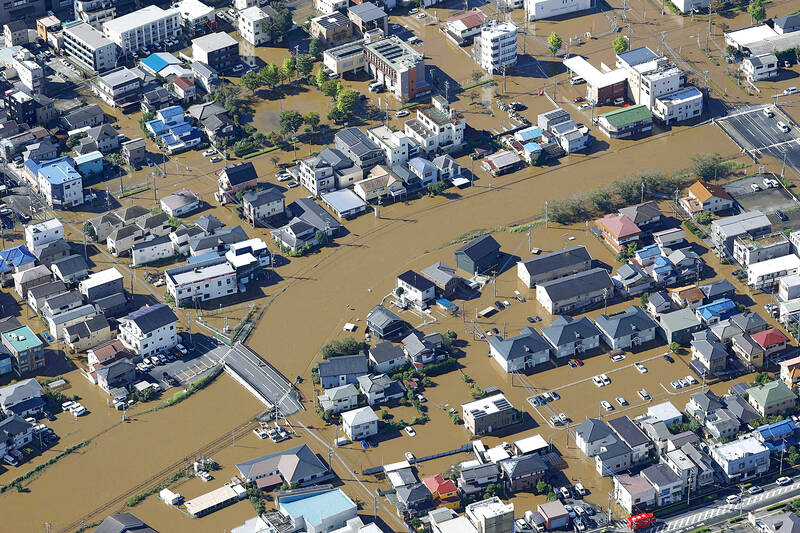
Four people have died in Japan after Typhoon Dujuan battered Tokyo and surrounding prefectures with torrential rains and destructive winds. [3] The fatalities were from landslides in Kanagawa and Chiba prefectures. [3] Six others were reported missing. [3] The Japanese Fire and Disaster Management Agency said three people died in Chiba Prefecture and one in Kanagawa region, both near Tokyo. [4] Search operations were continuing for six people missing after landslides triggered by torrential rain. [4] A woman in Kanagawa prefecture, aged in her 60s, was believed to have been buried alive after a landslide swept the house she lived in. [3] Following a search by rescue crews, she was found inside the home and pronounced dead. [3] Separately, a man in his 50s was rescued after getting trapped while working to clear debris at a landslide site in Chiba prefecture. [3] The worker fell into a bamboo thicket, along with some heavy machinery. [3] He was then taken to hospital before his death was confirmed. [3] Typhoon Dujuan left at least four people dead and 22 injured in Japan. [4]
Evacuation Orders and Power Outages
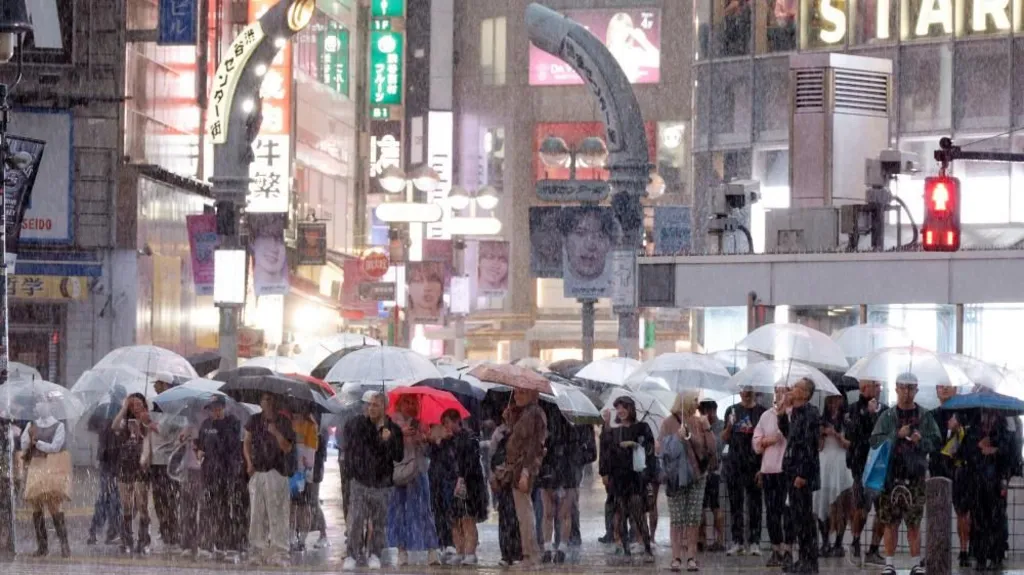
The storm cut power for 50,000 people. [3] At the height of the storm on Monday, authorities warned of an "imminent threat to life" and urged 1.9 million people to move to shelters. [3] Most evacuation orders were lifted on Tuesday as the storm pulled away from Japan's eastern coast. [3] More than one million people were under evacuation advisories in Japan early Tuesday. [5] More than 45,000 households in Chiba were still without electricity yesterday afternoon, while more than 460 houses were damaged. [4] The typhoon moved away from Japan’s coast and out into the Pacific Ocean by morning, allowing authorities to lift or downgrade most heavy rain and landslide warnings. [4]
Typhoon Dujuan triggers deadly landslides in Chiba and Kanagawa prefectures near Tokyo. — Source: taipei-times
Record Rainfall and Flooding
Dujuan had sustained winds of 130km/h and gusts of 194km/h. [3] Although Dujuan weakened as it moved northeast, it dumped record rainfall in parts of the Tokyo area. [4] Oshima, an island about 120km south of central Tokyo, recorded 832mm of rain over 48 hours, more than double its average rainfall for the whole of September. [4] Rainfall in Tokyo’s Edogawa Ward reached a record 282.5mm over 24 hours. [4] A residential area flooded due to heavy rain caused by Typhoon Dujuan in Sakura, Japan. [4] The typhoon is continuing to travel along the country's Pacific coast, heading north. [3] The extent of the damage may not be known until Tuesday. [3]
Disruptions to Travel and Events
The storm caused the suspension of hundreds of flights. [3] Hundreds of flights have been cancelled as Typhoon Dujuan brushed past Tokyo. [5] Dujuan, which is Japan's 25th typhoon of the year, hit in the midst of a five-day holiday and forced the cancellation of several events. [3] Concerts scheduled for Monday at the Rock in Japan music festival were cancelled, while the Tokyo Game Show, a video game convention, also cancelled Monday's programme. [3] The typhoon led to the early closure in the capital of one of the world’s biggest video game trade fairs. [4] Japan often sees strong typhoons in the late summer and early autumn, with other storms this season disrupting some events at the Asian Games being held in the country. [4]
Climate and El Niño Context
The typhoon is the latest in a series of storms in the Pacific, made more intense by the "super El Niño", which has warmed the ocean, fuelling the formation of storms. [3] Some research suggests that Japan has become more exposed to destructive storms, but climate change is not thought to be increasing the number of these storms globally, and could even make them less common in some regions. [3] As temperatures rise, typhoons that do form are likely to become more intense on average. [3] Warmer ocean waters mean storms can pick up more energy, leading to higher wind speeds. [3] Because a warmer atmosphere can hold more moisture, these storms could also bring heavier rainfall. [3] Scientists say human-driven climate change is intensifying the risk posed by heavy rains because a warmer atmosphere holds more water. [4] El Niño doesn't have a clear effect on the total number of typhoons, but it can affect where typhoons form, their strength and which countries they hit. [3] Some El Niño events may expose Japan to stronger typhoons. [3]
Severe Weather Alerts in the United States
Flash Flood Warning has been issued for the City of Chesapeake, VA. [1] At 344 PM EDT, Doppler radar indicated thunderstorms producing heavy rain across the warned area. [1] Between 0.5 and 1.5 inches of rain have fallen. [1] The expected rainfall rate is 2 to 4 inches in 1 hour. [1] Additional rainfall amounts of 0.5 to 1 inch are possible in the warned area. [1] Flash flooding is ongoing or expected to begin shortly. [1] A separate Flash Flood Warning has been issued for Dolores, CO, covering the Ferris burn scar in central Dolores County in southwestern Colorado. [2] At 138 PM MDT, Doppler radar indicated thunderstorms producing heavy rain over the Ferris Burn Scar. [2] Between 0.5 and 1 inch of rain has fallen. [2] Flash flooding is ongoing or expected to begin shortly. [2] Excessive rainfall over the burn scar will result in debris flow. [2]
What to watch next: The typhoon is continuing to travel along the country's Pacific coast heading north, with the extent of damage possibly not known until Tuesday, while separate flash flood warnings remain active in Chesapeake, Virginia, and the Ferris burn scar in Dolores County, Colorado.






