
Houthis Seize Yemen Port City of Mocha Near Bab el-Mandeb Strait in Most Dangerous Countries
Reporting based primarily on newarab.com.
Houthis have seized the strategic Yemeni port city of Mocha near the Bab el-Mandeb Strait in most dangerous countries, triggering a large-scale exodus of residents toward Aden and reshaping the military map in western Yemen amid renewed fighting. [5]
Houthis Capture Strategic Port City
The Houthis have seized Yemen's strategic port city of Mocha on the Red Sea coast, government sources said on Thursday, marking a major development in the renewed fighting as tens of thousands have been displaced across the country. [5] Three Yemeni government sources told Reuters that Houthi forces had entered Mocha and taken control of the coastal city, while local sources told The New Arab that large numbers of residents were fleeing towards the southern city of Aden. [5] Mocha is strategically important because of its location on Yemen's western coast near the Bab al-Mandab Strait, the narrow waterway connecting the Red Sea with the Gulf of Aden and one of the world's most important maritime trade routes. [5] The city's capture could therefore have wider implications for security around the strait and commercial shipping through the Red Sea, as fighting intensifies across Yemen's western coast. [5]
Escalation Along Yemen's Western Coast in Most Dangerous Countries
The takeover comes after weeks of escalating Houthi attacks on Mocha and its port and amid a broader offensive by the Iran-backed group across western Yemen. [5] Mocha had already come under repeated Houthi missile, drone and explosive-laden boat attacks in recent weeks. [5] The city's port suspended all commercial and maritime operations in mid-August after it was struck by more than 25 Houthi missiles, according to information provided by sources. [5] The attacks caused civilian casualties and damaged facilities and property, with material losses estimated at around $16 million. [5] Yemeni media reports Houthi control of Hays and Al-Khawkhah, potentially giving group control over entire Al-Hudaydah province. [4] The Houthis launched a major offensive in Hodeidah and Taiz provinces last week aimed at advancing towards Bab al-Mandab, prompting government-aligned forces to mount counterattacks and expand operations elsewhere in the country. [5] The escalation coincides with an escalation in fighting along Yemen's western coast, particularly in southern Hodeidah and western Taiz, where government and allied forces have been carrying out military movements and withdrawing from several positions. [5]
Government Forces Regroup After Losses
Yemeni government forces withdrew overnight from Hays district in southern Hodeidah as military units operating around Hays and western Taiz began a process of reorganisation and redeployment, military and local sources said. [5] It remains unclear how many troops withdrew from Hays and Al-Wazi'iyah or where they have been redeployed. [5] Military sources said the movements were part of preparations for a coordinated field operation. [5] Tareq Saleh, deputy chairman of Yemen's Presidential Leadership Council, said on Thursday that government forces on the western coast had suffered heavy losses in recent days while confronting the Houthi offensive. [5] Saleh said forces had been ordered to regroup and establish an alternative command centre in a secure location in consultation with the Saudi-led coalition and the Presidential Leadership Council. [5] Military media affiliated with Saleh's National Resistance said the joint forces had established a command centre south of Mocha following Houthi breakthroughs on several fronts under heavy fire. [5] The forces involved in the western coast fighting include the National Resistance, the Giants Brigades and Nation's Shield forces, alongside units from the Taiz military axis. [5] Saleh accused Iran of planning, supporting and participating in the Houthi offensive through what he described as its "various tools", without providing further details about Tehran's alleged involvement. [5] Iran has rejected accusations that it is interfering in Yemen, saying this week that it supports the country's unity and territorial integrity and a Yemeni-led dialogue based on a UN-backed roadmap. [5] Meanwhile, military media sources reported air strikes on Houthi positions in Al-Tuhayta, Al-Salif and Kamaran Island in Hodeidah province. [5] The National Resistance's military media also said the Houthis had targeted Zuqar Island with two ballistic missiles. [5] The latest developments come amid the most significant escalation on several Yemeni fronts following years of relative calm. [5] Large-scale fighting largely subsided following a UN-brokered truce in 2022, but clashes resumed in July and have since widened. [5]
Cross-Border Attacks on Saudi Arabia
Fighting has also spilled across the border into Saudi Arabia, with Riyadh accusing the Houthis of targeting Khamis Mushait, Abha and Jazan with ballistic missiles and drones. [5] Saudi authorities said this week that recent Houthi attacks had wounded at least 73 people. [5]
Maritime Security Incident Off Yemen
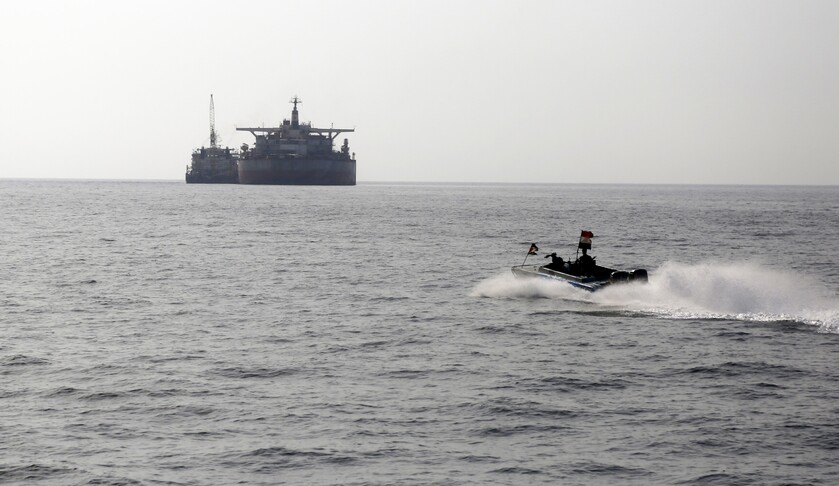
An unidentified skiff approached a cargo vessel 98 nautical miles southwest of Al Mukalla. [1] UKMTO says the incident occurred there and advises vessels to transit with caution. [1]
What to watch next: The takeover of Mocha after weeks of attacks that suspended port operations could widen implications for security around the Bab al-Mandab Strait, as government forces continue regrouping south of the city following heavy losses and Houthi control extends over additional districts in Al-Hudaydah province.