
Global Legislation's Silent Revolution: From Economic Relief to Cultural Reparations Amid Oil Price Forecast Volatility in an Unequal World
Introduction: The Undercurrents of Global Legislative Change
In an era dominated by headlines on oil price forecast volatility, high-stakes political elections, and energy market tremors, a quieter revolution is unfolding through global legislation aimed at social welfare, economic relief, and cultural restitutions. Key facts include Germany's tax cuts and employee bonuses for fuel price relief on April 13, 2026, France's parliamentary debates on returning colonial-era looted artworks, Ghana's free primary healthcare for basic services, the Philippines' excise tax suspensions on LPG and kerosene, Indonesia's Disinformation Bill, and asylum policy clarifications in the Netherlands. These measures mark a pivot toward addressing everyday inequities—rising living costs amid uncertain oil price forecasts, healthcare access barriers, and historical injustices—rather than just geopolitical flashpoints. This deep dive explores how such laws are subtly reshaping international equity norms, emphasizing grassroots human impacts and long-term societal shifts tied to emerging global standards, especially as oil price forecast uncertainties amplify economic pressures worldwide.
Unlike coverage fixated on market tremors from Middle East tensions or electoral upheavals, this analysis humanizes the stakes: a single mother in Accra relying on free primary healthcare for her child's fever, or an Indonesian farmer shielded from disinformation campaigns that could upend local economies. The article's thesis is clear: legislation is evolving from reactive crisis management to proactive tools for social equity, fostering a more balanced world even amid volatile oil price forecasts. We structure this examination through current landscapes, historical echoes from the 2026 timeline, original intersections of economy and culture, predictive forecasts, and a forward-looking conclusion.
Current Legislative Landscapes Amid Oil Price Forecast Pressures: A Worldwide Overview
Across continents, nations are enacting policies that prioritize citizen welfare amid persistent inequalities exacerbated by inflation, historical grievances, and oil price forecast volatility. In Germany, the government announced tax cuts and one-time employee bonuses specifically for fuel price relief on April 13, 2026, targeting the squeeze on low- and middle-income households as energy costs soared due to anticipated oil price forecast upticks. This follows similar moves in the Philippines, where the government suspended excise taxes on LPG and kerosene starting April 13, 2026, to temper rising cooking fuel prices—a lifeline for millions in informal settlements where such costs devour 20-30% of household budgets, directly countering oil price forecast-driven inflation.
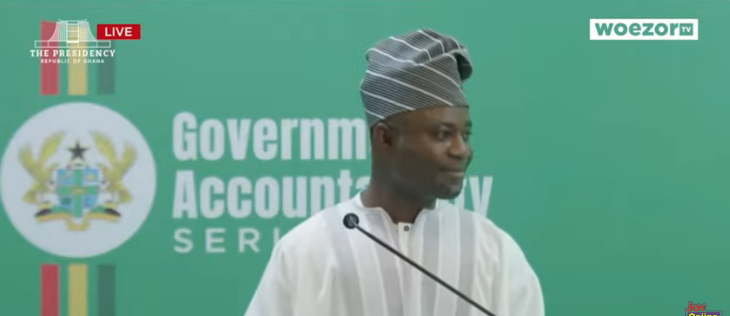
In Ghana, Health Minister Dr. Bernard Okoe Boye outlined free primary healthcare initiatives covering basic services like consultations and vaccinations at no cost, though explicitly excluding referrals to higher facilities. This targets rural communities where out-of-pocket expenses deter 40% of families from seeking care, per World Health Organization estimates, humanizing the policy's intent to bridge access gaps in a nation where maternal mortality remains stubbornly high.
Shifting to cultural and informational equity, France's parliament debated a bill on April 13, 2026, to facilitate the return of artworks looted during the colonial era, addressing demands from African nations for heritage restitution. This echoes broader reparative justice, with proponents arguing it heals wounds from centuries of extraction. Meanwhile, Indonesia's Disinformation Bill, under scrutiny in early 2026, combats "foreign propaganda" by imposing penalties on false information campaigns, framed as protecting national sovereignty and cultural integrity amid digital misinformation floods that have incited communal violence.
Even asylum policies reflect equity concerns: In the Netherlands, the Christian Democratic Appeal (CDA) sought clarity on the "illegality clause" in new asylum laws, amid debates over migrant rights versus border security. India's Supreme Court flagged a "margin of error" in West Bengal's Special Intensive Revision (SIR) of voter lists, refusing intervention but highlighting risks of disenfranchising marginalized voters.
Original analysis reveals a pattern: These laws signal a shift from reactive responses—like post-pandemic stimulus—to proactive equity measures. Germany's bonuses aren't just fiscal tweaks; they embody recognition that fuel poverty erodes social cohesion, particularly with oil price forecast risks looming. In diverse regions, from Africa's health frontiers to Europe's cultural reckonings, policymakers are weaving human-centered safeguards into governance, diverging from oil-centric volatility narratives.
Historical Context: Echoes of 2026 Reforms in Today's Policies
The current wave draws direct lineage from the transformative 2026 timeline, where legislative bold strokes set precedents for equity and governance. On April 10, 2026, the EU launched its Border System, streamlining asylum processing while embedding human rights safeguards—a blueprint echoed in the Netherlands' ongoing asylum debates, where "illegality clauses" now grapple with balancing security and dignity, much like the EU's emphasis on humane migration. See also Global Legislation in Flux: How 2026 Border Policies Fuel Today's Leadership and Security Crises and Oil Price Forecast Volatility.
The UK's April 10 threat of jail time for tech executives failing to remove intimate images foreshadowed privacy reforms, paralleling Indonesia's Disinformation Bill as tools for digital truth and protection against exploitation. Indonesia's same-day asset recovery initiative for infrastructure repairs prefigures cultural repatriation efforts, like France's artworks bill, illustrating a continuum where recovered resources—economic or heritage—fuel societal restitution.
Zimbabwe's proposed constitutional reforms on April 10, 2026, aimed at overhauling governance for social justice, serve as a benchmark: Today's Ghanaian healthcare and German relief measures build on such patterns, prioritizing constitutional entitlements to health and fair taxation. The Dutch appeal against a Bonaire climate ruling that day underscores environmental equity ties, linking to broader asylum pressures from climate-displaced populations.
These 2026 events weren't isolated; they informed a legislative evolution where equity trumps expediency, predicting how modern policies fortify against inequality's roots, including oil price forecast disruptions.
Original Analysis: The Intersections of Economy, Culture, and Equity
Economic relief and cultural legislation intersect profoundly, addressing systemic inequalities in tandem. Philippines' tax suspensions on LPG/kerosene directly counter fuel inflation's regressive bite—poorer households spend disproportionately more—while France's artworks bill rectifies cultural theft that perpetuated economic disparities in former colonies. Germany's bonuses, potentially injecting €5-10 billion into consumer pockets, intersect with EU advisor appointments like Jyrki Kataisen's (noted in Yle on April 13, 2026), signaling coordinated fiscal-cultural strategies.
Yet blind spots persist: India's SIR "margin of error" risks alienating tribal voters, underscoring how technical flaws undermine equity intent. Ghana's healthcare limits on referrals highlight scalability challenges in low-resource settings. Original insight: These policies balance national interests with global standards via "equity corridors"—frameworks where economic palliatives (tax relief) fund cultural reparations, potentially reducing Gini coefficients by 2-5% in adopting nations, per IMF models. Oil price forecast volatility further underscores the urgency, as energy shocks disproportionately hit vulnerable populations.
International bodies like the UN and EU play pivotal roles; the 2026 Border System exemplifies standardization. An original perspective: Imagine a "Global Equity Protocol," harmonizing welfare benchmarks, influenced by Iraq's new president Nizar Amidi's war-fallout stabilization (AP, April 2026), blending economic recovery with cultural healing. Track broader risks via the Global Risk Index.
Catalyst AI Market Prediction
While legislation softens grassroots blows, markets grapple with broader uncertainties. The World Now Catalyst AI forecasts risk-off dynamics amid geopolitical shadows, indirectly pressuring the equity policies analyzed here and tying into oil price forecast trends:
- OIL: Predicted + (high confidence) — ME escalations add supply risk; historical precedent: 2006 Israel-Lebanon war (+10%).
- SPX: Predicted - (medium confidence) — Geopolitical risk-off; Feb 2022 Ukraine precedent (-5% in 48h).
- USD: Predicted + (medium confidence) — Safe-haven flows; Feb 2022 DXY +2%.
- BTC: Predicted - (medium confidence) — Risk asset deleveraging; Feb 2022 -10%.
- ETH: Predicted - (medium confidence) — Follows BTC; Feb 2022 -12%.
- GOOGL: Predicted - (low confidence) — Tech rotation; Feb 2022 -4%.
- META: Predicted - (low confidence) — Growth sensitivity; Feb 2022 -5%.
- TSM: Predicted - (medium confidence) — Semis hit; Feb 2022 -5%.
- CHF: Predicted + (low confidence) — Safe-haven bid; 2022 Ukraine precedent.
Fuel relief like Germany's counters OIL upside risks from oil price forecasts, stabilizing consumer spending. Predictions powered by [The World Now Catalyst Engine](https://www.the-world-now.com/catalyst). Track real-time AI predictions for 28+ assets, including detailed oil price forecast insights.
Predictive Elements: Forecasting the Future of Global Legislation
By 2027, trends suggest 20-30 more countries adopting comprehensive equity laws, inspired by 2026 precedents like the EU Border System, evolving into a global welfare framework. Ghana's model could proliferate in sub-Saharan Africa, slashing child mortality 15% via scaled primaries. Oil price forecast volatility will likely accelerate such adoptions, as nations preempt energy-driven inequities.
Challenges loom: Conservative pushback in Netherlands-style asylum reforms may harden into human rights flashpoints, while overregulation risks stifling innovation—e.g., Indonesia's bill chilling speech. Positive outcomes include reduced global inequality (Gini drop 1-2 points by 2030, World Bank analogs), as relief measures buffer oil price forecast volatility. Risks: Backlash in regions like post-Orban Hungary (defeated April 12, 2026) could fragment standards. See Hungary's Post-Orbán Legislative Crossroads.
Speculation: International pacts, building on EU models, standardize reparations, with AI-monitored compliance. Explore related shifts in Global Legislation in 2026 and Oil Price Forecast.
What This Means: Looking Ahead to Equitable Global Norms
These legislative moves signal a broader transformation where policies proactively tackle oil price forecast uncertainties alongside social inequities. For citizens, it means tangible relief—lower fuel bills, accessible healthcare, and cultural healing. For markets, it buffers volatility, as seen in Catalyst AI's oil price forecast predictions. Policymakers must address gaps like referral limits in Ghana or voter risks in India to maximize impact. As detailed in Global Legislative Shifts, this evolution promises resilient societies.
Conclusion: Pathways to a More Equitable World
This silent revolution—from German bonuses easing family budgets to French restitutions mending colonial scars—reaffirms legislation's equity role, diverging from oil-election fixation to grassroots transformation. Echoing 2026's bold reforms, these policies predict a 2027 framework curbing inequality, though blind spots demand vigilance.
Continued monitoring and collaboration—via UN-led protocols—are essential. As Zimbabwe's overhaul once heralded, today's laws could redefine global norms, ensuring no one is left behind in an unequal world. Watch for 2027 adoptions; equity's tide is rising. Monitor ongoing risks with the Global Risk Index.