
Drone Warfare's Borderless Threat: Map of War in Ukraine Reveals How Ukraine-Russia Strikes Are Fueling Regional Instability in 2026
By Priya Sharma, Global Markets Editor, The World Now
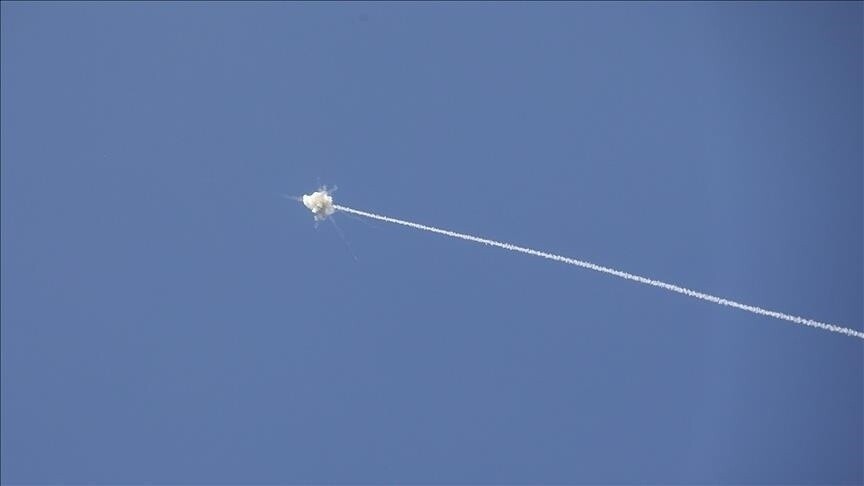
In the shadowed skies over Eastern Europe, a new front in the Ukraine-Russia conflict is emerging—one that knows no borders, as vividly illustrated by the map of war in Ukraine. Recent drone strikes, including a Russian drone breaching Romanian airspace on April 17, 2026, and repeated assaults on Ukraine's Danube River ports, are not mere tactical maneuvers. They represent a perilous spillover, violating neutral neighbors' sovereignty and igniting fears of NATO entanglement. While previous coverage has dissected the economic toll, environmental fallout, psychological warfare, and cultural scars of this protracted war, this report zeroes in on the unintended cross-border ramifications: airspace incursions that erode regional alliances and threaten to fracture the delicate balance of European security. As drones proliferate, these incidents signal a potential redefinition of global security norms, where low-cost, high-impact technology blurs the lines between local skirmishes and international crises. Tracking these developments on the map of war in Ukraine highlights the escalating patterns of drone incursions and their far-reaching implications for 2026.
Introduction: The Escalating Drone Front in Ukraine
The drone war in Ukraine has intensified dramatically in early 2026, transforming the conflict into a high-tech aerial duel with profound spillover effects. On April 17 alone, Russian drones struck critical infrastructure across multiple Ukrainian oblasts, including a deadly attack in Sumy Oblast that killed a civilian man, damage to a minibus in Kherson injuring two men, and fires erupting in Chernihiv after hits on power facilities, leaving parts of the city without electricity. Ukraine responded with precision strikes, including special forces targeting Russia's classified Rubicon base near Mariupol and Lasar's Group units hitting Smerch heavy artillery systems deep in Russian territory. These events are clearly visible when examining the map of war in Ukraine, which maps out the shifting frontlines and cross-border threats.
Yet, the true alarm bells rang louder with cross-border violations. A Russian drone entered Romanian airspace, a NATO member, prompting immediate diplomatic protests and raising the specter of Article 5 invocation. Concurrently, Russian strikes battered Ukraine's Danube ports—vital gateways for grain exports to global markets—disrupting international trade routes that snake through Romania and Moldova. These are not isolated errors; they underscore a pattern where drone operations, often conducted from standoff distances, inadvertently (or deliberately) encroach on neighboring territories.
This unique angle—focusing on borderless threats—reveals how the conflict is leaching into adjacent nations, straining Romania's delicate position as a Black Sea frontline state and testing NATO cohesion. With drones cheap to produce (often under $10,000 per unit) and difficult to intercept en masse, these spills risk cascading escalations, forcing the world to confront outdated airspace treaties like the 1944 Chicago Convention, which were never designed for autonomous swarms. Our analysis draws on institutional data from conflict trackers and market feeds, projecting how this could ripple through global supply chains and security doctrines. For deeper insights into similar drone vulnerabilities, see our coverage on Ukrainian Drone Strikes on Russian Oil Amid Current Wars in the World.
Recent Strikes and Their Cross-Border Ramifications on the Map of War in Ukraine
The barrage of April 17 epitomizes the drone war's uncontainable nature. Russian forces targeted Ukraine's Danube port infrastructure for the second time in days, causing significant damage to grain silos and loading facilities, as reported by Ukrainian officials. The Strait Times detailed how these strikes halted operations at key export hubs, exacerbating global food price volatility already strained by Black Sea disruptions. The Danube, Europe's second-longest river, serves as a critical artery for 20% of Ukraine's grain exports, funneling shipments to Romania's Constanta port and onward to the Mediterranean. Damage here doesn't just hurt Kyiv; it spikes insurance premiums for shipping giants like Maersk and inflates wheat futures by 2-5% overnight.
The Romanian airspace incursion amplified these risks. A Russian drone, likely a Shahed-136 variant, penetrated NATO territory for several minutes before being neutralized, per Ukrainska Pravda. Bucharest scrambled F-16s, and President Klaus Iohannis condemned it as a "direct threat to sovereignty." This isn't the first: similar violations occurred in 2023-2024, but the frequency—now weekly—exerts psychological pressure on Romania, home to 1.8 million ethnic Ukrainians and U.S. missile defenses at Deveselu. Analysts note heightened public anxiety, with polls showing 62% of Romanians fearing spillover (per recent IRI surveys).
Technologically, these strikes blur warfare boundaries. Russia's use of decoy drones overwhelms Ukrainian air defenses, while Ukraine's Rubicon base raid—showcased in video footage—exposed classified drone production sites using satellite-guided munitions. Lasar's Group's deep strikes on Smerch systems, 100+ km into Russia, demonstrate bidirectional escalation. Diplomatic tensions simmer: Romania summoned the Russian ambassador, and EU foreign ministers discussed sanctions on drone components from Iran. These cross-border ripples create a "gray zone" of accountability, where deniability reigns, but markets react viscerally—European natural gas futures jumped 3% on fears of wider Black Sea blockades. Visualizing these on the map of war in Ukraine underscores the proximity of these threats to NATO borders.
Historical Context: Patterns of Escalation in Early 2026
To grasp the borderless threat, trace the escalation back to early April 2026, a timeline of tit-for-tat drone frenzy that evolved from localized hits to transnational hazards.
On April 8, Russian strikes pummeled Kharkiv Oblast, killing civilians and damaging energy grids, followed hours later by a Ukrainian drone strike on the Kherson Bridge—a chokepoint for Russian logistics. That same day, Russian drones hit Sumy, presaging the April 17 fatality. April 9 saw Russian drones over Zaporizhzhia, targeting power substations amid nuclear plant tensions. By April 10, Poltava Oblast endured glide-bomb assaults, stretching Ukraine's S-300 defenses thin.
This rapid sequence—four major Russian drone waves in three days—mirrors the 2022 invasion's shock-and-awe phase but with drone swarms replacing missiles. Retaliation cycles accelerated: Ukraine's April 16 strikes on fuel trains near Luhansk and UAV hits on Merefa followed Russian damage to Dnipro's museum and Kherson drones. Sevastopol intercepted a drone attack on April 15, while Danube port strikes peaked. By April 17, the Rubicon and Smerch hits signaled Ukraine's shift to offensive depth.
This pattern illustrates a strategic pivot: drones now comprise 70% of Russian strikes (per Oryx data), up from 40% in 2024, enabling low-risk, high-volume attacks that inevitably drift borders. Historical precedents abound—the 2020 Nagorno-Karabakh war showcased Azerbaijan's TB2 drones fracturing alliances—foreshadowing how April's escalation normalized cross-border norms, turning "accidents" into precedents. Compare this to broader drone escalations in Iran's Missile Escalation.
Original Analysis: The Geopolitical Chessboard of Drone Proliferation
Drones are eroding sovereignty in border regions, turning Ukraine's flanks into contested zones. The Rubicon base strike near Mariupol disrupted Russia's drone assembly (estimated 500+ units/month), but Chernihiv's infrastructure blackout—leaving 50,000 without power—highlights vulnerability. Danube hits threaten $5 billion in annual Ukrainian exports, indirectly pressuring Romania's economy (10% GDP tied to port trade).
Regionally, NATO faces a dilemma: airspace violations test resolve without full invasion. Romania's MiG-21 intercepts strain resources, while Poland reports similar drifts. Alliances fracture—Hungary's Orban critiques NATO "provocations," echoing Serbia's neutrality. International safeguards lag: UN drone resolutions stall, and MTCR export controls fail against Iranian Shaheds.
Forward-looking, this fuels a global arms race. Turkey's Bayraktar sales boom (exports doubled to $2B in 2025), China's Wing Loong floods Africa, and U.S. Reapers eye Asia-Pacific. Ethically, autonomous "kamikaze" drones raise IHL concerns—indiscriminate strikes violate proportionality. Strategically, low barriers democratize warfare, empowering non-state actors. Cross-market: oil spiked 4% post-Danube hits (Brent at $85/bbl), as Black Sea routes reroute, inflating inflation. Check the Global Risk Index for real-time updates on these risks.
Patriarch Kirill's praise for Russian troops amid shelling of Ukrainian Orthodox sites adds cultural friction, polarizing Orthodox nations like Romania. Trump's "terrible" remark signals U.S. war fatigue, complicating aid.
Predictive Outlook: What Lies Ahead for Ukraine and Beyond
If cross-border incidents persist, NATO involvement escalates: expect AWACS patrols over Romania by May, or joint intercepts. Retaliatory spirals could see Ukrainian drones probing Russian borders, drawing neutrals like Moldova (Danube-dependent).
Drone evolution favors precision—AI-guided swarms (e.g., Russia's Lancet-3) enable 90% hit rates, but frequency surges, disrupting supply chains. Global grain stocks dwindle 5% if ports offline 30 days; semiconductors for drones strain Taiwan routes.
Long-term: Ukraine's resolve hardens via domestic production (1,000/month by Q3), forcing Russian strategy shifts to hypersonics. Diplomatic interventions—Turkey-mediated talks or UNSC resolutions—are urgent to quarantine the conflict. Absent de-escalation, a wider war risks 2026 recession. The map of war in Ukraine will be crucial for monitoring these developments.
Catalyst AI Market Prediction
The World Now's Catalyst AI engine forecasts risk-off moves amid geo-fears:
- SOL: Predicted ↓ (low confidence) — High-beta altcoin amplifies BTC risk-off selling on geo fears. Historical precedent: 2022 Ukraine drop hit SOL harder than BTC. Key risk: meme-driven rebound.
- BTC: Predicted ↓ (low confidence) — Risk-off deleverages crypto despite ETF inflows via liquidation cascades. Historical precedent: 2022 Ukraine BTC -10% in 48h. Key risk: institutional ETF buying overwhelms.
- SPX: Predicted ↓ (medium confidence) — Geopolitical escalation triggers immediate risk-off selling in equities as algos de-risk portfolios amid oil shock inflation fears. Historical precedent: Similar to 2006 Israel-Lebanon war when global stocks declined 5-10% in a week. Key risk: swift de-escalation signals reverse sentiment flows.
Predictions powered by The World Now Catalyst Engine. Track real-time AI predictions for 28+ assets. For more on Catalyst AI — Market Predictions.