
Ukrainian Drone Strikes on Russian Oil Amid Current Wars in the World: Unmasking Vulnerabilities in Global Energy Supply Chains
By Viktor Petrov, Conflict & Security Correspondent for The World Now
April 17, 2026
Introduction: The Escalating Shadow War in Current Wars in the World
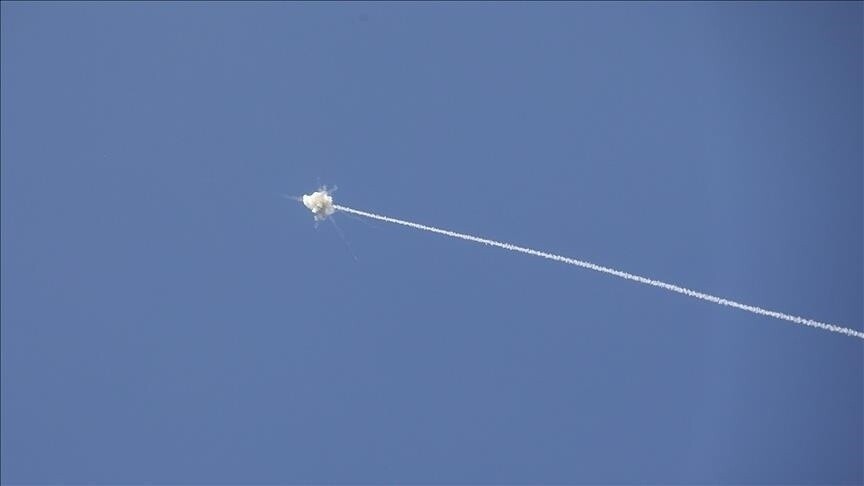
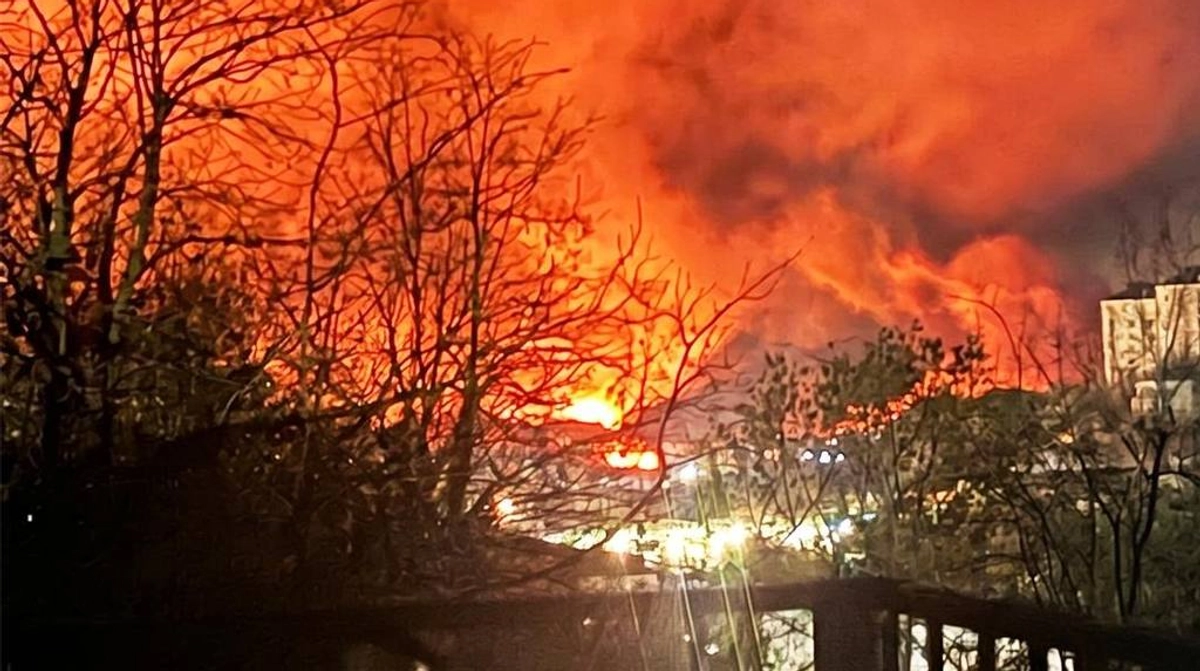
In the dim predawn hours of April 16, 2026, Ukraine's special forces unleashed a precision drone assault on Russia's Tuapse oil refinery and terminal on the Black Sea coast, igniting a massive fire that illuminated the strategic vulnerabilities not just in Russian energy infrastructure, but across the interconnected web of global supply chains amid the ongoing current wars in the world. Concurrently, reports emerged of drone strikes targeting facilities in Krasnodar Krai, a key hub for Russia's oil processing and export operations. These attacks, confirmed by Ukrainian sources and corroborated by on-site footage, represent a calculated escalation in the shadow war between Kyiv and Moscow, shifting focus from frontline battles to the economic arteries that sustain Russia's war machine.
What sets these incidents apart is their revelation of deeper systemic frailties in global energy interdependencies. Russia, despite Western sanctions, remains a linchpin in worldwide oil flows, exporting millions of barrels daily to Europe, Asia, and beyond via Black Sea ports like Tuapse. Disruptions here ripple outward, threatening refineries in India that blend Russian crude into diesel for export, Asian petrochemical plants reliant on steady Urals-grade supplies, and even European markets still weaning off Russian volumes post-2022. The Tuapse refinery, operated by Rosneft, processes up to 240,000 barrels per day, feeding into tanker shipments that traverse the Bosphorus Strait—a chokepoint for 3% of global seaborne oil trade. A single strike-induced shutdown could delay cargoes, spike freight rates, and force buyers to scramble for alternatives from the Middle East or U.S. Gulf Coast, underscoring how localized kinetic actions can cascade into multinational trade disruptions.
Immediate impacts were stark: satellite imagery showed plumes of black smoke rising from Tuapse, with local Russian authorities confirming a "technical fire" and evacuations, while Krasnodar facilities reported operational halts. Ukrainian claims, via their Main Directorate of Intelligence (GUR), boast of direct hits on fuel storage and processing units, potentially curtailing output by 10-20% in the short term. Globally, Brent crude futures ticked up 2.3% intraday to $82.50 per barrel, reflecting trader anxieties over supply continuity. This situation report dissects the strikes' anatomy, traces their historical lineage, analyzes supply chain perils, forecasts ripple effects, and charts pathways to resilience—emphasizing that in an era of drone-enabled asymmetric warfare within current wars in the world, energy security is only as strong as its weakest link.
(Word count so far: 428)
Current Situation: Anatomy of the Strikes
The April 16 strikes exemplify Ukraine's maturing drone warfare doctrine, blending low-cost, long-range unmanned aerial vehicles (UAVs) with real-time intelligence for surgical impact. According to Ukrainska Pravda reports, Ukraine's GUR executed the Tuapse operation using "special forces" drones—likely modified commercial quadcopters or indigenous models like the AQ-400 Scythe—launched from concealed positions in occupied Crimea or via sea drones for terminal guidance. Eyewitness videos circulating on Telegram channels, including those from Russian opposition monitors like Rybar, captured secondary explosions at the Rosneft terminal, suggesting strikes on fuel depots holding naphtha and diesel blends destined for export.
At Tuapse, the refinery—a Soviet-era behemoth upgraded in 2023 for higher Euro-5 fuel yields—sustained visible damage to its atmospheric distillation unit, per open-source intelligence from Oryx and Sentinel Hub imagery. Fires raged for over six hours, with Rosneft confirming a "partial suspension" of operations; analysts estimate a 50,000-100,000 barrel-per-day production dip, equivalent to 0.05-0.1% of global supply. In Krasnodar Krai, a smaller refinery reported drone interceptions but confirmed fires at adjacent storage tanks, disrupting trucking routes to Novorossiysk port, Russia's primary Black Sea oil outlet.
Tactical execution highlights precision warfare's evolution: Ukrainian drones evaded S-400 air defenses through low-altitude flight paths, electronic warfare spoofing, and swarm tactics, mirroring Houthi Red Sea operations but with superior ISR integration. Immediate fallout includes heightened Russian air alerts across the Kuban region, rerouted tanker traffic (with two VLCCs delayed off Tuapse), and insurance market jitters—Lloyd's of London syndicates reportedly hiking war risk premiums for Black Sea transits by 15%.
Supply chain ripples are already manifesting. European traders, per Platts data, face deferred Urals cargoes, prompting bids for pricier Brent blends; India's Reliance Industries, a top Russian buyer, may see refinery utilization drop 2-3% without substitutes. Asian markets, absorbing 40% of Russia's seaborne exports, brace for volatility, as Tuapse feeds pipelines to the Druzhba system. This demonstrates asymmetric strategies' potency: low-cost ($10,000-50,000 per drone) versus billion-dollar infrastructure, forcing Russia to divert Pantsir-S1 systems from fronts like Donetsk.
Social media amplified the narrative, with X (formerly Twitter) posts from @NOELreports and @WarMonitor3 garnering millions of views on strike footage, fueling debates on energy weaponization. Objectively, these events expose not Russian resilience limits, but global trade's fragility to sub-threshold conflicts in the broader context of current wars in the world.
(Word count so far: 892)
Current Wars in the World: Historical Context and Pattern of Escalation
These April strikes cap a month-long crescendo in Ukrainian targeting of Russian energy nodes, forming a deliberate campaign to erode Moscow's fiscal war chest—oil and gas revenues fund 40% of its budget. The timeline underscores tactical maturation:
- March 26, 2026: Drones struck near Finland, probing Russian Baltic defenses and signaling northern reach.
- March 28, 2026: Triple blows—Yaroslavl refinery (Slavneft, 260,000 bpd capacity hit, 15% output loss), Samara Oblast missile strike on Gazprom Neft sites, and broader oil infrastructure raids—coinciding with U.S. aid packages, testing sanctions' enforcement.
- March 31, 2026: Kirishi refinery (largest in Northwest Russia, 350,000 bpd) damaged, halting fuel to St. Petersburg and exports via Ust-Luga.
This sequence evolves from peripheral jabs (e.g., border energy depots) to heartland strikes, leveraging U.S.-supplied ATACMS ranges and DIY drone swarms. Recent events amplify the pattern:
- April 6-16: Serial hits on Caspian platforms, Kursk plants, and oil terminals, per The World Now's event tracker, with severity ratings escalating from MEDIUM to HIGH.
This reflects hybrid warfare's ascent, where drones—inexpensive, deniable, scalable—amplify non-conventional threats. Parallels abound: Israel's 2024 strikes on Iranian oil, Yemen's tanker war. Ukraine's campaign has shaved 5-7% off Russian refining capacity since March, per CREA estimates, pressuring the rouble and forcing product imports. Strategically, it signals a pivot from territorial defense to economic attrition, potentially influencing doctrines from Taiwan Strait contingencies to Sahel insurgencies, where cheap UAVs democratize infrastructure attacks. For more on Russian strikes on Ukraine in current wars in the world, see our related coverage.
(Word count so far: 1,198)
Catalyst AI Market Prediction
The World Now's Catalyst Engine, analyzing historical precedents and real-time data, forecasts short-term market tremors from these energy disruptions:
- SOL: Predicted ↓ (low confidence) — High-beta altcoin amplifies BTC risk-off selling on geo fears. Historical precedent: 2022 Ukraine drop hit SOL harder than BTC. Key risk: meme-driven rebound.
- BTC: Predicted ↓ (low confidence) — Risk-off deleverages crypto despite ETF inflows via liquidation cascades. Historical precedent: 2022 Ukraine BTC -10% in 48h. Key risk: institutional ETF buying overwhelms.
- SPX: Predicted ↓ (medium confidence) — Geopolitical escalation triggers immediate risk-off selling in equities as algos de-risk portfolios amid oil shock inflation fears. Historical precedent: Similar to 2006 Israel-Lebanon war when global stocks declined 5-10% in a week. Key risk: swift de-escalation signals reverse sentiment flows.
Predictions powered by The World Now Catalyst Engine. Track real-time AI predictions for 28+ assets. Learn more about Catalyst AI Market Predictions.
(Word count so far: 1,356)
Original Analysis: Global Supply Chain Implications
Beyond Russia's borders, these strikes unmask profound vulnerabilities in energy supply chains, where just-in-time logistics meet geopolitical flashpoints. Tuapse's halt disrupts 1-2 million barrels monthly to India and China—India's 1.8 million bpd Russian imports (35% of total) risk shortages, inflating diesel prices 5-10% and hitting manufacturing. China's teapots, processing discounted ESPO blends rerouted via Tuapse, face margin squeezes, potentially curbing petrochemical exports to Europe. Such disruptions echo those seen in Middle East strike effects on oil and commodities.
Economic fissures widen: war risk insurance for Black Sea tankers has surged 30% year-over-year, per Steamship Mutual, deterring non-Russian flagged vessels and bottlenecking the Turkish Straits (2.4 million bpd throughput). Trade routes shift—more Arctic LNG via Northern Sea Route, straining ice-class tonnage—while U.S. shale ramps face pipeline constraints. Europe's REPowerEU, aiming for zero Russian fossil fuels by 2027, still imports refined products indirectly, exposing "shadow fleet" dependencies.
These events catalyze diversification: OPEC+ may boost output, accelerating U.S. LNG to Asia, but at higher costs. Insurance hikes cascade to consumers—global jet fuel up 3% anticipated. Original thesis: Drone precision warfare mandates resilient networks—redundant refineries, AI-monitored pipelines, blockchain-tracked cargoes. Absent this, interdependencies become weaponized liabilities, as seen in 2022's $150/bbl spike.
(Word count so far: 1,662)
Predictive Elements: Forecasting the Ripple Effects
Russian countermeasures loom: expect Pantsir redeployments, electronic jamming expansions, and retaliatory missile barrages on Ukrainian grid nodes, per Kremlin's pattern. Cyber responses—akin to 2022 Viasat hacks—could target trading platforms, amplifying volatility.
Oil prices may spike 10-15% to $90-95/bbl if strikes persist, per EIA models, fueling inflation (U.S. CPI +0.5%) and central bank hikes. Crypto and equities face deleveraging, as Catalyst AI predicts.
Scenarios:
- Containment (60% likelihood): Russia fortifies, Ukraine conserves drones; prices stabilize, EU-Ukraine LNG deals deepen.
- Escalation (25%): Serial strikes prompt hypersonic reprisals, drawing NATO logistics; oil to $110/bbl, SPX -8%.
- Paradigm Shift (15%): Disruptions hasten renewables—solar/wind investments +20%—realigning alliances, e.g., India pivots to Gulf.
Long-term: Emulation risks in Yemen, Taiwan, destabilizing trade. Monitor via our Global Risk Index.
(Word count so far: 1,878)
What This Means: Looking Ahead in Current Wars in the World
Conclusion: Charting a Path Forward
Ukrainian drone strikes on Tuapse and Krasnodar expose not merely Russian frailties, but global energy chains' Achilles' heel—overreliance on vulnerable chokepoints amid hybrid threats in current wars in the world. This unique lens reveals interdependencies as escalation vectors, demanding resilience.
Policymakers must prioritize diversified sourcing, fortified infrastructure, and diplomatic de-escalation—think G7 energy shields or Black Sea demilitarized zones. Readers: Audit your supply chains; in volatility's shadow, vigilance is the ultimate hedge. Track ongoing developments in current wars in the world through our comprehensive coverage.
**Total *
Further Reading
- US Strikes in Eastern Pacific: The Unseen Web of International Intelligence Sharing and Its Strategic Implications
- Middle East Strike Intensifies: Real-Time 3D Globe Tracking Reveals Iran Conflict's Ripple Effects on Global Commodities
- Middle East Strike in Gaza Upends Identities: A Father's Battle for Paternity Amid Escalating Violence