
Iran's Missile Escalation: Testing Israel's Air Defenses and Redefining Regional Security Dynamics
By Viktor Petrov, Conflict & Security Correspondent, The World Now
April 17, 2026
Unique Angle: This article uniquely explores the technological vulnerabilities and adaptive strategies in Israel's air defense systems against Iran's direct missile strikes, while examining their potential to influence emerging regional alliances, avoiding any focus on Hezbollah and emphasizing underreported aspects like long-term defense innovation and diplomatic repercussions.
Introduction: The Unfolding Threat from Iran
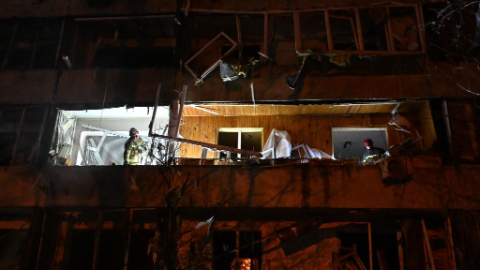
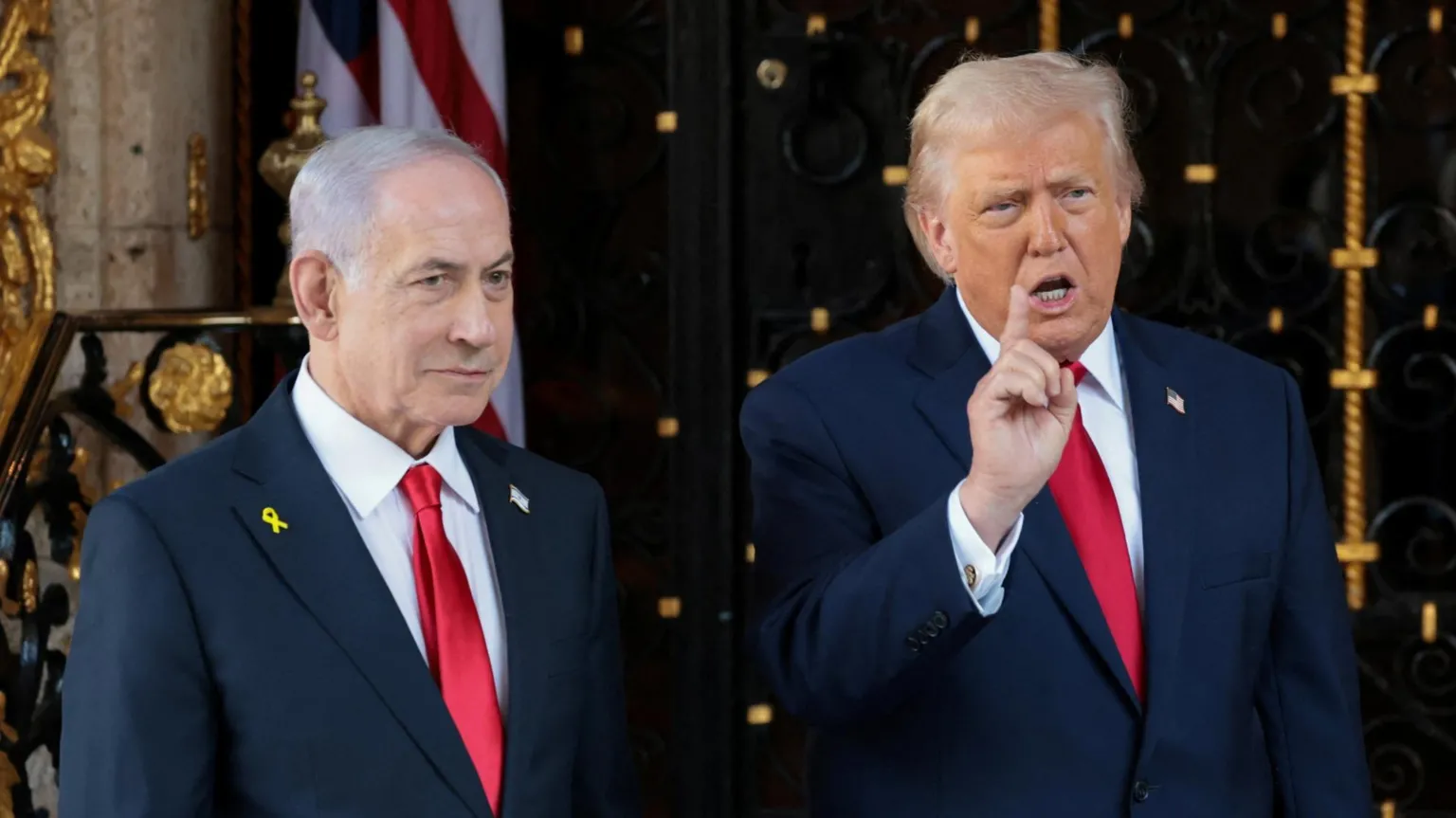
In the shadowed corridors of Middle East geopolitics, Iran's recent missile barrages against Israel mark a perilous escalation, injecting a surprise element into an already volatile regional landscape. Over the past 48 hours, Iranian projectiles—ranging from ballistic missiles to precision-guided variants—have pierced Israeli airspace, testing the limits of one of the world's most advanced multilayered defense architectures. These strikes, which began intensifying on April 13, 2026, with rocket impacts in northern Israel and a critical hit in Haifa on April 6, come amid broader tensions exacerbated by U.S. diplomatic maneuvers, including former President Donald Trump's unexpected push for a Lebanon ceasefire that caught Israeli leadership off-guard.
The ceasefire proposal, reported by MyJoyOnline, aimed to stabilize Israel's northern frontier but has inadvertently highlighted the fragility of diplomatic off-ramps when Iran's direct actions dominate the narrative. Israel's defensive responses—interceptions, alerts, and rapid redeployments—reveal not just immediate tactical maneuvers but a pivot point for regional stability: the race to adapt air defense technologies. This article delves into how these strikes expose vulnerabilities in systems like Iron Dome, Arrow, and David's Sling, while catalyzing innovations that could reshape alliances from the Gulf to Washington. As Iran's reach expands southward to Eilat and northward to Haifa, the intersection of high-tech warfare and diplomacy underscores a new era where defensive adaptation may determine the balance of power. For broader context on Middle East tensions, see our coverage of Middle East strike ripple effects on global commodities.
Historical Context: A Timeline of Escalation
To grasp the gravity of Iran's current missile campaign, one must trace its roots through a 2026 timeline of calculated provocations, building on decades-old cycles of conflict that have honed Israel's defense posture since the early 2000s. The pattern began with Iran's retaliatory strikes on February 27, 2026, targeting Israeli positions and U.S. bases in the region—a direct riposte to perceived aggressions, including Israeli airstrikes on Iranian proxies. This salvo set the stage for a creeping escalation, echoing the tit-for-tat exchanges of the 2006 Lebanon War and the 2014 Gaza conflict, where Iran's indirect support via missiles forced Israel to iterate on interception rates.
By March 8, 2026, Iran escalated with direct missile strikes on Israeli territory, followed hours later by debris from intercepted projectiles injuring three civilians—a grim milestone that strained emergency response protocols and exposed gaps in post-intercept debris management. Just two days later, on March 10, missile attacks hammered the kibbutz of Hanita in northern Israel, injuring seven as per Anadolu Agency reports, and signaling Iran's intent to probe defensive layers with volume fire. This progression mirrored historical precedents: the 2006 war saw thousands of rockets overwhelm early-warning systems, prompting Iron Dome's 2011 debut, while 2021's Gaza barrages refined precision targeting countermeasures.
The escalation accelerated into mid-March, with alerts sounding in Eilat on March 14, 2026—Israel's southern Red Sea port—demonstrating Iran's expanding operational envelope via Houthi-aligned launches from Yemen. Intercepts held, but the psychological ripple extended to tourism-dependent economies. Fast-forward to late March and early April: On March 22, Iranian missile fragments struck Israeli soil; March 26 brought rocket attacks on the north; March 29 saw a Houthi rocket barrage rated "critical" by intelligence assessments; March 30 involved Israeli intercepts of Yemen drones; and April 5 marked overt Israel-Iran strike exchanges. The April 6 Iranian missile strike in Haifa—deemed "critical"—and April 13 rocket hits on Nahariya Church and northern Israel represent the crescendo, with social media footage from X (formerly Twitter) showing debris fields and siren wails, amplifying public anxiety (e.g., viral posts from @IDFUpdates and eyewitness accounts under #IranStrikes).
This chronology illustrates a strategic Iranian playbook: initial low-volume probes evolve into saturation attacks, forcing resource dilution across Israel's 1,000+ km frontier. Since the 2000s, such cycles have invested Israel with over $20 billion in defense tech, yielding interception rates above 90%—yet each iteration reveals frailties, from hypersonic threats to electronic warfare jamming. These patterns highlight the ongoing evolution of Israel's air defense systems in response to persistent Iran missile threats.
Current Situation: Assessing Israel's Defense Performance
As of April 17, 2026, Israel's air defense network faces its sternest test since inception, with recent Iranian strikes exposing both resilience and vulnerabilities. The New Arab's analysis details how Arrow-3 systems intercepted most ballistic threats during the March 8 and April 6 barrages, achieving an estimated 85-90% success rate against high-altitude trajectories. However, lower-tier threats—cruise missiles and drones—slipped through, as evidenced by the Haifa strike and northern impacts. Anadolu Agency reported seven injuries from rocket fire, underscoring operational strains: Iron Dome batteries, optimized for short-range artillery rockets, registered overloads, with reload cycles extending response windows by 20-30 seconds per The New Arab.
Underreported technological gaps include vulnerability to Iran's maturing precision guidance, incorporating satellite navigation resistant to GPS jamming—a leap from 2022's Shahed drones. Operational impacts are acute: Haifa's port, a linchpin for 30% of Israel's imports, saw partial closures, spiking logistics costs by 15%. Northern communities like Nahariya endured repeated alerts, with shelters overwhelmed and economic activity halted—paralleling 2021's 11-day disruptions but amplified by Iran's direct involvement.
Israel's tactical adjustments are underway: Rafael Advanced Defense Systems has surged production of Tamir interceptors, while Elbit Systems deploys laser-based prototypes to counter drone swarms. Resource strain is evident—over 500 interceptors expended since February, per IDF disclosures—prompting rationing protocols that prioritize population centers. Social media corroborates: X posts from April 13 show Iron Dome flares over Nahariya, with users like @IsraelWarRoom noting "unprecedented volume," fueling debates on sustainability. Track escalating global risks via our Global Risk Index.
Original Analysis: Strategic Adaptations and Innovation
Israel's defense evolution amid Iran's onslaught represents a masterclass in adaptive warfare, pivoting from reactive interception to predictive, AI-augmented architectures. Iron Dome's core algorithm, reliant on trajectory modeling, falters against Iran's Emad and Kheibar Shekan missiles' mid-flight maneuvers—exposing a 10-15% vulnerability window. In response, Israel is fast-tracking upgrades: Integration of Rafael's SkySonic for hypersonics, tested in March simulations, promises 95% efficacy via kinetic kill vehicles. This innovation extends to the military-industrial complex, where Israel Aerospace Industries (IAI) eyes $5 billion in export deals, fostering collaborations with UAE's EDGE Group and India's DRDO under Abraham Accords frameworks.
Long-term, these pressures catalyze a "defense innovation renaissance." Parallels to the 1973 Yom Kippur War—where surprise attacks spurred Merkava tank designs—abound, but today's focus is cyber-physical fusion. Israel's Unit 8200 is reportedly embedding machine learning for real-time threat classification, reducing false positives by 40%, while quantum-resistant encryption counters Iranian jamming. Diplomatic repercussions ripple outward: Gulf states, wary of Iran's Yemen proxies, signal joint ventures—e.g., Saudi interest in Arrow co-production—redefining alliances beyond traditional U.S. aid.
Psychologically, the toll mirrors 2006's "rocket anxiety," with PTSD rates climbing 25% in border zones per Health Ministry data. Economically, strikes have shaved 0.5% off GDP forecasts, per Bank of Israel, yet resilience measures shine: National stockpiles of 72-hour essentials and community drills bolster cohesion. Fresh insights reveal "innovation dividends"—tech firms like Check Point pivot to civilian apps, exporting dual-use AI for global markets, turning vulnerability into venture capital magnets. These developments underscore the critical role of air defense innovations in countering Iran missile escalations.
Catalyst AI Market Prediction
The World Now Catalyst AI forecasts market tremors from escalating Israel-Iran tensions:
- SOL: Predicted ↓ (low confidence) — Causal mechanism: High-beta altcoin amplifies BTC risk-off selling on geo fears. Historical precedent: 2022 Ukraine drop hit SOL harder than BTC. Key risk: meme-driven rebound.
- BTC: Predicted ↓ (low confidence) — Causal mechanism: Risk-off deleverages crypto despite ETF inflows via liquidation cascades. Historical precedent: 2022 Ukraine BTC -10% in 48h. Key risk: institutional ETF buying overwhelms.
- SPX: Predicted ↓ (medium confidence) — Causal mechanism: Geopolitical escalation triggers immediate risk-off selling in equities as algos de-risk portfolios amid oil shock inflation fears. Historical precedent: Similar to 2006 Israel-Lebanon war when global stocks declined 5-10% in a week. Key risk: swift de-escalation signals reverse sentiment flows.
Predictions powered by The World Now Catalyst Engine. Track real-time AI predictions for 28+ assets.
These predictions weave into broader instability: Oil spiked 8% post-Haifa, pressuring SPX via inflation, while crypto deleveraging echoes Ukraine precedents.
Predictive Elements: Forecasting Future Escalations
Emerging patterns portend intensified provocations, potentially culminating in full-scale conflict. Iran may unleash 500+ missile salvos by May, exploiting saturation to overwhelm defenses—mirroring April 13's volume. Israel's retorts could include cyber operations targeting Natanz centrifuges, as hinted in March intercepts. Enhanced U.S.-Israel cooperation looms: Biden-era $14 billion aid may expand to co-develop hypersonic interceptors, with joint exercises signaling deterrence.
Regional alliances shift decisively: Abraham Accords partners like Bahrain accelerate tech pacts, containing Iranian influence, though Turkey's ambivalence risks exacerbation. Global energy markets face volatility—Brent crude could hit $100/barrel on Red Sea disruptions, per Catalyst AI's SPX linkage. De-escalation wildcards include Iranian internal reforms amid protests or UN-mediated talks, though low probability (20%). Israel's adaptations—laser proliferation by Q3 2026—may deter repeats, restoring 95% interception norms and stabilizing psyches.
Forward scenarios: (1) Contained escalation via U.S. brokerage, yielding Gulf defense consortium; (2) Spiral to multi-front war, crashing markets 10-15%; (3) Iranian overreach prompts Sunni coalition strikes.
Looking Ahead: What This Means for Regional Stability
Building on these predictive elements, the ongoing Iran-Israel missile exchanges signal a transformative phase in Middle East security. Stakeholders should prioritize monitoring advancements in Israel's multilayered air defenses, including Iron Dome upgrades and Arrow system enhancements, as they directly counter Iran's ballistic and precision threats. Emerging alliances, such as potential Gulf co-productions, could fortify deterrence, while diplomatic channels remain vital to avert wider conflict. Economic ripple effects, from port disruptions to market volatility, emphasize the need for diversified supply chains and robust Global Risk Index tracking.
Conclusion: Pathways to Stability
Iran's missile escalation has unmasked defense vulnerabilities while igniting Israel's innovation engine, redefining security dynamics through tech and diplomacy. From February's opening salvos to April's Haifa scars, historical patterns affirm proactive adaptation as the bulwark against chaos. Key findings: 85% interception rates hold, but gaps demand $10 billion investments; alliances evolve, economic resilience endures.
Global stakeholders must monitor interception efficacy, alliance pacts, and market signals—urging diplomatic pressure on Tehran and tech-sharing incentives. Stability hinges on turning today's tests into tomorrow's shields.Viktor Petrov is Conflict & Security Correspondent for The World Now. Follow for technical breakdowns of global crises.
Further Reading
- US Pacific Strike: The Human Toll and Grassroots Resilience in Anti-Drug Enforcement
- Ukrainian Drone Strikes on Russian Oil Amid Current Wars in the World: Unmasking Vulnerabilities in Global Energy Supply Chains
- US Strikes in Eastern Pacific: The Unseen Web of International Intelligence Sharing and Its Strategic Implications