
Doomsday Clock Ticks Closer as Zelenskyy Reports Russian Additional Mobilisation and North Korean Troop Buildup
The doomsday clock continues to advance as President Volodymyr Zelenskyy reports that Russia has already begun additional mobilisation while recruiting more foreign nationals to sustain its war effort.
Russian Mobilisation and Foreign Troop Recruitment
President Volodymyr Zelenskyy stated that Russia has already begun additional mobilisation and plans to increase recruitment of foreigners. [2] He received a Defence Intelligence report detailing these efforts. [2] More than 8,000 North Korean military personnel are currently on Russian territory. [2] An additional contingent of 10,000 troops is being prepared for deployment through selection for training and subsequent transfer to Russia. [2] Russia is paying North Korea with technology that has enabled Shahed-type strike drone production to be established in North Korea with Russian technical support. [2] Zelenskyy called for effective sanctions, including the Lindsey Graham Act along with EU and global measures, to apply pressure on Russia. [2] He urged governments of countries from which Russia recruits personnel to counter these activities and noted that Ukraine would inform every relevant government. [2]
Ukraine's Defense Industry Rebuild
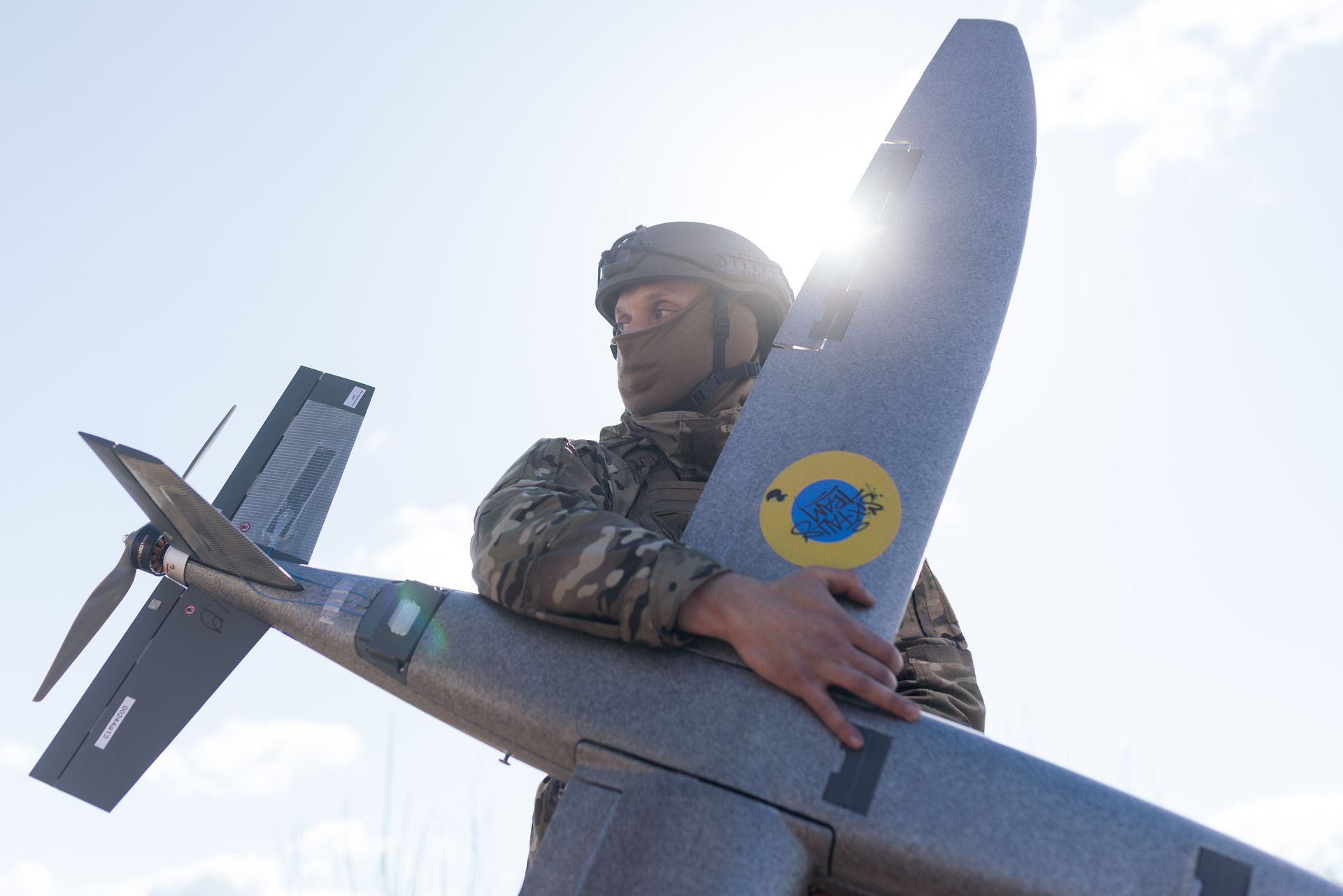
Ukraine inherited the second-largest defense industrial complex of the Soviet Union in 1991, with almost a third of the Soviet space industry located on its territory and millions employed in the sector. [1] Pivdenmash built the most powerful intercontinental missiles, Antonov produced the world's largest aircraft, Kharkiv designed tanks, and Mykolaiv launched aircraft-carrying cruisers. [1] By 2014 much of that capacity had disappeared, leaving volunteers to shoulder much of the burden of supplying the army. [1] Ukraine is now building its defense industry from the bottom up with private money, open competition, and front-line testing. [1] According to research by Defense Builder and KSE Institute, the sector now counts more than 1,000 companies, with private business accounting for up to 90 percent of activity in drone production. [1] In 2025 the industry produced $13.1 billion worth of output, 31 percent more than a year earlier. [1] The state estimates the sector's capacity at tens of billions of dollars. [1]
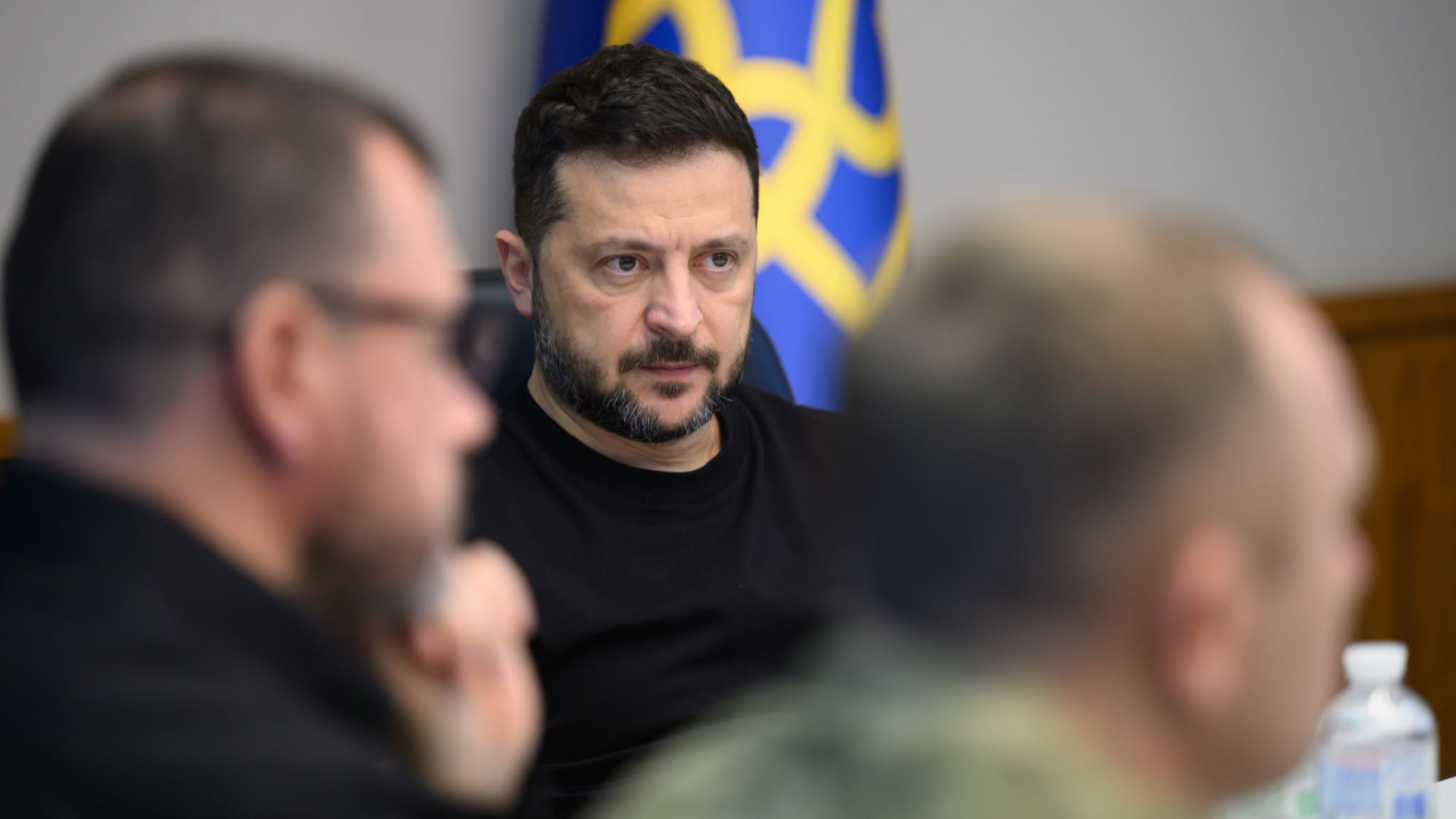
Zelenskyy speaks during a briefing on Russian additional mobilisation efforts. — Source: ukrainskapravda
Strategic Choices Facing Ukraine's Defense Sector
Ukraine faces four structural decisions that will determine whether its defense industry follows the spillover model seen in the United States and Israel or repeats the closed Soviet trajectory. [1] The first choice concerns spillover versus a closed loop, where military technology, people, and engineering culture either flow into the civilian economy or remain sealed inside a circuit. [1] The second choice is between autarky and openness, with Japan’s export ban leading to withered production while South Korea and Turkey built scale through exports from the start. [1] Ukraine has spent more than four years in forced autarky and is now leaving it, with the government formalizing a transparent mechanism of controlled exports that prioritizes the Ukrainian army. [1] The third choice involves competition versus consolidation from above, as the United States experience showed that reducing players led to higher prices and slower innovation while Ukraine’s open procurement allows hundreds of manufacturers to compete. [1] The fourth choice is doing everything versus specializing, following Israel’s decision to cancel its Lavi fighter program and focus on areas such as avionics, air defense, unmanned systems, and electronics where it became a world leader. [1] Ukrainian advantages lie in unmanned systems in every domain, electronic warfare, and combat data derived from years of front-line experience. [1]
Front-Line Realities and Training Support
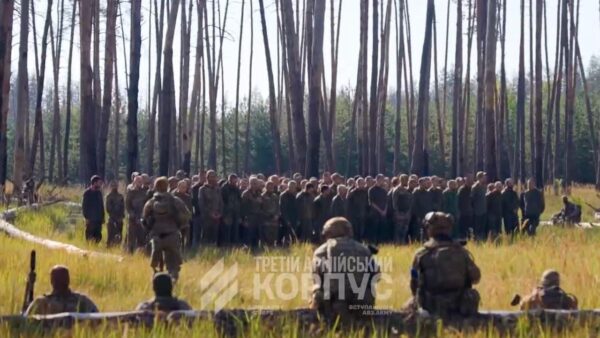
Ukrainian forces continue holding and regaining positions along the front line, particularly in Donetsk, where they have taken back several villages in recent weeks. [3] Norwegian support includes Camp Jomsborg, located an hour and a half from the Ukrainian border, where experienced Ukrainian soldiers are being prepared as instructors. [3] Some Ukrainian soldiers arriving for training are over 50 years old and in poor physical condition, requiring assistance even to put on backpacks. [3] Ukrainian politicians have made a deliberate choice to spare the youngest men, resulting in older and injured soldiers, including those with lasting injuries described as “senskader,” being sent for training. [3] Soldiers such as Yurii, a sharpshooter, and others who have fought across Sumy, Kharkiv, Luhansk, Zaporizhzhia, and Pokrovsk in Donetsk are now transitioning to instructor roles after years at the front. [3] Training covers planning and organization, countering small units on motorcycles, taking control of trenches under drone attacks, and other scenarios drawn from current fighting in Donetsk. [3] One recruit named Dodo, who volunteered in spring as a combat medic after losing homes in Kakhovka and Kharkiv plus many friends, is among those preparing to return to high-risk medical duties where Russian forces target sanitet soldiers. [3]

Zelenskyy warns of Russian mobilisation and North Korean troop buildup near the Doomsday Clock. — Source: vg
Pope Francis's Warning on Rearmament
Pope Francis has warned against the illusion of rearmament, stating that war has returned even to Europe as a new senseless slaughter claiming countless civilian lives every day. [5]
Environmental Considerations of Grain Exports
The war has forced Ukrainian grain onto longer routes that increase both costs and environmental footprints compared with the direct southern corridor through Greater Odesa ports. [4] When Pivdennyi, Chornomorsk, and Odesa operate normally, grain travels a relatively short distance overland before loading onto bulk carriers for North Africa, the Middle East, and Asia. [4] Repeated attacks have redirected flows through Ukraine’s Danube ports, Romania’s Constanța, the northern Adriatic, or ports on the Baltic and North Seas, replacing direct supply chains with multimodal arrangements involving rail, inland waterways, maritime transport, and additional transshipments. [4] Three quantitative studies examining allocation of maize, wheat, and barley, effects of expanding terminals, and European network responses show that geography strongly favors the southern corridor through Constanța. [4] Moving one tonne of grain from Dornești to Constanța generates about 8.9 kilograms of carbon dioxide equivalent, while comparable routes to Trieste generate around 12.2–12.4 kilograms. [4] Sea transport from Constanța to Alexandria generates just under 11.1 kilograms of CO₂ equivalent per tonne, compared with about 13.6 kilograms from Trieste and between 36.6 and 40.2 kilograms from Hamburg, Szczecin, or Gdynia. [4] Maize and barley flows concentrate heavily on the southern route, while wheat is distributed more broadly through northern Adriatic ports. [4] Capacity constraints and low Danube water levels observed in summer 2026 have increased reliance on rail alternatives when barge draught limits are reduced. [4]
What to watch next includes further Russian recruitment of foreign nationals, Ukraine’s progress on controlled defense exports and international partnerships, continued fighting in Donetsk, and the balance between southern and alternative grain corridors as volumes rise.