
WW3 Map Updates Show Ukrainian Advances Liberating Villages Near Lyman
WW3 map updates from multiple monitoring accounts show Ukrainian forces conducting Operation Vivaldi have liberated multiple villages near Lyman in the Sloviansk-Kramatorsk sector, captured 250 Russian soldiers, and achieved an operational-level breakthrough that pushed Russian troops back toward the Zherebets River.
Ukrainian Offensive Gains on the Lyman Axis
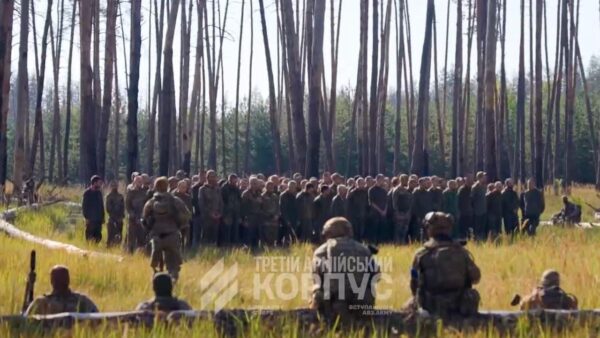
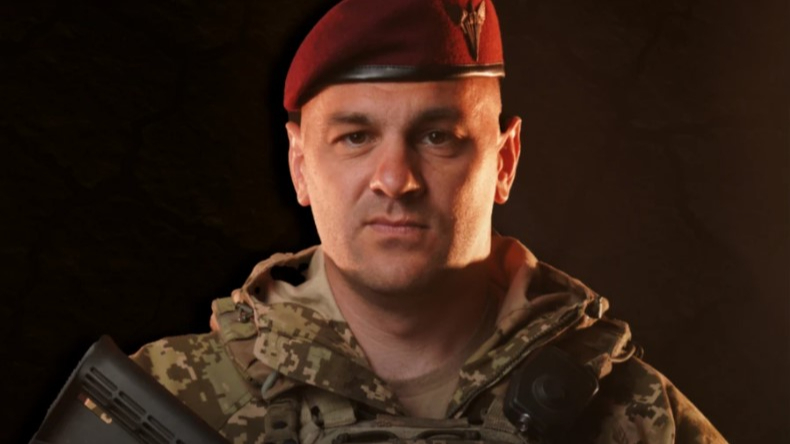
The 3rd Army Corps misled Russian forces by feigning an attack on Shandryholove while striking Nove, using remotely operated explosive-laden BTR-60 vehicles to breach fortified positions during the May-June phase of the operation, now publicly detailed [1]. Ukrainian president Volodymyr Zelensky announced on Sunday afternoon that there were important results from units taking part in Operation Vivaldi on the Lyman axis [1]. On Monday morning the 3rd Army Corps released details stating the opponent was misled and slept through the real strike, according to corps commander Andriy Biletsky [1]. The corps liberated the villages of Nove, Ridkodub, and Katerynivka and restored control over Karpivka and Novomykhailivka [1]. The report also noted the capture of 250 Russians during the operation [1]. Footage released showed an outdated BTR-60 armoured vehicle loaded with explosives and sent remotely to destroy a fortified Russian position [1]. During Operation Vivaldi the 3rd Army Corps converted Soviet-era BTR-60 armoured personnel carriers into unmanned explosive vehicles to breach Russian fortified positions [1]. The Ukrainians convinced the Russians that their target was Shandryholove, to which reserves were sent for counterattacks, but the strike occurred in Nove further east [1]. French analyst Clément Molin noted that Biletsky referred to events from May and June when the battlefield map showed the main push in the Nove direction and Russia did not retreat in good order, resulting in 250 prisoners and more dead [1].
Current Situation Around Lyman and Sloviansk
The situation on the Lyman axis remains difficult, with the enemy trying to push Russian forces beyond the Zherebets River where meeting engagements continue, according to the Russian Z-channel Two Majors [1]. Ukrainian forces are active in the Yampil area and on the approaches to Lyman, with heavy fighting under way to stabilise the line and individual positions [1]. Russian military channel Military Informant published maps still showing the now non-existent salient north of Lyman, but the area without Russian presence around the city has expanded [1]. The Ukrainian army is advancing and pushing the Russian Armed Forces away from the city and surrounding villages while Russian forces attempt counterattacks, and the loss of these positions significantly complicates the entire operation towards Sloviansk [1]. On the Sloviansk axis Ukrainian forces carried out local counterattacks and pushed Russian forces out of positions east of Mykolaivka as well as from the areas of Rai-Oleksandrivka and Velykyi Lis [1]. Rybar confirmed Ukrainian attacks on the approaches to Sloviansk last week, and Finnish analysts from Black Bird Group recorded the same development on their map showing one Ukrainian advance from Sloviansk directly towards Rai-Oleksandrivka and another slightly further north [1].
Ukrainian forces maintain positions in Russia's Kursk Oblast. — Source: ukrainskapravda
Persistent Ukrainian Positions in Kursk Oblast
Ukrainian soldiers continue to hold positions in Russia's Kursk Oblast in the area near the settlement of Novy Put, controlling several forest areas [2]. General Dmytro Voloshyn, Commander of the 8th Air Assault Corps, stated there are still Ukrainian military positions in Kursk Oblast, specifying the area of the village of Novy Put where the entire forest area around it is controlled, as well as the area around the settlement of Politotdelsky and the adjacent forest area [2]. These are small separate pockets in Kursk Oblast but they remain [2]. Voloshyn explained that a year ago the Russians were more aggressive and sought to dislodge these positions, but after losing a large number of personnel there they abandoned this objective [2]. From a military point of view the Russians probably did the right thing by not fighting over a couple of kilometres of their own territory that essentially change nothing when they can attempt to expand their zone of control on Ukrainian territory [2].
Russian Strikes on Ukrainian Data Centres
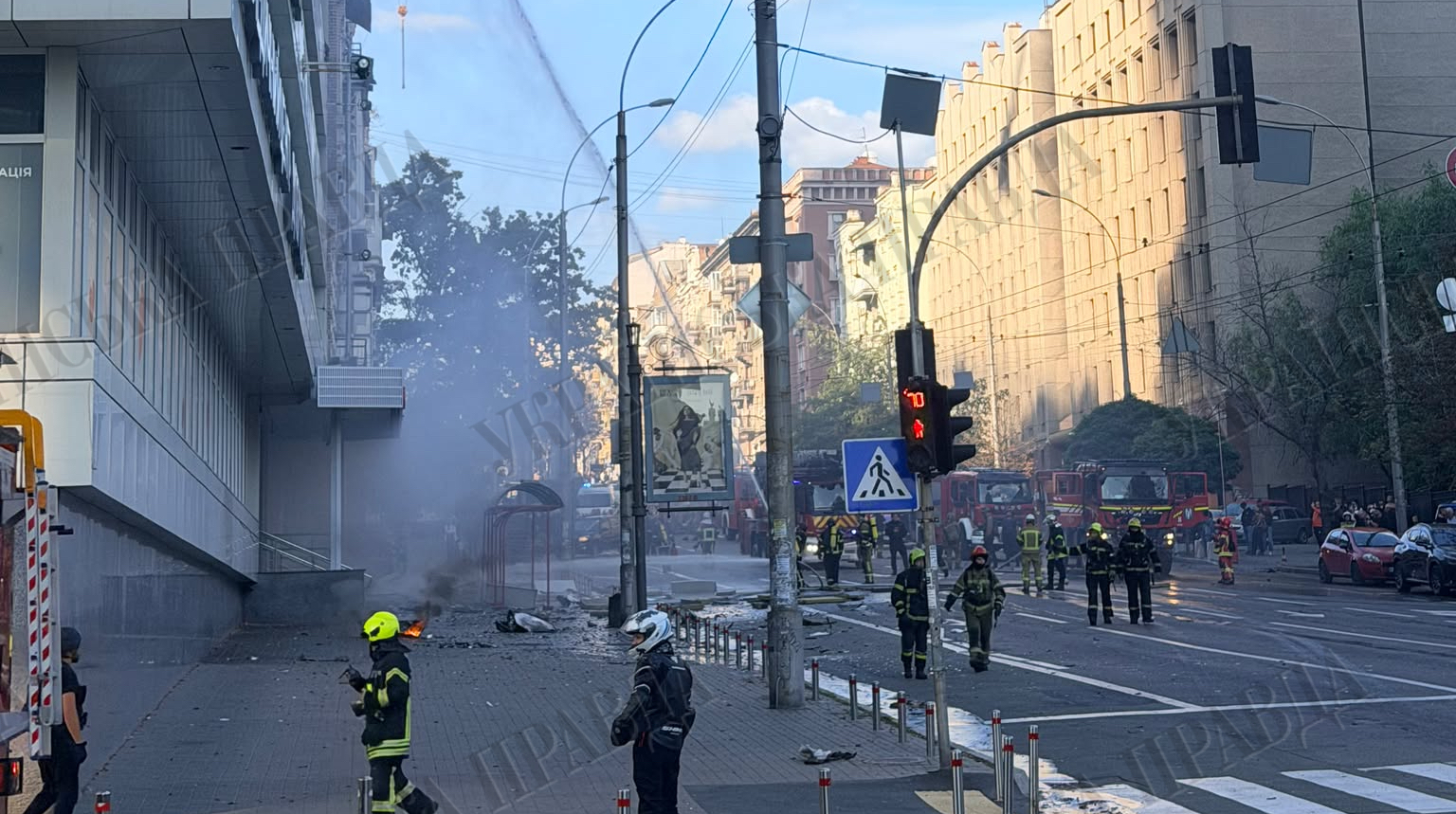
Russia has begun targeting data centres in Ukrainian cities [1]. In Kyiv alone Russian jet-powered drones destroyed two kindergartens and two schools, an ordinary residential building, a car repair shop, several warehouses and telecommunications facilities, according to President Volodymyr Zelensky [1]. The last category in Zelensky’s list of targets, telecommunications facilities, includes data centres which Russian drones have begun attacking in an attempt to cause internet coverage outages, including the headquarters of the major telecommunications operator Kyivstar [1]. The Russian Z-channel Veteran’s Notes wrote that nine centres had been struck over the previous week [1]. The Russian Telegram channel Rybar assessed the results as visible but said no digital collapse had occurred, with some services disrupted but destroying several servers insufficient to cause more serious damage because digital infrastructure is decentralised and therefore more resilient [1]. Rybar expects the new campaign to deliver longer-term results by causing economic damage and identifying the opponent’s weakest points [1].

Ukrainian forces advance near Lyman in Operation Vivaldi, liberating villages and pushing Russian troops back. — Source: errnews
Ukrainian Drone Strike on Russian Missile Plant
Ukrainian drones struck a factory producing missile guidance systems overnight from Friday to Saturday when at least five production halls at the Azov Optical-Mechanical Plant in Rostov region were damaged [1]. Satellite imagery confirms the strikes, showing hits on five workshops across six buildings, with foundry 022 burning, optics 008 hit twice, assembly 009 at least three times, galvanic 010 once, and machining 024 twice with a roof collapse [1].
Operational Implications and Expert Assessment
Ukraine's successful offensive near Lyman has achieved an operational breakthrough that could be repeated elsewhere, according to Maj. Gen. (Ret.) Neeme Väli [5]. Väli told ETV's Ukraina stuudio that Ukraine's Third Army Corps had made significant progress in liberating occupied territory near Lyman, describing it as more than a tactical success of local significance and a substantial advantage at the operational level [5]. The operation was planned and prepared over a long period with several novel elements, including extensive use of unmanned systems in the air and on the ground that blinded Russia's command systems and forced Russia to withdraw its Rubikon units from the battle area [5]. Different sources estimate that Ukraine may have retaken between 125 and 250 square kilometers, with the Institute for the Study of War's map showing an area roughly 25 kilometers or more wide and 30 kilometers deep that relieved pressure on the northern flank of the fortified line [5]. Väli said the same approach could be used to retake territory elsewhere along the front, starting far behind the front line to cut off and destroy Russian logistics and supply routes, then blinding command systems and preventing aircraft use before sending infantry units to eliminate strongpoints, a pattern that works in modern drone warfare and will certainly be copied [5]. The Kremlin says Ukraine is now paying the price for its own attacks on Russia [3].
What to watch next: Russian forces are expected to continue attempting counterattacks to bring the situation under control near Lyman and Sloviansk while preparing for the winter season, and the new Russian campaign targeting data centres is anticipated to aim for longer-term results by maximising damage to identified weak points.