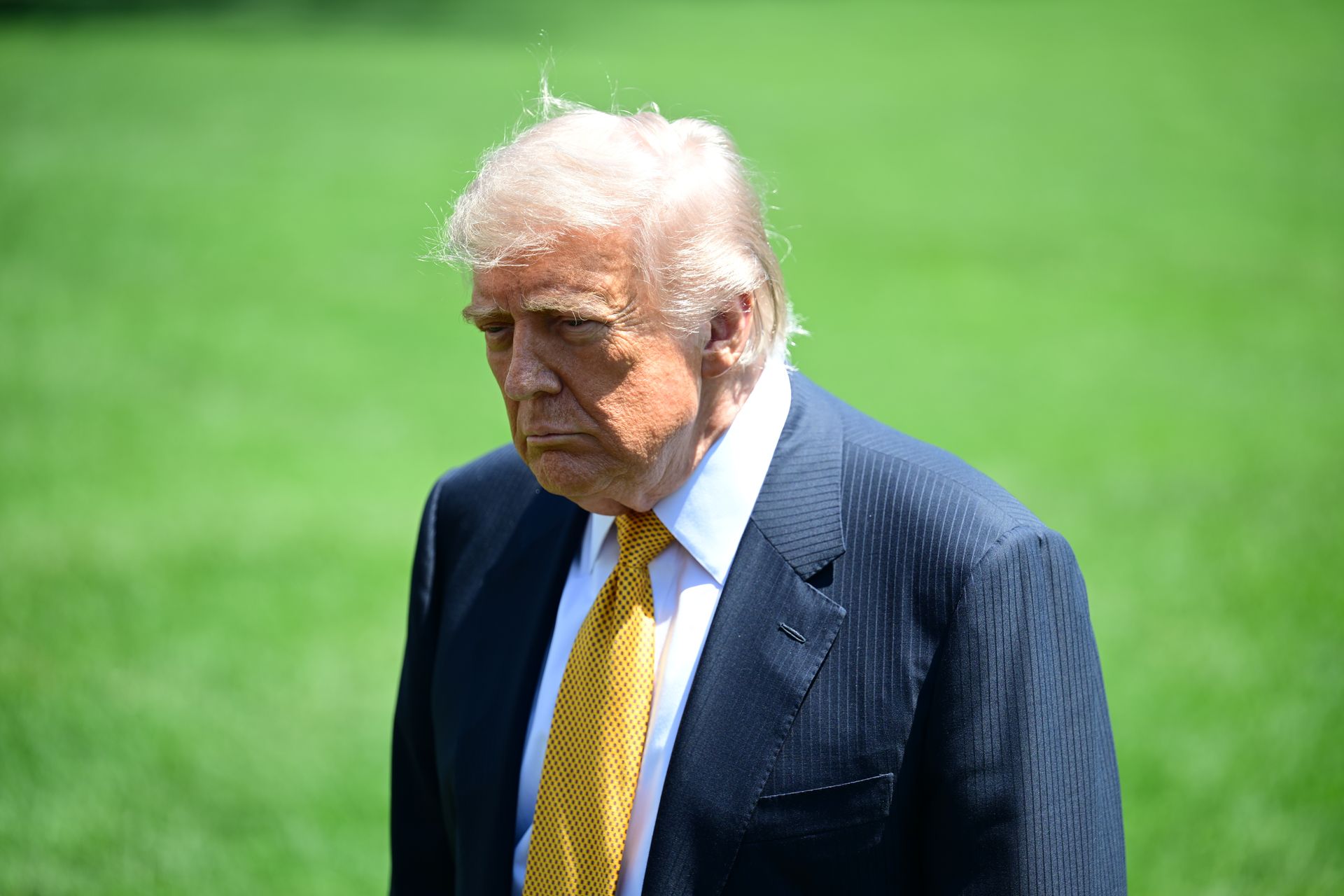
Doomsday Clock Ticks Closer as Trump Warns of Strike on Iran's Pickaxe Mountain
As the doomsday clock ticks closer amid rising tensions, US President Donald Trump stated that the United States may strike Iran's Pickaxe Mountain nuclear site very soon while Iranian leadership is reportedly considering escalation in the ongoing conflict, including potential cyberattacks on US infrastructure.
Trump's Latest Warning on Iran Strike
US President Donald Trump has again threatened to attack Iran’s Pickaxe Mountain “very soon,” repeating a warning he first issued in mid-July. [2] Trump told reporters at the White House that “We may hit Pickaxe very soon,” referring to the underground facility where Washington says Iran has moved some of its stockpile of highly enriched uranium. [3] Trump described the conflict with Iran as “small potatoes” and “intermittent,” saying there is no fighting right now despite recent strikes. [3] He stated, “It's a military conflict, but it's very intermittent,” and added, “I call it a military conflict because it's small potatoes for us. It's not a big thing.” [3] Trump further noted, “I would say that it's intermittent. You know, we do intermittent strikes. There's a lot of truth that we're not fighting right now. There's no fighting.” [3]
Iran's Growing Confidence and Escalation Considerations
Iran has grown more confident in its military capabilities, leading to reluctance to end the war fully, and believes US forces cannot sustain major new strikes due to dwindling munitions. [1] Throughout the war, Iran gained a better understanding of its military strengths and confidence regarding its capabilities, leading to a reluctance among Iranian leaders to make any sort of agreement to fully end the war. [1] US officials fear Iran may intensify attacks on ships in the Strait of Hormuz, US infrastructure in the Middle East, and launch cyberattacks on US domestic systems such as water utilities. [1] Iran has also gained a more precise understanding of its leverage over the Strait of Hormuz, and believes that US forces will not be able to sustain major new strikes due to dwindling munition stockpiles. [1]
Recent Cyberattacks Attributed to Iran
Iran-linked hackers are believed responsible for cyberattacks on over 100 US water systems in July, causing disruptions but not rendering water unsafe. [1] US officials believe Iran-linked hackers were behind cyberattacks on more than 100 water systems across the US in July. [1] While no systems were degraded to the point of making water unsafe to drink, the attacks caused disruptions that required manual overrides and precautionary boil-water advisories. [1] US oil and gas infrastructure may also be on the hackers' target list, current and former US officials told the NYT, although those systems are more protected. [1] It is unclear whether any energy systems have been breached. [1]
Iran's Focus on US Politics and Elections
Iran is focusing on the US midterm elections, spreading propaganda with anti-Republican views, and aims to prolong the unpopular war amid high gas prices. [1] Knowing the war is unpopular, in part due to high gas prices, Iranian leaders may want to drag the war out until at least the midterms. [1] Signs of Iran spreading propaganda against Trump have emerged, with Meta releasing a report highlighting a network of Facebook and Instagram accounts originating in Iran and focused on US politics, including "anti-Republican views." [1] Domestic media in Iran has also published more than 1,200 Persian-language articles within the past two weeks about Trump and the midterm elections, according to threat intelligence company Alethea. [1] Even if such attacks fail to meaningfully unsettle the American public, they can still play into a broader effort to exhaust domestic patience with this administration’s handling of the conflict. [1]
Recent Military Exchanges in the Conflict
US forces targeted nearly 60 Iranian targets around the Strait of Hormuz this week, including air defense sites, radar systems, mine-laying capabilities and communications facilities. [3] On Tuesday night, a US strike hit a wedding party in Sirik County in Hormozgan province, killing at least five people and injuring over 60 others, Iranian state media reported. [3] Trump on Wednesday threatened to launch more strikes on Iran “anytime we want.” [3] The United States and Israel launched massive military attacks on Iran on Feb. 28, marking the start of a conflict that has killed thousands of people. [3] Iran has responded with rocket attacks on US targets in the region.
Iran's Readiness for Confrontation
Iran’s air defence commander Brigadier-General Alireza Elhami suggests that “the threat is not over”, adding that the country is “ready for any kind of confrontation” both now and in the future. [2] This stance aligns with Iran's reported confidence in its capabilities amid the intermittent conflict.
What to watch next: US officials fear that Iran may intensify their attacks both within the Middle East, targeting more ships in the Strait of Hormuz and US infrastructure in the region and within the cybersphere, mounting cyberattacks on essential US domestic systems.