
Doomsday Clock Ticks Closer as Russian Losses in Ukraine Hit 2026 Record of 46,230 in September
Russian personnel losses in Ukraine reached 46,230 in September 2026, the highest monthly total recorded this year and a 46% increase from January, as the doomsday clock ticks closer while Ukrainian forces continue developing countermeasures against Russian jet-powered drones and long-range strikes [5].
Russian Personnel Losses and Frontline Developments
Russian forces suffered an estimated 46,230 personnel losses in September, the highest monthly figure recorded by Ukraine so far in 2026 [5]. The September figure surpassed previous summer highs of 42,860 in July and 42,020 in August [5]. According to the General Staff, Russian personnel losses have risen from 31,710 in January to 46,230 in September — an increase of nearly 46% [5]. Russian forces lost an average of 1,700 personnel per day [3]. Losses remained above 10,000 fighters per week for the fifth consecutive week [3]. Inflicting heavy personnel losses has become a stated strategic objective of Ukraine [5]. In January, then-Defense Minister Mykhailo Fedorov said Ukraine aimed to "kill 50,000 Russians per month," arguing that losses on that scale could undermine Moscow's ability to sustain the war [5]. The September figure brings Russia's estimated monthly losses closer to that target than at any previous point this year [5]. Front-line fighting averaged 220 engagements per day last week, as noted down on the previous week and also continuing a gradual decline seen over three weeks [3]. The most intense fighting was in the Pokrovsk and Kostiantynivka areas in Donetsk Oblast, followed by southern Slobozhanske, in Kharkiv Oblast; Lyman in Donetsk Oblast and Huliaipole in Zaporizhzhia Oblast [3]. Ukrainian counterattacks took place mainly in the Lyman, Sloviansk (Donetsk Oblast) and Kostiantynivka directions and toward Kupiansk (Kharkiv Oblast) [3]. Ukrainian forces have been successful in the Lyman zone, pushing Russian forces further back and improving the situation on the northern flank of the Donbas fortified belt [3].
Ukrainian Countermeasures Against Russian Drones
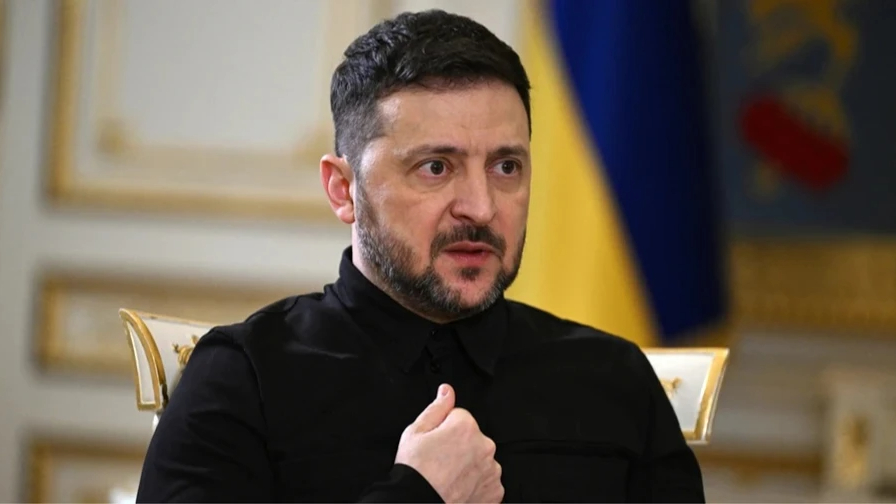
President Volodymyr Zelenskyy says Ukraine could produce around 400 units of one model of high-speed interceptor drone for countering Russian jet-powered drones as early as October [1]. Ukraine is currently testing five interceptor models [1]. F-16 fighter jets currently destroy 50-60% of jet-powered drones [1]. More than that, Ukrainian forces have been downing up to 50–60 percent of the much faster jet-propelled drones, and are intensively developing countermeasures [3]. However, their effectiveness is problematic: it is 70% one day and 30% the next [1]. The main issue is the engines [1]. Zelenskyy said Ukraine imports a lot and produces some itself, but these volumes are insufficient [1]. Quote: "So out of these five samples, some were used five times, some ten, and some only once. But you had one, and destroyed one Russian drone. This is the problem. I don't know the exact date, but in October, we will have 400 of these interceptors. And it is normal when you use 400 interceptors over several days of attacks, and you say, 'Look, guys, sorry, but it destroys only 10%. It doesn't work.' Or, for example, if it is 30% or more, 'Great, guys, you have to work a little bit on it, and when the percentage is 60-70% – huge success'" [1]. Ukraine too launched its own medium- and long-range strikes [3].
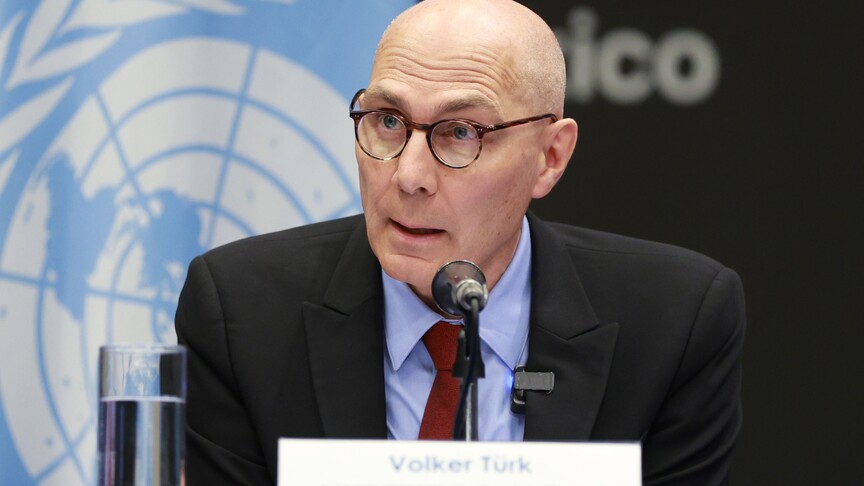
UN rights chief urges decisive shift toward de-escalation and peace in Ukraine. — Source: anadolu
Russian Long-Range Strikes and Ukrainian Responses
Russia's long-range strikes have targeted critical infrastructure, strategic sites, homes, educational, medical and scientific institutions and transport infrastructure in at least 15 Ukrainian oblasts [3]. Since mid-September, Russian forces have tried to hit telecoms companies and data centers to disrupt strategic services and the economy [3]. On September 30, Russian forces carried out a large-scale attack on Kyiv's energy infrastructure, suggesting a possible systematic campaign against Ukraine's energy system [3]. Ukrainian Prime Minister Serhii Koretskyi said data and technical infrastructure are being protected in several ways, including by moving some infrastructure underground and data to on cloud services [3]. Air raid alerts in September totaled nearly a third of the month in Kyiv, with one hour of alert costing Ukraine around $45 million [3]. Ukrainian strikes hit military and strategic targets in occupied areas and in Russian regions, destroying 76 air defense systems in September [3]. Ukraine attacked oil refineries in Krasnodar and Perm krais (regions) and in Rostov Oblast, fuel depots in Rostov and Belgorod oblasts, and oil fields in Krasnodar Krai [3]. Putin signed a law on September 28 classifying as confidential information on companies' exports, including data on products supplied, routes, transshipment points and delivery schedules [3]. The move is likely aimed at reducing the effectiveness of Ukrainian long-range strikes and hiding the true state of Russia's fuel industry [3].
International and Diplomatic Reactions
Russia has reiterated at the UN its intention to achieve its war aims in Ukraine at any cost [3]. Speaking at the regular Friday defense press conference, Col. Ants Kiviselg said Russia is intensifying its long-range strikes to achieve a deterrent effect, all at a time when Moscow continues to lose more than 10,000 troops per week [3]. UN rights chief calls for 'decisive shift' toward de-escalation, peace in Ukraine [2]. Volker Turk proposes local ceasefires, halt to attacks on energy and economic targets, full exchange of prisoners of war, enabling civilians to leave Oleshky [2]. Col. Kiviselg said Putin had been selective in the truth on this, presenting Russian actions as "countermeasures" to Ukraine's steps while omitting who started the war [3]. The very fact that Moscow is intensifying its long-range strikes to achieve a deterrent effect shows that Ukrainian strikes on its critical infrastructure and strategic sites have been successful [3]. Dmitry Peskov's statements that Russia is closely monitoring which countries help Ukraine produce or supply weapons, and "takes this into account" [3]. NATO's Supreme Allied Commander Europe, Gen. Alexus Grynkewich, has asked allies in recent weeks for more detailed information on Russia-linked incidents and responses, to improve the alliance's threat picture [3].
Russian defense briefing highlights repeated war aims at the United Nations amid declining frontline clashes. — Source: errnews
Recent Incidents and Ukrainian Innovations
Two Russian drones struck near the supports of Kyiv's Southern Bridge on Oct. 1, disrupting a key metro link between the city's eastern and western banks [5]. This is the first time Russian drones have struck one of the capital's bridges [5]. A Russian drone struck the grounds of the Institute for Nuclear Research in Kyiv on Sept. 30, where a research nuclear reactor is located [5]. The strike, which occurred at around 6:18 p.m. local time, sparked a fire that was quickly extinguished [5]. No one was injured in the attack [5]. The VVR-M research reactor itself and systems important for its safety were not damaged [5]. Radiation levels remained within the normal background range of 0.16-0.20 microsieverts per hour [5]. A Ukrainian pilot has died after his MiG-29 fighter jet was shot down by a Russian missile whilst performing a combat mission in eastern Ukraine [5]. The pilot, Captain Marat Redvanovych Mambetov, ejected but did not survive [5]. Mambetov, who was 25 years old, served as a flight commander in the "Ghost of Kyiv" 40th Tactical Aviation Brigade [5]. Ukraine marked the Day of Defenders on Oct. 1 [5]. "Thank you to all our defenders who are working to return Russia's sick war to where it came from," President Volodymyr Zelensky said on Telegram [5]. Commander-in-Chief Mykhailo Drapatyi highlighted a defining feature of Ukraine's fight in a message marking Defenders Day: relying on innovation, unmanned systems, precision and unconventional solutions rather than sheer numbers [5]. "While the aggressor tries to overwhelm us with quantities of scrap metal and 'meat grinder assaults,' we are betting on innovation and unmanned systems, precise calculations and unconventional solutions, while preserving and developing our human capital as much as possible," Drapatyi said [5]. Kiev yönetimi, Rusya'ya ait bir hedefe ilk kez balistik füze fırlattığını duyurdu [4]. Ukrainian tactical ballistic missile FP-7 first combat use [4].
Broader Strategic Context
The increase in losses also comes as Russia faces growing pressure to replace troops while sustaining offensive operations along the front [5]. December 2025 marked the first month in which Russian personnel losses exceeded the number of troops Moscow managed to recruit, according to the General Staff [5]. Since then, the manpower balance has remained an increasingly important issue as the Kremlin seeks to sustain the war without announcing a new wave of mobilization [5]. Russian President Vladimir Putin made the claim that Ukrainian forces lack the means to repel jet-powered drone attacks and to end Russia's blockade of the Black Sea coast [3]. Col. Kiviselg said Putin had been selective in the truth on this [3]. Finland and Denmark's security services have issued warnings about possible sabotage in supporting countries [3]. Estonia's own Internal Security Service (ISS) this week said the arson attack on the Milrem Robotics building in Lasnamäe in August was a sabotage act commissioned by Russian special services [3].
What to watch next: Ukraine expects to produce around 400 units of one model of high-speed interceptor drone in October while continuing strikes on Russian oil facilities, air defenses, and drone launch sites, as the UN rights chief urges local ceasefires and prisoner exchanges.