
Doomsday Clock Ticks Closer as Russia Offers Record $18,000 to Recruit Foreign Fighters for Ukraine War
Russia has intensified recruitment of foreign fighters for its war in Ukraine by offering record financial incentives while refusing any ceasefire during peace talks, as Ukrainian forces report daily personnel losses exceeding 1,500 and officials warn of the country's toughest winter yet due to systematic strikes on energy infrastructure, with the doomsday clock ticking closer on the humanitarian outlook.
Russian Recruitment Incentives for Foreign Fighters
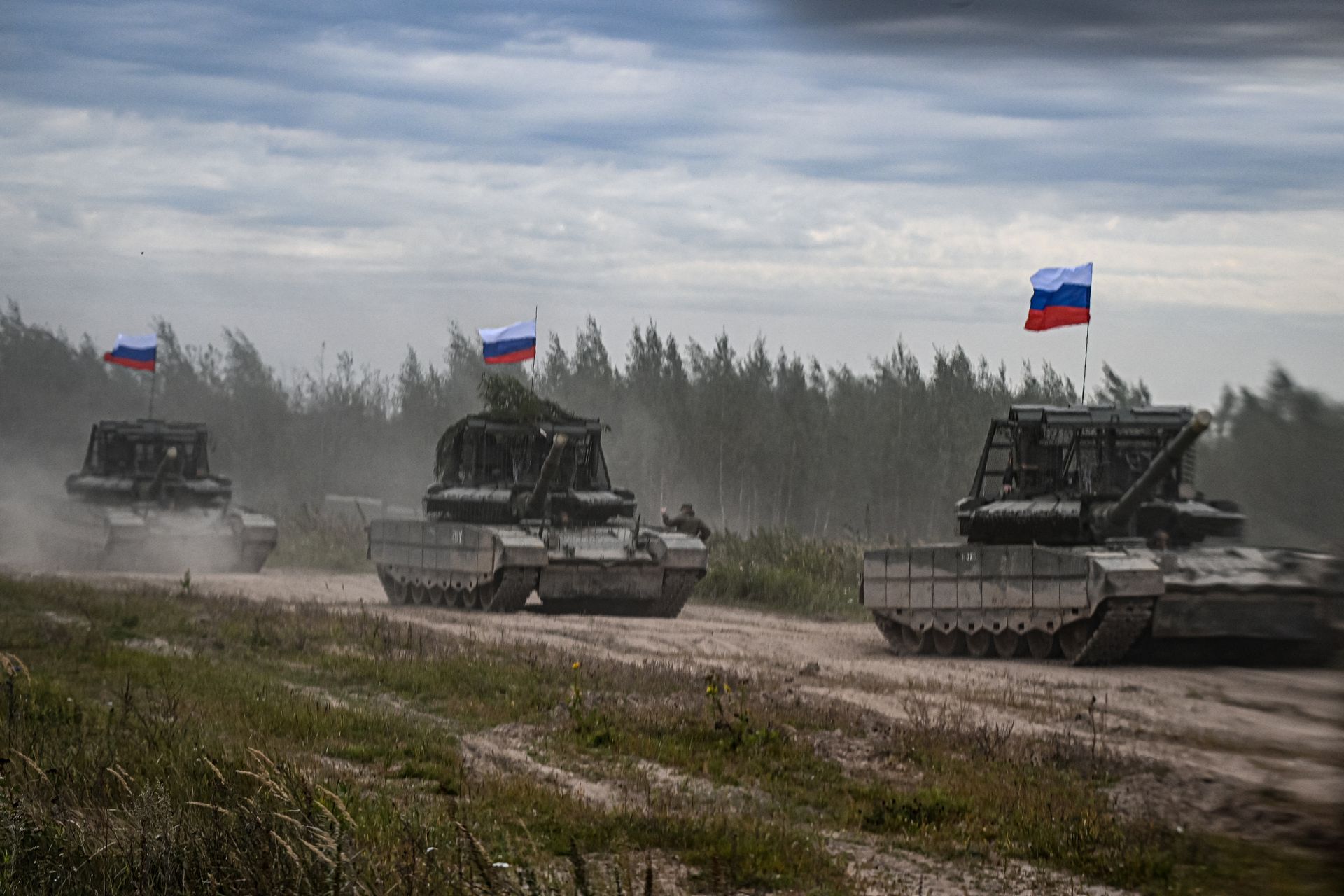
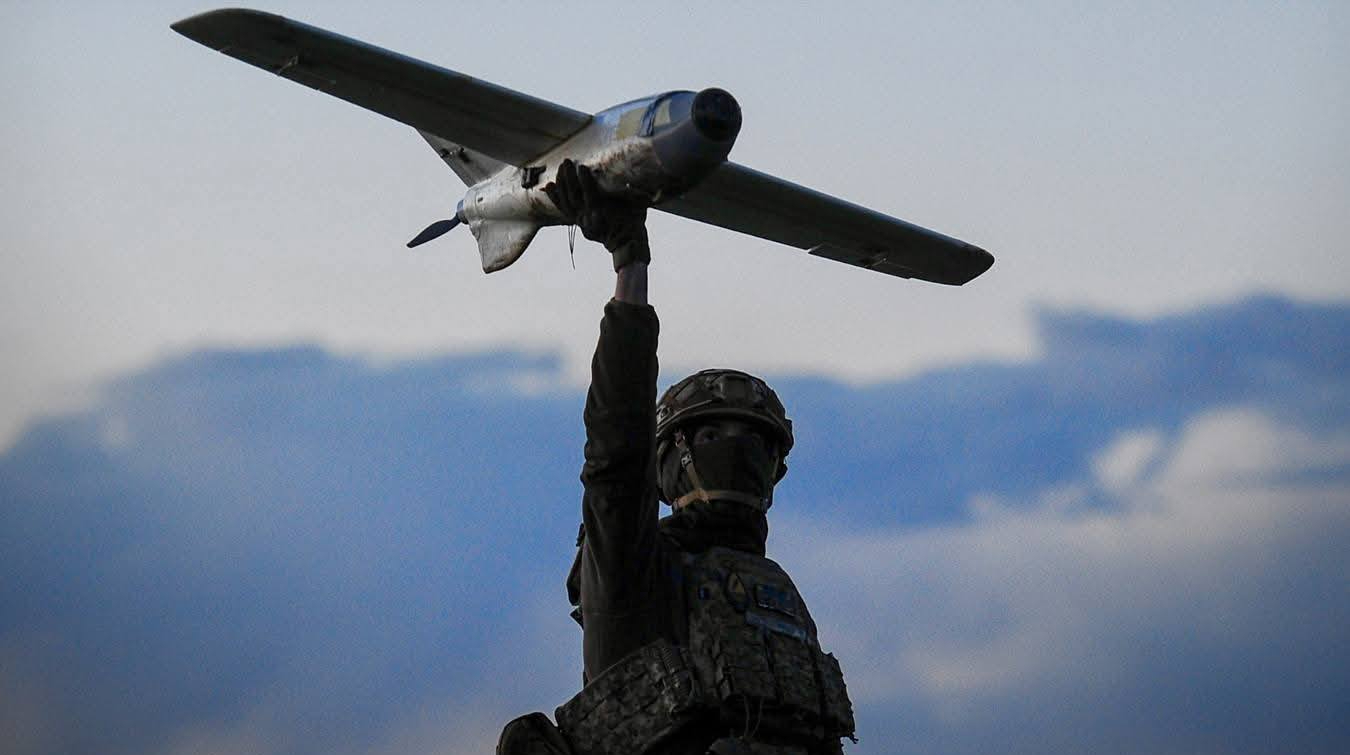
Siberia’s Irkutsk Oblast has raised payments to people who recruit foreign nationals into the Russian military to 1.5 million rubles ($17,800) per recruit, the highest such reward offered by a Russian region. [1] Irkutsk Governor Igor Kobzev signed the decree earlier this week, establishing the 1.5 million-ruble payment for anyone who helps a foreign citizen or stateless person sign a contract with Russia’s Defense Ministry. [1] The region has offered payments for recruiting contract soldiers since at least April. [1] Recruiters could previously receive up to 400,000 rubles ($4,700), meaning the maximum payment for bringing in a foreign national has risen almost fourfold in seven months. [1] The new decree also creates a separate category for foreign nationals and stateless people for the first time. [1] Payments for recruiting Russian citizens registered outside Irkutsk Oblast were doubled from 400,000 to 800,000 rubles ($9,500). [1] Other Russian regions have also increased incentives as Moscow seeks additional manpower for its war against Ukraine. [1] Smolensk Oblast raised its recruiter payment from 115,000 rubles ($1,300) to 1 million rubles ($11,900), while Ryazan Oblast increased some recruitment payments to 805,000 rubles ($9,500). [1] The increase comes amid mounting evidence that Russia has relied on foreigners, particularly people from lower-income countries, to replenish its forces. [1] Ukraine’s Coordination Headquarters for the Treatment of Prisoners of War said in April that at least 28,391 foreign nationals from 136 countries had been identified as fighting in the Russian military, not including regular North Korean troops. [1] Amnesty International cited the figures in a report published on Sept. 10 but said it could not independently verify them. [1] Amnesty said Russia’s recruitment of foreign nationals has frequently involved “deceptive, coercive and exploitative practices,” including false promises of civilian jobs, high salaries, residency rights, or Russian citizenship. [1] The rights group documented cases in which recruits said they signed contracts they did not understand, had their passports confiscated, received little military training, had their movements restricted, and were threatened when they attempted to leave. [1] Amnesty concluded that in many cases, Russia’s recruitment practices amount to human trafficking. [1]
Lavrov Rejects Ceasefire or Neutral-Venue Summit
Moscow will not pause the full-scale invasion of Ukraine while conducting negotiations for a peace settlement, Russian Foreign Minister Sergey Lavrov said on Sept. 12. [2] Lavrov's comments come the same day that President Volodymyr Zelensky said he would be willing to meet face-to-face with Russian President Vladimir Putin for peace talks at the G20 leaders' summit in Miami in December. [2] Speaking to the Russian news outlet Vesti, Lavrov claimed the Kremlin was open to talks — while pouring cold water on the idea of a ceasefire or a Putin-Zelensky summit in Miami. [2] "We are still ready for negotiations, but the (war against Ukraine) will not be stopped during this period," Lavrov said. [2] "We have already had this experience and have drawn conclusions," he added, perhaps referring to the previous periods of brief, limited truces that Russian forces nonetheless violated. [2] Regarding Zelensky's invitation to meet Putin at the G20, Lavrov reiterated the Kremlin's standard excuse: insisting the leaders can only meet in Moscow. [2] "On this matter, I believe (Kremlin Spokesperson) Dmitry Peskov has already spoken. An invitation was sent to (Zelensky). If he wants to meet, then he should come," Lavrov said. [2] After refusing even a temporary ceasefire or a leader-level meeting in a noncombatant country, Lavrov went on to emphasize the level of "goodwill" Moscow was displaying in the peace process. [2] "This is already a huge gesture of goodwill on our part, because (Zelensky) has not yet canceled his decree banning contacts with Putin and his team," Lavrov claimed. [2] "So, we are not lacking in goodwill, while he, it seems, lacks good intentions." [2] Zelensky and Putin have not met in person since before Russia launched its full-scale invasion of Ukraine in February 2022. [2] While Zelensky has expressed willingness to sit down with Putin on a number of occasions, he has ruled out Moscow as a venue for peace talks. [2] He has not, however, demanded the Russian president visit Ukraine. [2] Instead, Zelensky has repeatedly proposed meeting in a third country — a proposal the Kremlin has consistently denied. [2] Kyiv has also insisted that negotiations take place during a cessation of hostilities, and has said it is willing to uphold an unconditional ceasefire if Russia is willing to do the same. [2] Lavrov and Zelensky's comments follow a renewed U.S.-led effort to resume negotiations between Kyiv and Moscow. [2] U.S. envoys Steve Witkoff and Jared Kushner visited both capitals for separate talks with the Russian and Ukrainian governments in September, though the discussions did not produce a breakthrough. [2] At the end of the latest round of talks, the U.S. envoys said they hoped to resume trilateral negotiations with all parties present. [2] Zelensky has affirmed the need for trilateral talks, and the Kremlin has said it isn't ruling out this format — though no future talks have been announced. [2]
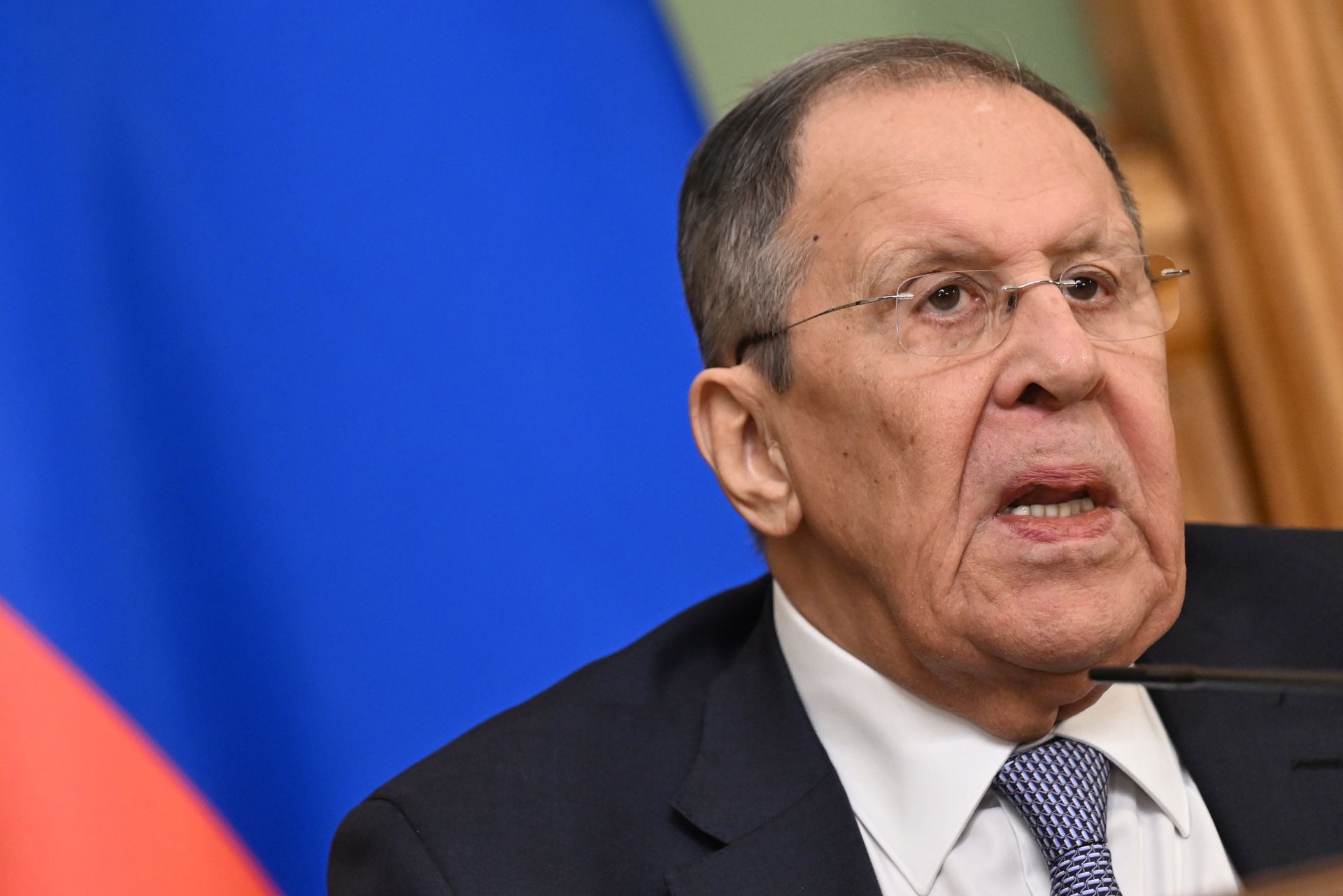
Russian officials discuss continued military recruitment amid ongoing Ukraine conflict. — Source: kyivindependent
Daily Russian Personnel Losses
Russia has lost 1,520 soldiers killed and wounded over the past day, bringing its total number of personnel losses to 1,506,900. [3] The total combat losses of the Russian forces between 24 February 2022 and 13 September 2026 are estimated to be as follows: approximately 1,506,900 (+1,520) military personnel, 12,344 (+2) tanks, 25,330 (+8) armoured combat vehicles, 49,678 (+77) artillery systems, 2,120 (+5) multiple-launch rocket systems, 1,635 (+2) air defence systems, 442 (0) fixed-wing aircraft, 356 (+0) helicopters, 2,603 (+17) ground robotic systems, 514,317 (+2,142) operational-tactical UAVs, 5,111 (+8) cruise missiles, 35 (+0) ships/boats, 2 (+0) submarines, 148,259 (+410) vehicles and fuel tankers, and 4,681 (+5) special vehicles and other equipment. [3] The information is being confirmed. [3]
Ukrainian Preparations for Winter Energy Attacks
Ukrainian Prime Minister Serhii Koretskyi has said that Ukraine is significantly better prepared this year for Russian attacks on its energy sector than it was last winter. [4] "The energy sector is constantly under fire, and it's clear that it's impossible to protect everything fully. However, we are significantly better prepared for these attacks than we were last winter," Koretskyi said at the annual YES (Yalta European Strategy) meeting in Kyiv on 12 September. [4] "It's been said a hundred times over, through every channel, that the winter is going to be hard – I have nothing new to add there. But we have no plan other than to get through this winter and to get through it with dignity." [4] In Koretskyi's view, Russia sees the current period and the coming winter as a kind of "blitzkrieg", but the government, through joint efforts and with partner support, is determined to get through this difficult period while solving tactical tasks and developing the state strategically. [4] Koretskyi stressed that lessons have been learned from last winter, including the preparation of decentralised means of delivering essential services to regions, cities and oblasts, which he said is the main task. [4] He said the government is drawing up both a Plan B and a Plan C, and possibly "the worst of all possible scenarios". [4] Koretskyi noted that Russian strikes and the resulting destruction have multiplied several times over in the past two months, so the economy is already in an extremely difficult state, but he said "there is enough optimism, enough strength and enough will in the team and everyone to overcome these difficulties". [4] The prime minister is also operating on the assumption that the war could go on for a long time and that even if there were a ceasefire, it could be broken – and he advises assessing the current situation with that in mind. [4] "We all want peace. Everyone wants peace to be achieved. But no one knows how long the war will last. So, firstly, with that in mind, we need to prepare for the long haul – both physically and mentally," Koretskyi said. [4] "Even if a ceasefire is achieved, no one knows how long it will last: history repeats itself, and the enemy isn't going anywhere. So we need to lay foundations so that businesses can survive in the long term and learn from the mistakes or lessons the war is giving us." [4]
Russian recruitment drive offers record 1.5 million rubles to enlist foreign fighters for Ukraine war. — Source: ukrainskapravda
UN Warning of Humanitarian Risks This Winter
Ukraine is facing its "toughest winter" since Russia's full-scale invasion in 2022, a top United Nations official told the BBC. [5] Alexander De Croo, head of the UN development agency, said there was a risk of "humanitarian catastrophe" if Russian attacks cut off access to power and water. [5] Speaking in Ukraine, De Croo – the UN's third most senior official – accused Russia of systematically targeting the country's energy infrastructure. [5] He said there was now a "race against the clock" to repair the power network before winter sets in and temperatures plummet. [5] De Croo, a former prime minister of Belgium, told the BBC: "This winter is going to be the toughest one since the war". [5] He said Ukraine started "from a very weak base going into this winter". [5] He added the UN were "very, very worried... about what this winter could become." [5] The concerns are driven by what De Croo said was Russia's "very systematic" targeting of civilian and energy infrastructure. [5] "This is petrol stations, it's shopping malls, it's business centres, but it's especially energy infrastructure, energy transmission lines, and so on. There is absolutely no justification for that," he said. [5] This could lead a "worst-case scenario" where people struggled to access energy to run heating, and water and sewage systems stopped working. [5] "With the temperatures that you would get here that would lead to circumstances which would be really close to humanitarian catastrophe," De Croo said. [5] Winter temperatures in Ukraine can drop to -20C. [5] If power supplies and critical infrastructure were severely damaged it could lead to "quite some human suffering", De Croo said. [5] Under efforts to prepare Ukraine for winter the UN Development Programme is helping to rebuild parts of its energy system that were damaged last winter. [5] It is also establishing more sustainable and decentralised energy plants, which are less vulnerable to attack. [5] De Croo said completing the difficult and dangerous work was "almost an impossible task". [5] "They are reconstructing these sites under constant, constant air alarms. And they know that they are working at a site which is a target," he said. [5] "So you try to reconstruct, but part of your day you can't work because it's just too dangerous." [5]
Recent Strikes and Broader Context
Russia and Ukraine have been intensifying aerial attacks in recent months, and both deny deliberately targeting civilian infrastructure. [5] Russia has started to use faster, jet-powered drones that are harder to intercept in recent around-the-clock attacks on Ukraine - and in particular Kyiv. [5] Many of the strikes have targeted Ukraine's infrastructure, including businesses, warehouses, factories, petrol stations, as well as energy infrastructure. [5] Ukraine continues to launch drone strikes deep into Russian territory, largely against gas, oil and business distribution facilities. [5] Both countries deny targeting civilians. [5] Deadly attacks have resumed after US President Donald Trump sent envoys for talks in Moscow with Russian President Vladimir Putin and in Kyiv with Ukrainian President Volodymyr Zelensky last weekend. [5] Five people were killed and 67 others were wounded in a daytime Russian drone strike on a shopping mall in Pavlohrad, a city in Dnipropetrovsk region, on Thursday, Ukrainian officials say. [5] Earlier in the week two other shopping malls were targeted by Russian air strikes, killing two people and injuring 28 people in the attacks on the cities of Zaporizhzhia and Sumy. [5] Russia reported a Ukrainian seaborne drone attack on the resort city of Sochi overnight on Wednesday, in which 28 people were wounded, as well as three more deaths blamed on Ukrainian attacks. [5] Two people were also killed earlier this week when Russian drones hit a border crossing between Ukraine and Moldova, which has increasingly found itself caught up in the conflict. [5] A full-scale war has been raging between Russia and Ukraine since Putin launched an invasion more than four and a half years ago. [5]
What to watch next: U.S. envoys have said they hoped to resume trilateral negotiations with all parties present, while both sides continue intensified aerial attacks and preparations for the coming winter.