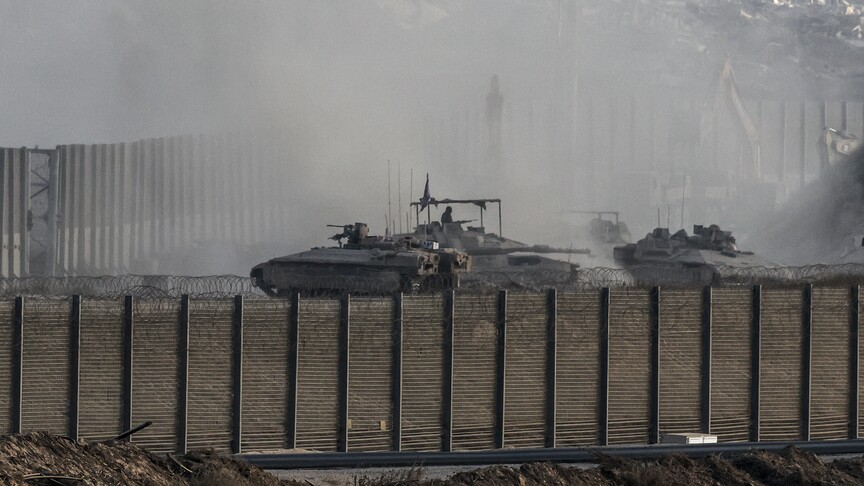
Doomsday Clock Ticks Closer as Gaza War Losses Surpass $80 Billion
Reporting based primarily on newarab.com.
As the doomsday clock ticks closer amid the deepening crisis, Gaza's direct losses from the ongoing war have exceeded $80 billion across 15 vital sectors, with around 90% of essential infrastructure destroyed or damaged, according to the territory's Government Media Office. [1] The Israeli military has dropped around 223,000 tonnes of explosives on Gaza and taken control of approximately 80% of the territory through bombardment and ground incursions. [1] Destruction has affected around 3,000 kilometres of roads with preliminary losses of $3 billion, 700 kilometres each of water pipelines and sewage networks, 725 main water wells, and 134 freshwater projects. [1] Electricity sector losses are estimated at $2 billion after destruction of 5,080 kilometres of distribution networks, 2,285 transformers and 235,000 electricity meters; telecommunications and internet losses total $3 billion. [1] More than 95% of Gazans now rely entirely on humanitarian aid, but truck entries are at no more than 35% of what is needed, worsening food and water shortages. [1] Municipal and government service losses have reached $6 billion with 253 government buildings destroyed and 194 municipal employees, including four mayors, killed. [1] A joint World Bank, UN and EU assessment from April 2026 estimated direct physical damage at $35.2 billion and recovery needs at $71.4 billion over the next decade. [1]
Overall War Losses and Infrastructure Scale of Destruction
Gaza's war losses have surpassed $80 billion across 15 vital sectors as destroyed infrastructure and severe food and water shortages deepen the humanitarian crisis. [1] Direct losses from the war on Gaza have exceeded $80 billion across 15 vital sectors according to the territory's Government Media Office. [1] Smail al-Thawabta, director general of Gaza's Government Media Office, told The New Arab that the destruction had extended beyond buildings and facilities to roads, water, electricity, telecommunications and sewage networks, as well as economic and public service infrastructure. [1] The Israeli military had dropped around 223,000 tonnes of explosives on Gaza and taken control of approximately 80% of the territory through bombardment and ground incursions, while the destruction had affected around 90% of the infrastructure essential to daily life. [1] The devastation has paralysed economic activity, severely weakened local institutions and left residents struggling to access food, clean water and other basic necessities. [1] In the transport sector the destruction had affected around 3,000 kilometres of roads with preliminary losses estimated at $3 billion. [1] The damage has severely restricted movement across Gaza hampering ambulances civil defence teams and humanitarian workers trying to reach affected areas while disrupting the transportation of goods and essential supplies. [1] Losses to municipal and government services have reached an estimated $6 billion with 253 government buildings destroyed. [1] Al-Thawabta said 194 municipal employees including four mayors had been killed further weakening local authorities' ability to maintain public services and respond to emergencies. [1] The destruction of civilian infrastructure he stressed could not be separated from its consequences for Gaza's population as the collapse of essential networks undermined the foundations of daily life and made recovery increasingly difficult and costly. [1]
Impact on Water, Food and Humanitarian Access
Water and sewage infrastructure has also suffered extensive damage with around 700 kilometres of water pipelines and an equivalent length of sewage networks destroyed. [1] A further 725 main water wells have been put out of service while 134 freshwater projects have been destroyed severely restricting access to clean water and increasing health risks linked to contamination and deteriorating sanitation. [1] The water crisis is worsening alongside food shortages as more than 200,000 families search daily for a single meal through community kitchens amid declining aid and difficulties in providing necessities. [1] Al-Thawabta warned that thousands of families were struggling to feed their children with even obtaining a loaf of bread becoming a daily challenge as living conditions deteriorate and dependence on humanitarian assistance grows. [1] More than 95% of Gaza's population now relies entirely on humanitarian aid and community kitchens to meet basic needs. [1] Restrictions on food supplies and funding shortages have forced some food programmes to suspend operations and others to close further reducing relief organisations' ability to respond to growing demand. [1] The number of trucks entering Gaza amounted to no more than 35% of what was needed including vehicles carrying humanitarian aid food and commercial goods. [1] The shortfall has worsened supply shortages leaving markets and humanitarian organisations struggling to provide residents with essential goods. [1] Al-Thawabta warned that the crisis extended beyond hunger to severe water deprivation caused by the destruction of hundreds of wells and extensive damage to supply networks. [1] Delays in repairs and shortages of essential materials have compounded the damage placing additional pressure on families and deepening the humanitarian crisis. [1]
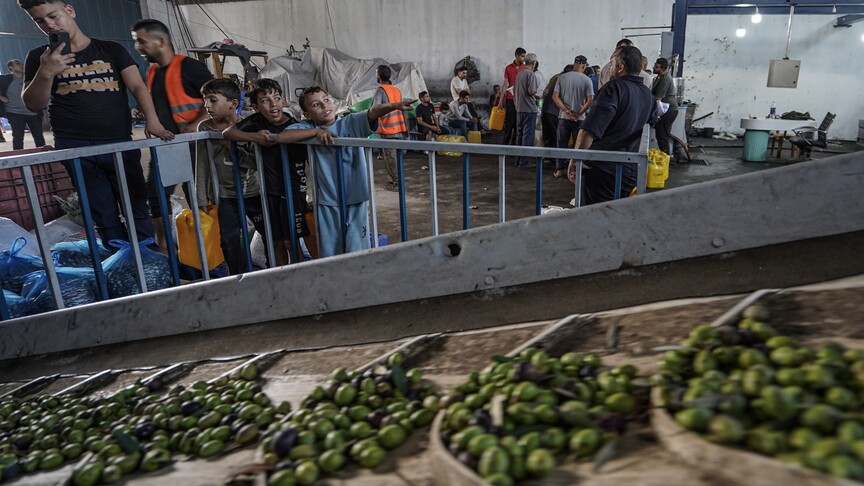
Gaza olive harvest faces sharp decline as war damages farmland and limits access. — Source: anadolu
Damage to Electricity, Communications and Municipal Services
Gaza's electricity infrastructure has also suffered extensive destruction with around 5,080 kilometres of distribution networks 2,285 transformers and 235,000 electricity meters destroyed according to al-Thawabta. [1] He estimated preliminary losses in the electricity sector at approximately $2 billion. [1] The damage has severely affected hospitals water pumping stations and sewage systems making the restoration of essential services increasingly difficult. [1] Losses in the telecommunications and internet sector were estimated at a further $3 billion with widespread infrastructure damage disrupting communications and complicating humanitarian coordination. [1] Al-Thawabta said the destruction had left residents struggling to communicate access information and obtain essential services. [1] Losses to municipal and government services have reached an estimated $6 billion with 253 government buildings destroyed. [1] He said 194 municipal employees including four mayors had been killed further weakening local authorities' ability to maintain public services and respond to emergencies. [1] The destruction of civilian infrastructure he stressed could not be separated from its consequences for Gaza's population as the collapse of essential networks undermined the foundations of daily life and made recovery increasingly difficult and costly. [1]
Agricultural Losses Including Olive Harvest Decline
The devastation has paralysed economic activity severely weakened local institutions and left residents struggling to access food clean water and other basic necessities. [1] A tree that produced around 100 kilograms of olives before the war now produces no more than 20 to 30 kilograms farmer Kamel Baraka tells Anadolu. [2] Gaza olive harvest battered by war as production plunges farmland becomes inaccessible. [2] The cumulative losses had undermined local institutions' ability to provide services and brought much of Gaza's economic and productive activity to a standstill. [1] The destruction has affected around 3,000 kilometres of roads with preliminary losses estimated at $3 billion. [1] The damage has severely restricted movement across Gaza hampering ambulances civil defence teams and humanitarian workers trying to reach affected areas while disrupting the transportation of goods and essential supplies. [1]

Gaza winter shelter cluster chart details operational needs and gaps for 2026-27. — Source: reliefweb
Winter Shelter Needs and Funding Gaps
As winter approaches almost 300,000 families are estimated to require shelter assistance in Gaza while current stocks and pipeline supplies can provide only partial assistance to around 52,000 families. [3] An estimated USD 283 million is required to meet essential winter shelter and household needs of which only appro [3] The number of trucks entering Gaza amounted to no more than 35% of what was needed including vehicles carrying humanitarian aid food and commercial goods. [1] More than 95% of Gaza's population now relies entirely on humanitarian aid and community kitchens to meet basic needs. [1] Al-Thawabta called on the international community United Nations agencies and humanitarian organisations to intervene urgently to provide food clean water and other essential assistance. [1]
Calls for International Intervention and Reconstruction Outlook
Al-Thawabta called on the international community United Nations agencies and humanitarian organisations to intervene urgently to provide food clean water and other essential assistance. [1] He also urged immediate efforts to repair electricity water and sewage networks rehabilitate hospitals and restore vital public facilities to support recovery and reconstruction. [1] He warned that continued destruction restrictions on aid and the declining capacity of local institutions would deepen Gaza's humanitarian and economic crisis and prolong the suffering of its population. [1] The Government Media Office's estimates come amid mounting concerns over the enormous cost of rebuilding the devastated territory. [1] A joint assessment by the World Bank United Nations and European Union published in April 2026 estimated direct physical damage in Gaza at approximately $35.2 billion while recovery and reconstruction needs were projected to reach around $71.4 billion over the next decade. [1] The destruction of civilian infrastructure he stressed could not be separated from its consequences for Gaza's population as the collapse of essential networks undermined the foundations of daily life and made recovery increasingly difficult and costly. [1]
What to watch next: Al-Thawabta warned that continued destruction restrictions on aid and the declining capacity of local institutions would deepen Gaza's humanitarian and economic crisis and prolong the suffering of its population while a joint World Bank UN and EU assessment projected recovery needs at around $71.4 billion over the next decade. [1]





/file/attachments/2999/13950161_903283.jpg)