Doomsday Clock Tensions Rise as Iranian Lawmaker Warns Middle East Sits on Brink of World War III
As the doomsday clock continues to draw attention amid mounting global strains, Iranian lawmaker Kamran Ghazanfari stated that the Middle East is practically on the brink of World War III amid escalating global tensions involving Russia-Ukraine, US-China disputes over Taiwan, and Iran's positioning against the US-led order. [1]
Iranian Lawmaker Warns of World War III Brink
Iranian lawmaker Kamran Ghazanfari said recently that the region is “practically on the brink of World War III.” [1] The report of his comments appeared in Iran International. [1] Ghazanfari is known for some of his outlandish claims in the past. [1] For instance, he claimed in the past that Iran’s President Ebrahim Raisi was assassinated by Israel and its allies in 2024. [1] The Ghazanfari comments are interesting because they likely illustrate how some of Iran’s more extremist politicians and IRGC elites view the war. [1] They see it as a regional and global conflict. [1]
Tehran's Alignment Against US-Led Order
While Iran has flirted with reconciliation with the US at times, it has also sought to position itself alongside countries that want a new world order. [1] Iran has worked with Russia and China and hopes to challenge the US-led world order. [1] Iran has long portrayed its Islamic Revolution as a unique event that can transform the region and the world. [1] This goes back to the fact that Iranian Islamists believed they were presenting a new path during the Cold War that was different than the US and Soviet blocs. [1] That changed in the 1990s when the Soviet Union declined. [1] Weakening the US and pushing the US out of the Middle East is a key goal of Tehran. [1] Iran’s regime is currently continuing to carry out attacks in the region. [1] Its recent attacks on Jordan and threats to attack tankers show that it wants to show that it can respond in kind to any US strikes. [1] It is telegraphing that it will not back down. [1]
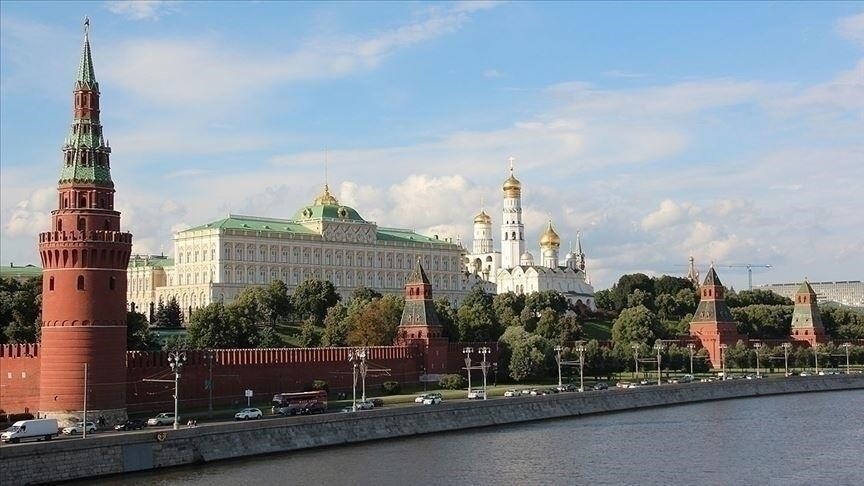
Kremlin denies presence of roadmap for Ukraine settlement. — Source: anadolu
Escalating Tensions in Europe and Asia
Iran International noted on September 9 that “Kamran Ghazanfari, a Tehran representative in the parliament, said that we are ‘practically on the brink of World War III,’ and considered the expansion of the war between Russia and Ukraine and the increase in tension between world powers as grounds for the formation of a widespread conflict.” [1] The report noted he made the comments in an interview with ILNA. [1] “Ghazanfari said that NATO's support for Ukraine in its war with Russia and Moscow's tensions with Britain and Germany have increased the possibility of the conflict spreading to other European countries,” the report added. [1] He also called the US-China dispute over Taiwan another area of widespread conflict in the world. [1] Munitions seen near a B1 bomber at RAF Fairford on July 24, 2026 in Fairford, England. Iran's Islamic Revolutionary Guard Corps (IRGC) has declared RAF Fairford in Gloucestershire a ''legitimate target'' after U.S. Air Force B-1B Lancer bombers used the British base to launch bombing missions. [1]
Nuclear Diplomacy and NPT Withdrawal Debate
In the interview, he also focused on Iran’s plan to withdraw from the Nuclear Non-Proliferation Treaty (NPT). [1] “According to him [Ghazanfari], there is a possibility that this issue will be put on the parliament's agenda again.” [1] Ghazanfari has in the past critiqued the chances of a US deal. [1] For instance, in June he criticized the memorandum of understanding with the US. [1] At the time, it seemed the US and Iran might be able to reach an agreement. [1] He claimed that any deal with the US would lack legitimacy and not be binding. [1] Ghazanfari added that the United States had repeatedly threatened Iran and members of its negotiating team during the two-month talks, saying any deal reached under such conditions would have no validity under international law. [1] He has also warned in the past about US and Israeli plans for a broader military operation. [1] He claimed that the US might seize Iranian islands. [1] "Evidence and signs show that the United States and Israel are planning a large-scale operation. They probably intend to seize some of our islands in the south and have brought many forces and equipment into the region," he said. [1]
Western Pressure on Israel Over West Bank
An Independent's headline reads, “UK sanctions Israel over West Bank 'ethnic cleansing'". [3] Ed Miliband, Britain’s foreign secretary, said that the sanctions come as Israel has turned a blind eye to the “ongoing ethnic cleansing in the West Bank” by “settler terrorists”. [3] He also added that the occupation of the West Bank as a whole is unlawful. [3] The front page of The iPaper focuses on the reaction from Israel: “Israeli fury after UK accuses settlers of ethnic cleansing”. [3] Britain’s Chief Rabbi said that Tuesday was a “truly dark day for British Jews”. [3] Meanwhile, Miliband highlighted his Jewish background, adding that he is a “proud British Jew”. [3] The paper also says that “Britain risks reduced access to Israeli intelligence” after the import ban. [3] An editorial in The Times writes that “Britain’s West Bank sanctions will do nothing to help Palestinians”. [3] The article says that the “measures do not match the theatrical rhetoric” and they may actually be “hugely counterproductive” and “feed the fire of antisemitism” in the UK. [3] Israel to consider 747 new settlement units in occupied West Bank amid Western pressure. [4] Move comes a day after 12 Western countries announced plans to restrict trade in goods from Israeli settlements. [4]
IAEA Closes Long-Running Syria Nuclear Probe
The UN nuclear watchdog's board of governors on Wednesday decided to close a long-time probe against Syria launched under ousted leader Bashar al-Assad after the country's new authorities led agency exports to key nuclear sites. [5] Inspectors from the International Atomic Energy Agency (IAEA) last month visited two sites, one in Deir al-Zour and a second in an undisclosed location identified to them by Syrian authorities. [5] IAEA head Rafael Grossi said on Monday that a near-complete nuclear reactor found in Deir al-Zour and built secretly during the rule of al-Assad would have been able to produce material to make nuclear weapons. [5] The IAEA board "adopted by consensus" a text stating that a 2011 resolution finding Syria in non-compliance with its obligations was "terminated", noting the current government's cooperation, two diplomats told AFP. [5] The resolution, seen by AFP, was submitted by Egypt, Jordan, Morocco and Saudi Arabia and "encourages Syria to continue its cooperation with the agency, including the excavation work at the Deir al-Zour site". [5] It also "requests the director general to update the board, as appropriate, on the outcomes of ongoing activities of the agency" in Syria. [5] Grossi said on Monday that it was "obvious that the previous government was pursuing a number of clandestine" activities. [5] Besides the reactor under construction at the Deir Ezzor site, the IAEA found a fuel fabrication plant where nuclear fuel for the reactor was manufactured, and a location where nuclear fuel as well as uranium scrap and waste were stored. [5] In a confidential report seen by AFP last week, the IAEA said it found around 73 tonnes of natural uranium metal. [5] Grossi has praised Damascus's "courageous decision" to report the undisclosed site. [5] The UN atomic watchdog had declared in 2011 that the location was "very likely" to host a nuclear reactor, adding that its information suggested it was being built with North Korean assistance. [5] Last month, Grossi visited the site in Deir al-Zour in the east, which has been shut for 18 years. [5] In 2018, Israel admitted carrying out a top-secret air raid on the site 11 years earlier. [5]
What to watch next: The IAEA board adopted by consensus a text stating that the 2011 resolution on Syria was terminated while noting ongoing cooperation and excavation work at the Deir al-Zour site.