
Current Wars in the World Trap Ukrainian Civilians in Oleshky Famine
Multiple ongoing conflicts around the world are creating severe humanitarian crises, including famine-like conditions and blocked evacuations in Russian-occupied Oleshky, Ukraine, Houthi attacks threatening Saudi oil production and Red Sea shipping, renewed clashes in Sudan, and deadly security incidents in southern Syria as current wars in the world continue to unfold.
Humanitarian Collapse in Occupied Oleshky
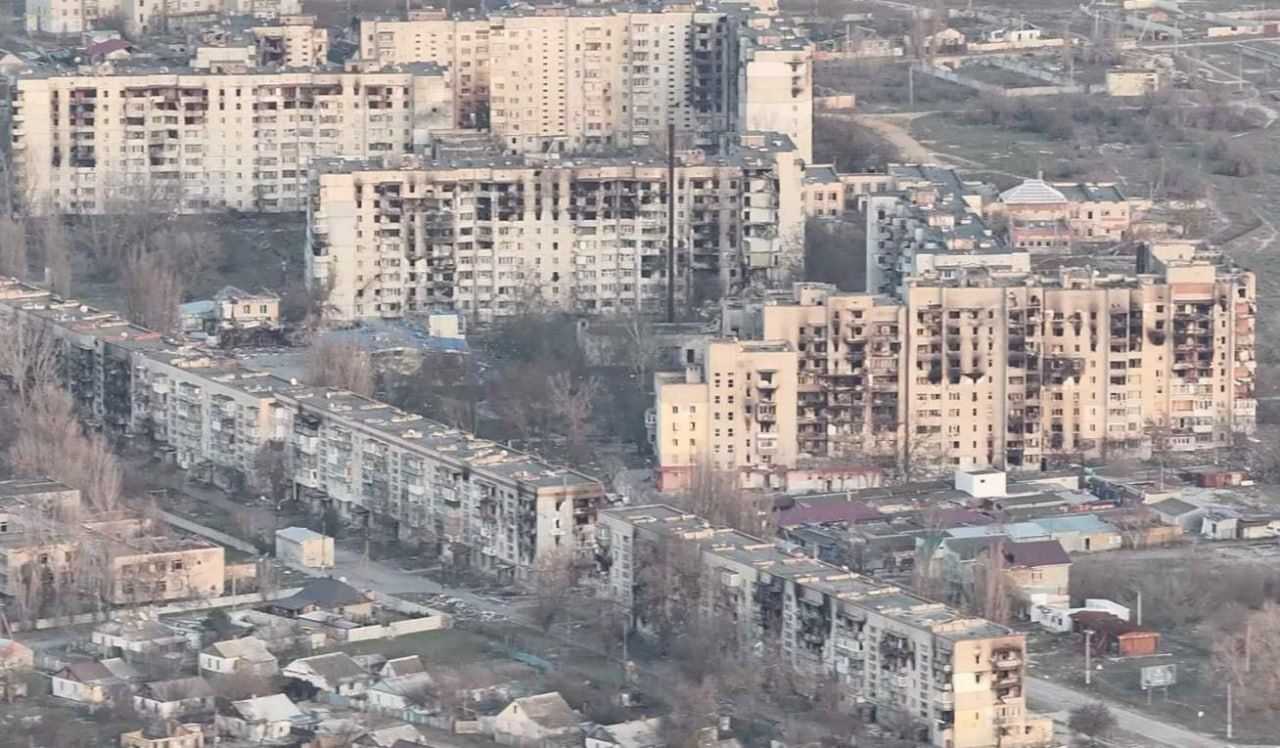
Residents in Russian-occupied Oleshky in Kherson Oblast face an escalating humanitarian crisis, as constant Russian drone attacks and artillery shelling have made it impossible to deliver essential food and medicine supplies or evacuate civilians by road. [1] "These people need to be saved," Dmytro Lubinets, Ukraine's human rights ombudsman, said on Sept. 16, adding that residents are desperate to escape "from this hell." [1] "People are driven to despair and are simply walking along mined roads (to escape)," an Oleshky resident told the Kyiv Independent. [1] Of the city's prewar population of about 24,000, about 2,000 people remain in Oleshky, including about 50 children, Tetiana Hasanenko, exiled head of the Ukrainian Oleshky City Military Administration, told the Kyiv Independent. [1] This spring, amid a deteriorating humanitarian situation, volunteers could still evacuate civilians from the city despite the risks. [1] Now, several months later, volunteers say even those evacuation efforts are no longer possible, as Russia refuses to cooperate and leaves Ukrainian civilians trapped in the occupied city, facing starvation. [1] The Oleshky resident told the Kyiv Independent that the food situation has been deteriorating for months. [1] "By New Year's, there were already shortages of eggs, and we barely managed to buy any apples. Then we didn't see any of that stuff again until spring. When we did, it was at astronomical prices," the resident said. [1] "Suddenly, bread deliveries stopped," they added. [1] "I'm having tea with honey. And that's all." [1] According to Hasanenko, the last successful food delivery to the city was on May 26. [1] "There is absolutely no meat, flour, oil, butter, ready-made bread, and other basic products in the city," she said. [1] There were two further attempts to bring supplies into Oleshky, Hasanenko said. [1] On June 2, Russian drones attacked vehicles carrying food, killing two drivers and injuring others. [1] On Sept. 1, Russian forces cut short another attempt to deliver food to the city when they attacked five vehicles with drones. [1] Hasanenko said civilians in Oleshky were trying to exchange food with one another, but the Oleshky resident told the Kyiv Independent that "there's absolutely nothing to buy, and there's not even the option of bartering." [1] The local hospital, left without basic medical supplies, electricity, or running water, is also struggling to operate, Hasanenko said. [1] Four doctors, all elderly former hospital staff, continue to work there, she said. [1] "But there are absolutely no medical supplies. The only thing they can do is … to stop the bleeding. There are no medicines," Hasanenko said. [1] Since Russia destroyed the nearby Kakhovka Dam in 2023, the hospital has had to rely on generators for electricity, but fuel supplies have also become increasingly difficult to obtain, according to Hasanenko. [1] She said ambulances have not been operating in the city for years because Russian drone attacks have made it too dangerous. [1] May 26 was the last time people were evacuated from Oleshky, and nobody has entered the city since, according to Hasanenko. [1] In recent weeks, some residents have started walking out of Oleshky to the neighboring village of Radensk alone or in pairs, on roads mined by Russian forces. [1] "They risk being blown up by a land mine or struck by a drone, but they go anyway, because staying in Oleshky is even worse for them," Lubinets said. [1] Stefan Vorontsov, a volunteer coordinator with the Humanity NGO, which helps evacuate civilians from occupied territories, said the walk takes five to six hours under the constant threat of Russian air attacks. [1] "Four or five months ago, it was still possible to leave by car. Now the only option is to walk." [1] Once people reach Radensk, volunteers can pick them up and help them travel farther, he said. [1] Volunteers helped a family leave the area about a week ago, according to Vorontsov. [1] "Some are leaving, while others have to return (after picking up supplies) because they have children or grandchildren at home, or relatives with limited mobility," the Oleshky resident said. [1] The crisis is not confined to Oleshky itself. [1] The worsening humanitarian situation is spreading across the surrounding settlements, leaving more civilians trapped in critical conditions. [1] "Oleshky is not the only place where there is hunger," Vorontsov said. [1] "Ukrainian villages around it — Hola Prystan, Radensk — the geography of the problem is getting bigger." [1] The Oleshky community includes 13 settlements, five of which have been completely destroyed, according to Hasanenko. [1] While settlements such as Solomky, Pidlisne, and Kozachi Laheri have suffered extensive destruction, some civilians still live there. [1] In other villages such as Radensk, vehicles can either no longer reach people, or have to make a "quite risky" journey navigating the threat from mines and drones, Vorontsov said. [1] "I don't even remember what it's like to have cars driving on the roads anymore," the Oleshky resident said. [1] Lubinets gave a broader estimate on Sept. 16, saying more than 6,000 people may remain in Oleshky and the surrounding area, including about 200 children. [1] His office said it had verified 358 people who urgently need assistance to leave safely. [1] "People's moods are very panicked and depressed," Hasanenko said. [1] Residents are increasingly worried about how they would survive the winter without regular food deliveries, medicine, electricity, or reliable transport, she added. [1] "They understand that the summer has passed and no evacuation has been organized." [1]
Escalating Houthi Attacks on Saudi Oil Infrastructure
Saudi Arabia is currently facing "the biggest threat" ever to its production of oil as the Iran-backed Houthis in Yemen are launching cross-border attacks and seizing territory near the Red Sea’s Bab el-Mandeb Strait, an expert told Fox News Digital. [2] Hussain Abdul-Hussain, a research fellow at the Foundation for Defense of Democracies, said Thursday that the situation is escalating in the Middle East as Iran "likely instigated the Houthis to force a blockade on Saudi Arabia." [2] "I think this situation is really precarious for the Saudis. This is the biggest threat to their production of oil since their kingdom was founded in 1932. And this is almost existential," he said. [2] Saudi Arabia was forced to temporarily close its East-West oil pipeline last week following a drone attack launched from Iraq, which Trump said he believes Iran was behind. [2] Then on Tuesday, Saudi Arabia destroyed a Houthi drone that attempted to enter the airspace near Mecca, among other recent provocations. [2] "We know that the United States imposes a blockade on Iran, so Iran is unable to export any of its oil, licitly or illicitly. What the Iranians are trying to do is that they're trying to telegraph to the other oil exporters in the region that either we export, all of us export oil, or none of us will export oil," Abdul-Hussain told Fox News Digital. [2] "This is why you see Iran shutting down the Strait of Hormuz. This forced Saudi Arabia to switch its oil production from east to west, from Hormuz to the other side to the Red Sea. Tankers started picking up oil at the port of Yanbu in Saudi Arabia on the Red Sea and sailing south through the Bab al-Mandeb all the way to the Asian markets." [2] "Iran didn't like this because clearly all or none didn't work," he said. [2] "So they likely instigated the Houthis to force a blockade on Saudi Arabia." [2] Fox News Digital, citing a source familiar with the matter, reported on Friday that Saudi Crown Prince Mohammed bin Salman urged Trump to take military action against the Houthis. [2] Trump then said the next day during a visit to Ireland that "the Houthis called us and they don’t want to fight with us." [2] "They let us know, they don’t want to fight with us...they don’t want us to go after them," Trump added. [2] "But they have called and they have talked to us, and they don’t want us to, they would much prefer not having us involved." [2] Abdul-Hussain told Fox News Digital that "Our expectation as Washington is that the Saudis, with all these arms that we've sold them over the past few decades, with all the military support and advice we give them, that they should be able to protect their own tankers and ships in this waterway and keep it open." [2] "The Houthis announced that they're only going after Saudi ships and Saudi navigation and they made it clear that they are not going after international shipping, whether [they] are U.S. ships or European ships," he continued. [2] "So this forces a choice on us. Do we go to war with the Houthis out of nowhere, even though they're not willing to, or at least they didn't wage war on our ships and our navigations through Bab el-Mandeb?" [2] "Or we ask the Saudis to handle this, you know, after all the Houthis are not really a state, they're a non-state actor and Saudi Arabia should be able to deal with them," Abdul-Hussain added. [2] "Unfortunately, the Saudis don't seem to have been able to deal with the Houthis." [2] A senior administration official told Fox News Digital on Thursday that the U.S. remains focused on protecting core national security interests such as the freedom of navigation in the Red Sea while simultaneously empowering allies in the region to manage and resolve security challenges. [2] The Trump administration also remains in continuous dialogue with Saudi Arabia and Yemen over regional stability, the official added. [2]
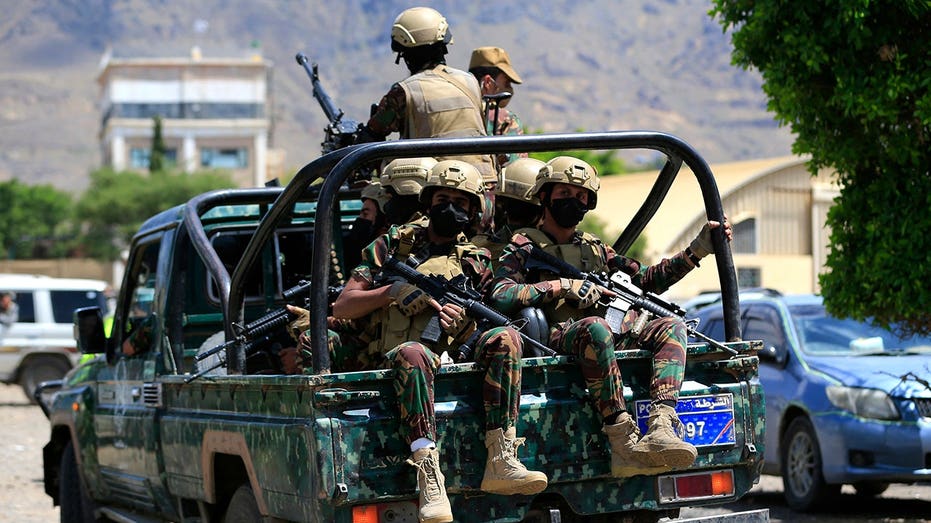
Houthi fighters in Yemen launch attacks threatening Saudi oil production and Red Sea shipping. — Source: foxnews
Sudanese Army Advances in Kordofan
Sudanese army takes control of areas in North, South Kordofan. [4] Army captures Al-Farshaya, Al-Mamsouka in South Kordofan and Sharshar in North Kordofan after clashes with RSF. [4]
Deadly Security Raid in Southern Syria
Three members of the Syrian Internal Security Forces were killed in the Daraa countryside, around thirty kilometers from the Golan border. [5] Reports from Syria say the incident happened in the city of Sanamayn, about sixty kilometers south of Damascus. [5] According to ANHA news, “three members of the Internal Security Forces were killed, and others were injured during a security raid on a house in the city of Sanamayn in the northern Daraa countryside, which was followed by clashes with a number of wanted individuals, amid heightened security tensions and a curfew imposed in the city.” [5] Syrian state media SANA reported similar information. [5] Noting that the forces were searching for a wanted individual. [5] “An outlawed armed group led by the wanted individual opened fire on a security patrol and clashed with members of the patrol as they carried out the operation, according to a statement.” [5] The report did not identify the outlawed group. [5] The government media report added that “security forces remain deployed across al-Sanamayn and are pursuing members of the group and others involved in the attack," the statement said. [5] “The Internal Security Command in Daraa province imposed a temporary curfew in al-Sanamayn until the security situation stabilizes.” [5] Syria says that it will “continue to pursue all those involved in the attack and take the necessary legal measures against them,” the Internal Security Forces said. [5] ANHA named the three members of the security forces as Mustafa Saad al-Din, Salloum al-Masalmeh and Nael al-Safadi. [5] It said the killings were the result of a clash when the forces raided a house. [5] “Saad al-Din was from the village of Hamer in the al-Lajat area of the Daraa countryside, while al-Masalmeh was from Daraa al-Balad and al-Safadi was from the city of al-Hara.” [5] The situation in the city appears tense, hence the curfew. [5] “The Internal Security Forces Command in Daraa province said it was following up on the repercussions of the armed clash that took place in Sanamayn early today, stressing that ‘the law is above everyone’ and noting that it would continue to follow up on the incident and take the necessary measures,” ANHA added. [5] Daraa province is the major province in southern Syria. [5] Its capital is the city of Daraa near the Jordanian border. [5] The province is also near the Golan border with Israel and also near the Druze area of Suwayda. [5] As such, it is an important part of Syria at the intersection of trends in the country. [5] During the Syrian civil war, much of the province was held by rebels. [5] Daraa province fell to rebels following collapse of Assad regime. [5] The rebellion has roots in Daraa city, where early protests against the regime began. [5] It is thus a symbolic area. [5] In 2018, the Syrian regime retook Daraa from the rebels. [5] Later, the province fell to rebels again as the Assad regime collapsed in December 2024. [5] Israel has demanded that southern Syria be largely demilitarized. [5] This means the Interior Ministry forces are the main force in the area. [5] These are lightly armed. [5] It also means that there are security threats. [5] These may include ISIS cells or drug smuggling gangs. [5] Damascus has accused elements in Suwayda of being involved in drug smuggling. [5] Jordan has busted numerous smuggling attempts, including the use of balloons to move captagon and other drugs. [5] It remains unclear who the perpetrators were in the clash in southern Syria. [5] There are tensions closer to Israel in villages near Quneitra, where locals complain of weekly IDF raids and shelling. [5]
Broader Regional Impacts
The situation in Russian-occupied Oleshky was dire. Now it's 'hell'. [1] The aerial view of Oleshky, a Russian-occupied town in Kherson Oblast, Ukraine in a photo published on Sept.16, 2026. [1] Saudi Arabia is currently facing "the biggest threat" ever to its production of oil as the Iran-backed Houthis in Yemen are launching cross-border attacks and seizing territory near the Red Sea’s Bab el-Mandeb Strait, an expert told Fox News Digital. [2] 12,597 newly displaced households (86,415 individuals) have been reported across Abyan, Aden, Al Hodeidah, Lahj, Shabwah and Taiz governorates. [3] Fifteen of 19 International Medical Corps-supported health facilities remain operational across the west coast, with four non-functional. [3]
What to watch next: Ukraine continues to press Russia to allow the evacuation and remains in contact with the ICRC and other international organizations. [1]







