
Current Wars in the World Intensify on Multiple Fronts from Ukraine to Congo
Multiple active conflicts continue across the globe, with fighting intensifying in Ukraine, eastern Democratic Republic of the Congo, Yemen, Ethiopia's Tigray region, and risks persisting at Ukraine's Zaporizhzhya Nuclear Power Plant. The current wars in the world reflect overlapping pressures from armed groups, external involvement, and threats to critical infrastructure that stretch diplomatic resources thin.
DR Congo Faces Ongoing War of Aggression
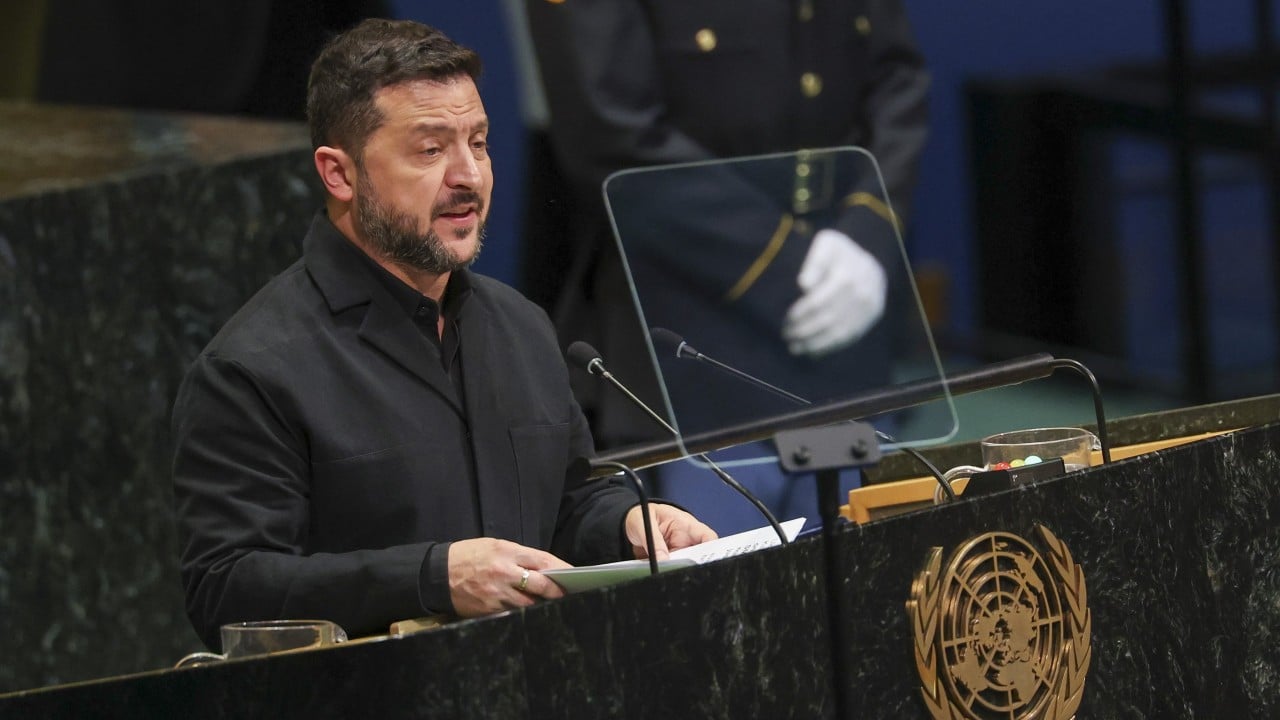
Prime Minister Judith Suminwa told the UN General Assembly that the Democratic Republic of the Congo continues to face a war of aggression led by Rwanda through its proxy the AFC/M23. [1] Other armed groups, particularly the Allied Defense Forces and CODECO, are exacerbating the humanitarian crisis in the resource-rich eastern region. [1] The Prime Minister pointed to a peace agreement signed in Washington, DC, in June 2025, between the DRC and Rwanda, yet noted that for millions of Congolese this peace remains only a promise. [1] She also referenced UN Security Resolution 2773, which calls for an effective cessation of hostilities, the withdrawal of Rwandan forces from Congolese territory, and restoration of state authority. [1] Ms. Suminwa addressed a protocol signed in May that provides for the disarmament and demobilization of combatants from the Democratic Forces for the Freedom of Rwanda, noting that the UN peacekeeping mission supported the repatriation of 120 people associated with the group as a first testament to the protocol's implementation. [1] She cautioned against growing global demand for blood-stained minerals in the rush to net-zero and rejected the old model that limits producer countries to crude extraction while processing and profits concentrate elsewhere. [1]
Houthis Escalate Attacks on Saudi Arabia
The Houthis have intensified missile and drone strikes on Saudi targets, prompting emergency alerts in Mecca, Jeddah, and Yanbu. [2] Saudi Arabia, Turkey, and Pakistan convened under a joint defense pact to support Saudi Arabia and affirmed its right to self-defense. [2] The ministers discussed arrangements for holding an urgent meeting of the chiefs of staff of the three countries under the Mecca Joint Defense Agreement, which stipulates that an attack against any one of the parties constitutes an attack against all parties. [2] Iran's president distanced Tehran from the Houthis in an American television interview, stating that the Houthis are responsible for their own actions. [2] Iran's Foreign Minister conveyed a proposal to the United States under which the Strait of Hormuz would be reopened if conditions were met, including an end to hostilities on all fronts within seven days, the lifting of the blockade on Iranian ports, release of frozen funds, and waiver of oil sanctions. [2] The Houthis said they had fired dozens of missiles and drones at Saudi targets on Thursday, September 24, while authorities in Saudi Arabia said they had intercepted six ballistic missiles. [2] Saudi Arabia’s Grand Mufti called on soldiers to be ready to lay down their lives to fight the Houthis until the group is ousted from power. [2]
Renewed Fighting Erupts in Ethiopia's Tigray
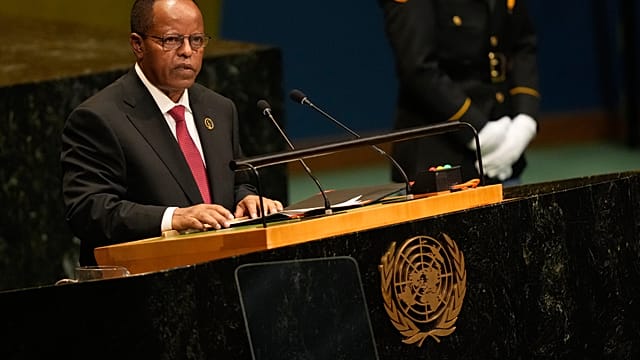
Fighting has renewed in Ethiopia's Tigray region, shattering the 2022 peace pact. [3] President Taye Atske Selassie blamed external actors including Egypt and Eritrea at the UN General Assembly. [3] The TPLF and six other groups formed an alliance to overthrow the government. [3] Taye told the Assembly that in spite of continued outside interference in the country’s internal affairs, Ethiopia had exercised immense restraint. [3] He said the country remained firm in the conviction of becoming one of the most prosperous and dynamic development engines in Africa. [3] The main combatants in the renewed fighting are Ethiopian federal troops and fighters loyal to the Tigray People’s Liberation Front. [3] The UN and the European Union called for restraint and a return to the African Union-brokered peace process. [3]
Ukraine Reports Heavy Russian Assaults
In Ukraine, 236 combat clashes occurred in one day with over 50 Russian attacks repelled on the Pokrovsk and Kostiantynivka fronts. [4] On the Pokrovsk front, Ukrainian defenders stopped 29 attacks near settlements including Serhiivka, Molodetske, and Novopavlivka. [4] On the Kostiantynivka front, 22 Russian attacks were recorded near settlements including Kostiantynivka, Novoselivka, and Illinivka. [4] Ukrainian forces also repelled six assaults on the North Slobozhanshchyna front and in Russia's Kursk Oblast, nine attacks on the South Slobozhanshchyna front, four on the Kupiansk front, five on the Lyman front, three on the Sloviansk front, nine on the Huliaipole front, two on the Orikhiv front, and one on the Prydniprovske front. [4]
Nuclear Safety Concerns at Zaporizhzhya Plant
The Zaporizhzhya Nuclear Power Plant is operating on its sole remaining power line with declining diesel supplies for emergency generators. [5] The plant is receiving off-site power through its sole remaining power line, the 330 kilovolt Ferosplavna-1 line. [5] The plant has adjusted the operating strategy for its emergency diesel generators as diesel fuel supplies at the site continue to decline. [5] Repeated losses of this connection in recent months have underlined the vulnerability of the site. [5]
Global Humanitarian and Energy Impacts
The conflicts form part of broader Middle East and African instability, disrupting oil flows, causing mass displacement and threatening global energy security. [1][2][3] In eastern DR Congo, decades of violent insecurity and mass displacement continue alongside a deadly Ebola outbreak. [1] The Houthis have disrupted ship traffic at the mouth of the Red Sea while Iran has effectively limited tanker traffic at the Strait of Hormuz, the conduit for 20% of the world’s oil exports before the start of the war. [2] In Ethiopia, the renewed fighting follows a devastating two-year war that killed hundreds of thousands of people. [3]
What to watch next: Continued diplomatic efforts under the Mecca Joint Defense Agreement, implementation steps for the May protocol on FDLR combatants, and monitoring of the single remaining power line at the Zaporizhzhya Nuclear Power Plant.