
Colombia Unions Call National Strike Against Tax Reform Policies in Most Dangerous Countries
Civil unrest is escalating in multiple countries including some of the most dangerous countries as labor unions in Colombia call a national strike against the government, opposition figures in Somalia accuse the president of assaulting the judiciary, violence disrupts a political rally in Nigeria, and protests in Iran lead to a death sentence for online dissent.
Colombia Faces National Strike Over Tax Reform
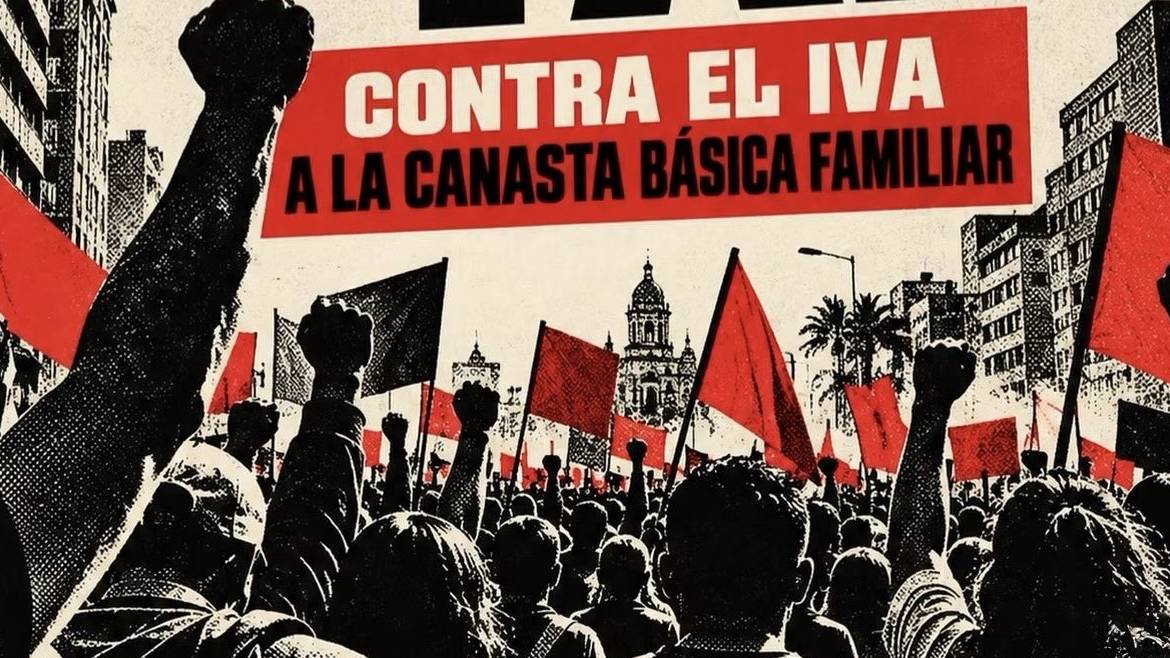
Colombian labor unions and civil society groups announced a national strike on November 19 against President Abelardo de la Espriella’s tax reform, accusing the government of dismantling social rights, imposing new taxes on basic goods, and favoring the ultra-rich. [1] Colombia’s main labor unions and a collection of civil society organizations called a national strike “against the fascist government of Abelardo de la Espriella and his tax reform” bill. [1] In a press statement, the organizations accused De la Espriella of, among other things, dismantling the “social, environmental, trade union, and labor rights achieved during the government of Gustavo Petro,” and surrendering sovereignty and kneeling before the imperialist government of the United States. [1] The government of Abelardo, like that of Duque and Carrasquilla, intends to reach into the pockets of the people and privilege the ultra-rich with its “economic rescue” bill, which imposes a 19% VAT on food and other basic goods in the family basket, higher taxes on earned income, raises health contributions up to 8%, and conversely reduces the corporate capital income tax from 35% to 31%, eliminates the wealth tax in 2031, and reduces the capital gains tax to 20% for investments in 2027 and 2028. [1] Civil society organizations additionally accused the government of seeking special powers to facilitate the privatization of state-controlled companies like oil firm Ecopetrol. [1] The organizations said they united with the main opposition party, the Historic Pact, “with the purpose of opposing this fascist government and decisively participating in the National Strike.” [1] The National Strike on November 19 constitutes a new stage in the organization and expression of growing popular discontent, which was also manifested in the successful national mobilization day of October 14. [1] It is about strengthening a collective action process capable of confronting the Government’s regressive measures, demanding respect for hard-won rights, and opposing the deepening of its neoliberal and authoritarian project. [1] The last time a national strike was organized was in 2021 when the labor unions and their allies from civil society shut down parts of the country for months. [1]
Political Crisis Deepens in Somalia
In Somalia, President Hassan Sheikh Mohamud faces accusations of deploying troops to arrest the Supreme Court chief justice after the court ruled his term extension unlawful, deepening a political crisis amid an ongoing Al-Shabaab insurgency and loss of international support. [2] Somalia's political crisis deepened on Thursday as the opposition accused the president of sending troops to arrest the Supreme Court's chief justice after the tribunal declared an extension of his term "unlawful". [2] Somalia is dealing with multiple crises, with political rivalries that have descended into violent clashes, while the government loses international support for its fight against the powerful Islamist insurgent group, Al-Shabaab. [2] President Hassan Sheikh Mohamud has tried to move Somalia towards fully democratic elections, replacing the clan-based system in which elders pick their representatives. [2] But his opponents see the reforms as a power grab, especially after the president declared a "transition period" that gave him an extra year in office when his term ended in May. [2] Mohamud argues he was allowed to stay in office under constitutional amendments passed by parliament, to prepare for the first nationwide democratic elections in April and May 2027. [2] But the Supreme Court ruled on Thursday that they should never have applied to Mohamud's current term and he should have left office in May. [2] It called for a new agreement between political parties within 30 days, and elections to be held within 90 days. [2] Before the ruling had even been published, the president's office announced on Facebook that he was dismissing the chief justice, Bashe Yusuf Ahmed, and appointing a replacement, because of "concerns... about the need for an efficient and fair judiciary". [2] The court responded that the president had no authority to fire the judge, accusing him of trying "to obstruct the administration of justice in the constitutional case filed before the Supreme Court". [2] A former prime minister, Hassan Ali Khaire, told reporters that the president had "launched an assault on the Supreme Court and deployed troops to its premises" on Thursday. [2] "The chief justice and lawyers are being pursued in their homes for arrest, have been subjected to torture, and the court's operations have been halted," he added. [2] His claims could not be verified by AFP, but images published by Somali media claimed to show military forces in the court's compound. [2] "Somalia stands at a dangerous juncture. The dismantling of our judiciary is a direct threat to the rule of law," said Ali Khaire. [2] "I call on all sectors of Somali society to stand up now and defend Somalia's constitutionalism." [2] Most of the opposition and regional parties boycotted the vote on amending the constitution when it went to parliament in March, and some said they were barred from attending. [2] Violence broke out in the capital, Mogadishu, in June as political factions clashed over the issue. [2] The flare-up comes at a time when Somalia is also facing a security crisis related to the long-running insurgency by the Al-Qaeda-linked Al-Shabaab group that controls swathes of the country. [2] International donors, frustrated by the lack of progress against the militants and the endless political chaos, have been slashing funding for the international military mission that has been ongoing for almost 20 years. [2] Uganda, the biggest contributor to the African Union's force, announced this week that it was pulling out all troops by the end of 2027. [2] Washington has cut all donations to a critical United Nations logistics mission on which the military coalition relies. [2]
Violence Erupts at Nigerian Political Rally
Violence at an APC presidential campaign rally in Nasarawa State, Nigeria, injured about 40 people, prompting the governor to order a probe into security agencies and alleged masterminds linked to political opponents. [3] Nasarawa State Governor Abdullahi Sule has ordered an investigation into the conduct of security agencies and suspects during the violent disruption of the All Progressives Congress (APC) presidential campaign rally in Lafia, the state capital, on Wednesday. [3] The governor gave the directive on Thursday during an expanded State Executive Council meeting at the Government House, Lafia, following the clash that reportedly left about 40 people injured. [3] In a statement issued by his Senior Special Assistant on Media Affairs, Ali Abare, Governor Sule questioned the circumstances surrounding the use of tear gas at the rally, particularly around the podium. [3] He described the incident as embarrassing and unacceptable, especially given the presence of the vice president, who attended the rally on behalf of President Bola Ahmed Tinubu. [3] “The embarrassment was not to the state or the Presidential Campaign Council alone. It was an embarrassment to the Vice President on behalf of the President of the Federal Republic of Nigeria. That is the reason why we cannot take it lightly,” he said. [3] The governor directed security agencies to invite and question everyone suspected of having a role in the incident, irrespective of their previous positions or status. [3] He insisted that the investigation should go beyond arresting a few suspected youths, stressing that those who allegedly planned, sponsored, or masterminded the disruption must also be identified and held accountable. [3] “We cannot, at the end of the day, after having such an embarrassment, just go and arrest five or six Almajiris and say that is the end of it. It will not work. The people responsible for this must be called to order,” he stated. [3] Governor Sule also expressed concern over reports that some individuals had allegedly planned to disrupt the rally before it took place. [3] He further cited the reported attack on the Vice President’s convoy and the throwing of an object suspected to be a shoe towards the podium where Shettima and other governors were standing. [3] He warned against allowing political disagreements to degenerate into violence, cautioning that such developments could threaten peace and stability in the state. [3] “I don’t want us to behave like them. If we behave like them, believe me, the state will become ungovernable. While commending the military, the State Security Service (SSS) and the Nigeria Security and Civil Defence Corps (NSCDC) for their intervention during the incident, Mr Sule said he convened the meeting to ensure that all concerns surrounding the violence were properly presented before further action was taken. [3] Earlier, the state government had linked former governor and senator, Umaru Al-Makura, as well as the Social Democratic Party (SDP) governorship candidate and former Inspector-General of Police, Adamu Abubakar, to the violence. [3]
Iran Issues Death Sentence for Online Activism
Iranian authorities sentenced activist Amirhossein Mousavi to death for social media posts, citing “corruption on earth,” with rights groups alleging the use of torture-tainted confessions following nationwide protests. [4] Iran's judiciary has sentenced to death a man held in detention for almost two years over his posts on X and other social media, his lawyer and several rights groups said. [4] The death sentence against Amirhossein Mousavi comes as concerns grow over the surging use of the death penalty against defendants seen by rights groups as political prisoners after nationwide protests in January and the Middle East war. [4] Mousavi posted on X and also Instagram under accounts named James Bi Din (meaning James without faith in Persian), or James B. Dean, which have since been suspended. [4] He was sentenced to death after being convicted of the capital charge of "corruption on earth" in connection with "online activity on the Twitter account 'James B. Dean'", his lawyer Reza Shafakhah wrote on X, formerly known as Twitter. [4] His account on X was known as @james_bidin and run anonymously. [4] But authorities ascertained that Mousavi was behind it and he was arrested at a Tehran airport in December 2024 while leaving for the Iranian Gulf island of Kish. [4] Norway-based rights group Iran Human Rights (IHR) said the conviction was over his "online dissent" against the authorities. [4] The sentence was also confirmed by US-based Human Rights Activists News Agency (HRANA), which said the trial has been presided over by judge Abolghasem Salavati, who is notorious for handing out execution verdicts. [4] IHR said that following the arrest of Mousavi, 40, he had been shown in October 2025 on Iranian state television making confessions in a segment which accused him of acting as an Israeli agent to incite protests during nationwide demonstrations in 2022. [4] Rights activists accuse authorities of subjecting detainees to torture to extract forced confessions that are later broadcast on TV. [4] IHR said Mousavi had later retracted the comments broadcast on television. [4] "His torture-tainted confessions were aired by state media prior to the commencement of legal proceedings," it said. [4] Iran has executed 36 men over the January 2026 protests. [4] Since the war broke out with the US and Israel, it has also executed another two men over the protests in 2022. [4]
Malawi Activists Threaten Protests Over Fuel Shortages
In Malawi, the Human Rights Defenders Coalition threatened demonstrations to demand the removal of the Energy Minister over a fuel crisis blamed on foreign exchange shortages, though analysts argue it stems from macroeconomic constraints rather than ministerial failure. [5] Malawi is in the grip of a nationwide fuel supply crisis, and the Human Rights Defenders Coalition (HRDC) has threatened countrywide demonstrations to force the resignation or dismissal of Energy Minister Jean Chifuniro Mathanga. [5] The minister has openly identified the root cause as the country's persistent shortage of foreign exchange. [5] That diagnosis is not new. Successive administrations have said the same thing, and it should inform any rational assessment of the crisis. [5] The problem is not necessarily ministerial incompetence. It is a macroeconomic constraint that limits the country's capacity to buy fuel and meet the costs of moving it. [5] Against that background, the continued arrival of fuel supplies despite the foreign exchange shortage should not be dismissed. [5] It is evidence of sustained effort by the minister and officials to keep the economy's lifeline running under very difficult conditions. [5] Removing the minister and replacing her, including with those now demanding her departure, would not by itself end a shortage of foreign exchange. [5] Unless the structural constraint is addressed, a change of personnel would change the face managing the crisis without changing the crisis. [5] The case for her removal has yet to show how that change would solve the underlying problem. [5] Tobacco remains Malawi's main source of foreign exchange, a largely seasonal export that brings in most of its earnings once a year. [5] Other domestic sources remain limited, so the economy has long leaned on the IMF, the World Bank and efforts to build private-sector exports in mining, tourism and agriculture. [5] This year's tobacco earnings have not been as strong as expected, but the government has kept import cover at an average of about 2.5 months. [5] The column argues this reflects efforts to protect the country's external liquidity through domestic and international financing. [5] Reserve Bank of Malawi figures show gross foreign exchange reserves stood at US$616.3 million in June 2026, up 10.9 per cent from US$555.9 million in June 2025. [5] The column says this does not mean reserves are adequate, but argues the situation could have been worse. [5] Import cover of about 2.5 months remains below the three-month benchmark. [5] It is, however, a substantial improvement on the roughly two weeks the column says prevailed before last year's change of government. [5] Import cover affects the availability of essential goods, exchange-rate stability, business confidence and consumer prices. [5] The column says this