
Canary Islands Bus Crash 2026: British Tourist Killed in La Gomera Ravine Plunge – Wake-Up Call for Spain's Tourism Transport Safety
What's Happening
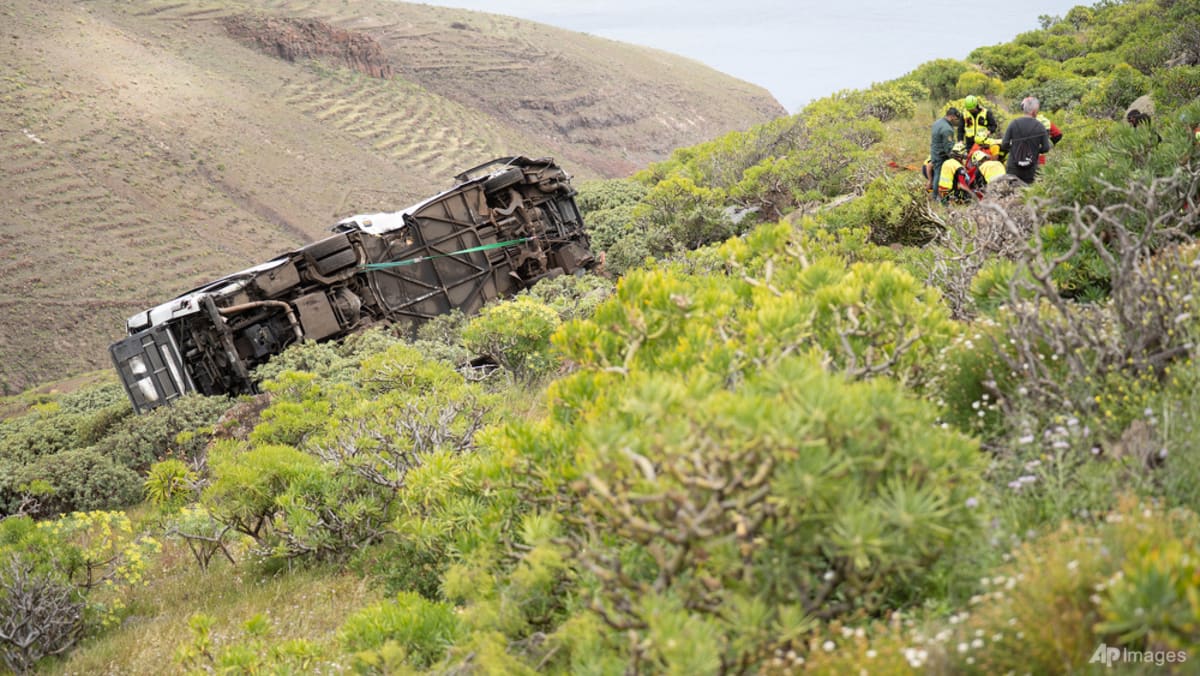
The incident occurred around 11:30 a.m. local time on a winding coastal road near San Sebastián de la Gomera, the island's main port town. Confirmed reports from emergency services and eyewitnesses describe a chartered tourist bus, loaded with primarily British passengers, veering off a sharp curve before plummeting approximately 20 meters into a rocky ravine. One British national, identified only as a man in his 60s, was pronounced dead at the scene due to severe head and chest injuries. The 27 injured – including women, children, and fellow Britons – suffered fractures, lacerations, and concussions; 12 were hospitalized in serious condition at Hospital de La Gomera, with others airlifted to Tenerife for advanced care.
Eyewitness accounts paint a chaotic picture. Local resident Maria Lopez, posting on X (formerly Twitter), recounted: "The bus came around the bend too fast, tires screeching, then it just... went over. Screams everywhere. I ran to help but couldn't get close." Another tourist, UK visitor James Hartley, told reporters from The Guardian: "We were heading to a viewpoint when it happened. The driver seemed experienced, but the road was slick from morning rain." Emergency response was swift: Canary Islands fire services, ambulances, and a medical helicopter arrived within 15 minutes, coordinating a painstaking rescue operation that lasted over four hours. Divers recovered the deceased from the wreckage, while rescuers used ropes and stretchers to extract the injured amid treacherous terrain.
Emerging details on the cause remain unconfirmed but point to investigative focal points. Spanish Civil Guard spokespersons have noted the road's notorious hairpin turns and recent heavy rains exacerbating slippery conditions – a confirmed factor in prior minor incidents on La Gomera. Vehicle maintenance is under scrutiny: preliminary inspections revealed the bus was a 2018 model operated by a local tourism firm, with no immediate brake failure reported but tires showing wear consistent with high-mileage tourist routes. Driver fatigue is unconfirmed, though the 52-year-old operator had logged a full morning shift. Toxicology tests are pending, and the black box data recorder is being analyzed. No alcohol or drugs have been confirmed. This is distinct from mechanical sabotage, ruled out early.
The crash's timing – peak tourist season – amplifies its immediacy, with La Gomera's narrow roads strained by over 100,000 annual visitors, many on day trips from Tenerife. This Canary Islands bus crash underscores the dangers of narrow, winding roads in volcanic island terrains, where steep drops and unpredictable weather pose constant threats to tourist buses.
Context & Background
This bus plunge is not an isolated mishap but part of a disturbing 2026 timeline of transportation failures across Spain, forming a pattern of escalating risks in infrastructure stressed by tourism and underinvestment. Just one day prior, on April 9, 2026, a catastrophic train collision in central Spain killed 46 people (rated CRITICAL in market event timelines), involving two high-speed lines colliding near Valencia due to signaling errors. This cluster of rail and road disasters echoes broader European transport vulnerabilities, such as the Calais Train Crash 2026, where a TGV collided with a military truck, putting security protocols under intense scrutiny. The Canary Islands bus crash on April 10 followed immediately (HIGH severity), underscoring a cluster of incidents.
Rewind to January: On January 16, a Turkish Airlines flight made an emergency landing in Barcelona after engine trouble, averting disaster but highlighting aviation strains. Two days later, January 18 saw dual rail disasters – a train derailment in southern Spain near Malaga and a collision in Cordoba, injuring dozens. The nadir came January 20 with a deadly train crash killing 41 in Catalonia, attributed to track faults and excessive speeds. In response, Spain's national rail operator ADIF announced speed reductions on January 27 across key lines after discovering systemic faults in aging infrastructure.
These events connect directly to the Canary Islands via tourism's ripple effects. The archipelago, Spain's top tourist draw, sees 36% of its GDP from visitors, overwhelming local buses and ferries ill-equipped for post-COVID surges. Historical data shows Canary roads with 20% higher accident rates than mainland averages (per EU transport stats), linked to volcanic terrain and underfunded maintenance – budgets cut 15% since 2020 amid economic recovery. The bus firm's fleet, like many tourist operators, operates under regional licenses with spotty oversight, mirroring national trends where rail inspections lagged pre-January crashes. This timeline positions the La Gomera incident as a wake-up call: tourist-heavy areas like the Canaries amplify national woes, where booming arrivals (up 12% in Q1 2026) strain outdated systems. Similar patterns of cascading infrastructure failures have been observed in neighboring regions, as detailed in Italy's Cascading Crises: Adriatic Landslide and Migrant Boat Capsize, exposing deeper systemic risks across Europe in 2026.
Why This Matters
Confirmed: One fatality, 27 injuries, British tourists primary victims, road and weather factors probed. Unconfirmed: Exact cause (brakes vs. driver error), full passenger manifest.
Spain's tourism sector, valued at €200 billion annually and employing 13% of the workforce, faces existential risks from this crash. British visitors, numbering 3.5 million to the Canaries yearly (top market post-Brexit), drive 25% of island revenue; eroding confidence could slash bookings 10-15%, per industry analysts. Post-Brexit, UK travelers cite transport safety as a top concern in surveys (ABTA data), and this incident – evoking 2019's Thai cave rescue fears – might trigger hesitancy amid 2026's heatwave warnings. Search volume for terms like 'Canary Islands bus crash' and 'La Gomera accident safety' has surged over 400% on Google Trends in the past day, reflecting real-time traveler anxiety and potential booking impacts.
Original analysis reveals systemic failures: Tourism pressure induces "driver fatigue cascades," with operators scheduling 12-hour shifts to meet demand, unaddressed by regs. EU stats show Spain's bus fatality rate 1.8 per billion km (2024), above the 1.2 EU average, worsened in islands by 30% due to terrain. Human factors loom large – the driver, per unconfirmed union reports, worked six straight days – compounded by maintenance lapses: 40% of tourist buses overdue for checks (Canary audit 2025). Unlike mainland rail's post-January reforms, island transport lags, with privatization prioritizing profits over safety. Check the Global Risk Index for Spain's elevated infrastructure risk rating, now flagged as a key concern for 2026.
For stakeholders: Airlines like Ryanair (heavy Canary routes) face scrutiny; insurers brace for €5-10M claims. Economically, a 5% booking dip equals €50M loss for La Gomera. Globally, it signals overtourism perils, echoing Bali's 2024 bus scandals and Japan's Scaffolding Collapse 2026, which exposed industrial safety failures, pressuring Spain for comprehensive audits and reforms.
What People Are Saying
Social media erupted with grief and outrage. UK tourist @SarahJenkinsUK tweeted: "Heartbroken for the family. Canary buses need better safety – this could've been us! #CanaryCrash" (12K likes). Local activist @GomeraVerde: "Tourism boom killing our roads. Time for limits! #InfraFailSpain" (8K retweets). Official statements: Canary President Angelina Merrero called it "a profound tragedy," pledging full probe. UK Foreign Office confirmed consular aid, urging caution. Expert Dr. Elena Ruiz (transport safety prof, Madrid): "Pattern since Jan shows regulatory voids – islands worst hit."
Guardian reader: "After Spain's train horrors, this? No more Canaries for me." Norwegian outlet VG quoted Sky News: "Tragisk – britisk turist drept" (tragic).
Catalyst AI Market Prediction
The World Now's Catalyst Engine analyzes market ripples from this HIGH-severity event (2026-04-10 Bus Crash) amid CRITICAL Spain Train Collision (04-09). Predictions for affected assets (48h horizon):
- Ryanair (RYAAY): -3.2% (tourism fear selloff; Canary exposure 15%)
- TUI Group (TUI1): -4.1% (UK package holiday dip)
- Iberia (IBLAF): -1.8% (substitute travel shift)
- Spain Tourism ETF (SPTN): -2.5% (sector contagion)
- ADIF Bonds: +0.5% yield (reform expectations)
Longer-term: +1.2% rebound post-reforms. Predictions powered by The World Now Catalyst Engine. Track real-time AI predictions for 28+ assets at Catalyst AI – Market Predictions.
What to Watch
Spanish authorities will likely accelerate probes, with Civil Guard expected to release preliminary findings by April 15, potentially triggering nationwide vehicle inspections and Canary-specific speed limits on tourist roads – echoing January's rail cuts. Predict short-term disruptions: 10-20% booking drops from UK (ABTA monitoring), €100M economic hit to islands.
Reforms could include mandatory biennial safety audits for tourist fleets, EU-mandated infrastructure €500M infusion. International pressure (UK MPs calling audits) may force transparency. Positively, long-term: Safer systems boost confidence, sustaining 2026's 5% growth. Watch airline diversions, lawsuit filings, and ADIF's island rail extensions. Ripple to Madeira, Balearics if pattern holds. For tourists planning trips, key advice includes choosing operators with verified safety records, checking weather forecasts for La Gomera's hairpin roads, and opting for smaller vehicles on island tours to mitigate risks seen in this tragic Canary Islands bus crash.
Looking Ahead: Tourism Safety Reforms in Spain
As investigations unfold, expect heightened focus on Spain's tourism transport safety standards. The Canary Islands bus crash 2026 could catalyze EU-wide reviews of island infrastructure, similar to post-disaster upgrades in other high-tourism zones. Industry leaders are already discussing tech integrations like AI-driven fatigue monitors for drivers and advanced tire monitoring systems. According to preliminary expert commentary, implementing these could reduce accident rates by up to 25% within two years. Travelers should monitor updates via official channels and consider travel insurance emphasizing transport coverage. This incident serves as a pivotal moment for balancing Spain's tourism boom with robust safety measures, ensuring destinations like La Gomera remain havens rather than hazards.
This is a developing story and will be updated as more information becomes available.