
Indonesian Volcano Eruption Claims Three Hikers' Lives
An eruption of a volcano in Indonesia has claimed the lives of three hikers, with their bodies later retrieved from under layers of ash.[1][5] This tragic incident at the volcano in Indonesia underscores the inherent dangers posed by such natural events in one of the world's most seismically active regions.[1]
The Eruption Incident
The eruption incident involving the volcano in Indonesia occurred recently, resulting in the deaths of three hikers who were in the vicinity at the time.[1][5] Reports detail that the event unfolded with sufficient force to overwhelm the individuals, leading to their fatalities amid the volcanic activity.[5] This particular eruption aligns with patterns observed at the site, where sudden releases of material have repeatedly demonstrated the volcano's capacity for rapid and hazardous outputs.[1] The immediate outcomes included the deposition of ash over the area where the hikers were located, complicating access and rescue possibilities in the aftermath.[1] Eyewitness accounts and initial reports highlighted the explosive nature of the event, which scattered debris and ash, directly contributing to the loss of life.[5] Such occurrences are not isolated but reflect the ongoing volatility characteristic of this volcano in Indonesia, where eruptions can escalate without extended warning periods.[1] The scale of the ashfall was significant enough to bury the victims, necessitating specialized recovery operations to reach them.[1] This event serves as a stark reminder of the risks associated with venturing near active volcanic zones, particularly when activity levels are elevated.[5] Detailed assessments from the scene confirmed that the eruption's intensity was a primary factor in the tragedy, with the hikers unable to escape the advancing pyroclastic flows or ash clouds.[1] The timing of the eruption, captured in news dispatches shortly after, emphasized the swift progression from normal conditions to catastrophe.[5] Furthermore, the incident prompted immediate evaluations of the volcano's behavior, revealing patterns consistent with prior activity that heighten the peril for nearby human presence.[1]
Casualties and Recovery Efforts

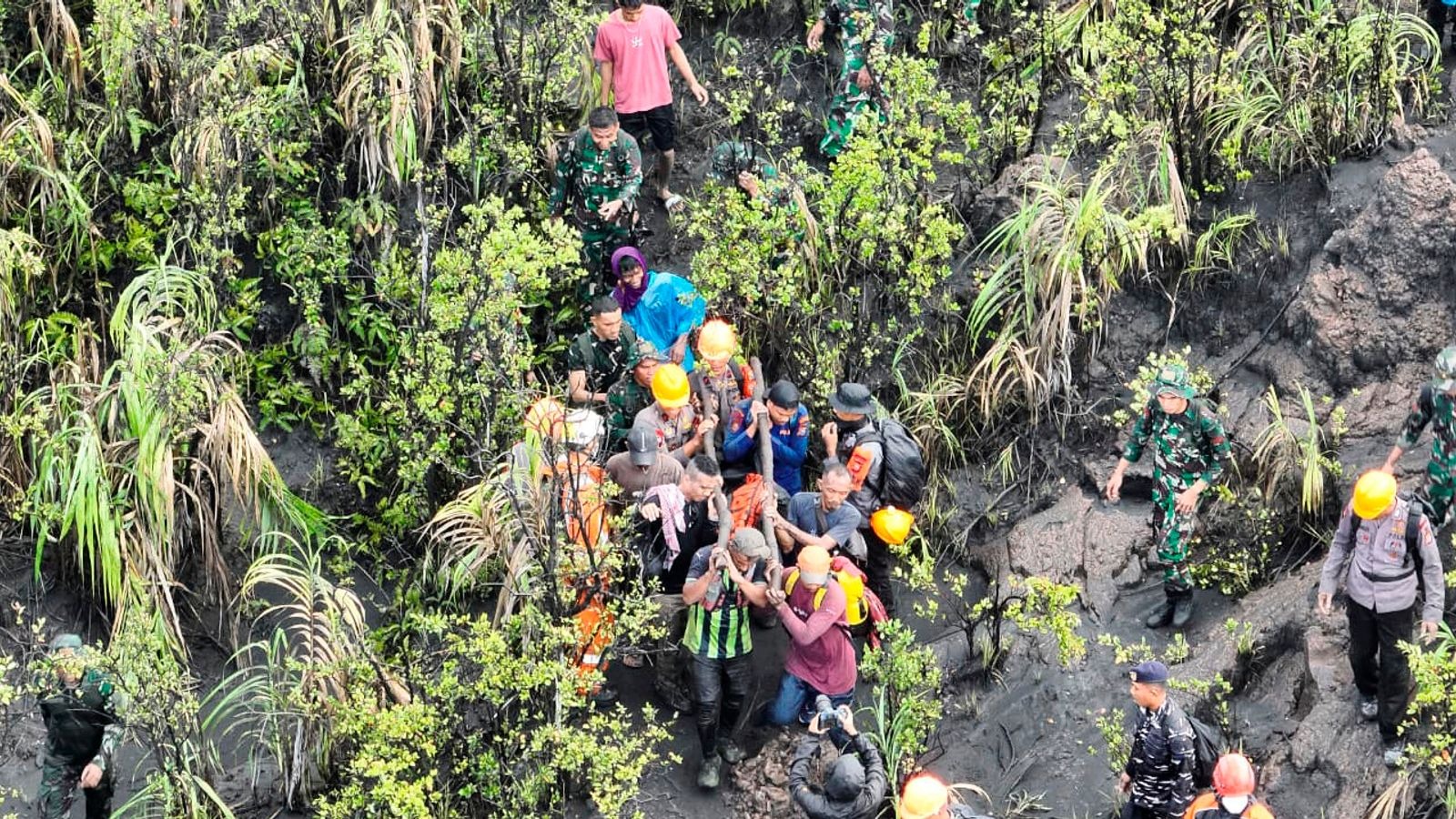
Three hikers' bodies covered in ash after an Indonesian volcano eruption. — Source: gdelt
The human toll from the volcano in Indonesia eruption stands at three confirmed fatalities, all hikers whose bodies were recovered from beneath the ash.[1][4] Recovery efforts focused on locating and extracting these individuals, who were found in a poignant embrace, holding each other as they succumbed to the eruption's effects.[4] This detail, reported from the site, illustrates the final moments of desperation amid the overwhelming ashfall.[4] The retrieval process was challenging due to the thick layers of volcanic ash that had accumulated, requiring careful excavation to avoid further disturbance or risk to rescuers.[1] Authorities and emergency teams worked methodically to bring the bodies to safety, confirming the cause of death as directly related to the eruption's immediate impacts.[1][4] The fact that the victims were holding each other has been noted in coverage, adding a layer of emotional weight to the recovery narrative.[4] Each of the three hikers represented a personal loss, with the incident highlighting vulnerabilities for those engaging in recreational activities near active sites.[1] Post-recovery, the bodies were processed according to standard procedures, allowing for identification and notification of families.[4] The efforts underscored the dedication of response teams operating in hazardous post-eruption environments, where ash poses respiratory and stability risks.[1] This section of the response phase was critical in providing closure, even as the broader implications of the event continued to unfold.[4] The retrieval not only confirmed the death toll but also provided tangible evidence of the eruption's ferocity, with the ash burial serving as a grim testament to its reach.[1][4]
Official Responses and Safety Measures
In direct response to the fatalities at the Indonesian volcano, authorities have mandated the permanent closure of all entry points to the site.[3] This decisive measure aims to eliminate future access for hikers and visitors, addressing the evident risks demonstrated by the recent loss of three lives.[3] The order reflects a comprehensive evaluation of the volcano's ongoing hazards, prioritizing public safety over recreational use.[3] Implementation involves securing trails, observation points, and any pathways leading to the crater area, ensuring no unauthorized entries can occur.[3] Officials have communicated the permanence of this closure, signaling a long-term strategy to mitigate recurrence of such tragedies.[3] This action follows the eruption that killed the hikers, with decision-makers citing the incident as a pivotal catalyst for heightened restrictions.[3] Enforcement mechanisms are being established, including signage, barriers, and potential patrols to uphold the ban.[3] The policy shift marks a significant departure from previous allowances for proximity visits, driven by the real-world consequences observed.[3] By permanently sealing entry points, authorities intend to prevent similar exposures to volcanic dangers, fostering a safer environment around the site.[3] This response also encompasses broader advisories for nearby communities, emphasizing vigilance against ash dispersal and secondary effects.[3]
Background on the Volcano
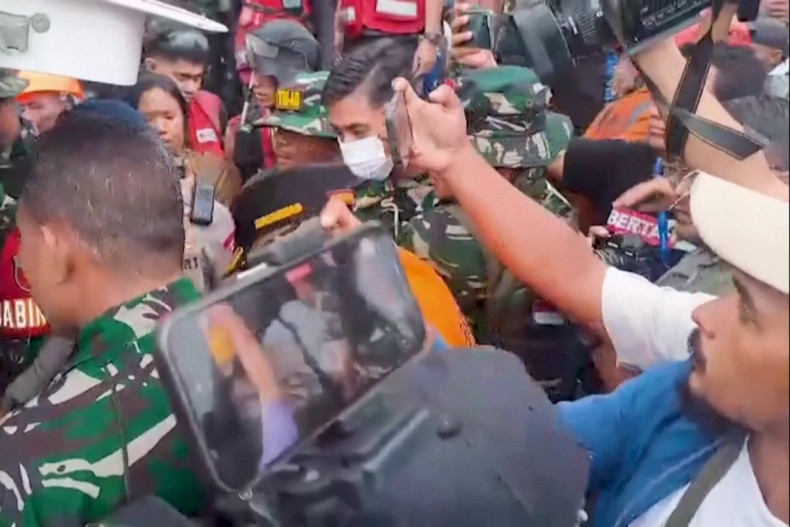
Bodies of three hikers retrieved from ash after Indonesia volcano eruption. — Source: bangkokpost
The volcano at the center of this incident is Dukono, recognized as the most active volcano in Indonesia with a long history of eruptions.[2] Its track record includes frequent activity, as evidenced by this latest event described as "Kembali Meletus," meaning it has erupted again.[2] Dukono's status as Indonesia's most active stems from consistent volcanic outputs over extended periods, making it a focal point for monitoring.[2] The volcano's behavior features recurrent eruptions, with each episode adding to an extensive "jejak panjang" or long trail of activity.[2] Situated in a geologically dynamic region, Dukono exemplifies the persistent nature of volcanism in Indonesia, where such sites demand ongoing attention.[2] Historical patterns show no prolonged dormancy, instead a pattern of regular ejections that shape its reputation.[2] This background context explains the context for the recent tragedy, as the volcano's high activity level predisposes it to sudden hazardous events.[2] Dukono's prominence among Indonesian volcanoes is tied to its output frequency, surpassing others in consistency.[2] The latest eruption fits seamlessly into this narrative of unrelenting operation, reinforcing its designation as the most active.[2] Understanding this history is essential for grasping why entry restrictions have now been escalated to permanent status.[2]
Current Status
The current status of the volcano in Indonesia remains one of heightened activity following the eruption that killed three hikers, with bodies retrieved from under the ash where they held each other.[1][2][4] Dukono continues its pattern as the most active volcano in Indonesia, with this event marking yet another in its frequent sequence.[2] Authorities maintain the permanent closure of entry points, a measure enacted in direct response to the fatalities.[3] Recovery efforts have concluded successfully, though the site bears the marks of ash coverage and instability.[1][4] Ongoing implications include sustained monitoring to track any escalation, given the volcano's established volatility.[2][5] The incident has solidified the risks, prompting these enduring safety protocols.[3] Hikers and visitors are indefinitely barred, shifting focus to remote observation methods.[3] Dukono's activity shows no signs of abatement, aligning with its historical profile.[2] The human impact lingers through the confirmed deaths, with details of the recovery providing closure amid the ongoing natural processes.[1][4][5] This status encapsulates a balance between the volcano's persistent behavior and human-imposed safeguards.[1][2][3][4][5]
Implications for Volcanic Safety in Indonesia
Drawing from the established facts, the eruption's outcomes have broader reverberations for safety protocols around active sites like Dukono.[1][2][3] The permanent closure sets a precedent, potentially influencing policies at other Indonesian volcanoes with similar activity profiles.[2][3] Recovery details, including the victims' positions under ash, inform training for future responses, emphasizing speed and protection.[1][4] As the most active volcano in Indonesia, Dukono's frequent eruptions necessitate adaptive strategies beyond temporary alerts.[2] This incident reinforces the need for education on volcanic hazards, particularly for recreational users.[5] Authorities' actions demonstrate a proactive stance, converting tragedy into structural prevention.[3]
Regional Volcanic Monitoring
Indonesia's volcanic landscape, exemplified by Dukono, requires vigilant monitoring given the recurrence of events like this one.[2] The eruption that claimed three lives highlights gaps in proximity management, now addressed through closures.[1][3][5] Ash retrieval contexts from past and present activities underscore consistent challenges in such environments.[4] Ongoing status involves assessing eruption frequency to predict patterns, though the volcano's track record suggests persistence.[2] Collaborative efforts among agencies ensure that safety measures evolve with each occurrence.[3]
What to watch next: Observers should monitor enforcement of the permanent entry closures at the volcano and any signs of further eruptions from Dukono, given its status as Indonesia's most active.[2][3]