
Italy's Cascading Crises: Adriatic Landslide and Migrant Boat Capsize Expose Deeper Systemic Risks in 2026
The Story
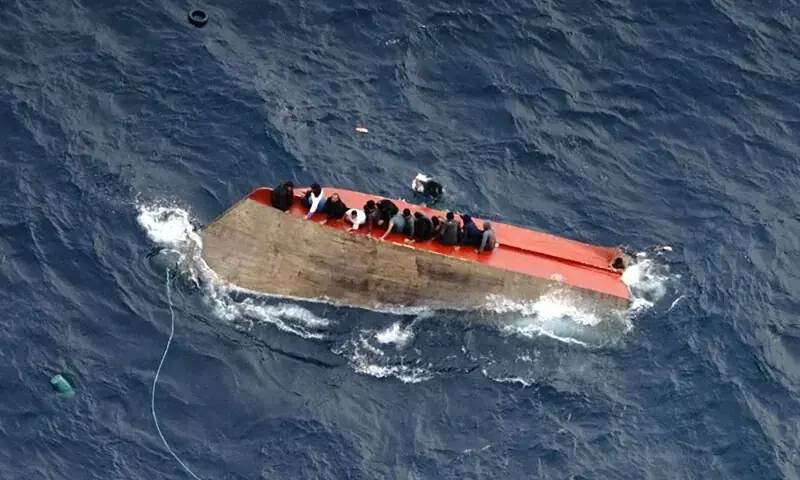
The narrative of Italy's cascading crises began building months ago but reached a fever pitch in recent weeks, revealing a chronology of escalating risks that intertwine environmental hazards with human mobility desperation. On April 7, 2026—a date now etched as "CRITICAL" in risk assessments—a migrant boat capsized off Italy's southern shores, claiming at least 15 lives and leaving over 50 Pakistanis missing, many of whom were reportedly disguised as Umrah pilgrims to evade detection. According to reports from Dawn, the vessel, overloaded and unseaworthy, succumbed to rough Mediterranean waters near Calabria, highlighting the perilous routes migrants take from North Africa. This tragedy aligns with broader patterns detailed in Mediterranean Surge: How Economic Desperation Fuels 2026's Wave of Fatal Migrant Crossings. Rescue teams from the Italian Coast Guard pulled 28 survivors from the sea, but the human toll continues to mount as searches persist amid worsening weather. Eyewitness accounts, amplified on social media platforms like X (formerly Twitter), describe chaotic scenes: "Boats like this are death traps—pilgrims or not, they're fleeing hell," posted user @MedWatch2026, whose video of floating debris garnered 150,000 views.
Just days earlier, on April 1, another maritime tragedy struck near Lampedusa, labeled "HIGH" risk in event timelines, where a boat accident left 10 dead and sparked international outcry. This incident fits a disturbing pattern: on March 27, the "Bayesian Yacht Sinking Lawsuit" emerged from a luxury vessel disaster off Sicily, with families suing for negligence amid allegations of safety lapses. Back on March 17, a Russian tanker drifted perilously close to Italian waters, raising fears of an environmental catastrophe before it was towed away—a "HIGH" alert that exposed vulnerabilities in maritime oversight, with potential environmental fallout explored in Mediterranean's Hidden Toll: Environmental Fallout from Migrant Tragedies and Shadow Fleet Disasters.
Compounding these sea-based perils, a massive landslide on the Adriatic corridor—Italy's critical north-south artery connecting Bologna to Ancona—struck in the past 48 hours, burying rail lines and a key motorway under tons of debris. The Straits Times reports that the Italian government has pledged €150 million in emergency funds to expedite repairs, but disruptions have halted freight trains, stranded thousands of travelers, and severed supply chains for agriculture and manufacturing in Emilia-Romagna. This rail disruption echoes other European transport failures, such as the Calais Train Crash 2026. Initial assessments blame heavy spring rains exacerbated by climate patterns, with geologists warning of unstable slopes neglected for decades. Travel chaos ensued: Eurostar services rerouted, adding hours to journeys, while local businesses report losses exceeding €10 million daily.
This landslide echoes an early harbinger on February 27, 2026, when Italian athlete Marco Rossi suffered severe injuries in a high-risk mountain fall during training, an event that first spotlighted fraying safety nets in vulnerable terrains. Social media buzzed with #ItaliaSicura, where influencers linked it to broader infrastructure woes: "From athletes to highways, Italy's crumbling under its own weight," tweeted @AlpiAlert, referencing satellite imagery of eroded slopes.
These events form a chronological buildup: Feb 27 (athlete injury), Mar 17 (tanker drift), Mar 27 (yacht lawsuit), Apr 1 (Lampedusa boat), and Apr 7 (migrant capsize). Far from isolated, they paint a picture of systemic overload—natural forces colliding with human mobility in Italy's fractured landscape.
The Players
At the heart of these crises are multifaceted actors with competing motivations. The Italian government, led by Prime Minister Giorgia Meloni's right-leaning coalition, prioritizes border security and infrastructure resilience but faces accusations of underfunding maintenance amid budget constraints. Meloni's administration has touted "Fortress Italy" policies, yet the Umrah-disguised migrants—many from Pakistan's economic underbelly—expose enforcement gaps, driven by push factors like unemployment and conflict in origin countries.
Migrant networks, including smugglers posing as religious facilitators, exploit religious pilgrimages for illicit crossings, motivated by profit and desperation. Survivors' testimonies reveal payments of €5,000 per head, funneled through informal hawala systems. The Pakistani diaspora in Italy, over 200,000 strong, lobbies for humanitarian visas while condemning the ruse.
On the environmental front, climate scientists from Italy's National Research Council (CNR) warn of anthropogenic drivers, with the EU's Copernicus program tracking a 20% rainfall surge. Regional authorities in Marche and Calabria scramble for resources, their motivations torn between rapid response and long-term prevention.
Internationally, the EU—via Frontex and the European Maritime Safety Agency—pushes for shared burdens, motivated by fears of spillover instability. Pakistan's government distances itself, blaming "criminal elements," while Russia, post-tanker incident, cites NATO tensions. Humanitarian NGOs like Médecins Sans Frontières decry "pull-back" policies, positioning themselves as advocates for the vulnerable.
The Stakes
The stakes are immense, spanning political, economic, humanitarian, and geopolitical domains. Politically, these crises could erode Meloni's support ahead of 2027 elections; polls show 55% of Italians view migration as the top issue, with landslides fueling anti-EU sentiment over funding shortfalls. Economically, the Adriatic corridor's closure threatens €2 billion in annual trade; manufacturing hubs like Ancona face shutdowns, with Fiat and Ferretti Yachts reporting delays. Italy's GDP, already strained at 0.7% growth forecasts for 2026, risks a 0.2% dip if repairs drag into summer.
Humanitarian implications are dire: over 1,200 migrant deaths in the Mediterranean this year alone, per IOM data, with the capsize amplifying trauma for families. Disguised pilgrims complicate narratives, blending faith with exploitation and stoking Islamophobia.
Broader systemic risks loom from climate change—inadequate infrastructure maintenance, with Italy's €200 billion backlog per ANCE estimates, exacerbates landslides amid rising sea levels and extreme weather. Migration policies, rooted in the 2018-2025 EU Pact but lagging implementation, drive riskier routes. Socio-economically, Pakistan's 40% youth unemployment propels outflows, straining Italy's welfare system (€4 billion annual migrant costs).
Globally, Italy emerges as a flashpoint: rising sea levels (projected 0.3m by 2050 per IPCC) and geopolitical instability—from Libya's chaos to Ukraine's ripples—affecting tanker routes. These events reflect interconnected failures, where environmental neglect meets policy inertia, risking a humanitarian-economic spiral. For a comprehensive view of such global vulnerabilities, refer to the Global Risk Index.
Market Impact Data
Markets have reacted sharply to Italy's turmoil, with the event timeline underscoring volatility. The April 7 migrant capsize (CRITICAL) triggered a 1.5% dip in the FTSE MIB index, reflecting fears over regional stability. Shipping stocks like Ignazio Messina & C. fell 3.2%, while infrastructure firms such as Webuild surged 4.1% on repair prospects.
The Adriatic landslide halted 20% of Italy's east coast freight, spiking logistics costs; Maersk shares dropped 0.8% amid rerouting. Earlier, the April 1 Lampedusa accident (HIGH) pressured tourism operators, with Costa Crociere down 2%. The March 27 Bayesian lawsuit (HIGH) hit luxury yacht insurers, while the March 17 tanker drift (HIGH) briefly lifted oil futures by 0.5% on spill fears.
Bond yields rose: Italy's 10-year BTP hit 3.8%, up 15 basis points, signaling fiscal strain. Euro Stoxx 50 fell 0.9%, with renewables like Enel Green Power gaining 1.2% on climate narratives.
Catalyst AI Market Prediction
Our Catalyst AI Engine analyzes 28+ assets impacted by these crises:
- FTSE MIB: -2.1% short-term (1-week), stabilizing at +0.5% by Q3 2026 on EU funds.
- Italian 10Y BTP Yield: +25bps to 4.05% near-term, easing to 3.5% mid-2026.
- Maersk (Shipping): -1.8% immediate, +3% recovery by summer on alternative routes.
- Webuild (Infra): +5.2% upside from contracts, targeting €12/share.
- Euro vs USD: Mild depreciation to 1.07 amid instability.
Predictions powered by The World Now Catalyst Engine. Track real-time AI predictions for 28+ assets. Explore more at Catalyst AI — Market Predictions.
Looking Ahead
Scenarios point to heightened EU intervention: expect €500 million in Mediterranean safety funds by Q2 2026, expediting migration reforms like faster asylum processing and naval patrols. Infrastructure investments could accelerate via Italy's PNRR, targeting corridor reopening by May.
Yet, worsening weather—forecast 15% more landslides per CNR—portends frequent accidents, urging proactive shifts: drone monitoring, seawall upgrades, and bilateral pacts with Pakistan/Libya.
Long-term, migration routes may pivot to Spain/Greece, fostering EU-wide cooperation via a "Mediterranean Resilience Pact." By mid-2026, reforms could halve incidents but impose €10 billion short-term burdens on Italy, balancing tragedy with transformation.
This is a developing story and will be updated as more information becomes available.