
Belgium Brings Century's Largest Wildfire Under Control After Seven Days
Belgium Declares High Fens Wildfire Under Control
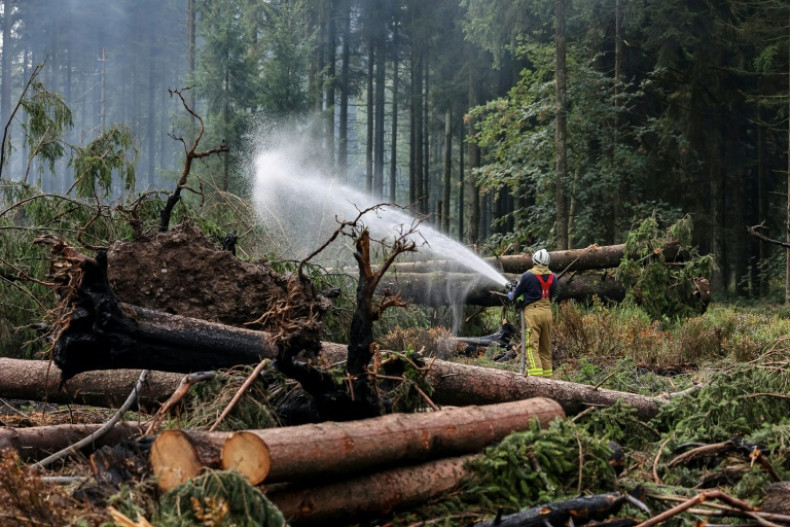
Belgium's largest wildfire in a century was brought under control Thursday after a seven-day fight involving hundreds of firefighters in the boggy terrain of the High Fens nature reserve. "At this stage, the fire is now under control in its entirety and should no longer spread," barring a major change in weather conditions or other unforeseen factors, said the local governor's office. The High Fens fire mushroomed over the weekend to half the size of Manhattan — 3,000 hectares — charring a huge expanse of peatland, pine trees and hiking trails. Firefighters wrestled numerous flare-ups under control overnight, working in very difficult conditions as powerful winds buffeted the eastern region bordering Germany — with a mini-tornado even striking a town outside the park. The governor's office said the fire was now fully contained on its western side, with operations continuing to the east to finish the job. Seven aircraft from Germany, Norway, Belgium and Sweden were carrying out water drops in and around the burned perimeter where ground temperatures remained extremely high. Aerial support crews, grounded by bad weather earlier in the week, hoped to keep operating until nightfall, when civil protection drones would take over the task of monitoring for potential flare-ups. Around 350 firefighters and other emergency personnel remain deployed in the effort, as do the many farmers who mobilised in support of the operation since last week. Authorities have lifted all evacuation orders in the border region since Wednesday, allowing the residents of several Belgian hamlets and a town on the German border to return home. Germany's contingent of firefighters will start pulling out later Thursday, to be offset with Belgian firefighters including volunteers. [1]
Difficult Terrain and Zombie Fire Risks
Tackling the High Fens fire was made much harder by the fens' terrain — a patchwork of heath, peat bogs and raised wooden boardwalks. The blaze broke out for reasons still unknown in an area that was ravaged by massive fires in 1911, during a similar period of heatwaves. Even once under control, officials have warned it will take weeks or even months of soaking and dousing to prevent the High Fens blaze from reigniting. The fire is burning in the peat, so it is actually underground, sometimes quite deep, explained area fire chief David Covens on a trip into the fire zone. In peatland terrain like the High Fens, a fire can keep burning underground and resurface some distance away, a phenomenon known as a zombie fire that can also attack tree roots, increasing the risk of them collapsing. At first glance, it may seem under control, but it can flare up again because it re-emerges, sometimes from great depths, said the regional government's Stephanie Ernoux. To detect flare-ups more effectively, firefighters were using drones equipped with heat-sensing detectors. In forests, peat is an accumulation of spongy, highly flammable, carbon-rich material formed over time through the decomposition of plant matter. It is an ideal fuel for buried embers, which can lie dormant until favourable conditions, such as wind and dry weather, allow them to reignite in broad daylight. Whenever we disturb the ground, when we cut down a tree and expose the soil, the fire can reignite, said fire chief Covens. We're doing everything we can with the resources available, but we know this is going to take a long time. [5]
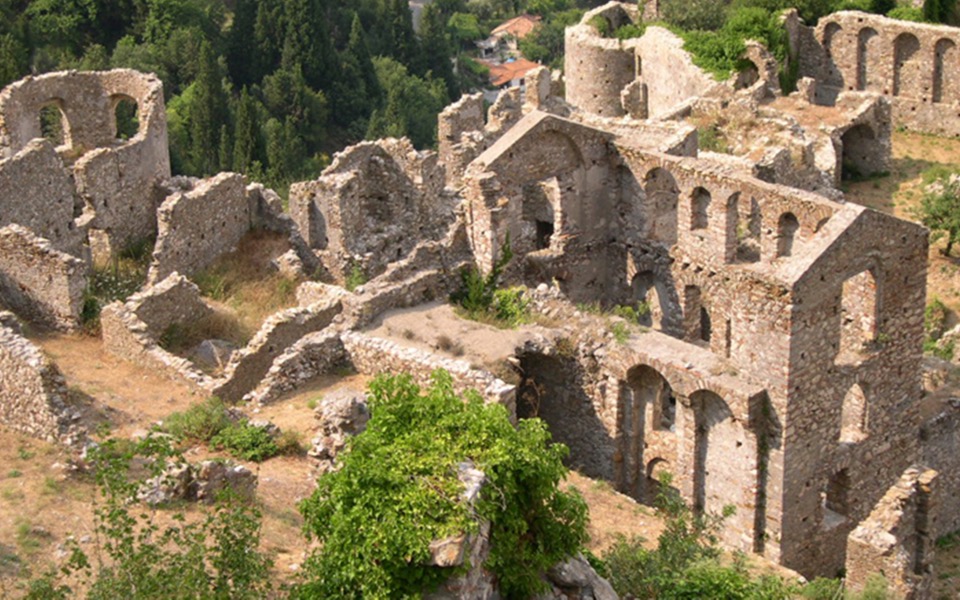
New fire protection systems are installed at the ancient Mystras site in Greece. — Source: ekathimerini
Europe's Summer of Extreme Wildfires
Europe has been swept by weeks of devastating wildfires fuelled by dry conditions and a historically hot summer, with France, Greece, Portugal and Spain also battling major blazes. The High Fens blaze broke out for reasons still unknown in an area that was ravaged by massive fires in 1911, during a similar period of heatwaves. It is the country's largest wildfire since. Crisis cell spokesman Tony Hosmans told AFP the fire burning since Friday has been contained and should no longer be able to spread after threatening to spill over the German border to the east. New flare-ups were still emerging across the vast site with the blaze smouldering underground in the peaty soil but were being brought under control one by one. Regional government spokesperson Stephanie Ernoux called the latest developments reassuring, while the local governor's office said it was weighing whether to start scaling back the firefighting deployment on the ground. Villagers in two Belgian hamlets were given the all-clear to return home, while the German town of Monschau also posted a notice telling residents living near the border it was safe to go back. The High Fens fire grew over the weekend to half the size of Manhattan — 3,000 hectares — charring a huge expanse of peatland, pine trees and hiking trails, but hundreds of firefighters working night and day managed to stop it spread further. On-site operations have been complicated by the fens' terrain — a patchwork of heath, peat bogs and raised wooden boardwalks. Aircraft flown in from Norway, Germany, Sweden and the Netherlands had been pinned on the ground by low-hanging clouds, but both helicopters and planes were able to resume operations and were dropping water on the site. [5]
Europe's Summer of Extreme Wildfires Continued
The broader pattern shows multiple nations facing simultaneous threats from prolonged dry spells and record heat. Belgium's experience mirrors challenges reported elsewhere on the continent where similar conditions have allowed fires to grow rapidly and persist in difficult landscapes. Officials across affected countries have noted that containment does not immediately end the danger because of lingering heat in soil and vegetation. In the High Fens case, the seven-day battle required coordinated international aircraft support that resumed after weather delays, highlighting how external resources proved essential once initial ground efforts contained the western flank. [1]
Greece Protects Archaeological Sites with New Technology
Early fire detection and protection systems are being installed at 22 major archaeological sites and monuments as part of efforts to protect the country's cultural heritage from wildfires, the Culture Ministry said Thursday. Eight systems are already operating at sites including Ancient Olympia, Mycenae, Epidaurus, Mystras and Dion. The technology was put to the test July 31, when the Mycenae system detected a fire at Fichtia in the Argolida region and automatically alerted a control center, providing real-time images and data. Six more systems are expected to begin operating by August 31 at the Acropolis, the Palace of Nestor, Ancient Messene, Hosios Loukas, Nikopolis and Phaistos. Another eight, including at Knossos, Delphi, Tatoi, Mount Athos and Dodona, are scheduled to follow in September. The systems use thermal and optical cameras, including 360-degree and remotely operated cameras, to identify potential fires and transmit real-time information to control centers and the Fire Service. The network also includes weather stations and portable firefighting cannons at selected sites. The project is part of Greece's AIGIS national civil protection program and is funded through the European Union's Recovery and Resilience Facility. [2]

Helicopter drops water on wildfire in Belgium's High Fens nature reserve. — Source: ekathimerini
Ongoing Monitoring and Resource Drawdown
After being grounded by bad weather, water-dropping aircraft were back out helping to quell Belgium's largest wildfire in a century, after fire crews hacked their way through boggy terrain overnight to fully encircle the blaze. Belgian firefighters work in a forest affected by a wildfire in Waimes, in the High Fens region. Authorities in Belgium and Germany on Wednesday lifted the last remaining evacuation orders in the border region where firefighters appeared to be gaining the upper hand against the massive High Fens wildfire. The fire, which spread across 3,000 hectares, has been contained and should no longer be able to spread. [5] Drones equipped with heat-sensing detectors continue to monitor for flare-ups as ground crews maintain soaking operations. Germany's contingent of firefighters will start pulling out later Thursday, offset by additional Belgian personnel including volunteers. [1]
Smaller Wildfires Tracked in the United States
Prescribed Fire RX Tom Green 7105 in Tom Green, Texas, and Wildfire Windmill in Stillwater, Montana, are wildfires events tracked by NASA EONET with one source reporting each. These smaller incidents remain under monitoring alongside the larger European blazes. [3] [4]
What to watch next: Officials expect weeks or months of continued dousing in the High Fens to address underground peat risks, while Greece plans to activate additional early detection systems at sites including the Acropolis by August 31.