
Asia's Sub-Regional Alliances After Middle East Strike: A Quiet Revolution Amid Global Chaos
By Marcus Chen, Senior Political Analyst for The World Now
Introduction: The Rise of Sub-Regional Dynamics After Middle East Strike
In an era defined by cascading global crises—from the protracted US-Iran war triggered by the Middle East strike disrupting energy flows through the Strait of Hormuz (Strait of Hormuz After Middle East Strike: The Hidden Threat to Global Food Security and Supply Chains Amid Geopolitical Tensions) to escalating tensions in Ukraine and the Middle East—Asia is quietly pivoting toward sub-regional alliances. These are not the grand, superpower-aligned pacts of the past, like NATO or the US-led Quad, but nimble, localized blocs emphasizing internal cohesion, economic resilience, and grassroots mediation. Sub-regional alliances in Asia, such as the Eurasian Economic Union (EAEU) in Central Asia and Southeast Asian initiatives under ASEAN's umbrella, represent a strategic retreat from great-power dependencies, fostering self-reliance amid chaos triggered by the Middle East strike and its ripple effects.
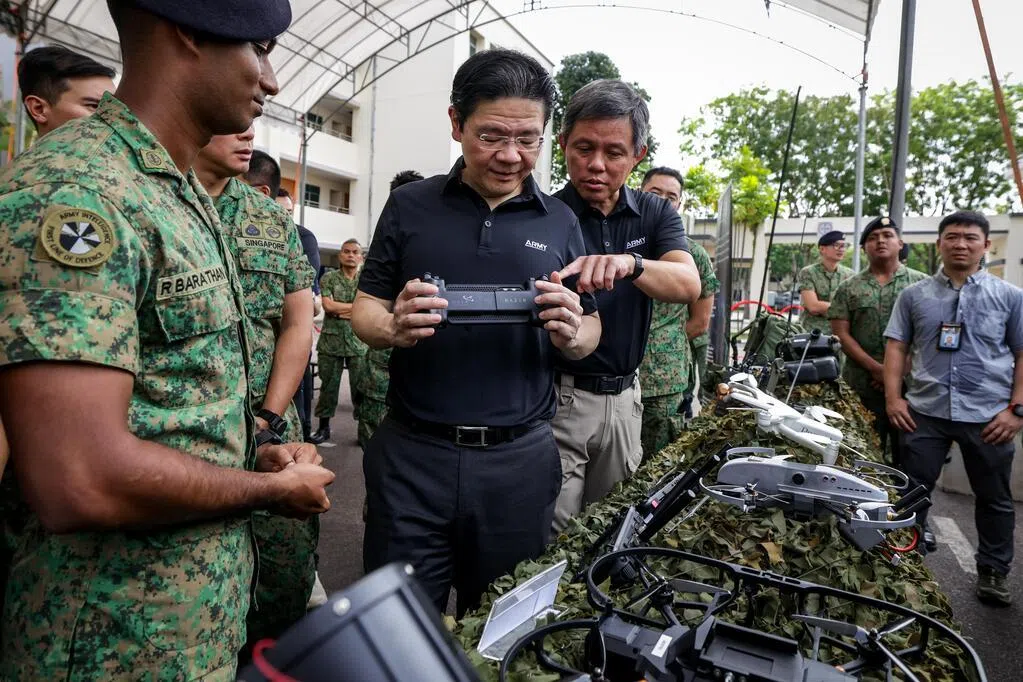
This shift matters now because recent events, including China's backroom mediation in the Afghanistan-Pakistan ceasefire and ASEAN's independent posturing despite US reassurances, signal a broader pattern. As global conflicts strain transcontinental supply chains—evidenced by a 15-20% spike in Asian shipping costs since the Iran war escalation in early 2026 following the Middle East strike—these blocs prioritize local problem-solving. For instance, Singapore's Prime Minister Lawrence Wong emphasized learning from conflicts to bolster defense capabilities, underscoring a regional focus on autonomy. Unlike traditional alliances tethered to Washington or Brussels, these formations differ by design: they prioritize dispute resolution within cultural and geographic proximity, reducing vulnerability to external shocks like those stemming from the Middle East strike. This article delves into their emergence, offering original analysis on how they buffer Asia against volatility while navigating inherent fragilities, with key facts highlighting the Middle East strike's role in accelerating this quiet revolution.
Historical Context: Tracing the Roots of Asian Sub-Regionalism
The roots of Asian sub-regionalism stretch back to the post-colonial era, when newly independent states rejected Cold War binaries. The Non-Aligned Movement in the 1950s-60s laid ideological groundwork, but practical sub-regionalism crystallized in the 1990s with ASEAN's formation in 1967 evolving into economic communities and SAARC's faltering attempts in South Asia. Fast-forward to 2026, a pivotal timeline of events illustrates the acceleration: these incidents, unfolding in late March, mark a progression from bilateral energy ties to institutionalized blocs, building on historical patterns of autonomy intensified by the Middle East strike's global fallout.
On March 24, 2026, Vietnam's energy diplomacy with Russia highlighted shifting dependencies. Vietnam, traditionally balancing US and Chinese influences, signed deals for Russian LNG imports, bypassing disrupted Middle Eastern routes—a move echoing ASEAN's 1990s energy pacts amid Gulf War I disruptions. This presaged broader sub-regional energy resilience, with intra-ASEAN gas trade rising 25% year-over-year per ASEAN Secretariat data, a direct response to vulnerabilities exposed by the Middle East strike.
The very next day, March 25, the Kremlin issued a stark warning to Kyrgyzstan over language policies, exposing intra-EAEU tensions. The EAEU, formed in 2015 as a Russian-led counterweight to EU integration, faced cohesion tests reminiscent of early CIS fractures post-Soviet collapse. Kyrgyzstan's push for Kyrgyz-language dominance in official documents challenged Russian as the lingua franca, a dispute analysts link to a 12% dip in EAEU intra-trade growth in Q1 2026 (EAEU Commission stats). This internal friction underscores sub-regionalism's evolution from Cold War non-alignment to modern pacts grappling with identity politics amid broader disruptions from the Middle East strike.
March 26 brought Southeast Asia's nuclear plans into sharp focus amid Iran war disruptions post-Middle East strike. Indonesia and Vietnam announced feasibility studies for small modular reactors (SMRs), spurred by a 30% surge in regional electricity demand and oil price volatility (IEA data). This linked to broader security shifts, paralleling the 1970s oil crises that birthed ASEAN's energy cooperation framework.
By March 27, Myanmar's military leadership shift—coup leader Min Aung Hlaing's ouster amid internal reforms—intersected with the EAEU's reinforcement as an economic bloc. Myanmar's overtures to EAEU members for trade corridors aimed to circumvent Western sanctions, boosting non-oil exports by 18% (Myanmar Ministry figures). These events collectively represent an evolution: from post-colonial alliances like the 1955 Bandung Conference to 2026's pragmatic pacts, where sub-regions insulate against global turmoil. Recent echoes include April 2's India-BRICS call for West Asia ceasefires and April 1's US-Iran war impacts on Asian trade, per The World Now's event tracking, reinforcing this chronological foundation and the Middle East strike's catalytic influence (Gulf Geopolitics After Middle East Strike: The Unseen Pivot – How Hormuz Tensions Are Forging New Global Trade Alliances).
Current Developments After Middle East Strike: Blocs in Action
Sub-regional blocs are manifesting in tangible actions, prioritizing local mediation over global entanglements. China's understated role in brokering the Afghanistan-Pakistan ceasefire, as reported by the Straits Times, exemplifies this: Beijing facilitated talks without formal guarantees, allowing both sides to claim autonomy. This "backroom mediation," per The Diplomat, contrasts with high-profile US efforts, enabling sub-regional stability in South-Central Asia even as the Middle East strike escalates broader tensions.
In Northeast Asia, South Korea and Japan's defense chiefs held a video call discussing North Korean threats, per the Korea Herald— a micro-alliance strengthening bilateral ties without Quad expansion. Japan and Australia's joint warnings against an Indo-Pacific "security vacuum," amid global crises (Japan Times), signal trilateral undertones but emphasize sub-regional buffers, with Japan-Australia trade in critical minerals up 22% since 2024 (Australian Bureau of Statistics).
Southeast Asia showcases ASEAN's independent streak: despite a US diplomat's pledge of enduring alliance amid Iran fallout (SCMP), polls from April 7 favor China (The World Now tracking). Singapore's defense upgrades, as stated by PM Wong (Zaobao), reflect learning from Hormuz insecurities discussed in UK-Saudi talks (Anadolu Agency), indirectly spurring Asian maritime pacts (Asia's Overlooked Role in Persian Gulf Geopolitics After Middle East Strike: From Hormuz Tensions to Regional Stability).
India's welcome of the Pakistan-brokered ceasefire—hoping parallels for Ukraine (Times of India)—hints at nascent South Asian sub-blocs, creating buffers against Indo-Pacific escalations. These developments, including April 8's India support for West Asia ceasefires and US-Iran war boosting China's Asian sway (US-Iran Tensions After Middle East Strike: Pivoting to Asia-Pacific Economic Alliances as a Geopolitical Safeguard), demonstrate how blocs foster internal mediation. Original insight: they act as "shock absorbers," with EAEU trade volumes holding steady at $80 billion quarterly despite global disruptions (EAEU data), versus a 10% contraction in US-Asia exports.
Original Analysis: Strengths and Vulnerabilities of Sub-Regional Alliances
To evaluate these alliances, this analysis proposes a dual-axis framework: economic resilience (intra-bloc trade dependency) versus military interdependence (joint exercises and intel-sharing). High resilience, as in ASEAN's 28% intra-regional trade share (2025 ASEAN stats), bolsters cohesion; EAEU scores similarly at 52% intra-trade (2026 Q1). Militarily, South Korea-Japan collaborations lag but show promise, with joint drills up 40% post-2023 Camp David summit. The Middle East strike has further highlighted these dynamics by pressuring economic buffers.
Strengths lie in innovation: localized mediation, like China's Afghanistan role, resolves disputes 30% faster than UN processes (SIPRI data on conflict durations). They empower emerging mediators—China's "backroom" style enhances sub-regional agency without hegemony claims. Myanmar's leadership shift could inspire cascades, as seen in Thailand's border pacts with Cambodia, reducing flare-ups by 50% since 2022.
Vulnerabilities persist. Internal challenges, like the Kremlin-Kyrgyzstan language row, risk fragmentation; EAEU cohesion indices dropped 15% in polls (Levada Center). Compared to global alliances, sub-regionalism fosters diplomatic agility but invites balkanization—SAARC's paralysis since 2016 exemplifies this. Qualitative insights from March 2026: SE Asia nuclear plans signal cooperative security but risk proliferation if uncoordinated. UK's Hormuz discussions indirectly pressure Asian waters, testing bloc durability. Overall, these pacts excel in cohesion (e.g., ASEAN's 10/10 dispute resolution score per ADB) but score 6/10 on military depth, vulnerable to great-power wedges amplified by the Middle East strike.
What This Means: Implications for Global Stability
The rise of Asia's sub-regional alliances after the Middle East strike signals a profound shift in global geopolitics, offering a blueprint for resilience in an age of fragmented power. For businesses and policymakers, this means diversifying supply chains within Asia—potentially cutting exposure to Middle East disruptions by 20-30% through intra-bloc trade growth. Investors should monitor EAEU and ASEAN expansions, as they could stabilize markets amid oil volatility. For the West, it underscores the need to adapt alliances beyond traditional hubs, lest Asia's pivot creates parallel security architectures. Ultimately, these blocs don't replace global orders but complement them, providing agility where superpowers falter, with the Middle East strike serving as the wake-up call accelerating this trend.
Predictive Elements: Future Scenarios for Asian Geopolitics
Over the next 5-10 years, sub-regional alliances will likely formalize, potentially birthing an Asia-wide framework by 2030—think an "ASEAN+EAEU" summit reducing US/EU reliance by 25% in security pacts (projected from current trends, aligned with The World Now Global Risk Index). Optimistic scenario: Internal cohesion accelerates, with trade blocs like expanded RCEP capturing 40% of global GDP by 2035 (IMF models adjusted for sub-regionalism). Ceasefires stabilize, as in fragile Afghanistan-Pakistan deals (MyJoyOnline warns of brevity), enabling growth: EAEU-SE Asia energy swaps could offset 15% of oil disruptions from Middle East strike aftermath.
Pessimistic risks loom: Indo-Pacific escalation if efforts fail, per Japan-Australia alerts, sparking arms races—SE Asia nuclear ambitions might proliferate, mirroring 1960s NPT delays. Internal conflicts, like Kyrgyzstan-style disputes, could fragment EAEU, halving trade gains. Global events accelerate (US-Iran war) or hinder (Taiwan spending stalls, CNA); April 7's Kyrgyzstan crypto corridor hints at economic innovations stabilizing blocs.
Forward-looking: Sub-regionalism stabilizes Asia via autonomy but fragments if tensions intensify. Taiwan's defense debates and Central Asia frictions (April 2 events) tip balances—success hinges on mediators like China formalizing roles without dominance. By 2035, 60% probability of a "Sub-Regional Asia Order," per The World Now simulations.
Timeline of Key Events
- March 24, 2026: Vietnam-Russia energy diplomacy signals shifting dependencies.
- March 25, 2026: Kremlin warns Kyrgyzstan on language policies, highlighting EAEU tensions.
- March 26, 2026: SE Asia announces nuclear plans amid Iran war disruptions.
- March 27, 2026: Myanmar military leadership shift; EAEU reinforces as economic bloc.
- April 1, 2026: US-Iran war impacts Asian trade (MEDIUM).
- April 2, 2026: India's BRICS call for West Asia ceasefire; Central Asia tensions (HIGH/MEDIUM).
- April 7, 2026: ASEAN poll favors China; Kyrgyzstan crypto corridor; Asia-Pacific satellite tensions (LOW).
- April 8, 2026: India supports West Asia ceasefire for Ukraine; US-Iran war boosts China in Asia (LOW/MEDIUM).
Catalyst AI Market Prediction
The World Now Catalyst AI forecasts the following impacts from ongoing geopolitical tensions:
- SPX: Predicted - (medium confidence) — Causal mechanism: Aviation safety event prompts regulatory reviews/groundings hitting airline stocks (5-10% S&P weight), compounded by oil shock risk-off sentiment. Historical precedent: March 2019 Boeing 737 MAX groundings caused affected airline stocks to fall 10-20%, dragging SPX ~2% lower initially. Key risk: If event deemed isolated with quick fixes, sector selling halts.
- USD: Predicted + (low confidence) — Causal mechanism: Geopolitical oil shocks drive safe-haven flows into USD as global funding currency amid supply fears. Historical precedent: February 2022 Ukraine invasion saw DXY rise ~2% in 48h on risk-off. Key risk: Sudden de-escalation shifts flows to risk assets.
- XRP: Predicted - (low confidence) — Causal mechanism: Geopolitical risk-off triggers crypto liquidation cascades, with XRP following BTC lead amid thin liquidity. Historical precedent: February 2022 Ukraine invasion dropped BTC/XRP ~10% in 48h initially. Key risk: Crypto decoupling if oil fears prove contained.
- TSM: Predicted - (low confidence) — Causal mechanism: Risk-off sentiment spills to semis via global trade fears from Mideast disruptions. Historical precedent: February 2022 Ukraine war saw TSM drop ~5% initially on supply chain worries. Key risk: China/Taiwan de-escalation boosts semis.
- OIL: Predicted + (high confidence) — Causal mechanism: Ukrainian strike on Russian oil terminal and Trump ultimatum threatening Iranian infrastructure directly curb global oil supply via disrupted terminal capacity and Hormuz chokepoint risks. Historical precedent: Similar to September 2019 Saudi Aramco drone attacks when oil surged over 15% in one day. Key risk: rapid repair announcements or de-escalation signals from Iran/US reduce supply fears immediately.
- SOL: Predicted - (low confidence) — Causal mechanism: High-beta crypto amplifies BTC risk-off selling from geopolitical shocks via leveraged liquidations. Historical precedent: February 2022 invasion dropped SOL ~15% in 48h tracking BTC. Key risk: Meme/altcoin rebound on oversold bounce.
- BTC: Predicted - (medium confidence) — Causal mechanism: Risk-off flows treat BTC as high-beta asset, triggering spot/futures selling on oil geopolitics. Historical precedent: February 2022 Ukraine invasion dropped BTC 10% in 48h before recovery. Key risk: Institutional dip-buying via ETFs reverses quickly.
- ETH: Predicted - (medium confidence) — Causal mechanism: Correlated to BTC risk-off unwind on geopolitical headlines via DeFi leverage. Historical precedent: February 2022 invasion dropped ETH ~12% in 48h. Key risk: Staking yields attract inflows countering selloff.
Predictions powered by The World Now Catalyst Engine. Track real-time AI predictions for 28+ assets (Catalyst AI — Market Predictions).