
Asia's Overlooked Role in Persian Gulf Geopolitics After Middle East Strike: From Hormuz Tensions to Regional Stability
Introduction: The Asian Shadow Over Hormuz After Middle East Strike
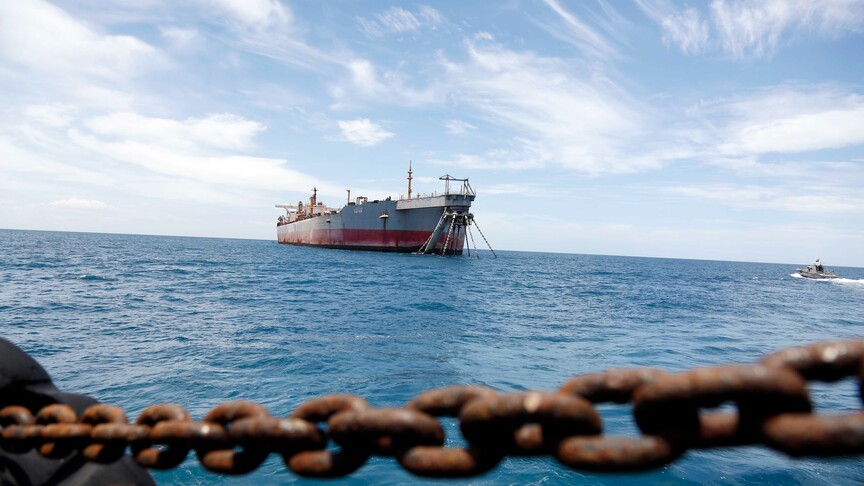
The Strait of Hormuz, a narrow waterway handling one-fifth of the world's oil trade, remains a flashpoint in 2026 following the Middle East strike, with recent reports confirming its closure despite a fragile US-Iran truce. As of April 9, 2026, a UAE oil giant revealed that 230 loaded oil vessels are stranded, waiting to sail, underscoring the chokepoint's paralysis (Anadolu Agency). Western narratives dominate coverage, framing the standoff as a US-Iran proxy battle involving Gulf states like the UAE, which has demanded action on Iran's nuclear and military capabilities (Japan Times). Yet, this overlooks Asia's emerging role as a silent powerhouse in global energy security, especially in the wake of the Middle East strike that has intensified regional tensions.
Asia, home to the world's largest oil importers—Japan, China, India, and South Korea—relies on Hormuz for over 80% of its Gulf crude imports, per International Energy Agency data. Japan's daily intake of 4 million barrels and China's 10 million position them as pivotal stakeholders whose economic dependencies could tip the scales in de-escalation efforts. Unlike the US, with its shale independence, or Europe diversifying via LNG, Asian giants face acute vulnerabilities: shipping delays could spike premiums by 20-30%, inflating costs for industries from manufacturing to transportation. For more on US-Iran tensions after the Middle East strike, see how pivots to Asia-Pacific alliances serve as safeguards.
This article's unique angle spotlights Asia's underappreciated influence, particularly Japan's strategic hesitations, contrasting Western-centric views. While US precision strikes evolve (SCMP), Asian nations' backchannel diplomacy and energy diversification could redefine alliances, averting escalation or forcing a multipolar order. As Iran and the US issue divergent statements on Hormuz status (NRK), Asia's reluctance to join naval patrols risks prolonging the crisis, but also opens doors for mediation. Explore related insights on navigating the straits after Middle East strike.
Historical Context: Lessons from 2026's Escalations After Middle East Strike
The current Hormuz tensions echo early 2026's near-misses, revealing Asia's pattern of cautious engagement. On March 15, 2026, Japan hesitated to commit warships to Gulf patrols amid rising tensions, prioritizing energy security over US alliance pressures—a decision that delayed multinational responses and highlighted Tokyo's balancing act between Washington and Tehran.
This fed into the March 18 IMO crisis talks on Middle East shipping, where Asian delegates pushed for neutral evacuation protocols, foreshadowing today's vulnerabilities. The International Maritime Organization's sessions exposed global shipping's fragility, with 20% of tanker traffic at risk, per BIMCO estimates. Asian voices, led by Japan and Singapore, advocated de-militarization of lanes, contrasting US hawkishness.
Escalation peaked on March 19 with dual events: former President Trump's threat to bomb Iranian gas fields, and the IMO's parallel push for safe Gulf evacuations—repeated in reports that day, signaling disorganized international efforts. Trump's rhetoric, evoking 2019 tanker crises, amplified fears, yet Asia responded peripherally: Japan quietly boosted Iranian oil purchases via third parties, while China expanded Belt and Road (BRI) pipelines.
These events illustrate Asia's historical playbook: balancing US security pacts (e.g., Japan's Article 9 constraints) with energy pragmatism. Post-1973 oil shocks, Tokyo pioneered "resource diplomacy," securing long-term Gulf deals without military footprints. The 2026 timeline mirrors this—hesitation prevented direct involvement but prolonged uncertainties, influencing outcomes like the fragile April truce (France 24, Cyprus Mail). Today, parallels abound: UAE's nuclear demands (Japan Times) resonate in Tokyo, yet Asian states avoid overt intervention, leveraging economic ties for stability. For deeper context on Iran's domestic power dynamics after Middle East strike, check the hidden catalysts fueling Hormuz tensions.
Historical Event Timeline
- March 15, 2026: Japan hesitates on deploying Gulf warships, citing domestic pacifism and energy risks.
- March 18, 2026: IMO holds crisis talks on Middle East shipping vulnerabilities, with Asian nations emphasizing neutral lanes.
- March 19, 2026: Trump threatens strikes on Iran gas fields, heightening US-Iran rhetoric.
- March 19, 2026: IMO seeks safe evacuation protocols for Gulf shipping amid escalation fears (repeated emphasis in dispatches).
Recent Event Timeline
- April 1, 2026: Bahrain revises UN Hormuz draft resolution, seeking broader Asian input.
- April 2, 2026: LNG tanker transits Hormuz under escort, testing truce fragility.
- April 3, 2026: US faces Gulf hotel stationing issues for troops, logistical strains.
- April 4, 2026: Gulf states neutrality crisis emerges amid Iran targeting (France 24).
- April 7, 2026: US-Iran Hormuz tensions peak with closure reports (Cyprus Mail).
- April 8, 2026: US shifts from precision strikes (SCMP); Filipino seafarers stranded.
- April 9, 2026: UAE demands action on Iran attacks; 230 vessels wait (Anadolu, Japan Times).
This chronology underscores recurring themes: Asia's peripheral responses stabilize without escalation, a pattern policymakers ignore at peril. Track broader risks via the Global Risk Index.
Current Dynamics: Asia's Economic and Strategic Interests
Hormuz's closure hits Asia hardest. The 230 stranded vessels (Anadolu) represent 50-60 million barrels—enough for Japan's two-month supply—driving spot premiums to $10/barrel over benchmarks. Japan's refiners, 90% Gulf-dependent, face $5-7 billion in annual losses if prolonged, per JETRO estimates. China, importing 45% of its oil via Hormuz, sees BRI corridors strained, with Pakistan's Gwadar port rerouting attempts faltering amid security fears. See Pakistan's geopolitical chessboard after Middle East strike for how US-Iran talks exacerbate threats.
UAE's nuclear pleas (Japan Times) align with Asian anxieties: Tokyo views Iran's program as an existential energy threat, yet hesitates on sanctions. Divergent US-Iran claims (NRK)—Tehran denying closure, Washington alleging blockade—erode trust, pressuring Asian importers to stockpile, spiking regional storage to 95% capacity.
China's BRI intersects critically: $1 trillion in Gulf-linked projects could bypass Hormuz via Oman-India pipelines or Haifa port deals. Yet, Iran's post-ceasefire strikes (France 24) risk BRI assets, prompting Beijing's discreet Oman mediation. Ceasefire fragility (Cyprus Mail, Al Jazeera) amplifies this: early ships breaking blockade (MDZOL) offer hope, but 230-vessel backlog signals weeks of disruption.
Asian states leverage ties—Japan's $10 billion annual Iran trade, India's rupee payments—for de-escalation, contrasting US strategies.
Catalyst AI Market Prediction
The World Now's Catalyst AI engine forecasts market ripples from Hormuz risks after the Middle East strike, attributing to oil shocks and risk-off sentiment:
- SPX: Predicted - (medium confidence). Aviation safety events prompt regulatory reviews/groundings hitting airline stocks (5-10% S&P weight), compounded by oil shock risk-off. Historical: March 2019 Boeing groundings dragged SPX ~2%.
- USD: Predicted + (low confidence). Geopolitical oil shocks drive safe-haven flows. Historical: 2022 Ukraine invasion lifted DXY ~2% in 48h.
- XRP: Predicted - (low confidence). Risk-off triggers crypto cascades. Historical: 2022 drop ~10%.
- TSM: Predicted - (low confidence). Semis spill from trade fears. Historical: 2022 TSM -5%.
- OIL: Predicted + (high confidence). Ukrainian/Russian strikes and Trump threats curb supply. Historical: 2019 Aramco +15%.
- SOL: Predicted - (low confidence). High-beta crypto amplifies BTC selloff. Historical: 2022 -15%.
- BTC: Predicted - (medium confidence). Risk-off treats BTC as high-beta. Historical: 2022 -10%.
- ETH: Predicted - (medium confidence). Correlated BTC unwind. Historical: 2022 -12%.
Predictions powered by Catalyst AI — Market Predictions. Track real-time AI predictions for 28+ assets.
Original Analysis: The Geopolitical Chessboard of Asian Influence
Asia's hesitation—epitomized by Japan's 2026 warship demurral—carries profound implications. Tokyo's shift toward independent security, via QUAD naval drills and Australian LNG deals, signals alliance fatigue. US precision strike pivots (SCMP) alienate partners: Asians fear escalation drawing them into conflict, pushing diversification—India's Russia pivot cut Hormuz reliance 15%.
Untapped diplomacy beckons: Japan, with $40 billion Gulf investments, could mediate like its 2019 Abe-Iran shuttle, offering Iran economic incentives. India, balancing Chabahar port with US ties, eyes Hormuz arbitration. China's BRI posits alternatives: IMEC corridor could slash transit times 40%, per World Bank models.
Environmentally, closures accelerate Asia's renewables pivot—Japan's 2030 carbon-neutral goal faces delays, but shipping emissions (5% global) spur LNG/hybrids. Humanitarily, stranded Filipino seafarers (April 8) highlight Asia's 40% tanker crews, risking humanitarian crises if blockades persist.
This chessboard reveals multipolarity: Western narratives ignore how Asian pragmatism tempers US-Iran binaries, fostering stability via economics.
Predictive Elements: Charting Future Scenarios and What This Means Looking Ahead
If tensions linger into Q3 2026, Asian naval coalitions emerge by 2027—Japan-India patrols securing lanes, reducing US dependency 30%, akin to 2026 IMO precedents. Escalation risks Iran reprisals; Japan/China broker truces with incentives—$50 billion BRI loans—reshaping alliances, per historical backchannels.
Long-term: IMEC investments surge $100 billion by 2030, mitigating Gulf risks. Yet, US-Iran dissonance (NRK) draws Asia into proxies, birthing a multipolar Gulf: China-UAE axis vs. US-Saudi, fragmenting OPEC+.
By decade's end, Asia leads forums like an "Asian Hormuz Initiative," enforcing neutral shipping. What this means looking ahead: Asia's growing influence post-Middle East strike could stabilize global energy flows, but requires proactive diplomacy to avoid fragmented alliances and prolonged disruptions.
Conclusion: Pathways to Stability
Synthesizing themes, Asia's overlooked role—from 2026 hesitations to BRI buffers—offers non-Western paths to Persian Gulf stability. Prioritizing Tokyo/Beijing perspectives counters escalation, blending economics with diplomacy.
This unique angle illuminates fresh vistas: Western focus blinds to Asian mediation potential. Proactive steps—inclusive UN forums, Asian-led IMO protocols—fortify chokepoints. Ignoring this risks energy chaos; embracing it heralds sustainable geopolitics.