
1,326 Palestinians Killed in Gaza Since Ceasefire as Fishermen Face Continued Arrests in Current Wars in the World
Israeli naval forces arrested 10 Gaza fishermen on Tuesday, part of ongoing restrictions that have severely damaged the fishing sector and contributed to 1,326 Palestinian deaths and 4,398 injuries in Gaza since a ceasefire began on October 10, 2025. This situation unfolds amid current wars in the world, where such restrictions continue to affect civilian livelihoods.
Recent Arrests of Fishermen
On Tuesday, Israeli naval forces arrested 10 fishermen off the coast of al-Zawayda in central Gaza and Sheikh Ajlin, southwest of Gaza City, according to the Union of Fishermen's Committees. [1] Israeli forces opened fire on the fishermen's boats before taking the detainees to the Israeli port of Ashdod. [1] Seven of the fishermen were later released, while three remained detained at an unknown location at the time of reporting. [1] The arrest of these 10 fishermen adds to a series of daily violations, including killing, arrest, and the destruction of fishing boats and equipment, in addition to preventing fishermen from accessing the sea for more than three years, Zakaria Bakr, an official with the Fishermen's Committees, told The New Arab. [1]
Ongoing Restrictions and Violations
The arrests were part of broader restrictions and violations affecting Gaza's fishing sector, including the destruction of boats and fishing equipment and restrictions on access to fishing areas. [1] The number of Palestinian fishermen arrested by Israel since the Israeli genocidal war began on October 2023 had reached about 150. [1] These restrictions and attacks on fishermen are violations of international humanitarian law and the Fourth Geneva Convention. [1] The ceasefire had failed to provide meaningful protection for fishermen, as restrictions and attacks continued. [1] In the context of current wars in the world, such patterns persist without resolution.
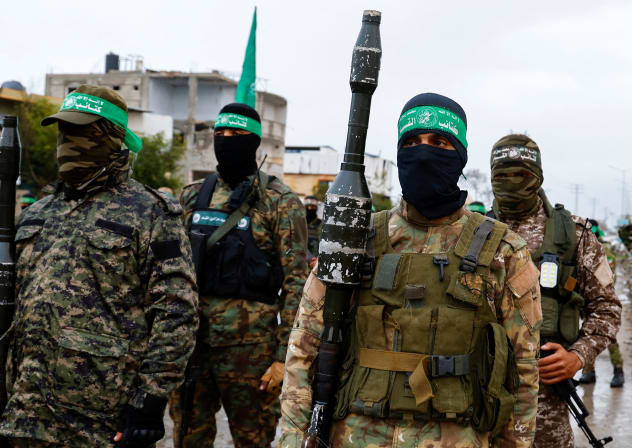
Israeli naval forces arrest Gaza fishermen off the coast near al-Zawayda and Sheikh Ajlin. — Source: jerusalempost
Impact on Fishermen and Families
For fishermen who continue to venture into the sea, each trip has become a source of uncertainty. [1] "We go to sea not knowing if we will return," Salim Hamouda, a Gaza-based fisherman who has worked in the profession for years, told TNA. [1] Hamouda said the sea had previously provided his family with a stable source of income but had now become associated with fear and insecurity. [1] "We go out to sea not knowing what will happen to us. We might return with some fish, or we might lose our nets or boats, or we might be shot at or arrested. The sea has become a path to death for us, not a path to livelihood," he added. [1] Hamouda noted that the decline in fish stocks, rising fuel prices, and the high cost of fishing equipment had further undermined the profession. [1] Many fishermen and their families were now dependent on debt and humanitarian assistance, according to Hamouda. [1] "No one asks about us. Organisations talk about farmers, displaced people and workers, but fishermen have been forgotten," Hamouda lamented. [1] "We have families and children who need food, medicine and education, and we have no other source of income." [1] Mohammed Saadallah, another fisherman from Gaza, said the fishing community had been living under a constant sense of fear and uncertainty, while many fishermen had lost their boats and nets during the war. [1] "We used to live off the sea, but today we cannot work," Saadallah told TNA. [1] "A boat that used to support an entire family can be destroyed in minutes, while nets that we buy at great expense can be lost in an instant." [1] "We are not asking for the impossible. We simply want to work safely and return to our families. But even this right has been denied to us," he said. [1]
Economic Losses in the Fishing Sector
According to the Union of Fishermen's Committees, around 4,000 fishermen in Gaza work on more than 700 boats, while around 70,000 people rely on fishing and the sale of fish for income. [1] Bakr estimated that the fishing sector had suffered direct losses of about 120 million US dollars, with around 95 per cent of its infrastructure damaged or destroyed through bombardment, fires and the destruction of fishing equipment. [1] He estimated indirect losses at approximately 7 million dollars per month, as the fishing catch has fallen to about 2 per cent of its pre-war level. [1] He called on the international community and relevant countries to pressure Israel to halt violations against fishermen, ensure safe access to fishing areas and support the rehabilitation of Gaza's fishing sector. [1]
{IMAGE_3}
Casualties in Gaza Since Ceasefire
5 more Palestinians killed, over 23 wounded in continuing Israeli attacks on Gaza. [2] 1,326 Palestinians killed, 4,398 injured by Israeli forces despite ceasefire since Oct. 10, 2025. [2]
Internal Tensions with Anti-Hamas Militias
In recent months, Hamas’s security apparatuses have operated on several fronts in an attempt to confront the militias opposing the organization. [3] The activity of Gazan militias opposed to Hamas, which took place Tuesday morning deep inside the Gaza Strip, demonstrates not only the area’s volatility but also the deep concern among Hamas’s leadership. [3] Arab media had initially reported that an Israeli force entered the Gaza Strip to carry out a covert operation against a senior Hamas figure. [3] After the operation was exposed, a firefight broke out at very close range between the two groups. [3] Members of a Gazan militia led the fighting against the senior official’s guards. [3] The volatile situation forced the IDF to help extract the force, providing cover with ground and aerial strikes, with smoke plumes visible from long distances. [3] Now that the operation was confirmed to have been carried out by the Gazan militias, it should be noted that former Shin Bet chief Ronen Bar was the one who pushed for supporting the anti-Hamas militias in the Strip, despite criticism from within and outside of the defense establishment. [3] The operation ended with the arrest of a senior Hamas figure, which could shed light on the organization’s covert activities and its methods of operation in the Gaza Strip. [3] At the same time, reports indicate that over the past year, members of various militias have carried out operations that directly damaged Hamas’s military capabilities in the Gaza Strip. [3] Palestinian militias are Hamas’s enemy from within. [3] The most prominent effort has been the pursuit of collaborators with Israel, informants, and Hamas critics. [3] Some were warned, while others were taken to interrogation rooms or severely beaten, at times in public, in an attempt to create deterrence and instill fear. [3] Others were killed under "mysterious circumstances." [3] At the same time, Hamas expanded its intelligence collection and surveillance systems targeting IDF forces along the Yellow Line. [3] As part of these efforts, the organization has carried out operations designed to study the activity patterns of IDF units, identify unusual activity in the area, and detect attempts to breach the new border line between the sides. [3] Another element involves deliberate friction operations with IDF soldiers along the Yellow Line. [3] Hamas terrorists, some of them children, are sent to the area in exchange for symbolic payments. [3] The goal of these encounters is not only to study the IDF’s response patterns and identify vulnerabilities, but also to place additional pressure on the forces’ operational activities. [3]
What to watch next: The incident comes as the US seeks to ease tensions and advance the reconstruction of parts of the Gaza Strip, without Hamas disarming or losing control over the territory. [3]