
Zelenskyy Awards Hero of Ukraine Title to Fallen MiG-29 Pilot Marat Mambetov
Posthumous Recognition for Ukrainian Pilot Marat Mambetov
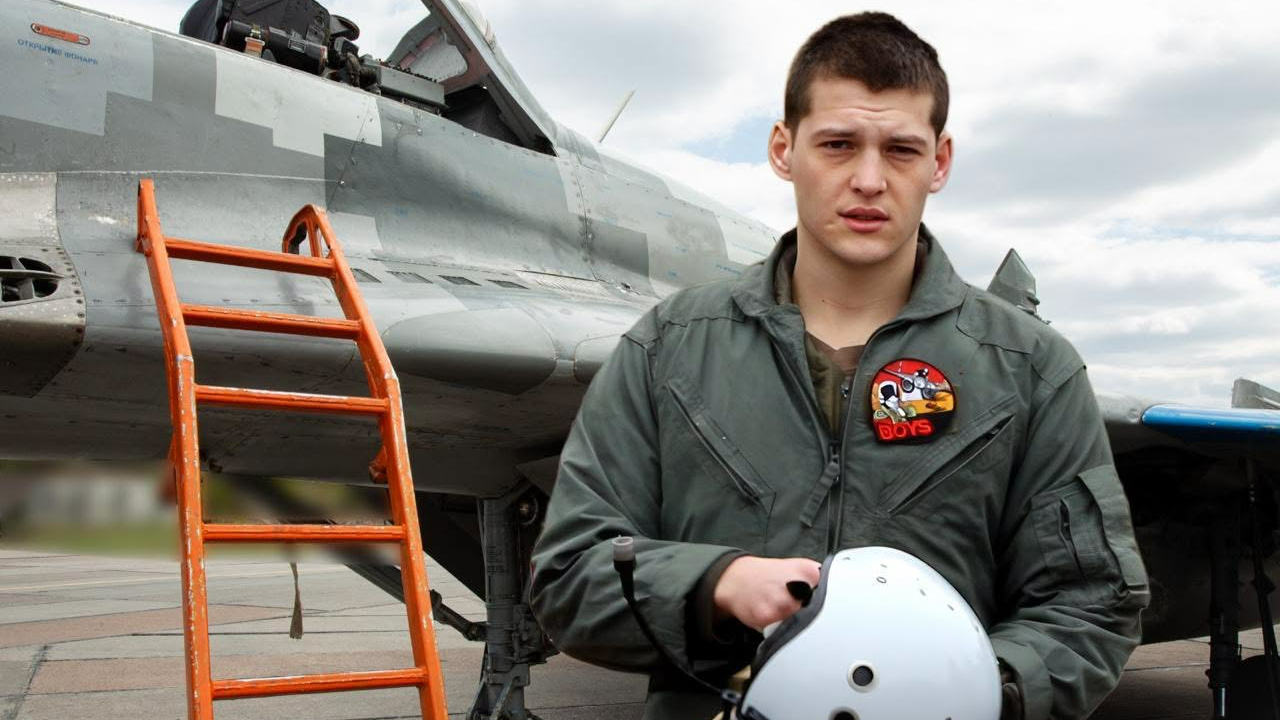
Marat Mambetov, a MiG-29 fighter pilot who was killed in action on 1 October aged 25, has been posthumously awarded the title of Hero of Ukraine. [1] The decree on the website of the Office of the President of Ukraine states that Mambetov shall be awarded the title of Hero of Ukraine and the Order of the Golden Star posthumously for personal courage and heroism displayed in the defence of the state sovereignty and territorial integrity of Ukraine, and selfless service to the Ukrainian people. [1] Mambetov was a flight commander in the 40th Tactical Aviation Brigade, also known as the Ghost of Kyiv. [1] Flying a MiG-29 fighter jet, he carried out missile and bomb strikes on Russian troops on one of the fronts. [1] His aircraft was hit by a Russian missile during a combat mission. [1] He ejected but did not survive. [1]
Europe's Response to Russian Drone Sabotage
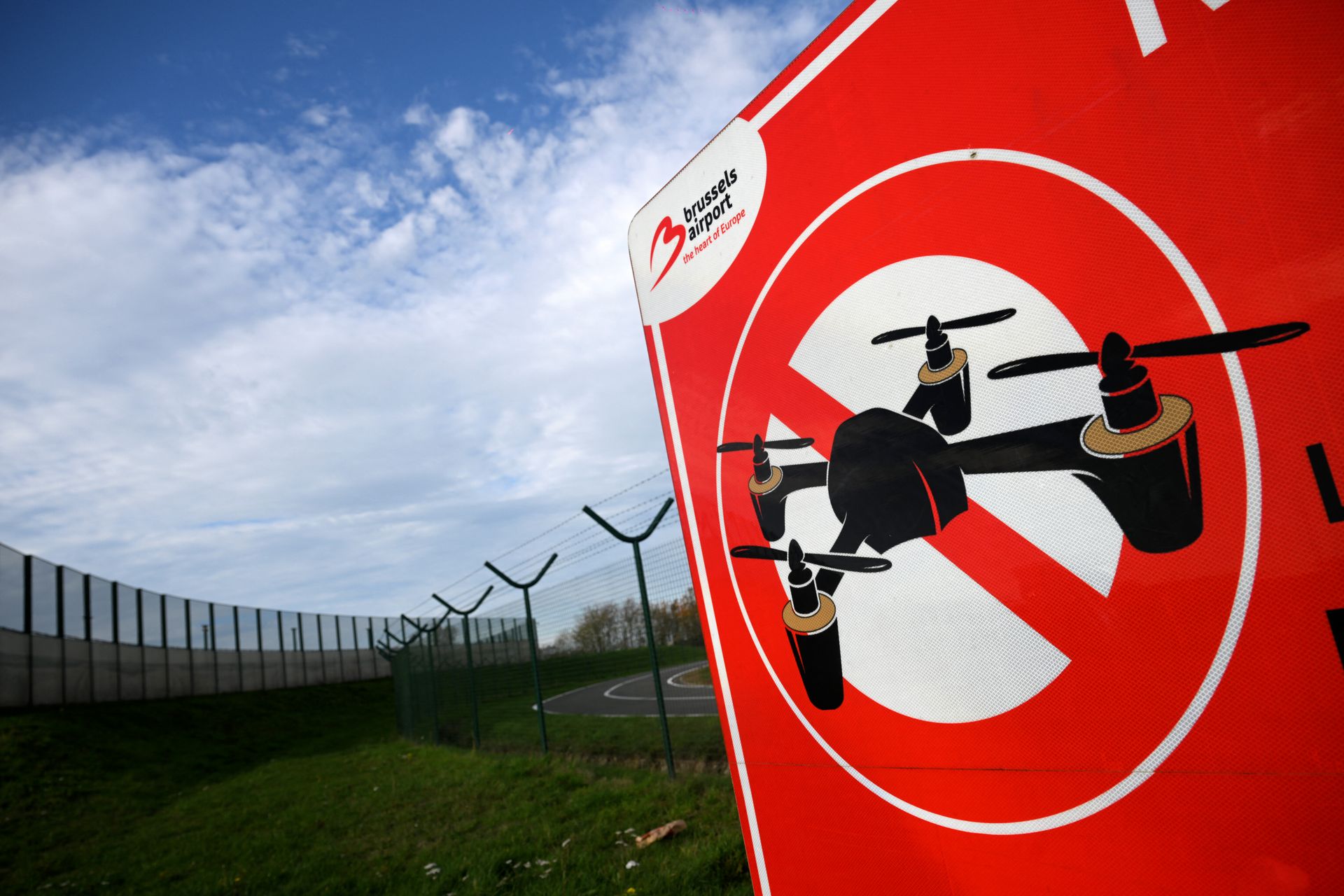
European governments are preparing for a form of confrontation that their current investments do not fully match. [2] While Russian-linked sabotage usually uses drones, logistics networks, criminal intermediaries, and deniable proxies against European cities, official policies and national strategies remain focused on detecting and intercepting each incident as it arises. [2] This approach treats only the instrument of attack, leaving the vulnerability it exploits mainly overlooked. [2] That vulnerability is clear: Europe's security architecture remains slow, fragmented, and expensive to mobilize across agencies and national boundaries. [2] In this environment, drone incursions become just separate incidents, while the problem of long, inefficient responses remains unaddressed. [2] The incident at Leipzig/Halle Airport on Aug. 4 with a quadcopter carrying plastic explosives that went unnoticed by security systems and landed near a Ukrainian cargo aircraft without detonating, belongs to a wider pattern of Russian sabotage activities against European cities, especially those targeting the major airports across the continent. [2] Each case, whether or not an attack was intended or completed, leaves the same residue of uncertainty, and that uncertainty is what makes cheap, deniable activity so effective against institutions that are otherwise highly capable. [2] A drone flying near or above an airport can disrupt the normal performance of critical civilian infrastructure by forcing the immediate closure of airports, overloading the work of police and intelligence services, and occupying resources even if no attack follows. [2]
Ukrainian MiG-29 pilot Marat Mambetov posthumously awarded Hero of Ukraine title. — Source: kyivindependent
Ukraine's Integrated Defense Model as a Lesson for Europe
More importantly, Europe's reading of Russia's drone campaign in Ukraine has focused attention on counter-drone technology, sensors, and interception systems, all of which are necessary for protecting infrastructure but cannot compensate for the institutional fragmentation that an adversary is actively exploiting. [2] In fact, Ukraine's experience demonstrates the importance of an organizational approach. [2] Against years-long Russian drone attacks, Ukraine has progressively connected battlefield reporting, air-surveillance data, acoustic and other sensor inputs, drone feeds, and intelligence into increasingly integrated situational-awareness and command systems, including the DELTA platform, allowing information from different sources to be brought together and distributed to those responsible for action. [2] Ukrainian air defense intercepts a Shahed drone in midair during the Russian aerial attack on Kyiv, Ukraine, on May 30, 2023. [2] It has also adapted its response architecture by combining centralized information with distributed defensive capabilities, enabling units and mobile teams to respond to threats without waiting for every decision to move through a complicated process of hierarchy. [2] As a result, Ukraine streamlined the process of detection, identification, decision, and action. [2] This is a useful model that Europe should explore. [2] Attribution is another problem, because deniable sabotage is designed to take advantage of the interval between an incident and a verdict. [2] When investigators need weeks to establish responsibility, as it was during the Leipzig incident, where German authorities took around four weeks to publicly assign responsibility to Russia, attribution becomes a retrospective exercise and no longer functions as an indispensable aspect of deterrence and defense. [2] Indeed, public attribution requires credible evidence, and obtaining one might take a long time before authorities establish rock-solid data. [2] However, when a citizen is suddenly stranded at an airport due to a drone-related disruption, the consequences of delayed decision-making are immediate and tangible. [2]
UN Call for Ceasefire Three Years After October 7
Three years ago, civilians were killed and taken hostage in horrific attacks by Hamas and other armed groups. [3] The devastating Israeli attacks that followed in Gaza killed and displaced civilians. [3] A year since the ceasefire announcement, people are still being killed and displaced, and families face a fourth winter in tents and makeshift shelters. [3] UN relief chief Tom Fletcher called on Israel and Hamas to implement a ceasefire, protect civilians and aid workers, remove obstacles to aid, comply with international law, and choose lasting peace. [3] We call again on Israel and Hamas to fully implement the ceasefire; to protect civilians, including aid workers; to remove any obstacles to aid; to comply with international law; and to choose lasting peace. [3] A Palestinian family sits amid the rubble of a damaged home in Gaza. [3] Families across the Strip continue to face displacement and difficult living conditions. [3]

Ukrainian MiG-29 pilot Marat Mambetov posthumously awarded Hero of Ukraine title. — Source: ocha
Perspectives from a Former Israeli Hostage
In an interview with FRANCE 24, Israeli former hostage Shoshan Haran said "we were naive" about Hamas before the October 7, 2023 attack on her kibbutz. [4] Held in Gaza for 50 days, she recalled refusing to "show weakness" to her captors. [4] She also called the accusations of genocide against Israel "a lie" and shared her late husband's last words. [4] Shoshan Haran, an agronomist and founder of the NGO Fair Planet, was taken hostage by Hamas from her home in Kibbutz Be'eri on October 7, 2023. [4] Speaking from Durham, North Carolina, as her memoir "Mission in Captivity" comes out in English, she looked back on the community's ties with Gaza. [4] People from the enclave worked in the kibbutz, and many of its residents drove sick children from Gaza to Israeli hospitals. [4] "First of all, we were naive," Haran said. [4] "We didn't really believe that they want to kill us all. Although they were explicit about it." [4] She went on: "When I say they, I mean Hamas, with their declarations and their speeches and their writings." [4] A genocide? 'It's a lie' Asked about the accusations of genocide and possible war crimes levelled against Israel by many people around the world over the devastation in Gaza, Haran said: "The claim of genocide is a lie. It is a war, a very cruel war." [4] Held for 50 days with her daughter, her sister-in-law and their children, Haran said she quickly understood she was "on a mission" as "the liaison between my family and the captors". [4] From reading books by Holocaust survivors, she had retained one lesson – "not to show weakness". [4] "By body language and eye contact, I was able to kind of demand respect," she told us. [4] It was only upon her release on November 25, 2023, that Haran learned that her husband Avshalom and her sister had not been abducted but murdered on October 7. [4] Her son-in-law Tal, held for 505 days in Gaza tunnels, later told her Avshalom's last words: "It was a pleasure to live." [4] Now rebuilding her life in another kibbutz, Haran said she is "missing my husband every day. Every minute, every second". [4]
Arab Media Framing of the October 7 Anniversary
Three years after Hamas's October 7 invasion of Israel, Arab media coverage of the anniversary has focused heavily on the devastation in Gaza, often making little or no mention of the Israeli civilians killed in the attack that sparked the war and sometimes going as far as to celebrate it. [5] The Jerusalem Post has not identified a statement from an Arab leader expressing sympathy for Israeli victims of the October 7 attack as of Tuesday. [5] Articles from the Arab world support 'Al-Aqsa Flood' massacre. [5] The Egyptian state-owned Maspero marked the anniversary of Hamas’s October 7 attack using the terrorist group’s name for the assault, publishing an article titled “New details emerge about the Al-Aqsa Flood... and the region’s involvement in a chaos plot” that featured exclusively Palestinian and Egyptian professors. [5] The article failed to share the number of Israelis killed during the “crushing blow,” instead reporting only that Hamas was able to “occupy the settlements located in the envelope” and kill “hundreds of soldiers and officers of the Zionist entity.” [5] Unmentioned in the report was that more than 800 of those killed on October 7 were civilians. [5] “Events did not end with the clashes of October 7th. As expected, they escalated into a war of extermination waged by the Zionist entity against the Gaza Strip, during which approximately 74,000 Palestinians were killed, and about 100,000 others were wounded,” the report continued. [5] Al Ghad, the first independent daily Arabic newspaper in Jordan, also failed to mention the specific number of victims in its article on the massacre, instead focusing on Israel closing the crossing from Gaza and the West Bank for two days. [5] “On the morning of October 7, 2023, Hamas surprised Israel with an unprecedented attack on 11 military bases and 22 settlements along the Gaza Strip, resulting in the death, injury, and capture of hundreds of Israelis,” it reported on Sunday, adding that the explanation that Hamas argued it committed the attack "to end the unjust siege on Gaza and to thwart Israel's plans to liquidate the Palestinian cause and impose its sovereignty over the Al-Aqsa Mosque." [5] Asharq Al-Awsat, a Saudi-owned media group headquartered in London, published an article stressing that assassinated Hamas leader Yahya Sinwar had warned Israel in 2022 that Hamas would respond if Israel continued “attacks” on Al-Aqsa Mosque and Jerusalem. [5] The article attributed the launch of “Operation Al-Aqsa Flood” on October 7, 2023, to Israeli actions and focused on whether Hamas had achieved its objectives. [5]
What to watch next: European governments continue preparing responses to drone incidents while Ukraine applies the DELTA platform for faster detection-to-action cycles, and UN relief chief Tom Fletcher urges full ceasefire implementation three years after the October 7 attacks.