Yemen Conflict Sees Houthis Claim Attacks on Saudi Ports of Yanbu and Jizan
The Yemen conflict has seen fresh escalation as the Houthis claim strikes on key Saudi port areas and the downing of a reconnaissance drone, actions that have already cut shipping volumes through the Bab el-Mandeb Strait and raised the risk of wider fighting.
Recent Houthi Attacks on Saudi Targets
The Houthis have claimed attacks in the last few days on Yanbu and Jizan areas in Saudi Arabia, which are key port facilities for Riyadh. [1] The group also said it carried out coordinated missile and drone strikes on Saudi energy facilities in the Jizan and Yanbu regions. [4] These claims followed the Houthis’ announcement of a maritime ban on Saudi-linked shipping. [4] A separate security incident occurred in the southern Red Sea when a tanker observed a splash from an unknown projectile near the vessel close to the Bab al-Mandeb Strait, though the vessel and crew remained safe. [4] The incidents came after the Houthis announced the maritime ban last week and claimed attacks on commercial vessels in the Red Sea. [4]
Downing of Saudi Drone and Maritime Incidents
Yemen’s Houthi group claimed it has shot down a Saudi-operated reconnaissance drone over the northern province of Al-Jawf. [4] Houthi military spokesperson Yahya Sarea said the group’s forces downed the drone with appropriate weaponry while it was conducting hostile operations in Al-Jawf’s airspace. [4] Reports in Yemen suggest the Houthis downed a Turkish-made Saudi Arabian drone over the country. [1] The Houthis have downed drones in the past, especially American Reapers, and are showing they will not back down. [1] The United Kingdom Maritime Trade Operations received a report of the splash incident near the strategic Bab al-Mandeb Strait on the same day. [4]

Houthi attacks disrupt Red Sea and Bab el-Mandeb shipping routes near Saudi ports of Yanbu and Jizan. — Source: khaamapress
Decline in Red Sea Shipping Traffic
Shipping traffic through the Bab el-Mandeb Strait fell to its lowest level in months on Sunday after attacks by Yemen’s Iran-aligned Houthi group on Saudi oil infrastructure along the Red Sea coast. [3] Only 11 commodity vessels passed through the strategic waterway on Sunday, including seven oil tankers. [3] Two Hong Kong-flagged supertankers leaving the Red Sea were carrying a combined 4 million barrels of Saudi crude for China. [3] Another tanker carried about 1 million barrels of Russian crude to China, while a separate vessel transported around 750,000 barrels of Saudi crude bound for Pakistan. [3] Top shipping insurers at Lloyd’s of London will not sell war cargo insurance to Saudi Arabia-linked ships in the Red Sea following Houthi attacks. [1] Several of the leading marine war insurers at Lloyd’s of London market said they would exclude vessels with any Saudi touchpoints from coverage, including ships traveling under other flags that have made past calls at Saudi ports. [1] The Houthis have threatened to block Saudi-linked shipping through the Bab el-Mandeb in retaliation for what they describe as a Saudi blockade of Yemen. [3] Reuters reported last week that 27 vessels crossed the Bab el-Mandeb on Wednesday, down from 38 the previous day, while two Saudi oil tankers reversed course near the strait following Houthi threats. [3]
Background to the Current Escalation
The Iranian-backed Houthis have transformed themselves over the last two decades from a relatively isolated movement in northern Yemen into one of the most powerful armed groups in the Middle East. [1] Emerging from Yemen’s Zaidi Shi’ite community, the Houthis fought the Yemeni government during the 2000s before seizing Sana’a in 2014. [1] Their advance eventually forced the internationally recognized government from the capital. [1] Saudi Arabia intervened in Yemen in 2015 at the head of an Arab coalition seeking to prevent a complete Houthi takeover. [1] A UN-brokered truce in 2022 significantly reduced fighting between the Houthis and the Saudi-backed government. [1] Although the formal truce expired, a de facto ceasefire largely held. [1] Then came October 7, 2023, and the Hamas attack on Israel. [1] The Houthis then claimed that this had changed the equation and they would support Hamas and Gaza in the war. [1] The Houthis sought to increasingly position themselves as a key member of Iran’s regional axis. [1] The conflict in Yemen recently increased when Saudi Arabia and the government in Yemen opposed Iran flying to Sana’a, the Houthi capital. [1] The Houthis accused Saudi Arabia of bombing the airport. [1] The Houthis then said that if the Saudis continued their blockade on the Houthis, then the Houthis would enact a blockade on the Saudi shipping in the Red Sea. [1]
Potential Battlefronts in Renewed Ground War
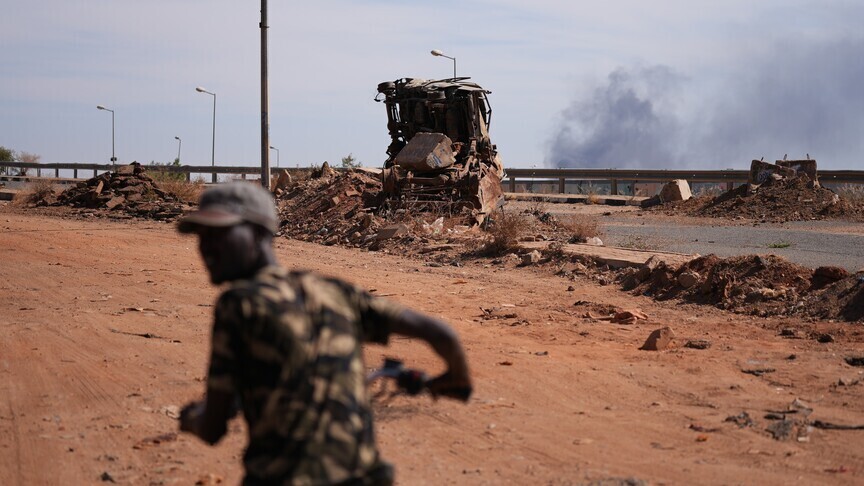
Five strategic battlefronts including Marib and Al-Jawf, Hodeidah and the western coast, Taiz, Dhalea and Lahij, and Saada and the northern border could shape any renewed large-scale ground fighting between government forces and the Houthis. [2] The energy-rich provinces of Marib and Al-Jawf are considered the most likely flashpoint due to their economic importance and strategic value. [2] Government forces are heavily fortified across the area, while the Houthis have concentrated troops, artillery, drones and missile units around the frontlines. [2] The Red Sea coast remains strategically important because of its ports and proximity to the Bab al-Mandeb Strait. [2] Any battle around Taiz would likely centre on mountainous terrain and entrenched urban positions, producing trench warfare, sniper engagements and artillery exchanges. [2] The mountainous fronts around Karsh and Yafa form the main gateway between northern and southern Yemen and serve as the first line of defence for Aden and Al-Anad airbase. [2] The northern border region, stretching across Saada, Hajjah and adjacent districts, is regarded as the Houthis’ ideological and political heartland. [2] Government forces have also acquired warplanes and advanced drones, which have reportedly been used to strike Sanaa airport and Houthi military positions in Marib and Al-Jawf. [2] Government forces and their allies are assessed as holding significant advantages in conventional weaponry, logistics and international backing. [2] By contrast, the Houthis are relying on ideological and tribal recruitment, asymmetric warfare and mass mobilisation. [2]
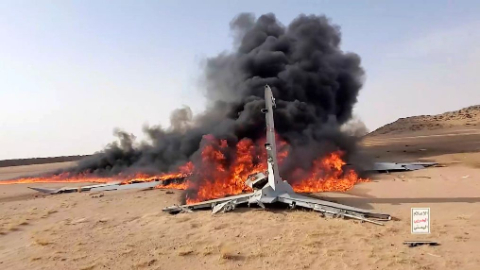
Houthi fighters stand near wreckage of a claimed Saudi reconnaissance drone in Yemen. — Source: xinhua
Regional Security and Energy Implications
The latest decline in traffic comes after shipping activity had already begun to fall sharply. [3] The Bab el-Mandeb is one of the world’s most important maritime chokepoints, linking the Red Sea with the Gulf of Aden and providing a major route for ships travelling between Asia and Europe through the Suez Canal. [3] Around 12% of global trade normally passes through the waterway. [3] Saudi Arabia has been forced to consider longer alternative routes through Egypt’s Suez Canal and around the Cape of Good Hope as security risks rise. [3] A journey from Saudi Arabia’s Red Sea port of Yanbu to Taiwan that normally takes about 19 days through Bab el-Mandeb could take roughly 48 days using the longer route around southern Africa. [3] Shipping through the Strait of Hormuz has remained extremely low despite a temporary pause in US-Iran military strikes, with fewer than 10 commodity vessels passing through the waterway each day over the weekend. [3] Oil prices reached two-month highs last week as physical crude supplies were affected by the shipping risks, although prices fell sharply on Monday after the United States and Iran paused military action. [3] A reduction in US-Iran tensions could lead to a reduction in Yemen tensions. [1] It remains to be seen if the Saudi-Houthi conflict will now grow or if it may be reduced in the coming weeks. [1]
What to watch next
Both sides have used the relative lull since the April 2022 truce to strengthen their military capabilities. [2] Government forces include the Yemeni army, National Shield Forces, Joint Forces, Giants Brigades and southern formations, supported by the Saudi-led coalition. [2] Their strengths include combat aircraft, modern drones, naval assets, armoured vehicles and control of key coastal areas as well as oil and gas infrastructure. [2] The Houthis’ arsenal centres on suicide drones, short-range ballistic missiles, heavy artillery, tunnels and landmines, supported by a unified command structure. [2] The outcome of any renewed ground offensive would not only determine military control on the battlefield but also shape Yemen’s political future and its role in the wider regional balance of power. [2]