Yemen Conflict Sees Houthi Forces Capture Entire Red Sea Coast in 18 Hours in Most Dangerous Countries
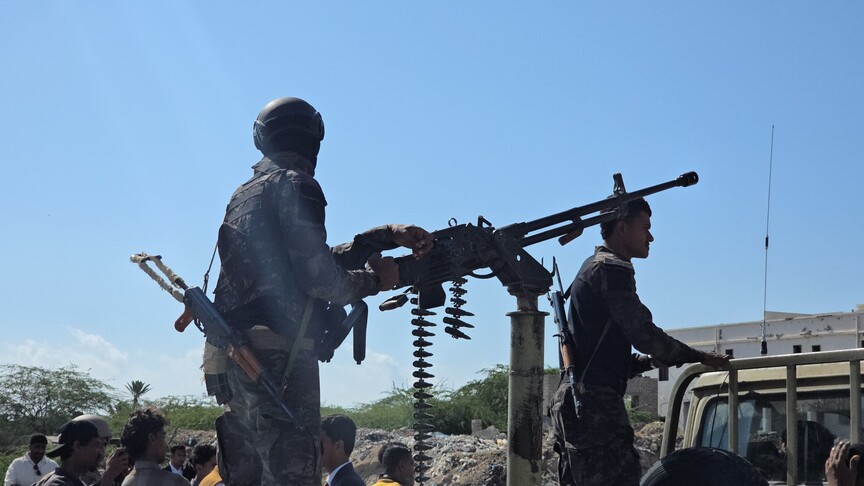
Houthi forces have seized the entire Yemeni Red Sea coast and reached the Bab el-Mandeb strait in an 18-hour offensive, dealing a major blow to Saudi-backed government troops while driving new displacement that has reached 132,330 internally displaced people since August in most dangerous countries.
Houthi Coast Offensive in Most Dangerous Countries
Houthi forces seized the entire Yemeni Red Sea coast and reached the Bab el-Mandeb strait in an 18-hour offensive. [3] The lightning Houthi offensive used Iranian-supplied ballistic missiles and drones developed through experience attacking Israel-linked shipping, allowing them to outmatch fragmented government forces. [3] This success inflicted a heavy blow on the Yemeni government backed by Saudi Arabia. [3] Analysts described the move as the most significant regional development since the United States and Israel declared war on Iran in February. [3]
Displacement Update
IOM recorded an additional 2,892 IDPs on 21 September 2026, bringing the total displacement from 1 August to 20 September to approximately 131,274 individuals (21,879 households) and a cumulative 132,330. [1] IOM Yemen DTM continues to record the displacement caused by escalation in the west coast. [1] On 21 September 2026, IOM Yemen DTM recorded the increase of 2,892 individual IDPs compared to the previous report. [1] This brings the cumulative number recorded to 132,330 individuals. [1]
Clashes in Taiz
Yemeni government forces seized a strategic mountain in southern Taiz, killing more than five Houthi fighters in the clashes. [2] More than 5 Houthi fighters were killed in clashes as troops capture tactical high ground. [2] Yemeni government forces seize strategic mountain in southern Taiz. [2]
Regional and Historical Context
The roots of the conflict with Riyadh date back to 2004, when the Shiite Ansar Allah movement, better known as the Houthis, first took up arms against then-Yemeni President Ali Abdullah Saleh and accused Saudi Arabia of financing and directing his crackdown on their community in the northern Saada province. [3] After the Houthis exploited a wave of discontent over corruption in 2014 and seized the capital Sanaa, forcing the president to flee to Aden, Saudi Arabia entered the war at the head of a coalition of Arab states. [3] The war remained stalled for a full decade despite the 2022 truce, and the current escalation represents its most intense continuation. [3] The Houthis almost from the founding of the movement in the 1990s adopted the slogan known as "al-Sarkha" (The Scream) — "God is greatest, death to America, death to Israel, curse the Jews, victory to Islam" — as part of a broader anti-imperialist and anti-Zionist ideology close to Iranian revolutionary rhetoric, but until 2023 that slogan remained largely symbolic. [3] That changed after the Hamas attack on Israel on 7 October 2023, when the Houthis began firing missiles and drones at the Israeli port city of Eilat and attacking ships in the Red Sea. [3] The pattern repeated in waves, a truce in Gaza in October 2025 temporarily calmed the attacks, but fighting between Israel and Iran, which broke out again this year, prompted the Houthis to resume the blockade of Israel-linked ships in June. [3]
Oil Market and Geopolitical Impact
Control of Bab el-Mandeb, through which 12 percent of global trade passes, has sharply reduced Saudi oil shipments via the strait, with volumes falling to around 400,000 barrels per day and shipping down 60-70 percent. [3] Bab el-Mandeb, through which around 12 percent of total world trade passes daily, has gained additional importance since Iran closed the Strait of Hormuz. [3] Saudi Arabia then increased the capacity of the pipeline that transports crude oil from the Abqaiq fields to the port of Yanbu on the Red Sea from five to seven million barrels per day. [3] Maritime traffic through Bab el-Mandeb is seriously threatened by the Houthi advance. [3] Helima Croft, an analyst at RBC Capital Markets, warned that full war could push Brent to nearly 122 dollars by the end of the year. [3] Goldman Sachs sees the possibility of growth toward 120 dollars if the conflict drags into 2027, while Bank of America expects a range of 95 to 125 dollars by the end of the year. [3] The International Energy Agency stated that global oil supply this year will fall more than previously forecast. [3] According to IEA data, Saudi Arabia and Russia, the second and third largest oil producers in the world, together pumped around 5.5 million barrels per day less in August than in January. [3] For Tehran, the outcome on the ground has almost symbolic value. [3] Alam Saleh, professor of international relations at the Australian National University, assessed that Iran now controls the Strait of Hormuz plus something more. [3]
Outlook and Reactions
Saudi Arabia constantly fires dozens of missiles at areas under Houthi control, but so far without visible effect. [3] Crown Prince Mohammed bin Salman twice requested direct U.S. airstrikes on the Houthis by telephone from President Trump, but Trump declined the request, instead offering intelligence support. [3] Trump also acknowledged that the war is unlikely to end before the U.S. midterm elections in November. [3] According to the Wall Street Journal, his advisers in internal talks already mention only 2029 as the year the conflict ends. [3] Analyst Mohamad Elmasry from the Qatari Doha Institute assessed that this is "a fighting force more advanced than the one the Saudis faced a decade ago," adding that access to Iranian weapons enabled the Houthis to build an impressive arsenal. [3] Andreas Krieg, associate professor at King's College London, nevertheless warns that the Houthis are "terrible" at governing conquered areas and that it is unlikely they will be able to maintain the blockade in the long term. [3]
What to watch next: Saudi Arabia continues to fire missiles at Houthi-controlled areas while Trump has declined direct U.S. airstrikes and offered only intelligence support, with advisers already referencing 2029 as a possible end to the conflict.