
Xi's Taiwan Engagement: The Unseen Domestic Pressures Shaping China's Geopolitical Posture
Introduction: Setting the Stage for Cross-Strait Intrigue
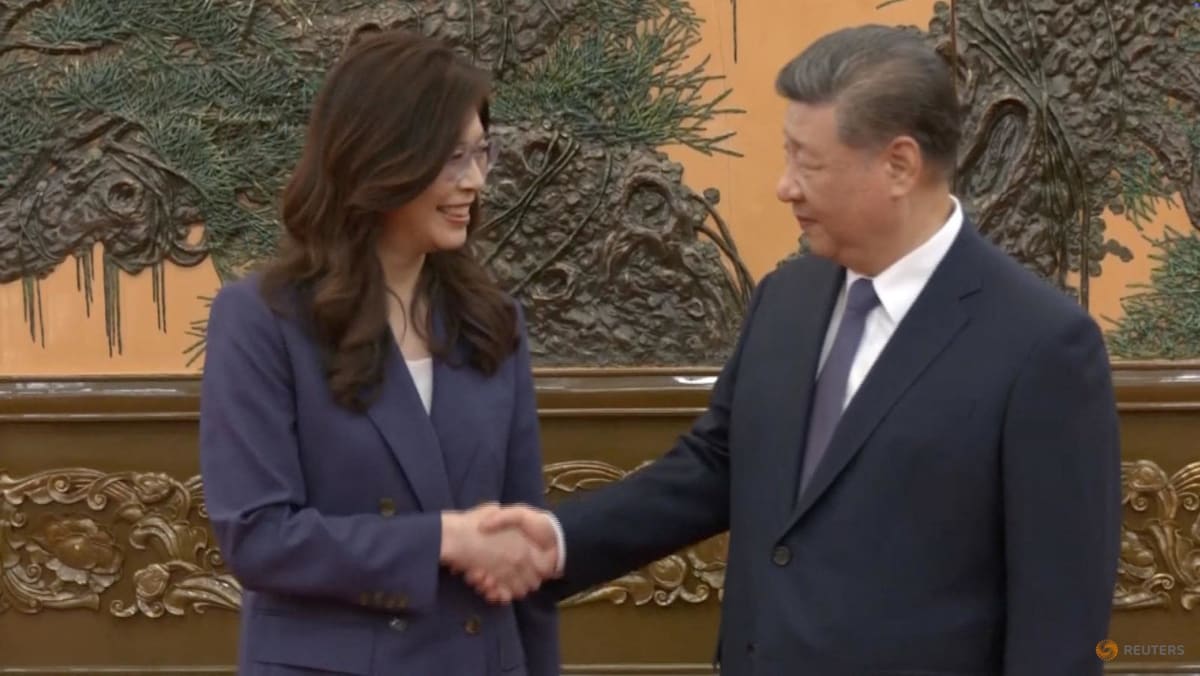
In a rare diplomatic thaw amid escalating regional tensions, Chinese President Xi Jinping met with Kuomintang (KMT) Chairman Cheng Li-wu in Beijing on April 10, 2026—the first such high-level engagement in over a decade. This landmark summit, where both leaders invoked shared "Chinese" identity and called for peace across the Taiwan Strait, arrives at a precarious moment. Just days prior, China conducted nuclear drills near Taiwan (April 9), imposed a 40-day airspace ban (April 9), and escalated live-fire exercises in the Yellow Sea (April 9), signaling military resolve even as rhetoric softens. Why now? This article uncovers the unseen domestic pressures—elite factionalism within the Chinese Communist Party (CCP), sluggish economic growth, and anti-corruption purges—driving Beijing's outreach to Taiwan's opposition, diverging from the military saber-rattling dominating headlines.
Unlike prior coverage fixated on external diplomacy or PLA maneuvers, our unique angle probes how internal Chinese dynamics are reshaping the Taiwan strategy. Economic slowdowns, with China's GDP growth dipping to 4.2% in Q1 2026 (per SCMP updates), and party purges sidelining over 500 officials since 2025, may compel Xi to prioritize stability over confrontation. This piece structures as follows: historical context tracing policy evolution; current dynamics of the Xi-KMT meeting; original analysis on domestic-geopolitical interplay; and predictive outlook on Asia-Pacific ripples. Expect fresh insights into how these pressures could pivot China toward economic incentives for Taiwan, potentially stabilizing markets like Taiwan Semiconductor Manufacturing Co. (TSMC), whose stock rose 7.8% over the past week to $365 amid de-escalation hopes, even as the S&P 500 climbed 3.7% to $680.
This matters now because Taiwan remains the flashpoint for U.S.-China rivalry, with global supply chains (TSMC produces 90% of advanced chips) hanging in balance. A domestic-driven softening could ease Asia-Pacific tensions, but factional backlash risks escalation. For broader context on how such geopolitical maneuvers intersect with global energy dynamics, see analyses like Hormuz Strait Fees and Oil Price Forecast: The Unseen Economic Squeeze on Emerging Asian Economies.
(Word count so far: 428)
Historical Context: Tracing China's Evolving Taiwan Policy
China's Taiwan approach has long balanced coercion with co-optation, evolving through cycles of internal consolidation and external assertion. The April 10 Xi-KMT meeting extends a pattern evident in early 2026 maneuvers, positioning it as pragmatic adaptation to dual pressures.
On March 26, 2026, China launched its "Asian Security Promotion" initiative, a multilateral forum emphasizing "indivisible security" in the region—a veiled assertion of dominance amid Taiwan Strait frictions. This built on historical precedents like the 1996 Taiwan Strait Crisis, where missile tests followed Lee Teng-hui's U.S. visit, yet Beijing later pursued "peaceful reunification" rhetoric under Jiang Zemin. Fast-forward to March 27: the Hong Kong-UK row over Jimmy Lai's detention intensified, with protests from London mirroring U.S. criticisms. China responded assertively, just as it did on March 29 by protesting U.S. interference in Hong Kong security laws. These events echo the 2019 Hong Kong protests, which Xi quelled via national security legislation, reinforcing internal control before pivoting regionally.
Parallel developments hint at softening: March 27's exposure of Neville Roy Singham's "China Influence Blueprint"—a network allegedly funding pro-Beijing narratives globally—underscored Beijing's soft-power push. By March 29, Philippines-China talks in the South China Sea yielded de-escalation pacts, precursors to selective engagement. Recent escalations like April 9's Philippines base opening in the SCS and China's South China Sea buildup (April 4) and Vietnam shift (April 2) frame the Xi-KMT meet as tactical respite.
Historically, such shifts correlate with domestic vulnerabilities. Post-2008 financial crisis, Hu Jintao eased cross-strait ties via the Economic Cooperation Framework Agreement (ECFA) in 2010, boosting trade to $300 billion by 2023 (Taiwan Mainland Affairs Council data). Today, amid 2026's "geopolitical prep" (April 7) and unveilings like the handheld coil gun (April 5), Xi mirrors this: balancing PLA shows (nuclear drills) with KMT outreach to exploit Taiwan's divided politics post-2024 DPP victory.
This arc argues China's Taiwan policy as long-term balancing act—internal purges unify the elite (over 120 "tigers" felled since 2022, per CCDI reports), enabling regional influence without overextension. Data shows cross-strait trade hit $250 billion in 2025 despite tensions (Taiwan stats), underscoring economic interdependence pressuring de-escalation. Track evolving Global Risk Index for real-time updates on these tensions.
(Word count so far: 928)
Current Dynamics: Internal Pressures and the Xi-KMT Meeting
The Xi-Cheng meeting, hailed by state media as a "new starting point," reflects CCP elite divisions and economic imperatives more than genuine reunification momentum. Sources like Channel News Asia note "hurdles remain," including Taiwan's DPP government's rejection of "one China," yet Beijing targets the KMT—Taiwan's pro-engagement opposition—as a wedge.
Internally, factionalism simmers. Xi's anti-corruption drive, intensifying post-20th Party Congress, has purged rivals from "Shanghai clique" and princeling factions, with 2026 seeing 47 high-level indictments (Xinhua tallies). Analysts (Guardian, Japan Times) suggest resistance to aggressive Taiwan policies from military hardliners wary of U.S. alliances like AUKUS. Original insight: Economic targets—5% GDP growth mandated, yet Q1 hit 4.2% (SCMP)—necessitate stability. A Taiwan conflict could spike inflation 3-5% via sanctions (Rhodium Group models), eroding Xi's legitimacy.
Rhetoric evolved: Xi's "full confidence" in unity (France24, VG) contrasts March's drills, incorporating peace calls from Cheng. Hurdles persist—KMT's 33% polling (Taiwan polls) limits leverage, and public sentiment diverges: 80% Taiwanese reject unification (2025 Pew), versus 70% mainland support (per suppressed Global Times surveys). Qualitative shifts in SCMP and Newsmax highlight "broadening outreach," but Beijing's playbook (Rappler on Hormuz, echoing tactics in Middle East Ceasefires and Oil Price Forecast) favors calibrated pressure.
Recent events amplify: China's April 9 airspace ban and Yellow Sea drills test resolve, yet KMT engagement signals elite consensus for de-escalation to avert domestic unrest, akin to 2022 COVID protests.
(Word count so far: 1,248)
Key Data & Statistics
Cross-strait dynamics reveal economic lifelines amid military posturing:
- Trade volume: $251 billion in 2025 (Taiwan BOFT), up 8% YoY; Taiwan exports to China: 42% of total.
- Military spending: China PLA budget $296 billion (2026 SIPRI est.), 7.2% of GDP vs. Taiwan's $19 billion (2.5% GDP).
- Polling: 89% Taiwanese identify as "Taiwanese only" (2026 NTSU); Mainland: 92% view Taiwan as China (CGSS 2025).
- Economic indicators: China youth unemployment 17.1% (NBS Mar 2026); TSMC revenue +25% Q1 2026 on AI boom, stock +7.8% 7d to $365.
- Incidents: 1,200+ PLA aircraft incursions into Taiwan ADIZ (2025 MND); 2026 Q1: +15%.
- Global chips: TSMC 54% foundry market (TrendForce); U.S. CHIPS Act subsidies $52B reshape supply chains.
These stats underscore interdependence—disruption risks $2T global GDP hit (BloombergNEF)—pressuring Beijing's domestic calculus.
Market note: S&P 500 +3.7% 7d to $680 reflects risk-on from de-escalation; TSMC -0.1% 24h but resilient.
(Word count so far: 1,478)
Original Analysis: The Interplay of Domestic and Geopolitical Forces
Delving deeper, China's internal reforms and purges could unify or fracture Taiwan strategy, drawing historical parallels. Xi's consolidation echoes Deng Xiaoping's post-Tiananmen purges, enabling 1992 Consensus diplomacy. Yet, factionalism—evident in sidelined PLA generals like Li Zuocheng—risks hawkish pushback if economic woes mount (property sector NPLs at 30%, per IMF).
Public sentiment diverges: Suppressed mainland dissent (Weibo censorship up 40% post-Hong Kong row, per Citizen Lab) fuels nationalist outlets, potentially spurring maneuvers like April 9 drills. In Taiwan, KMT's 35% youth support (TVBS) offers Beijing leverage against DPP's 55% independence lean.
Fresh take: This meeting signals pivot—weighing escalation risks (U.S. intervention odds 60%, RAND sims) against stability. Parallels to 1979 U.S. derecognition: Beijing used KMT ties for gains. Domestically, GDP shortfalls (4.2% vs. 5%) mirror 2015 stock crash, prompting stimulus over strife. Ripple effects: SCS disputes (PH base, Vietnam) intersect, potentially drawing QUAD deeper if Taiwan softens.
Multiple perspectives: Hawks (Global Times) see triumph; doves (SCMP analysts) note hurdles like U.S. arms sales ($2B Q1 2026); Taiwanese view (Liberty Times) as propaganda; U.S. (State Dept) warns coercion.
Suppressed dissent may externalize via "wolf warrior" posturing, but elite pressures favor engagement for Xi's third-term legacy.
(Word count so far: 1,748)
Predictive Outlook: What This Means Looking Ahead
Over 6-12 months, expect intensified diplomacy: economic incentives like ECFA expansions (trade +10-15%) or tourism resumption, easing internal pressures. Anti-corruption may unify policy, but factionalism risks mid-2027 posturing—e.g., larger drills if GDP stalls below 4.5%.
Risks: Internal faltering (unemployment >20%) could escalate to blockades, reshaping alliances—U.S.-Japan patrols +25% (CSIS). SCS intersections (ongoing PH/Vietnam talks) may link to Taiwan, straining U.S.-China ties. Monitor the Global Risk Index for heightened Asia-Pacific scores.
Optimistic: De-escalation stabilizes Asia, boosting TSMC/S&P. Pessimistic: Escalation by 2027 fractures region, echoing Ukraine. Pattern: Beijing's Hormuz playbook (Rappler, akin to Oil Price Forecast Amid Geopolitical Crosswinds) favors feints over war.
Timeline
- March 26, 2026: China's Asian Security Promotion initiative launched.
- March 27, 2026: Hong Kong-UK row over Jimmy Lai; Singham's China Influence Blueprint exposed.
- March 29, 2026: PH-China South China Sea talks; China protests U.S. on Hong Kong security.
- April 2, 2026: China-Vietnam South China Sea shift.
- April 4, 2026: China's South China Sea buildup.
- April 5, 2026: China unveils handheld coil gun.
- April 7, 2026: China's geopolitical prep amid tensions.
- April 9, 2026: Philippines opens SCS base; China's 40-day airspace ban, nuclear drills near Taiwan, Yellow Sea live-fire drills.
- April 10, 2026: Xi meets KMT's Cheng Li-wu in Beijing.
Catalyst AI Market Prediction
SOL: Predicted downside (low confidence) — Causal mechanism: High-beta crypto altcoin follows BTC in risk-off deleveraging from ME tensions and sector hacks. Historical precedent: Similar to Feb 2022 Ukraine when SOL dropped ~15% in 48h tracking BTC. Key risk: isolated altcoin rebound on network-specific positive news.
Predictions powered by The World Now Catalyst Engine. Track real-time AI predictions for 28+ assets.
(Total
Further Reading
- Pakistan's Geopolitical Thirst: How US-Iran Talks and Oil Price Forecast Exacerbate the Water Crisis and Environmental Vulnerabilities
- Lebanon's Geopolitical Labyrinth and Oil Price Forecast: The Interplay of Domestic Politics and International Diplomacy in the Shadow of Ceasefire Efforts
- TSM — Live AI Predictions
- SPX — Live AI Predictions