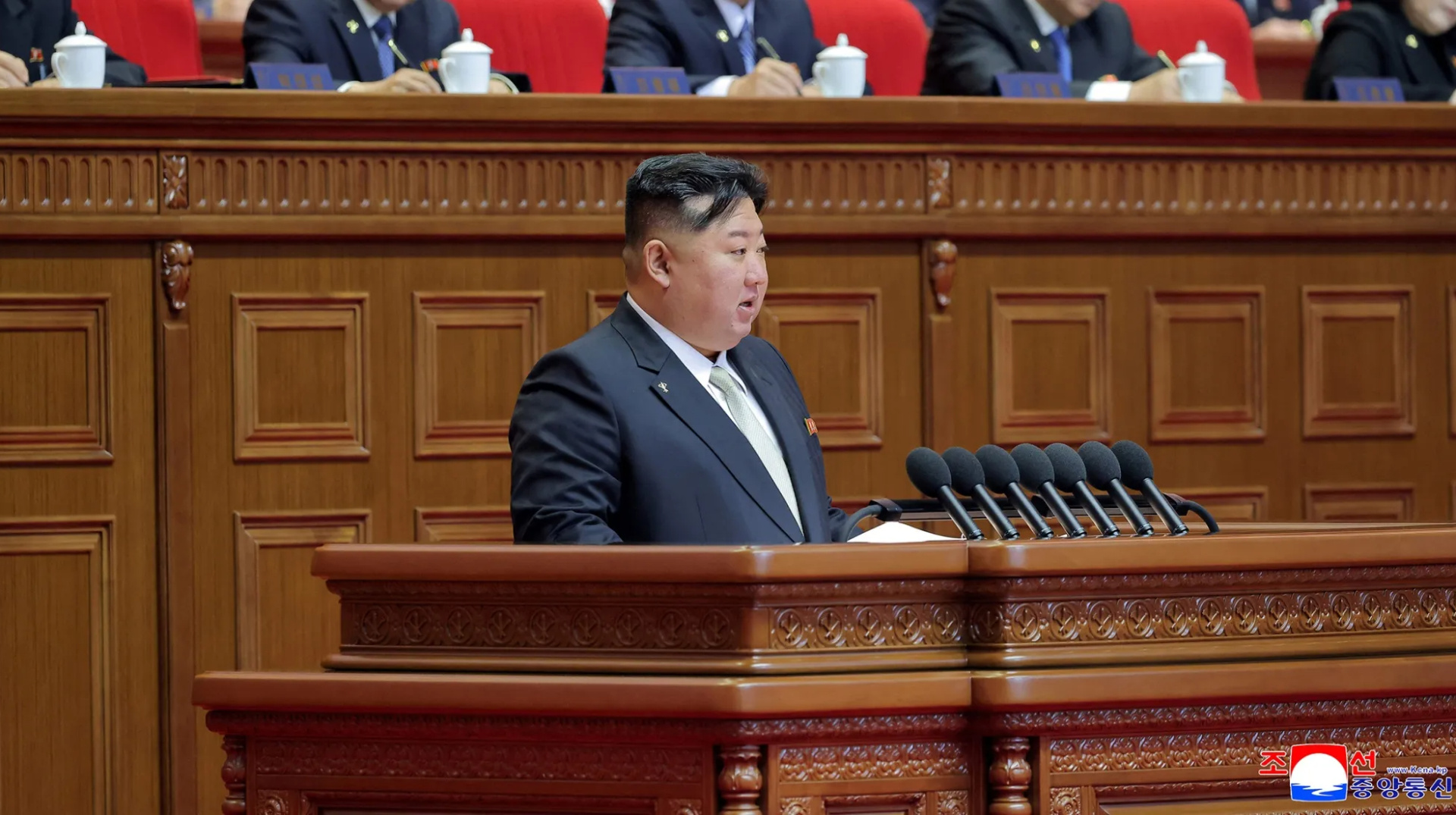

War in Ukraine: Kim Jong Un Declares Soldiers Who Committed Suicide as Heroes
North Korean leader Kim Jong Un has praised soldiers from his country who committed suicide to avoid capture while fighting in Russia's war in Ukraine, labeling them heroes and confirming a policy that requires such actions in the event of imminent capture.[1][2]
Overview of Foreign Military Involvement
North Korean leader Kim Jong Un recently made public remarks that highlight the role of his country's troops in Russia's ongoing military operations against Ukraine. During a ceremony described by Pyongyang as commemorating operations in Russia’s Kursk region, Kim praised both soldiers who had fallen in combat through self-sacrifice and those who survived their engagements.[2] Specifically, he stated, “Those who, in order to defend great honor, unhesitatingly chose the path of self-destruction and self-sacrifice are heroes.”[2] This language directly references North Korean soldiers who blew themselves up to avoid being taken prisoner, a practice Kim has now officially endorsed as heroic.[1]
These statements serve as an official acknowledgment of North Korean military participation on the Russian side in the war in Ukraine. The ceremony underscored the deployment of these troops to key areas like the Kursk region, where they have been engaged in combat operations.[2] Kim's praise extends to surviving troops as well, framing their service as a defense of national honor amid the broader conflict.[2] This public recognition from Pyongyang's top leadership confirms not only the presence of North Korean forces but also a deliberate policy mandating extreme measures to prevent capture, reflecting a strategic approach to maintaining troop morale and operational secrecy.[1]
The implications of these remarks are significant for understanding foreign military involvement in the war in Ukraine. By elevating suicide to the status of heroism, Kim Jong Un is reinforcing a cultural and military doctrine that prioritizes death over surrender, a longstanding element in North Korean military training.[1][2] The timing of the ceremony, tied explicitly to Kursk region activities, suggests ongoing and active contributions from North Korean units, potentially numbering in the thousands based on prior reports, though exact figures remain unconfirmed in these statements.[2] This overview positions North Korea as a committed ally to Russia, with leadership openly celebrating the sacrifices made by its personnel in this foreign conflict.
Further context from the remarks indicates that the praise is multifaceted, aimed at bolstering the resolve of all involved troops. Surviving soldiers are commended alongside the fallen, creating a narrative of collective heroism that permeates the entire force.[2] This dual recognition helps frame the North Korean contribution as both sacrificial and resilient, even as reports of captures emerge.[2] Overall, Kim's words provide a window into how Pyongyang views its troops' role: not as mercenaries, but as guardians of honor in support of Russia's war in Ukraine.[1][2]
Recruitment of Non-Russian Forces
The involvement of foreign troops, including North Koreans, in Russia's war in Ukraine has drawn attention to broader patterns of non-Russian recruitment. North Korean soldiers have been documented participating in operations in Russia’s Kursk region, as highlighted in official North Korean ceremonies.[2] Kim Jong Un's praise for these troops, both fallen and surviving, underscores their deployment to frontline areas.[2]
Parallel to this, recruitment efforts have expanded to include Central Asians, whose participation has evolved from initial reports of forced conscription to more economically driven incentives. Russia's war in Ukraine has increasingly tapped into migrant labor pools from Central Asia, transforming the conflict into an extension of the regional migrant economy.[3] Early phases saw allegations of coerced recruitment among Central Asian migrants in Russia, but recent dynamics emphasize financial motivations, offering salaries and benefits that appeal to workers from countries like Uzbekistan, Tajikistan, and Kyrgyzstan.[3]
This shift in recruitment strategies reflects Russia's need to bolster its forces amid prolonged fighting in the war in Ukraine. North Korean troops represent state-sponsored assistance, with policies ensuring their commitment through drastic measures like required suicide to avoid capture.[1] In contrast, Central Asian recruits often enter via economic pathways, drawn by promises of high pay in a labor market where such opportunities are scarce.[3] The combination of these groups illustrates a diversified approach to manpower: ideologically aligned allies like North Korea providing disciplined units for specific operations such as those in Kursk, and economically motivated individuals filling gaps elsewhere.[2][3]
Documented captures of North Korean soldiers have added complexity to their involvement, prompting leadership responses aimed at psychological reinforcement.[2] Meanwhile, the economic recruitment of Central Asians highlights how the war in Ukraine intersects with global migration patterns, where conflict zones become destinations for those seeking income.[3] Russia's reliance on these foreign elements points to challenges in sustaining domestic mobilization, with North Koreans handling high-risk tasks and Central Asians contributing to broader force augmentation.[1][2][3]
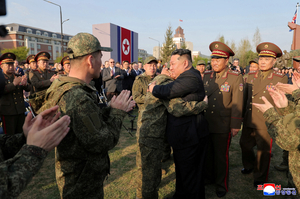
Kim Jong-un praises fallen and surviving North Korean troops in a ceremony. — Source: korea-herald
Humanitarian Consequences in Ukraine
The war in Ukraine has inflicted severe damage on civilian infrastructure, particularly housing, exacerbating the humanitarian crisis. According to assessments, more than 14% of Ukraine’s total housing stock has been damaged or destroyed, leaving millions of Ukrainians in need of various forms of shelter and housing support.[4]
This figure comes from the fifth Rapid Damage and Needs Assessment, underscoring the scale of destruction across the country.[4] Areas continuing to experience active hostilities face the most acute challenges, where emergency shelter assistance is critical for displaced populations.[4] The UNHCR's operations in Ukraine focus on providing support to those directly affected, including temporary housing solutions and repairs to make homes habitable amid ongoing conflict.[4]
The loss of over 14% of housing represents a profound impact on daily life, forcing millions into precarious living conditions. Families in frontline regions rely on emergency aid to secure basic shelter, while broader recovery efforts lag behind the pace of destruction.[4] UNHCR's shelter and housing programs target these vulnerable groups, delivering materials and expertise to mitigate immediate risks from exposure and instability.[4]
This housing crisis compounds other war-related hardships, as damaged infrastructure hinders reconstruction and prolongs displacement. The need for sustained international support is evident, with organizations like UNHCR emphasizing emergency responses in high-risk zones.[4] The 14% destruction rate highlights the war's toll on Ukraine's built environment, affecting urban and rural areas alike and necessitating long-term commitments to restoration.[4]
Current Policy and Psychological Aspects
North Korean leadership has articulated a clear policy requiring soldiers to commit suicide rather than face capture, a directive confirmed by Kim Jong Un in the context of their role in Russia's war against Ukraine.[1] This stance was reinforced in recent remarks where soldiers who blew themselves up were hailed as heroes, embodying self-destruction to defend national honor.[1][2]
The policy addresses operational realities on the battlefield, where capture poses risks of interrogation and propaganda exploitation. Kim's praise for both those who perished by suicide and surviving troops appears designed to manage the psychological fallout from reported captures of North Korean personnel.[2] By framing self-sacrifice as heroic, the message aims to deter surrender and maintain unit cohesion among deployed forces.[1][2]
Speaking at the Kursk operations ceremony, Kim emphasized the honor in choosing death over dishonor, a narrative that seeks to inspire loyalty and resolve.[2] This psychological strategy counters the demoralizing effect of prisoner-of-war situations, positioning fallen soldiers as exemplars for others.[2] The dual commendation of dead and living troops creates a unified front, reducing stigma around combat losses and reinforcing ideological commitment.[2]
In practice, this policy manifests in troops carrying explosives for self-detonation, as evidenced by Kim's explicit endorsement.[1] The psychological dimension extends to families and the home front, where hero worship sustains public support for overseas deployments.[2] Amid the war in Ukraine, such measures ensure North Korean units remain committed, even in adverse conditions like those in Kursk.[2]
{IMAGE_3}
Broader Context of the Conflict
The elements of foreign involvement, recruitment shifts, and humanitarian devastation paint a comprehensive picture of Russia's war in Ukraine. North Korean troops' participation, marked by Kim Jong Un's heroization of suicides and policy mandates, integrates state-backed support into Russian operations, particularly in Kursk.[1][2] This alliance bolsters Moscow's capabilities while exposing Pyongyang's forces to capture risks, prompting psychological countermeasures.[2]
Recruitment of Central Asians further diversifies the foreign contingent, evolving from coercion to economic lures tied to migrant labor flows.[3] This trend underscores Russia's manpower challenges, blending ideological partners like North Korea with pragmatic incentives for others.[1][2][3]
Meanwhile, Ukraine grapples with over 14% housing destruction, displacing millions and demanding urgent shelter aid in active war zones.[4] UNHCR's efforts highlight the human cost, where infrastructure losses perpetuate vulnerability.[4]
Tying these threads, the conflict reveals interconnected dynamics: North Korean policy responses to battlefield psychology [1][2], adaptive recruitment amid attrition [3], and enduring civilian suffering [4]. Pyongyang's Kursk-linked ceremony signals sustained commitment, while economic pulls on Central Asians reflect resource strains.[2][3] The housing crisis amplifies the war's domestic impact in Ukraine, contrasting foreign reinforcements on the Russian side.[4]
Key Developments in the War in Ukraine
Recent developments in the war in Ukraine encompass leadership statements, troop deployments, and infrastructural fallout. Kim Jong Un's confirmation of a suicide policy and praise for self-sacrificing soldiers marks a pivotal acknowledgment of North Korean engagement.[1] Troops in Kursk operations embody this involvement, with messages targeting psychological resilience post-captures.[2]
Central Asian recruitment's shift to economic models integrates migrant economies into the conflict, expanding non-Russian participation.[3] Paralleling this, Ukraine's housing stock faces 14% damage, fueling emergency needs for millions.[4]
These facts illustrate evolving strategies: policy-driven heroism from allies [1][2], incentive-based augmentation [3], and humanitarian imperatives [4]. The interplay sustains the war's intensity, from frontlines to homefronts.
What to watch next: Further statements from Kim Jong Un on troop performance and captures, evolving recruitment incentives for Central Asians, continued UNHCR assessments of Ukraine's housing damage, and updates on Kursk operations.[1][2][3][4]






