Volcano United States: Trump States US Is in No Rush as Clock Ticks for Iran
In the ongoing Volcano United States scenario, US-Iran tensions are escalating, marked by the arrival of a third aircraft carrier in the Middle East and reports of blasts over Tehran, as highlighted in recent statements from President Donald Trump and other developments.[3] Iranian media has reported these blasts amid the heightened conflict, while President Trump has emphasized that the United States is in no rush, though the clock is ticking for Iran.[3] These events come alongside diplomatic shifts, including the resignation of Iran's lead negotiator in talks with the United States, which triggered a notable market reaction.[4]
Overview of US-Iran Tensions
The current state of US-Iran relations reflects a period of intensified conflict, characterized by military posturing and diplomatic strains. President Donald Trump stated on Thursday that the United States is in no rush to end the war with Iran, but underscored that "the clock is ticking" for the Islamic republic.[3] This rhetoric signals a strategic patience on the US side, positioning America to maintain pressure without immediate escalation to further hostilities. The timing of this statement coincides with significant military reinforcements, as a third aircraft carrier has arrived in the Middle East, bolstering US naval presence in the region.[3]
Simultaneously, reports from Iranian media have documented blasts over the capital city of Tehran, described as a first in the ongoing tensions.[3] These incidents point to possible airstrikes or defensive actions, heightening fears of broader confrontation. On the diplomatic front, Israeli broadcaster N12 reported that Iran's lead negotiator in talks with the United States has resigned, a development that has fueled fresh concerns about the trajectory of negotiations.[4] This resignation underscores the fragility of dialogue amid the war, suggesting internal discord within Iran's negotiating team that could prolong the standoff.[3][4]
The combination of these elements paints a picture of strained relations where military readiness intersects with faltering diplomacy. Trump's comments imply that the US views time as an ally, allowing for sustained pressure on Iran while avoiding hasty resolutions.[3] Concerns about escalation persist, as the Middle East navigates the aftermath of direct US-Iran hostilities.[5] This overview captures the multifaceted nature of the tensions, where each development reinforces the other's impact, creating a cycle of uncertainty in US-Iran dynamics.[3][4]
Recent Developments in the Middle East
Recent events in the Middle East have amplified the US-Iran conflict, with key incidents underscoring the volatile security environment. Iranian media outlets reported blasts over Tehran, the capital city, marking a significant escalation in the hostilities.[3] These blasts, described as unprecedented in the current context, suggest active military engagements possibly linked to US or allied operations, though specifics remain tied to the reports from Iranian sources.[3]
Compounding this, President Trump announced the arrival of a third aircraft carrier in the Middle East, a move that enhances US strike capabilities and deterrence posture.[3] This deployment occurs as the US maintains its war footing against Iran, with Trump's statement framing it within a broader timeline where the Islamic republic faces mounting pressure.[3] The carrier's presence not only projects power but also serves as a response to perceived threats from Iran, aligning with the ongoing war dynamics.[3]
Broader regional analysis questions whether the Middle East is heading toward peace or further escalation following the US-Iran war.[5] Published on April 23, 2026, this perspective highlights lingering uncertainties, as recent blasts and military arrivals fuel debates over stability.[3][5] These developments collectively indicate a region on edge, where isolated incidents like the Tehran blasts could precipitate wider involvement, while US naval reinforcements aim to shape the conflict's course.[3][5]
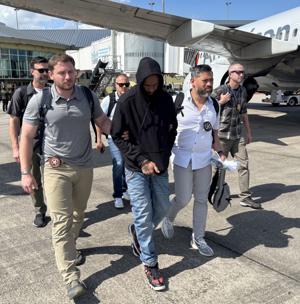
A man from Trinidad is extradited to the US to face armed robbery charges. — Source: trinidadexpress
Arrival of the Third US Aircraft Carrier
The deployment of a third aircraft carrier to the Middle East represents a pivotal military development in the Volcano United States context, directly referenced by President Trump.[3] Trump highlighted this arrival in his Thursday statement, linking it to the US's unhurried approach to the war with Iran while noting the ticking clock for the adversary.[3] Aircraft carriers serve as floating airbases, capable of launching fighter jets, drones, and precision strikes, thereby significantly augmenting US operational flexibility in the region.[3]
This move builds on existing naval assets, creating a formidable presence that deters Iranian aggression and supports potential offensive actions. The timing aligns with reports of blasts over Tehran, suggesting coordinated military signaling.[3] By stationing this carrier, the US demonstrates resolve without committing to immediate ground operations, consistent with Trump's no-rush posture.[3] Analysts interpret this as a strategic escalation in capability, ensuring the US can respond swiftly to any Iranian provocations amid the ongoing war.[3]
The carrier's arrival also reassures allies in the region, reinforcing the US commitment to countering Iranian influence. It fits into a pattern where naval power projection has been central to US strategy against Iran, allowing for sustained operations over vast distances.[3] As tensions persist, this development keeps the pressure on Iran, where the clock continues to tick under the weight of superior US forces.[3]
Economic Impacts of Escalation
The resignation of Iran's lead negotiator in talks with the United States has had immediate repercussions on global markets, particularly in energy commodities.[4] Brent crude oil prices jumped more than 3% following the report from Israeli broadcaster N12, reflecting investor anxieties over stalled diplomacy.[4] This surge underscores how diplomatic breakdowns in the US-Iran conflict directly influence supply concerns, as Iran remains a major oil producer despite sanctions and war-related disruptions.[4]
The 3% increase in Brent crude prices signals broader fears of supply interruptions in the Middle East, where escalation could disrupt key shipping routes and production facilities.[4] Markets reacted swiftly to the negotiator's departure, interpreting it as a sign of hardening positions that could extend the war and tighten global oil availability.[4] This economic ripple effect highlights the interconnectedness of geopolitics and energy markets, with the US-Iran tensions acting as a primary driver.[4]
Investors are closely monitoring these fluctuations, as prolonged uncertainty could lead to sustained higher prices, impacting economies worldwide.[4] The oil jump directly ties to the reported resignation, amplifying concerns that talks are collapsing at a critical juncture.[4] In the context of Volcano United States developments, this market response serves as a barometer for escalation risks, where diplomatic failures translate into tangible financial pressures.[4]
President Trump speaks on US-Iran tensions during a press event. — Source: newsmax
Diplomatic Shifts and the Negotiator's Resignation
The resignation of Iran's lead negotiator, as reported by Israeli broadcaster N12, marks a critical diplomatic setback in US-Iran relations.[4] This event, occurring amid ongoing talks with the United States, has intensified worries about the path forward in resolving the war.[4] The negotiator's departure suggests internal challenges within Iran's leadership, potentially fracturing the unity needed for effective bargaining.[3][4]
President Trump's assertion that the US is in no rush provides a contrasting stance, implying that such resignations weaken Iran's position as the clock ticks.[3][4] Talks have been a tenuous channel despite the hostilities, and this development raises doubts about their viability.[4] The immediate 3% jump in oil prices illustrates the market's interpretation of this as a step toward prolonged conflict.[4]
This shift fits into the broader tensions, where military moves like the third carrier's arrival coincide with diplomatic unraveling.[3][4] Iran's ability to sustain negotiations appears compromised, potentially forcing a reevaluation of strategies on both sides.[4] The resignation thus acts as a catalyst for heightened scrutiny of US-Iran interactions, emphasizing the high stakes involved.[3][4]
Broader Context of US International Affairs
President Trump's statements on Iran reflect a key aspect of US foreign policy under his administration, emphasizing strategic timing and military leverage.[3] By declaring no rush to end the war while noting the clock is ticking for Iran, Trump positions the US as holding the initiative, allowing for calibrated responses.[3] This approach integrates with ongoing international affairs, where US naval deployments underscore commitments to regional stability against adversarial states.[3]
The arrival of the third aircraft carrier exemplifies this policy in action, enhancing US capabilities without overextension.[3] Amid reports of blasts over Tehran, the US maintains a posture of readiness, influencing dynamics not just with Iran but across the Middle East.[3] Trump's rhetoric serves to signal both domestically and internationally that America prioritizes its interests on its terms.[3]
This context reveals a US strategy focused on deterrence and pressure, where patience is weaponized against Iran's timeline.[3] As the war persists, these elements shape America's global standing, reinforcing alliances and projecting strength.[3]
What to watch next
Key developments to monitor include further US military movements like additional carrier operations, reactions to the Tehran blasts, and oil market responses to any diplomatic updates following the negotiator's resignation, as these could signal whether tensions de-escalate or intensify.[3][4][5]