
Venezuela's Geopolitical Pivot: Economic Rebirth and Social Reforms in the Post-Maduro Era
Introduction: A New Chapter in Venezuelan Geopolitics
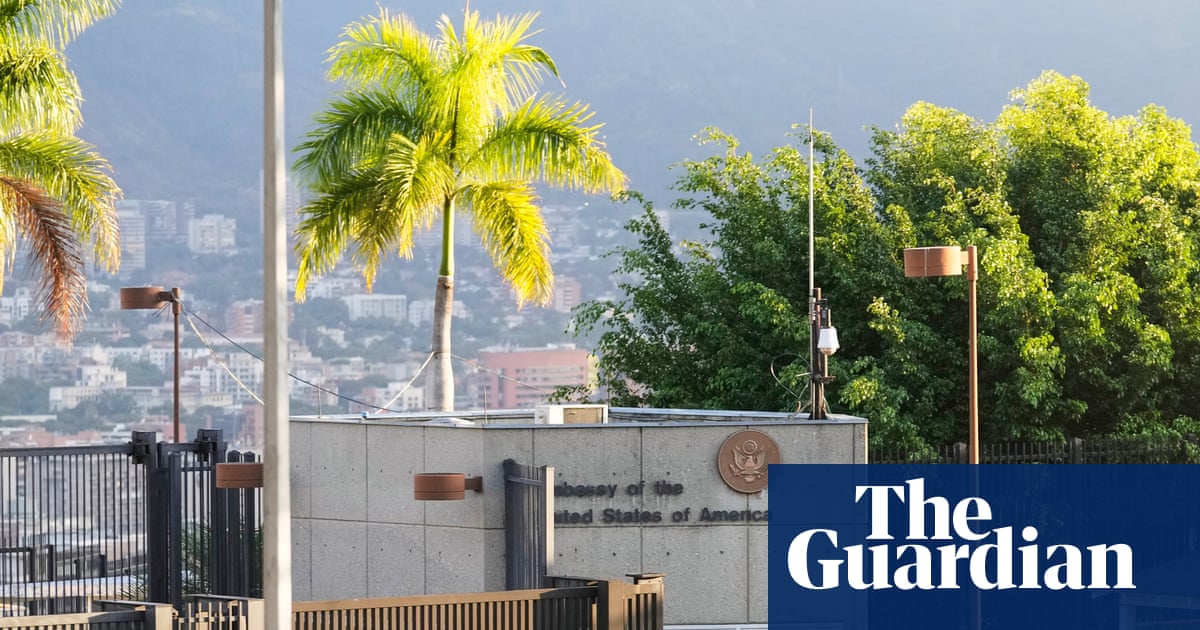
The reopening of the U.S. embassy in Caracas on March 30, 2026—months after the dramatic U.S. military operation that led to Nicolás Maduro's capture—stands as a quiet yet profound symbol of thawing relations between Washington and Venezuela. This pivotal event, widely reported by global outlets from Xinhua to The Guardian, not only represents a key diplomatic milestone but also heralds the potential economic revival of a nation long plagued by isolation, hyperinflation, and authoritarian rule. For the over 7.7 million Venezuelans who have fled poverty and repression since 2014 according to UN estimates, this development signals hope for a homecoming, family reunifications, and community rebuilding under promises of newfound stability and post-Maduro reforms.
What sets this moment apart from previous U.S.-Venezuela tensions is the strategic pivot toward comprehensive economic and social reforms, moving beyond the military escalations that dominated headlines in early 2026. While earlier media focus lingered on U.S.-Russia proxy conflicts, this in-depth analysis reveals the underreported transformations: the strategic resurgence of Venezuela's vast oil reserves as a cornerstone for broader Latin American energy integration, and the crucial involvement of international organizations like the Organization of American States (OAS) in guiding democratic transitions. By reopening the prolific Orinoco Belt oil fields to foreign investment and implementing investor-friendly pro-market mining laws, the post-Maduro Venezuela is emerging as a vital bridge between North and South America, with the potential to stabilize regional trade networks disrupted by persistent energy shortages.
This deep dive article is structured for clarity and depth: first, exploring the historical roots of Venezuela's instability and the rapid escalations of early 2026; second, providing original analysis of the emerging economic and social shifts; third, delivering forward-looking predictions on pathways to stability; and finally, extracting key lessons for global geopolitics. The central thesis remains unequivocal: Venezuela's transformation from international pariah to collaborative regional partner provides a compelling blueprint for diplomacy that emphasizes economic incentives over coercive measures, ultimately humanizing the recovery process for a population exhausted by decades of boom-and-bust cycles.
Historical Roots of Instability and Recent Escalations
Venezuela's geopolitical challenges are deeply rooted, originating from over a century of heavy oil dependency that has attracted foreign powers while breeding entrenched domestic corruption. First discovered in 1914, the nation's immense petroleum wealth elevated it to Latin America's wealthiest country by the 1970s. However, PDVSA, the state-owned oil company, devolved into a political slush fund under leaders like Hugo Chávez. By 2014, escalating U.S. sanctions in response to human rights violations and electoral fraud exacerbated hyperinflation—which peaked at an astonishing 1.7 million percent in 2018—leading to a massive population exodus and a catastrophic GDP plunge from $482 billion in 2013 to just $47 billion by 2021, as documented by IMF data.
This prolonged era of isolation laid the groundwork for the dramatic escalations of 2026, with a compressed timeline illustrating how brief diplomatic opportunities were overshadowed by intensifying military pressures. On January 2, 2026, Venezuelan authorities indicated willingness for U.S. negotiations amid growing border frictions, with Maduro personally suggesting talks on drug trafficking—a pragmatic acknowledgment of mutual hemispheric interests in curbing cocaine routes through the Darién Gap. Merely four days later, on January 6, Russia stepped in with a mediation offer to the U.S., framing itself as a multipolar intermediary and underscoring Venezuela's entanglement in great-power competitions, much like Eastern Europe's Strategic Pivot: How Iran Tensions Are Reinforcing NATO's Defenses Amid Ukraine's Drone Race. This Moscow initiative, evoking Cold War proxy engagements in places like Angola or Nicaragua, was ultimately rejected, fueling hawkish sentiments in Washington.
Tensions reached a boiling point on January 9 with a U.S. raid into Venezuelan territory, culminating in Maduro's capture on January 14, which ignited worldwide debates on national sovereignty and interventionist policies. Historical parallels are striking: the 1989 U.S. invasion of Panama to remove Noriega, or the 2004 intervention in Haiti, both rationalized on security pretexts yet lambasted for enabling regime change. In retrospect, Russia's mediation proposal symbolized a foregone multipolar alternative—potentially defusing the crisis via UN mechanisms—but U.S. unilateral action took precedence, perpetuating a pattern of interventions that deepened Venezuela's isolation under layered sanctions.
The sequence of recent developments highlights the ongoing pivot: On March 10, Venezuela introduced pro-U.S. mining legislation to lure investments in gold and coltan; March 12 saw a postponed Venezuela-Colombia summit due to residual mistrust; March 14 featured preliminary signals of embassy reopening; March 25 included a high-profile "US Oil Pitch Post-Maduro"; and March 30 brought Maduro's prison plea for national reconciliation concurrent with the embassy's official reopening. This progression underscores emerging opportunities: Maduro's ouster has dismantled entrenched chavista patronage systems, liberating PDVSA from political interference and paving the way for reforms that could reverse two decades of economic stagnation.
Original Analysis: Economic and Social Transformations
The post-Maduro Venezuela is experiencing profound transformations centered on economic pragmatism and social reconciliation, with energy sector reforms leading the charge. The Orinoco Belt, home to approximately 300 billion barrels of heavy crude—the globe's largest proven reserves—has languished under sanctions and poor management, outputting a mere 700,000 barrels per day in 2025 compared to 3.2 million in 2008 (OPEC figures). With major U.S. players like Chevron now poised for partnerships, these fields stand ready for reactivation, potentially unlocking $20-50 billion in foreign direct investment (FDI) within five years, drawing from World Bank projections modeled on post-sanctions recoveries such as Iran's 2016 diplomatic thaw.
Such developments could supercharge Latin American energy integration efforts. Venezuela's strategic location near Brazil's ethanol production hubs and Colombia's refining infrastructure facilitates the creation of an innovative "Andean Energy Corridor," diminishing dependence on unpredictable Middle Eastern imports. Original insight: Diverging from OPEC's inflexible quotas, a dynamic Mercosur-plus agreement—reinforced by OAS supervision—could deliver price stability, positioning Venezuela to supply refined products and alleviate Brazil's 2025 blackouts stemming from drought-affected hydroelectric facilities.
On the social front, these reforms hold the promise of reversing humanitarian crises. Migration outflows crested at 7.7 million, dispersing families primarily to Colombia (2.8 million) and the U.S. (over 500,000). Projections suggest 1-2 million returnees by 2028, fueled by $4 billion in annual remittances combined with burgeoning employment in oil-related services. Advancements in human rights are emerging: OAS-supervised amnesties for political prisoners (exceeding 15,000 under Maduro, according to Foro Penal) and the deployment of UN human rights offices mark a departure from prior non-interference stances, reflecting evolving international norms following Venezuela's 2021 OAS readmission.
The pivotal roles of the OAS and UN cannot be overstated. Previously marginalized after Venezuela's 2019 OAS withdrawal, these bodies are now poised to oversee 2027 elections through advanced digital verification systems—a proven approach from Bolivia's 2020 electoral recovery. This multilateral framework personalizes the recovery narrative: Families such as the Rodriguezes, who escaped to Peru in 2018, are now contemplating returns as schools resume operations and clinics restock essential medicines, as noted in UNHCR updates. Nevertheless, persistent challenges like corruption—Venezuela ranked 177 out of 180 in Transparency International's 2025 index—necessitate rigorous, ongoing international oversight to sustain momentum.
Catalyst AI Market Prediction
The World Now's Catalyst AI engine forecasts significant market implications from Venezuela's geopolitical pivot, especially in energy markets amid escalating global tensions. Key predictions:
- OIL: + (high confidence) — Causal mechanism: Venezuela's reform signals combined with broader supply disruptions (Yemen's Houthi Escalation Ripples to Asia: South Korean Markets Brace for Global Trade Shocks and Strait of Hormuz Standoff 2026: Vietnam's Urgent Plea to Iran Highlights Emerging Nations' Vulnerability in US-Iran Global Energy Disputes) are driving risk premiums higher. Historical precedent: July 2019 Saudi attacks propelled oil prices up 15%. Key risk: Unexpected diplomatic breakthroughs.
- USD: + (medium confidence) — Safe-haven demand from geopolitical uncertainty strengthens the dollar. Precedent: 2019 Soleimani strike lifted DXY by 1%.
- SPX: - (medium confidence) — Risk-off sentiment pressures equities. Precedent: 1973 Yom Kippur War caused a 20% stock market decline.
- BTC: - (medium confidence) — Forced liquidations batter cryptocurrencies. Precedent: 2022 Ukraine invasion led to a 10% drop.
Predictions powered by The World Now Catalyst Engine. Track real-time AI predictions for 28+ assets. For broader context on global risks, explore the Global Risk Index.
Forward-Looking Predictions: Pathways to Stability or Renewed Turmoil
Optimistic trajectories envision a robust 20-30% GDP growth surge over the next five years, propelled by U.S. oil agreements, akin to Iraq's 2004-2008 post-invasion annualized growth of 25%. By 2030, Venezuela could restore production to 2.5 million barrels per day, solidifying its status as Latin America's preeminent energy hub while integrating low-carbon innovations like carbon capture technologies—essential as global oil demand plateaus according to the IEA's 2026 outlook.
Socially, enhanced political engagement through OAS-endorsed referendums could invigorate participation, countering the divisiveness observed in Chile's 2022 constitutional processes. However, substantial risks remain: Corruption exposures might spark protests reminiscent of 2019's deadly unrest (over 100 fatalities); potential Russian meddling via Wagner group remnants or competitive frictions with Brazil over Amazon resources could undermine progress. Baseline outlook: Achievable stability contingent on sustained FDI inflows exceeding $10 billion annually; alternatively, stalled reforms could precipitate turmoil paralleling Libya's post-Gaddafi fragmentation.
Geopolitically, alignment with Western interests would loosen China's $60 billion debt stranglehold, bolstering U.S. energy security during the electric vehicle transition. By 2030, Venezuela could anchor a pro-market alliance within the OAS, promoting economic prerequisites for interventions in ongoing crises such as Nicaragua.
What This Means: Looking Ahead to Venezuela's Role in Global Stability
Looking ahead, Venezuela's post-Maduro trajectory offers profound implications for international relations, emphasizing how economic liberalization can foster social cohesion and regional security. This shift not only promises to repatriate millions of exiles but also positions Venezuela as a stabilizer in Latin America's volatile energy landscape. Stakeholders worldwide should monitor The World Now's Global Risk Index for real-time updates on these dynamics, ensuring proactive responses to emerging opportunities and threats.
Conclusion: Lessons for Global Geopolitics
Venezuela's post-Maduro era exemplifies a rare diplomatic triumph: prioritizing economic integration over military dominance to nurture social renewal via oil sector revival, migration reversals, and robust OAS/UN oversight. This distinctive perspective—transcending simplistic U.S.-Russia dichotomies—demonstrates how market liberation can humanize geopolitics, with 7 million displaced Venezuelans emerging as central stakeholders in the narrative.
For U.S.-Latin America relations, it establishes a model of "sanctions-plus-incentives," sidestepping the pitfalls of 1980s Central American interventions. Urgent policy recommendations include: Allocating $500 million for multiyear OAS election monitoring, expediting FDI work visas, and hosting an Andean Energy Summit to cement gains. Through balanced diplomacy—blending incentives with multilateral accountability—Venezuela has the potential to shine as a beacon of redemption, affirming that even after prolonged darkness, comprehensive recovery remains within reach.
Further Reading
- Eastern Europe's Strategic Pivot: How Iran Tensions Are Reinforcing NATO's Defenses Amid Ukraine's Drone Race
- Iran's Digital Shadow: Fueling Authoritarian Resilience in Myanmar Amid Global Geopolitical Shifts
- AI's Shadow War: How Emerging Technologies Are Fueling the Iran Crisis and Global Alliances
- Asia's Diplomatic Chessboard: How Sanctions and Visits Are Redefining Regional Alliances