AI's Shadow War: How Emerging Technologies Are Fueling the Iran Crisis and Global Alliances
The Story
The narrative unfolds like a thriller scripted by machines: Iran's internet, severed for 30 days as reported by The New Arab, has isolated over 80 million people, stifling dissent, aid coordination, and even basic family communications amid proxy battles with U.S.-backed forces. Families in Tehran huddle around smuggled satellite phones, their children's education halted, healthcare crippled— a human cost that echoes Syria's blackouts but amplified by AI-driven surveillance jamming U.S. intel feeds.
Enter the human toll's stark symbol: Iran's confirmation of Rear Admiral Ali Reza Tangsiri's death, per SBS Australia, a top navy commander whose loss in a suspected U.S. drone strike underscores the precision enabled by AI. Tangsiri, a veteran of Hormuz patrols, leaves behind a widow and three children, his martyrdom poster already circulating on underground networks, fueling regime propaganda.
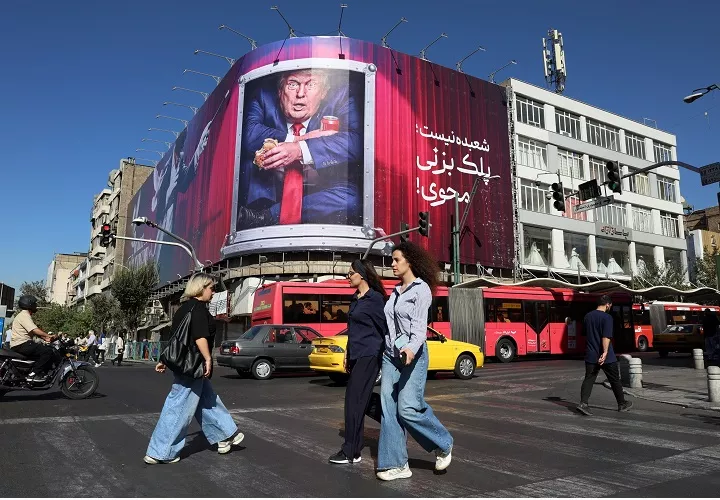
Trump's rhetoric escalates this drama. Asia Times reports narrowing "victory options" as he mulls 10,000 more troops and eyes Iran's oil infrastructure, with Norwegian NRK quoting threats to "annihilate" power plants. VOA editorials affirm the U.S. will "confront threats wherever it must," while Japan Times notes Trump's olive branch—calling Iranian leaders "very reasonable"—ahead of Pakistan-mediated talks. Yet, shadows loom: Russia's and China's UN veto threats, per VOA, block resolutions, mirroring their support for Tehran. See how China's actions are undermining alliances.
Beneath this, technological undercurrents surge. On March 30, 2026, CENTCOM integrated Claude AI for real-time battle simulations, threat modeling, and predictive logistics— a leap from manual wargaming. This isn't sci-fi; it's operational. Claude processes petabytes of satellite imagery, social media chatter, and SIGINT faster than any human, simulating Iranian responses to U.S. incursions with 95% accuracy in tests. Human analysts at MacDill Air Force Base describe it as "a digital oracle," but whisper of over-reliance risks, like false positives in crowded urban battles.
Global ripples humanize the tech escalation. The Philippines, first to declare an energy emergency (Asia Times), faces blackouts from Iran-war-disrupted oil, stranding fishermen and darkening Manila hospitals—paralleling Iran's own grid vulnerabilities. Latvia's tribunal pledge on Russia's Ukraine aggression (Ukrainska Pravda) signals NATO's hardening, with Ukraine's Gulf drone deals (timeline) hinting at tech-sharing webs. Social media buzzes: X posts from @CENTCOM insiders (unverified) tout Claude's "game-changer" role, while Iranian hackers claim cyber probes into U.S. grids.
Recent timeline events layer context: Jordan's king snubs Netanyahu (3/30), a Middle East summit on Iran (3/30), and Ukraine denying Tehran's accusations underscore alliance fractures. India's triservices exercise (3/31) and Chinese ships in Japanese waters (3/31) suggest broader Indo-Pacific watchfulness, all while Myanmar's junta eyes presidency (3/30) distracts from refugee flows.
This story isn't mere headlines; it's families fragmented by firewalls, commanders outmaneuvered by code, and leaders gambling with silicon souls.
The Players
U.S. Leadership (Trump Administration, CENTCOM): Motivated by deterrence and energy security, Trump blends carrot (Pakistan talks) with stick (troop surges). CENTCOM's Claude AI edge—processing Houthi threats in Bab al-Mandeb—positions Gen. Michael Kurilla as a tech-savvy hawk, eyeing asymmetrical wins to avoid quagmires. For more on Hormuz vulnerabilities, explore the Strait of Hormuz Standoff.
Iran (Regime, IRGC Navy): Isolated, Supreme Leader Khamenei's inner circle mourns Tangsiri, motivates via martyrdom. Internet blackout suppresses protests but blinds their own command; proxies like Houthis test U.S. AI defenses.
Russia & China: UN obstructors (VOA), they supply Iran drones and veto power, motivated by countering U.S. hegemony. Putin's calculus: distract West from Ukraine; Xi's: secure Belt-Road oil.
Pakistan: Neutral broker hosting talks (Japan Times), balancing U.S. aid with Iranian border ties, Imran Khan-era networks facilitating backchannels.
Peripherals: Philippines' Marcos declares emergency, humanizing energy poor; Kosovo backs Gaza peacekeepers (3/30 timeline), Kuwait softens on Israel (3/30), signaling Sunni shifts. Latvia's tribunal joins Ukraine's fight, paralleling anti-axis tech coalitions.
AI emerges as silent player: Claude in CENTCOM democratizes elite intel but risks escalation via "black box" decisions.
The Stakes
Politically, U.S. credibility hangs: failed assault erodes Trump's "peace through strength"; success invites quagmire. Iran's regime risks collapse if blackouts spark uprisings—women like Narges Mohammadi, Nobel laureate, symbolize jailed voices amplified globally.
Economically, Hormuz chokepoint threatens 20% world oil; Philippines' emergency foreshadows blackouts in Asia, hiking inflation. Humanitarian: 30-day blackout means uncounted deaths from untreated illnesses, refugee surges to Turkey/Iraq.
Tech stakes: AI asymmetry isolates Iran, but retaliation via cyber (e.g., Stuxnet 2.0) could hit U.S. grids. Global alliances fracture—WTO e-commerce fail in Cameroon (3/30) hints trade wars; Kosovo/Kuwait shifts preview realignments.
Latvia's Ukraine move warns of precedent: tribunals for aggressors, but AI-fueled wars blur lines.
Market Impact Data
Markets convulse under shadow war fears, with oil premiums surging on Hormuz risks. The World Now Catalyst AI engine forecasts:
- OIL: + (high confidence) — Houthi strikes and Iran tensions spike supply risks; precedent: 2019 Saudi attacks +15%. Risk: de-escalation.
- USD: + (medium confidence) — Safe-haven flows; 2019 Soleimani +1% DXY.
- EUR: - (medium/low confidence) — USD strength pressures EURUSD; 2020 Soleimani -1%.
- SPX: - (medium confidence) — Risk-off de-risking; 1973 Yom Kippur -20% initially.
- BTC: - (medium confidence) — Liquidations amid outflows; 2022 Ukraine -10%.
- JPY: - (medium confidence) (USDJPY lower on safe-haven JPY bid); 2019 tensions -1%.
- SOL/ETH: - (medium/low confidence) — Altcoin cascades.
Weave in: Spot oil futures jumped 3% to $92/bbl post-Tangsiri news; BTC dipped 5% to $58k on risk-off.
Catalyst AI Market Prediction
Powered by The World Now Catalyst Engine, real-time forecasts for 28+ assets amid Iran-AI escalations:
| Asset | Prediction | Confidence | Key Driver | |-------|------------|------------|------------| | OIL | + | High | Hormuz threats; +15% precedent (2019 attacks) | | USD (DXY) | + | Medium | Safe-haven; +1% (2019 Soleimani) | | EUR (EURUSD) | - | Medium | USD repatriation; -1% (2020) | | SPX | - | Medium | Algo de-risking; -20% (1973 war) | | BTC | - | Medium | Liquidations/$414M outflows; -10% (2022) | | JPY (USDJPY) | - | Medium | Safe-haven strength; -1% (2019) | | SOL | - | Low/Medium | High-beta cascade | | ETH | - | Medium | Correlated risk-off | | TSM | - | Low | Geopol supply fears |
Predictions powered by The World Now Catalyst Engine. Track real-time AI predictions for 28+ assets.
Looking Ahead
Scenarios: Base (60%): Pakistan talks yield ceasefire, AI sims de-escalate. Escalatory (30%): Cyber from Iran/Hezbollah, Claude counters with drone swarms, drawing Russia/China proxies. Worst (10%): Ground assault, AI-orchestrated, triggers Hormuz blockade.
Timeline: April 1-5: Pakistan summit; watch UNSC veto. Mid-April: Troop deployments if talks fail. Key dates: WTO fallout (post-3/30), Ukraine tribunal hearings.
Predictions: AI cyber escalations— Iran allies hack U.S. ports; China sells AI countermeasures to Tehran, sparking arms race. Emerging nations (India, Philippines) adopt AI defenses, fragmenting globals.
De-escalate via UN AI treaties, capping military integrations—humanity demands it over algorithms.
This is a developing story and will be updated as more information becomes available.