U.S. Uses Virtually All Long-Range Precision Missiles in Iran War
In the ongoing Iran war, the U.S. has used virtually all of its Army Tactical Missile Systems (ATACMS) and Precision Strike Missiles (PrSM) during the five-month conflict, raising concerns about military readiness for other potential conflicts. [2]
U.S. Long-Range Missile Stockpiles Depleted
The U.S. Army has used up much of its stockpile of highly accurate long-range missiles during its five-month war with Iran, according to three people familiar with the data, raising concerns about the military’s readiness for future conflicts. [2] The missiles are principally the Army’s surface-to-surface weapons, known as Army Tactical Missile Systems (ATACMS) and Precision Strike Missiles (PrSM). [2] The U.S. has used “virtually all” of these weapons, according to two of the sources. [2] The long-range munitions are an important part of the military’s arsenal, allowing accurate strikes from a safe distance. [2] U.S.-supplied ATACMS have played a key role in the war in Ukraine, allowing Ukrainian forces to attack targets inside Russia. [2] The PrSM is a newer, more advanced generation that will replace the ATACMS, which have a shorter range. [2] Analysts say such weapons—which cost over $1 million each—would also be important in any conflict with China. [2] The sources declined to say how many of each munition the U.S. had left. [2] President Donald Trump launched the Iran war jointly with Israel in February, predicting that the conflict would last a short time. [2] But as the war drags on, the three people familiar with the matter expressed worry that the falling missile supplies could limit the U.S. ability to deter adversaries, including Russia and China. [2] A fourth person familiar with the matter said that while Central Command—which oversees U.S. forces in the Middle East—has nearly used up the land-based missiles it had before the war began, it has been able to reload from U.S. military supplies elsewhere in the world. [2] The sources interviewed for this story spoke on the condition of anonymity. [2] Asked for comment on the stockpile data, the White House issued a statement from Trump, saying the U.S. had “far more munitions than anyone in the world” and “far more than we need.” [2] “Our defense companies are, at this moment, making more munitions than they have ever made before, in addition to expanding their plants and equipment at record levels,” Trump said. [2] Analysts agree that certain munitions, including artillery shells and several types of missiles, are being produced at record levels but caution that supplies might fall short of what is needed for a prolonged war. [2] Lockheed Martin, which makes the ATACMS and PrSMs, along with the anti-ballistic missile THAAD system, did not immediately respond to questions about Trump’s statements or about supply levels. [2] Raytheon, which makes Tomahawk missiles and Patriot interceptors, two important U.S. weapons, also did not immediately respond. [2] Responding to a request for comment, chief Pentagon spokesperson Sean Parnell said: “America’s military is the most powerful in the world and has everything it needs to execute at the time and place of the President’s choosing. We have executed multiple successful operations across combatant commands while ensuring the U.S. military possesses a deep arsenal of capabilities to protect our people and our interests.” [2] The supply figures have circulated inside the federal government over the last week during tense conversations inside the Trump administration about how much longer the U.S. can continue striking Iran without drawing down the stockpile to levels that would limit the military’s ability to respond to crises elsewhere. [2] One of the sources said the drawdown of the ATACMS and PrSM stockpiles reflected a decision by the Trump administration to avoid riskier ways of attacking Iranian targets, such as by using piloted aircraft to drop bombs. [2] Because these weapons allow the military to attack targets from a distance, analysts say they would be valuable in a war against an adversary with strong air defenses, such as China. [2] They have been used to strike targets inside Iran, according to a March report by the Center for Strategic and International Studies (CSIS). [2] According to the report, PrSM stockpiles were low to start with, since it is a relatively new munition, but the U.S. military has ordered a large number of them for 2027. [2] The Army has said that ATACMS are being phased out and that production is shifting to the newer PrSM missiles. [2]
Drawdown of Defensive Systems
Military leaders have for weeks warned the president that stockpiles of defensive weapons—including Patriot interceptors, which are effective against ballistic missiles—were dwindling, said two of the sources. [2] Last week, several media outlets reported Trump had decided not to launch another massive offensive inside Iran in part because his military advisers had warned about the U.S. stockpile. [2] A U.S. official disputed those accounts, saying Trump chose not to move forward with another attack because of pressure from Gulf states. [2] The Middle East conflict has sparked intense debate about Trump’s authority to prosecute hostilities against Iran without congressional authorization. [2] No request for a declaration of war or an authorization to use military force has been submitted to Congress. [2] Last week, CSIS published a report estimating that between February and July about 65% of Patriot interceptors had been expended and that the number of THAAD ballistic missile interceptors in U.S. stockpiles was at least 38% lower than at the start of the war. [2] Patriots and THAADs are systems that detect and destroy incoming missiles and are among the most effective in the country’s arsenal. [2] While Reuters has not seen the supply figures, those numbers match internal U.S. data, two of the sources said. [2] The U.S. also burned through a little less than half of its global supply of Tomahawk cruise missiles, which are generally launched from ships, since the start of the war, one of the sources said. [2] Reuters could not independently verify that number. [2] The Tomahawk is a Navy weapon, launched from destroyers, cruisers and submarines, and has long served as the sea service’s principal means of striking heavily defended targets without risking pilots. [2] Raytheon, a unit of RTX, has reached a tentative multi-year agreement with the Pentagon aimed at boosting Tomahawk production, alongside increases in other munitions, as Washington races to rebuild stockpiles. [2]
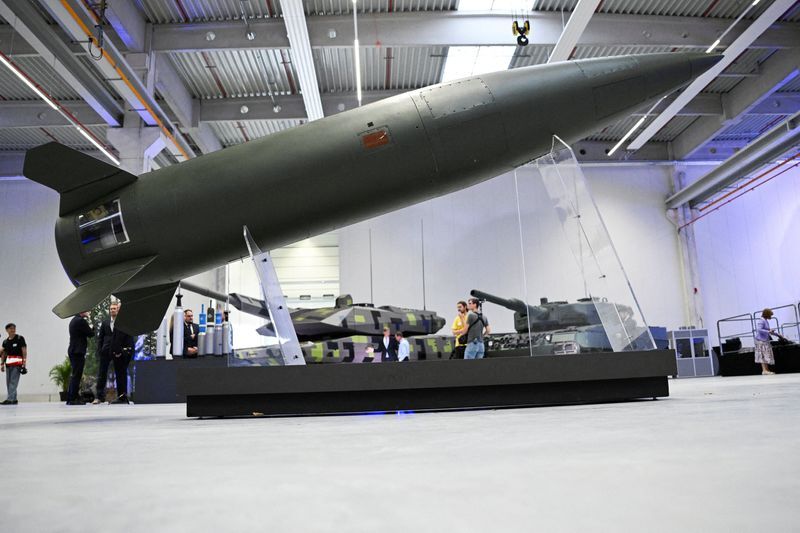
U.S. Army depletes nearly all ATACMS and PrSM long-range precision missiles during five-month Iran war. — Source: gdelt
Iranian Attacks on Regional Data Centers
Iran’s strategy to counter military might with economic pain has exposed a vulnerability in one of the world’s most vital interests: AI data centers. [1] Iran has aimed significant firepower at its neighbors’ refineries, oil exports and tourist attractions, inflicting economic havoc on the Gulf states and the countries that do business with them. [1] Now data centers, which power the technology most crucial to the global economy’s future, are becoming targets. [1] Iran has bombarded several of its neighbors’ data centers, and the United States responded by attacking one of Iran’s. [1] Data centers have long been cyberattack targets, but physical attacks are unique to 2026. [1] Iran and the United States have attacked at least five data centers in the Gulf region, including a second Iranian missile attack on an Amazon data center in Bahrain late last month. [1] Amazon declined to comment, but its Amazon Web Services dashboard has shown a disruption in the region since an initial April 30 attack on the data center, and satellite imagery showed extensive damage to the AWS facility. [1] In the war’s early days, Iran made clear that it views data centers as justified military targets. [1] The IRGC published a list of 29 regional tech targets it planned to strike, including sites owned by Amazon, Google, Microsoft, Nvidia and Palantir. [1] In a Telegram post following its July 21 attack on the Amazon data center, the Iranian regime said it struck the facility again because Amazon is a cloud provider for US military intelligence efforts. [1] Amazon holds numerous US government contracts, including part of the $9 billion Joint Warfighting Cloud Capability project. [1] Google, Microsoft and Oracle are also part of the project. [1] Data centers may seem new because of the recent rapid expansion in buildouts during the AI revolution. [1] But data centers have been around for decades—and they’ve been targets of war for a long time. [1] Militaries often run command and control operations away from the frontlines; enemies have sought to disrupt those communications through jamming and, in the past few decades, cyberattacks. [1] But data centers blowing up? That’s new. [1] The reason is twofold: AI has become economically critical to the United States and the Gulf region, so Iran can inflict damage where it really counts by disrupting data centers at a low cost—primarily with drones. [1] And Iran can legitimately claim data centers are military targets. [1] “They don’t carry a sticker that says, ‘Military data here!’” said Andrew Reddie, professor of public policy at the University of California, Berkeley. [1] “Data centers could be storing military-relevant data and be used for market-oriented purposes at the same time.” [1] “If you’re Iran and you’re looking at Amazon, it might as well have an American flag painted all over it,” he added. [1]
Gulf AI Investments and Vulnerabilities
The region’s data centers are important not only to the US military and AI industries but also to the Gulf region, which fancied itself a third global AI hub, along with the United States and China. [1] Saudi Arabia has dedicated a significant portion of its $1 trillion sovereign wealth fund to AI, and the UAE signed a landmark deal with the Trump administration last year to build Stargate, a $500 billion AI data center—the largest such project outside the United States. [1] OpenAI, Oracle, Nvidia and Cisco all partnered on that project. [1] Combined, Bahrain, Kuwait, Oman, Qatar, Saudi Arabia and the United Arab Emirates have pledged more than $2 trillion in AI-related investments with the United States—on condition that they also divest from Chinese equivalent technology. [1] That has aligned the region with the United States—and exposed their AI assets to Iranian attacks, noted Helima Croft, head of global strategy at RBC Capital Markets. [1] “On their face, these attacks and broader threats work to undermine confidence in what stands to be an important region for AI innovation and investment,” said Croft. [1] “They also highlight the role that these companies play in warfare and diplomacy, as well as what lengths the US is willing to go to defend them.” [1]

US long-range precision missiles including ATACMS and PrSM have been nearly depleted in the Iran war. — Source: gdelt
Diplomatic Efforts and Strait of Hormuz Blockade
Qatar said mediators were making progress in efforts to end the U.S.-Iran war on Tuesday, although Tehran has denied President Donald Trump’s assertion that talks are already under way. [5] Oil prices fell quickly after the comments from Qatar, with Brent crude down more than 2%, extending Monday’s steep losses on hopes that an arrangement could soon be reached to unfreeze traffic through the blockaded Strait of Hormuz. [5] But for now, the strait remained virtually shut, with another ship reportedly coming under attack while trying to cross it. [5] Trump said on Monday that talks with Tehran had started and Iran faced a “last chance” to reach a deal. [5] Iranian officials insisted no negotiations with the United States were taking place. [5] Iran says its only talks are with Oman about the strait, and that no major meetings were planned this week. [5] “They are going on right now,” Trump told reporters at an Oval Office event on Monday when asked about negotiations, adding that discussions were taking place at the request of Iran, Saudi Arabia, the United Arab Emirates and Qatar. [5] “This is a last chance for them (Iran) to sign a good document.” [5] Qatar’s foreign ministry spokesperson Majed al-Ansari said diplomatic contacts had reached “very progressive stages”. [5] Ansari said on Tuesday mediators including Qatar, Pakistan and Oman were coordinating closely to facilitate negotiations and exchange draft proposals between Washington and Tehran. [5] A senior Pakistani security official said: “A lot is happening in the background … We are talking to both sides. Our sole goal at this moment is to make both parties at least agree to start talking.” [5] Trump’s comments followed his weekend decision to cancel what he described as “massive attacks” on Iran, extending a pattern in which he has threatened major military action before later backing off and pointing to diplomatic contacts. [5] Iran has halted most traffic through Hormuz while Washington maintains a blockade of Iran-related shipping and ports, disrupting a corridor that normally carries about a fifth of global oil and liquefied natural gas shipments. [5] A cargo vessel reported being struck by an unidentified projectile near the Strait of Hormuz off Oman’s coast, according to the UKMTO maritime security agency. [5] Maritime sources told Reuters on Tuesday that the vessel was a dry bulk ship. [5] Its crew had to abandon the vessel and one seafarer was missing. [5] Iran has long demanded control over the strait, which it says it should share with Oman, which controls the opposite shore. [5] Tehran rejected an Omani proposal last week that would have allowed shared oversight of the strait and the collection of voluntary fees from ships. [5] A senior Iranian source said Iran is seeking full control over inbound shipping through the strait, and visibility over outbound traffic, with the ability to intervene if necessary. [5] Giving Iran such control would be a major shift in the regional balance of power in Tehran’s favour, and make it more difficult for the U.S. administration to argue that “Operation Epic Fury”, which Trump launched alongside Israel in February, had weakened Washington’s longstanding foe. [5] Meanwhile, questions are growing about the sustainability of the U.S. military campaign. [5] The U.S. Army has used up much of its stockpile of highly accurate long-range missiles during the war, according to three people familiar with the data, raising concerns about the military’s readiness for future conflicts. [5] U.S. Treasury Secretary Scott Bessent said there could be a deal reached with Iran on the reopening of Hormuz by Tuesday or Wednesday. [5] “We are in talks with the Iranians, and I think there is a chance we may have a deal today or tomorrow to open the Strait and move towards a more normalised position in this conflict,” Bessent said in an interview with CNBC. [5] Yemen’s Iran-aligned Houthis have also imposed a naval blockade on Saudi Arabia in the Red Sea, further restricting oil export routes. [5] Gulf officials and analysts say Iran is betting it can outlast Washington by turning the region’s trade routes, shipping lanes and energy infrastructure into pressure points that steadily raise the cost of confrontation. [5] “Their big advantage is that they can hurt the regional states and the global economy,” said Michael Knights of the Washington Institute. [5] Iran has publicly rejected negotiations with Washington since the collapse in early July of a memorandum of understanding the two sides signed the previous month in an attempt to end the conflict. [5] Trump has yet to achieve the objectives he set out at the start of the war: dismantling Iran’s nuclear programme, curbing its ability to attack regional rivals and creating conditions for Iranians to overthrow their clerical rulers. [5]
Implications for Data Center Operations and Insurance
All that has significant implications for the companies that build data centers and the governments that want them to be built. [1] But they’re effectively just giant warehouses with really expensive equipment inside, noted Philip Wray, head of property at insurer MSIG USA. [1] There’s not a whole lot that can be done to harden them against bombs and drones. [1] That’s why the systems are built with redundancy—typically to protect against natural disasters, cut cables and the like, but now for attacks, as well. [1] When one data center goes down, the data that was stored there and the compute power that it provided can usually be accessed from a different data center. [1] Despite the war, Gulf states remain loaded with cash and committed to AI. [1] Even with all the money to be made there, foreign companies may think twice about building in the region if they fear their assets can’t be adequately protected, Reddie noted. [1] And data center insurance costs are ballooning—if you can get it at all. [1] “Some clients are looking at recent events and they’re thinking twice about whether they move forward, and some insurers aren’t comfortable taking on certain risks,” said Joe Macejak, US property digital infrastructure leader at insurance brokerage Marsh. [1] Even if they can get coverage, tech companies won’t be able to transfer all the risk to an insurance carrier, noted Macejak. [1] With chips, building supplies, labor and other associated costs skyrocketing as data center demand surges, that’s a lot of risk for a company to take on. [1] Especially if that data center has a giant target on its roof. [1]
What to watch next: Qatar’s foreign ministry spokesperson said diplomatic contacts had reached “very progressive stages” with mediators coordinating to exchange draft proposals, while Iran insists its only talks are with Oman about the strait and that no major meetings were planned this week.