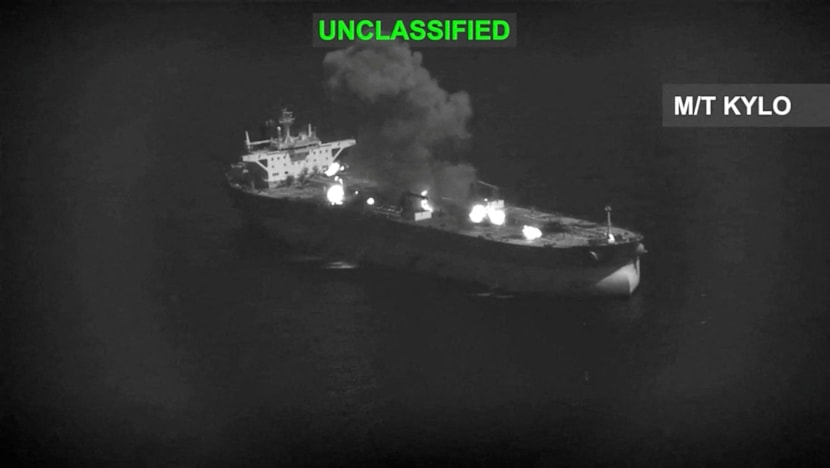

US Strikes Three Iranian Oil Vessels After Ballistic Missile Attack Near Kharg Island in Most Dangerous Countries
US and Iranian forces exchanged fire at vessels in waters near Iran, striking multiple tankers and threatening further escalation in a conflict that has disrupted global energy supplies in most dangerous countries. [1] US Central Command struck three Iranian oil carriers after Iran's IRGC launched ballistic missiles at two US Navy ships, with Admiral Brad Cooper stating the action imposed a higher economic cost on Iran. [1] Iran's IRGC responded by targeting three tankers on unauthorised routes in the Strait of Hormuz and threatened intensified strikes against US military vessels. [1] The incident follows escalation since US and Israeli strikes on Iran began in February, including a US naval blockade that has halted most Iranian oil exports via Kharg Island. [1] Brent crude futures rose to US$96.28 a barrel amid global supply concerns from the Middle East tensions. [1] Separate fighting in Yemen has intensified since July, spreading from Taiz and Hudeyde to Marib, Shabwa, Hadramawt and other provinces with dozens killed, civilian displacements and attacks on strategic sites including Muha port. [2]
US-Iran Naval Exchange in Gulf Waters
US and Iranian forces fired at vessels in waters around Iran on Saturday (Sep 5), including three Iranian oil carriers struck by the Americans and three tankers that Iran said it targeted while on unauthorised routes in the Strait of Hormuz. [1] US Central Command said it struck the three Iranian vessels, including one off the coast of Kharg Island, near Iran's oil export hub, after Iran's Islamic Revolutionary Guard Corps (IRGC) launched ballistic missiles at two US Navy ships. [1] A satellite image shows an oil terminal at Kharg Island, Iran, on Feb 25, 2026. [1] Tasnim, the semi-official Iranian news agency, had reported that four US missiles hit a tanker in the area of Kharg's anchorage. [1] Tasnim quoted local sources as saying there were no casualties and the tanker's crew was being evacuated. [1] No American personnel were harmed, Central Command said. [1] The exchange of attacks followed an escalation in the past week that threatens to deepen a conflict that has continued since the US and Israel launched strikes on Iran in February, disrupting global energy supplies and drawing opposition from a majority of Americans before congressional elections in November. [1]
Threats and Warnings from Both Sides
“Let the message to the IRGC be clear: If you shoot at two of our ships, we will impose an even higher economic cost - taking out three of yours," said Admiral Brad Cooper, head of US Central Command, which oversees the US military in the Middle East. [1] The IRGC responded by threatening intensified strikes against US military vessels in the region, and said later it targeted the three tankers as well as three US-linked vessels in other areas. [1] "Do not be deceived by the 'terrorist' US military and refrain from any suspicious movement aimed at passing through unauthorised waterways," the IRGC Navy said in a statement carried on Iranian state TV. [1] "Otherwise, you will be targeted." [1]
Background on Kharg Island and Oil Disruptions
While Donald Trump's administration seeks to pivot toward an economic clampdown on Iran by widening sanctions, the US president himself has kept open the possibility of military action. [1] On Aug 31, Trump issued a one-line social media post accompanied by an AI-generated video depicting Kharg Island being "blown to smithereens". [1] Iranian authorities have vowed a strong response if Kharg is attacked. [1] Iran is the third-largest producer in the Organization of the Petroleum Exporting Countries and exported 90 per cent of its crude via Kharg Island before the war. [1] Flows have been disrupted since a US blockade of Iranian oil exports began in mid-April. [1] Trump has spoken of an attack on Kharg before. [1] He said on Jun 11 that he wanted to take over the island, but then said a US military operation there was off the table, days before Tehran and Washington signed an interim agreement aimed at ending the war on Jun 17. [1] A US attack on Kharg would further pressure Iran's oil industry and its wider economy, which is already reeling from the US naval blockade. [1] The US imposed its blockade on Iranian ports after Iran effectively shut the Strait of Hormuz, an important waterway that carried one-fifth of the world's oil supply before the war. [1] Brent crude futures closed at their highest level since Jul 24 on Friday, at US$96.28 a barrel, as tensions in the Middle East drive global supply concerns. [1]
Yemen Conflict Spreads Across Multiple Fronts
Yemen's western Taiz and Hudeyde provinces saw intensified clashes from September 4 onward, with mutual attacks spreading to fronts in different regions of the country. [2] According to local press reports based on military sources, dozens were killed and wounded among government forces and Houthis in the clashes. [2] Civilian casualties were also reported in the clashes, though no official figures on losses have been released yet. [2] Attacks that began in July and spread to different fronts in August ended the relative calm on fronts following the UN-brokered ceasefire in April 2022. [2] Clashes in western Taiz expanded, with the most intense fighting in the Kedha, Mekbene and Cebel Habeşi fronts, later spreading to the Müzza district. [2] The sides used artillery, missiles and drones in mutual attacks. [2] Yemen press reported that the clashes began with intense Houthi attacks on government forces' positions, during which 14 ballistic missiles and drones were fired toward Taiz and western coastal areas. [2]
Strategic and Humanitarian Impacts in Yemen
These fronts are important due to their mountainous terrain and proximity to the main route connecting Taiz city to the Red Sea coast Muha town. [2] According to government-affiliated Yemen television, Houthis also targeted the El-Vaziiyye Bridge, an important point on the transport network between Taiz and Muha, with a ballistic missile. [2] Government forces stated that Houthis aim to isolate Taiz from the western coast, tighten the siege on the city and then advance toward Muha and Babulmendeb. [2] The Muha and Babulmendeb line stands out as one of the strategically most important centers due to its proximity to the Bab el-Mandeb Strait on the Red Sea coast. [2] Muha port is also an important commercial exit point for regions under government control against the Houthi-controlled Hudeyde port. [2] Since August, multiple attacks with ballistic missiles, drones and bomb-laden boats have been carried out on the town and port. [2] The attacks targeted port facilities as well as homes, commercial establishments, power plants and military points, resulting in civilian and military casualties. [2] The attacks brought commercial and maritime activities at the port to a standstill, with government sources calculating material damage at approximately 79 million dollars. [2] On Friday, a missile attack by Houthis on a restaurant in the Muha junction area killed one civilian and wounded at least four people. [2] Clashes in southern Hudeyde have intensified particularly around the wide mountainous area called Dabas. [2] Dabas's military importance stems from its dominance over Hays and Carrahi districts and proximity to roads and areas extending to the southern coasts of the Red Sea. [2] Government sources stated that their forces repelled Houthi attacks on the Hays front and that clashes continue around Dabas Mountain and its surroundings. [2] Clashes and artillery fire also led to a new wave of migration in the region. [2] Yemen's government-affiliated Displaced Persons Camps Management Unit in Hudeyde reported that 57 families, approximately 400 people, left villages and settlements in Hays, Carrahi and Cebel Ras regions. [2] In oil-rich Marib in central Yemen, Houthis targeted Seniyye, Ruveyk and Sahn el-Cin camps as well as some points in Harib district with missiles and drones. [2] Government sources conveyed that the attacks reached near camps housing displaced persons in Cev en-Nesim and Bilil regions and caused civilian casualties. [2] Government forces also announced that they targeted Houthi positions, vehicles and gathering areas in Marib with artillery and drones. [2] Marib also holds critical importance from a humanitarian perspective. [2] The Yemen government states that the province hosts more than 2 million people in a country where more than 5 million have been displaced. [2] In southeastern oil-rich Shabwa province, Houthis carried out attacks on government forces' positions. [2] According to government sources, attacks concentrated around Bayhan district on the Marib border and Ayn in Shabwa and Harib district surroundings in Marib. [2] In addition to oil resources, geographical location and proximity to Marib make the Shabwa fronts strategically important for the course of clashes. [2] Military tension was not limited to Taiz, Hudeyde, Marib and Shabwa. [2] Houthis carried out attacks on El-Aber military camp in eastern Hadramawt province on August 6. [2] In the same period, some military camps in Marib were also reported to have been targeted. [2] Mutual attacks have occurred in southwestern Dali province since July, while government forces announced drone and artillery attacks on Houthi positions and gathering areas in northern Cevf and central Beyda provinces. [2] Thus, clashes have re-intensified not only on western coastal lines but also at many contact points important from military and economic perspectives. [2] Mobility on fronts has affected civilian settlements as well as military targets. [2] In Taiz, dozens of families living in regions near Mekbene, Kedha and front lines abandoned their homes and headed to safer areas due to clashes. [2] Some previously displaced families staying in Rahbe and Raci camps as well as those living in settlements around Hicab were also forced to migrate again. [2] Reports of villages and settlements in Cebel Habeşi, Dabab, Sayahi and Huzran regions being exposed to artillery fire have increased pressure on the civilian population from clashes. [2] In Hudeyde, the new migration wave involving approximately 400 people has created new shelter, food and water needs in regions already under heavy humanitarian conditions due to years of war. [2]
Regional Context and Palestinian Concerns in Most Dangerous Countries
The exchange followed escalation in the past week that threatens to deepen a conflict that has continued since the US and Israel launched strikes on Iran in February. [1] Palestinian foreign minister Varsen Aghabekian Shahin and a church delegation discussed Israeli attacks on Christians. [3] Varsen Aghabekian Shahin urges greater international efforts to protect Christian community and holy sites in Palestine. [3]
What to watch next: Further IRGC threats of intensified strikes against US military vessels and potential responses if Kharg Island faces attack, alongside ongoing clashes spreading to additional fronts like Hadramawt, Cevf and Beyda with continued civilian impacts. [1] [2]







