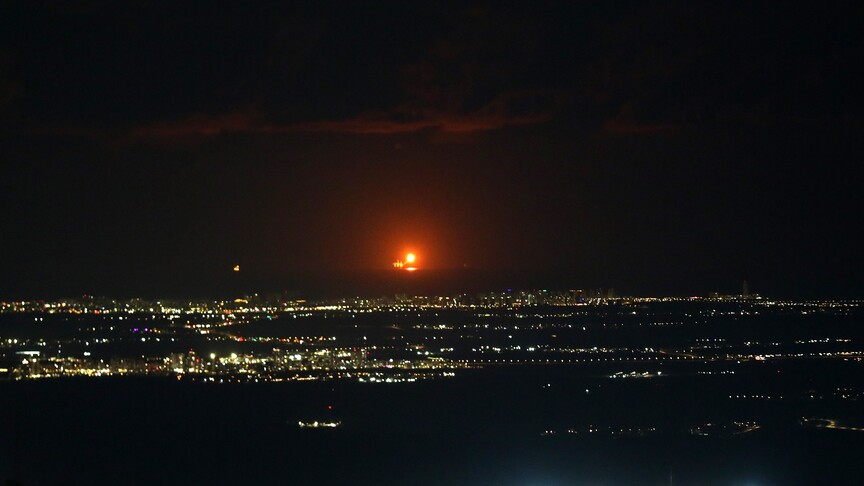
US Strikes Hit Areas Around Tehran as Iran Retaliates on Gulf Targets
The US has expanded strikes deeper into northern and central Iran, hitting areas around Tehran and multiple provinces for the first time in the latest round of violence, while Iran has retaliated with missile and drone attacks on US allies in the Gulf. Recent Iran strikes have widened the scope of targets in this escalation. Iranian officials said US strikes have killed more than 35 people and wounded more than 300 others. [2] Strikes also reached into areas around Iran’s capital, Tehran, for the first time in this latest round of violence, showing a widening set of targets for the US. [2]
US Strikes Reach Northern Iran and Tehran
The US early yesterday intensified its strikes on Iran, hitting targets further north as US forces also fired into a ship the US accused of trying to break its naval blockade on the Islamic republic. [2] The US strikes early yesterday hit around Tehran, state media reported. [2] It also reported that US attacks targeted Semnan Province, home to Iran’s ballistic missile production and space program. [2] Iranian media reported strikes yesterday morning around the provinces of Hamedan, Hormozgan, Khuzestan, Lorestan, Markazi, and Sistan and Baluchistan. [2] An attack on Greater Tunb Island, a strategic point in the Strait of Hormuz, targeted Iranian defense and missile sites, US Central Command said. [2] Another US strike on Wednesday targeted a barracks for Iran’s 388th Mechanized Infantry Brigade, which operates tanks and armored vehicles, in Sistan and Baluchestan Province, Iranian state television reported. [2] The report said Americans fired at least 13 missiles in the attack and the seven dead included conscripts and career soldiers. [2] Iran reports new US strike near Qeshm Island. [4] Iran reports new US strikes amid escalation with strikes reported near Qeshm Island and Bandar Abbas city. [5]
Iranian Casualties and Damage Reported
Iranian officials said US strikes have killed more than 35 people and wounded more than 300 others. [2] Strikes also reached into areas around Iran’s capital, Tehran, for the first time in this latest round of violence, showing a widening set of targets for the US. [2] The US on Wednesday resumed striking Iran during daylight, further showing the increasing tempo of the attacks. [2] Another US strike on Wednesday targeted a barracks for Iran’s 388th Mechanized Infantry Brigade, which operates tanks and armored vehicles, in Sistan and Baluchestan Province, Iranian state television reported. [2] The report said Americans fired at least 13 missiles in the attack and the seven dead included conscripts and career soldiers. [2] A number of troops were wounded. [2]
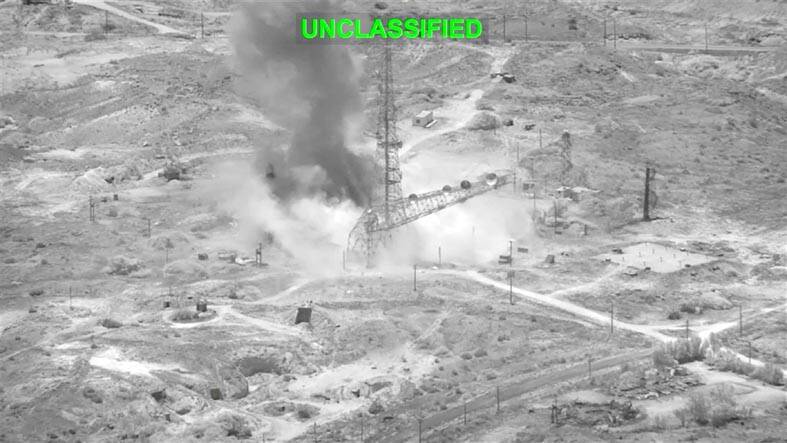
US strikes hit areas around Tehran and northern Iran as conflict escalates. — Source: taipei-times
Iranian Retaliation Against Gulf States
Iran retaliated yesterday with missile and drone attacks on Bahrain, Jordan and Kuwait, said authorities in those countries, which are home to US forces said. [2] There was no immediate acknowledgment of damage or casualties from the attacks in some locations. [2] Iran's Foreign Minister Abbas Araghchi arrived in Doha on Wednesday, just days after Tehran fired missiles toward Qatari territory and other Gulf states, in a visit that underscored the Islamic Republic's attempt to produce a specific narrative for its Arab neighbors and send a message to Washington. [3] The visit came days after the IRGC confirmed it fired on Qatar, claiming it was targeting the Al Udeid US base where satellite imagery released by Soar Atlas confirmed some level of damage to American aircraft maintenance facilities, leading to civilian injuries. [3] Doha said that three people, including a child, were injured by falling shrapnel in the attack. [3] Kuwait’s military announced on Tuesday that one of its navy vessels was targeted in an Iranian attack, which led to four armed forces personnel being injured. [3]
Threats Over Strait of Hormuz and Regional Infrastructure
Iranian Colonel Ebrahim Zolfaghari, a spokesman for the military’s Khatam al-Anbiya Central Headquarters, said that Iran could launch widespread attacks on regional infrastructure if Washington acts on US President Donald Trump’s repeated warnings that the US could hit Iranian bridges and power plants. [2] “All the infrastructure in the region will be crushed under the steel blows of the powerful armed forces of the Islamic Republic of Iran” should Trump’s threat be carried out, Zolfaghari said. [2] “Under no circumstances and in no way will we allow America, as a foreign and extra-regional country, to interfere in the Strait of Hormuz,” he added. [2] “This is Iran’s invincible red line.” [2] When the US and Israel launched the war on Iran on Feb. 28, Tehran effectively closed the strait to shipping traffic, a move that sent the price of oil, fertilizer and many other goods soaring far beyond the region and gave Iran major leverage in negotiations. [2] Days of back-and-forth strikes by the US and Iran across the Middle East — and renewed threats to the Strait of Hormuz — have shredded the interim deal to end the Iran war and could tip the region back into all-out war. [2]
Diplomatic Moves Amid Escalation
Iran's Foreign Minister Abbas Araghchi arrived in Doha on Wednesday, just days after Tehran fired missiles toward Qatari territory and other Gulf states, in a visit that underscored the Islamic Republic's attempt to produce a specific narrative for its Arab neighbors and send a message to Washington. [3] Araghchi, according to the Foreign Ministry, made the journey to “meet with Qatari authorities and offer his condolences” after the death of former Qatari emir Sheikh Hamad bin Khalifa Al-Thani. [3] International relations expert Dr. Arman Mahmoudian, research fellow at the University of South Florida’s Global and National Security Institute, told The Jerusalem Post that he believed the visit was part of Iran’s efforts to emphasize lines in its narrative that it is not targeting the Gulf but the US, and poses no regional danger as long as its demands are met. [3] Highlighting this, Mahmoudian noted that only days ago the IRGC issued a statement addressing the Kuwaiti and Jordanian public, pushing the narrative that the attack is not on them but the American military assets based there. [3] “Honorable and noble people of Kuwait and the holy land of Jordan, it is expected of you Muslim and noble nations to expel these child-killers and occupiers from your soil,” the IRGC statement read. [3] In addition to pushing its narrative across the Gulf, Mahmoudian said that the visit may also be some form of indirect communication with the United States. [3] Iran agreed on Wednesday to release Dena Karari, who was charged with espionage during the June war while running a charity for impoverished Iranian children. [3]
Context of the Ongoing Conflict
Iran's late supreme leader, Ayatollah Ali Khamenei, was laid to rest on 9 July after a week-long funeral procession following his assassination in a US-Israeli strike in February. [1] The 86-year-old leader, who ruled Iran for more than three decades, was succeeded by his 56-year-old son, Mojtaba Khamenei. [1] The funeral ceremonies, held across several cities in Iran and Iraq, drew millions of mourners, according to state figures. [1] When the US and Israel launched the war on Iran on Feb. 28, Tehran effectively closed the strait to shipping traffic, a move that sent the price of oil, fertilizer and many other goods soaring far beyond the region and gave Iran major leverage in negotiations. [2] Days of back-and-forth strikes by the US and Iran across the Middle East — and renewed threats to the Strait of Hormuz — have shredded the interim deal to end the Iran war and could tip the region back into all-out war. [2]
What to watch next: The Araghchi visit could therefore be part of a broader effort to reassure regional governments and limit the diplomatic consequences of the attacks, with the release of the dual national potentially signaling diplomatic movement behind the scenes.