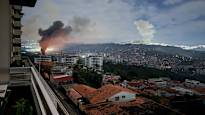
U.S. Captures Venezuelan President Nicolás Maduro in Dramatic Military Operation Amid Drug Trafficking Indictment

Latest from X
U.S. Captures Venezuelan President Nicolás Maduro in Dramatic Military Operation Amid Drug Trafficking Indictment
In a stunning turn of events, Venezuelan President Nicolás Maduro and his wife, Cilia Flores, have been captured by U.S. forces in a meticulously planned military operation on January 4, 2026. The operation, which unfolded under the cover of night, coincided with the unsealing of a U.S. indictment charging the couple and several allies with corruption, cocaine trafficking, narco-terrorism, and firearms offenses. This unprecedented move has escalated tensions between the United States and Venezuela, raising questions about the future of the South American nation.
According to reports from YLE News, U.S. authorities had been tracking Maduro’s movements since last summer, waiting for the right moment to execute the operation. The mission was ultimately dictated by weather conditions, with forces moving in during the early hours of January 4. Sources describe the raid as a surprise, catching Maduro off-guard while he slept. Former U.S. President Donald Trump, reportedly observing the operation in real-time, likened the event to watching a television program, as noted by YLE News.
The indictment, detailed by The Hill, accuses Maduro and his associates of abusing their power to facilitate the trafficking of thousands of tons of cocaine into the United States. The charges paint a picture of systemic corruption at the highest levels of the Venezuelan government, alleging that Maduro led a criminal enterprise intertwined with narco-terrorism. This follows earlier U.S. actions, including a 2020 indictment and a multimillion-dollar bounty for information leading to his arrest, reflecting long-standing accusations of Maduro’s involvement in drug trafficking networks.
CBS News reported that following the capture, Trump stated that the U.S. would “run” Venezuela temporarily, hinting at American oversight until a transition of power can be secured. This statement has sparked widespread concern about potential geopolitical ramifications and the risk of further instability in a country already grappling with economic collapse and humanitarian crises. Maduro, who has been in power since 2013, has long been a polarizing figure, accused by critics of authoritarianism and mismanagement, while maintaining support among some Venezuelans through socialist policies.
Background: Venezuela’s Ongoing Crisis and U.S. Relations
Venezuela has been mired in political and economic turmoil for over a decade, with hyperinflation, food shortages, and mass emigration defining much of Maduro’s tenure. The U.S. has repeatedly sanctioned Venezuelan officials and entities, accusing the government of human rights abuses and undermining democratic institutions. The 2020 indictment of Maduro for narco-terrorism marked a significant escalation, with the U.S. Department of Justice alleging his direct involvement in the “Cartel de los Soles,” a drug trafficking organization purportedly linked to Venezuelan military and political elites.
Relations between Washington and Caracas have been strained since the late Hugo Chávez era, with Maduro often portraying U.S. actions as imperialist interference. The recent military operation and capture represent a dramatic shift, reminiscent of the 1989 U.S. invasion of Panama to apprehend Manuel Noriega on similar drug trafficking charges. However, the long-term implications of direct U.S. involvement in Venezuelan governance remain unclear.
International and Domestic Reactions
The capture and indictment have elicited a range of responses. Posts on X from verified accounts, including news outlets, reflect the global shock and mixed sentiments surrounding the operation. Some highlight the severity of the charges against Maduro, while others express concern over U.S. intervention in sovereign affairs, drawing parallels to historical precedents. The polarized reactions underscore the complexity of Venezuela’s situation and the contentious nature of foreign involvement.
Within Venezuela, the power vacuum left by Maduro’s capture could exacerbate existing tensions. Opposition leaders, long suppressed under Maduro’s regime, may see this as an opportunity for change, though the prospect of U.S. oversight raises fears of prolonged instability or external control over the nation’s vast oil resources.
Outlook: Uncertainty Ahead for Venezuela
As the dust settles on this extraordinary operation, the future of Venezuela hangs in the balance. The U.S. indictment and military action against Maduro signal a bold stance against alleged corruption and drug trafficking at the highest levels, but they also risk deepening the country’s crisis. International observers are watching closely to see how the U.S. plans to manage its temporary stewardship and whether a stable, democratic transition can be achieved.
For now, Nicolás Maduro and Cilia Flores remain in U.S. custody, facing serious charges that could redefine their legacy and Venezuela’s trajectory. The coming days and weeks will be critical in determining whether this dramatic intervention marks the beginning of a new chapter for the beleaguered nation or a further descent into chaos.
Track this story live
Original Sources
- •
- •
- •
Editorial process: This article was synthesized from the original sources cited above using The World Now's AI editorial system, with byline accountability from our editorial team. We grade every story for source grounding, factual coherence, and on-topic match before publication. Read more about our editorial standards and contributors. Spot something inaccurate? Let us know.
Last updated: March 7, 2026






