

US and Iran Exchange Threats and Strikes over Strait of Hormuz and Red Sea Shipping
Reporting based primarily on jpost.com.
The rapid developments in the Strait of Hormuz and the Red Sea point toward a broader confrontation between the US and Iran, particularly as threats escalate between President Donald Trump and Iranian officials and diplomatic efforts led by Pakistan and Qatar fail to produce a breakthrough. [1]
Escalation in the Strait of Hormuz
Several signs suggest that Trump is preparing for further escalation. He has threatened to strike Pickaxe Mountain near Iran’s Natanz nuclear facility “very soon,” added multirole B-1 bombers to the aircraft carrying out raids on Iran for the past 12 days, and reinforced US military medical teams at German bases that treat troops wounded in the Middle East. [1] These reinforcements may also be connected to possible strikes against the Houthis following their announcement of a naval blockade on Saudi Arabia. [1] Trump chose the moment when he was receiving the bodies of four American soldiers killed in Iranian attacks in Jordan and Iraq to issue a new warning: US forces would destroy a bridge or power station in Iran every time the Revolutionary Guard attacked an oil tanker in the Strait of Hormuz. [1] Iranian Foreign Minister Abbas Araghchi answered by invoking the principle of “an eye for an eye.” [1] Iran’s joint military command had already pledged to retaliate against civilian infrastructure across the Gulf states if Trump carried out his threat. [1] Hours later, the Islamic Revolutionary Guard Corps announced that a tanker had struck a mine while traveling through the southern lane of the strait, while two others turned back. [1]
Houthi Actions and Red Sea Blockade

US and Iranian officials exchange threats amid escalating tensions over the Strait of Hormuz and Red Sea shipping. — Source: premiumtimes
The confrontation is also expanding in the Red Sea. Riyadh announced that a Saudi oil tanker had been hit by a projectile, while the Houthis claimed responsibility for targeting two Saudi tankers sailing toward Bab el-Mandeb, three days after declaring a maritime blockade of Saudi ports. [1] Since the Houthis notified oil companies of the blockade by email, several tankers have changed course away from Bab el-Mandeb and toward the Suez Canal, increasing insurance costs and lengthening journey times. [1] Oil prices have reached about $96 a barrel. [1] US Secretary of State Marco Rubio directly accused Iran of inciting the Houthis to carry out the attacks. [1] The opening of this front places additional burdens on American forces and redraws the map of the confrontation. [1]
US Strikes and Congressional Support
After more than 10 consecutive waves of American strikes on Iran – 12 as of this writing – alongside continued Iranian retaliation and regional mediation, the anxious question has become unavoidable. [1] Despite debate in Congress over the war’s objectives, the Republican-controlled House approved an additional $73 billion to support military operations in the region. [1] These actions occur as the US does not appear to be preparing for a war aimed at overthrowing the Iranian regime or occupying Iranian territory. [1]
The War as Negotiation Tool
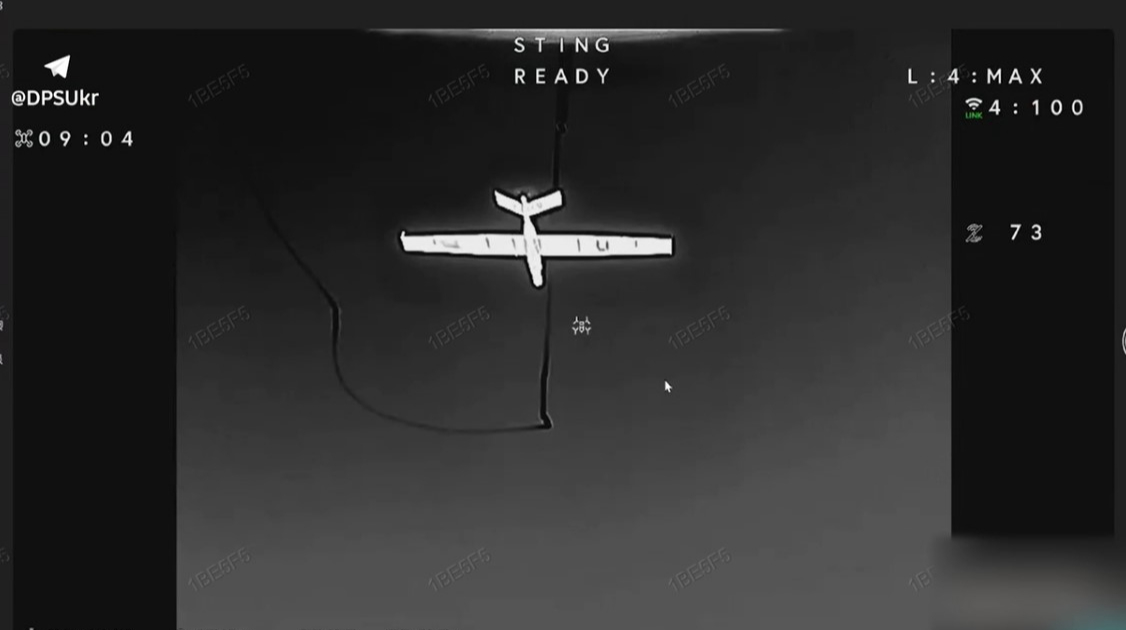
Ukrainian border guards in Chernihiv Oblast shoot down Russian drone at record altitude of 6,858 m. — Source: ukrainskapravda
Washington and Tehran are exchanging fire, yet mediation channels remain active and political messages are being sent alongside missiles. [1] Neither side has abandoned the negotiating table; each has moved part of it onto the battlefield. [1] Its objective is to deprive Tehran of one of its most important strategic assets: the ability to threaten navigation through the Strait of Hormuz and convert it into an instrument of political and economic influence. [1] Iran, meanwhile, seeks to demonstrate that Gulf security cannot be imposed without it and that any regional arrangement designed to bypass Tehran will remain incomplete and unstable. [1] Hormuz is therefore no longer merely a waterway. It has become the symbol of a struggle over who has the right to establish the rules of security in the Gulf. [1] Washington wants freedom of navigation that is not subject to Iranian will, while Tehran believes its geography gives it a natural right to serve as an indispensable partner in managing this vital passage. [1] Yet this confrontation carries mounting danger. Every new round of strikes reduces the ability of both sides to control escalation. [1] An Iranian attack could cause American casualties that compel Washington to respond more broadly. [1] An American raid could hit a target Tehran considers a matter of sovereignty or survival, turning a limited war into a confrontation that becomes difficult to contain. [1] There are no American ground forces inside Iran, no campaign openly aimed at toppling the regime, and despite disruption to shipping, the Strait of Hormuz has not been fully closed. [1] Regional mediators also continue searching for a ceasefire or a formula that could return both sides to negotiations. [1] Each side is using war to improve its negotiating position, but continued fighting may cause the battlefield to determine the future of diplomacy rather than the reverse. [1] Every additional day of bombing raises the cost of retreat and makes any settlement appear to domestic audiences as a concession. [1] The door to a new agreement remains open, but it narrows with every fresh strike. [1]
Intelligence Sharing and Potential Israeli Role
A source told CNN that Mossad chief Roman Gofman met Trump administration officials in Washington two weeks ago and provided intelligence concerning Mount Pickaxe in Iran. [1] Did his visit prepare the ground for Israel to join the US in strikes against Iran if escalation continues? That possibility cannot be ruled out. [1]
US-Saudi Nuclear Agreement Context
Against this volatile background, Washington’s announcement of a “historic” civil nuclear cooperation agreement with Saudi Arabia was also highly significant. [1] The agreement, which still requires congressional approval, includes nonproliferation safeguards and would allow the kingdom to enrich uranium on its own soil. [1]
What to watch next: Every new round of strikes reduces the ability of both sides to control escalation while the signs of full-scale war are not yet complete and regional mediators continue searching for a ceasefire. [1][4]







