US and Iran Both Pause Attacks for Second Straight Day After Nearly Two Weeks of Strikes
The United States paused its attacks on Iran for a second straight day on Sunday while Tehran said it had done the same, as both sides continued efforts toward an interim ceasefire following nearly two weeks of exchanges that began with Iran firing at ships in the Strait of Hormuz and subsequent Iran strikes. [1] A senior Iranian source told Reuters that Tehran would suspend its regional military operations as long as Washington refrained from further attacks. [2] The US had targeted Iranian coastal areas and infrastructure in the escalation that followed Iran’s actions in the Strait of Hormuz. [1]
Current Pause in Direct Attacks
The United States paused its attacks on Iran for a second straight day Sunday and Tehran said it had done so too, as efforts continued to bring the countries back to negotiations on an interim ceasefire deal largely undermined by recent exchanges of fire. [1] It was not clear why the US has paused after targeting Iranian coastal areas and infrastructure in a nearly two-week escalation sparked by Iran’s firing at ships trying to transit the Strait of Hormuz. [1] A senior Iranian source told Reuters that Tehran would suspend its regional military operations as long as Washington also refrained from further attacks. [2] Iran says the United States is “stuck and struggling” after five months of war it began under the influence of Israel and will “inevitably pay the price.” [5] The US continues to hold fire against Iran leading Tehran to halt retaliatory strikes throughout the Middle East after nearly two weeks of heavy bombing. [5]
Background on the Escalation
The United States paused its attacks on Iran for a second straight day Sunday and Tehran said it had done so too, as efforts continued to bring the countries back to negotiations on an interim ceasefire deal largely undermined by recent exchanges of fire. [1] It was not clear why the US has paused after targeting Iranian coastal areas and infrastructure in a nearly two-week escalation sparked by Iran’s firing at ships trying to transit the Strait of Hormuz. [1] Iran says the United States is “stuck and struggling” after five months of war it began under the influence of Israel and will “inevitably pay the price.” [5] The US continues to hold fire against Iran leading Tehran to halt retaliatory strikes throughout the Middle East after nearly two weeks of heavy bombing. [5]

Iran foreign minister speaks during press conference on regional tensions. — Source: khaamapress
Ukrainian Strike on Iranian Vessel in Caspian Sea
Iranian Foreign Minister Abbas Araqchi has warned that a Ukrainian attack on an Iranian vessel in the Caspian Sea will “not go unanswered”, escalating tensions between Tehran and Kyiv as the two sides gave conflicting accounts of the incident. [2] Iran’s Foreign Ministry described the attack as “hostile and criminal”, saying one Iranian sailor was killed and several others wounded. [2] Tehran summoned Ukraine’s chargé d’affaires to formally protest the incident. [2] Araqchi accused Ukraine of carrying out the attack at Israel’s request and attempting to draw European countries into the conflict, but provided no evidence to support the claims. [2] He said Iran had never intervened in the war between Russia and Ukraine and accused Kyiv of violating the UN Charter. [2] Ukrainian President Volodymyr Zelensky said Ukrainian forces had targeted vessels in the Caspian Sea that were allegedly being used to transport military-related cargo linked to Iran. [2] Zelensky wrote on X that Ukraine “achieved very strong results with long‑range strikes in the Caspian Sea—including vessels used in military cargo shipments involving Iran.” [3] Ukrainian President Volodymyr Zelenskyy said Saturday that his country’s forces “also achieved very strong results with long‑range strikes in the Caspian Sea – including vessels used in military cargo shipments involving Iran, as well as a warship.” [4]
Conflicting Accounts and Diplomatic Fallout
Iranian Foreign Minister Abbas Araqchi has warned that a Ukrainian attack on an Iranian vessel in the Caspian Sea will “not go unanswered”, escalating tensions between Tehran and Kyiv as the two sides gave conflicting accounts of the incident. [2] Iran’s Foreign Ministry described the attack as “hostile and criminal”, saying one Iranian sailor was killed and several others wounded. [2] Tehran summoned Ukraine’s chargé d’affaires to formally protest the incident. [2] Araqchi accused Ukraine of carrying out the attack at Israel’s request and attempting to draw European countries into the conflict, but provided no evidence to support the claims. [2] He said Iran had never intervened in the war between Russia and Ukraine and accused Kyiv of violating the UN Charter. [2] Ukraine offered a different account. [2] Israeli media, citing Ukraine’s ambassador to Israel, reported that the vessels were carrying Iranian weapons intended to support Russia’s war effort in Ukraine. [2] The claim could not be independently verified. [2] Russian Foreign Minister Sergy Lavrov expressed condolences to Araqchi over the death of the Iranian sailor. [2] Moscow said Araqchi called for an end to what he described as “such adventurism” by Kyiv and thanked authorities in Russia’s Astrakhan region for assisting the vessel’s crew. [2]
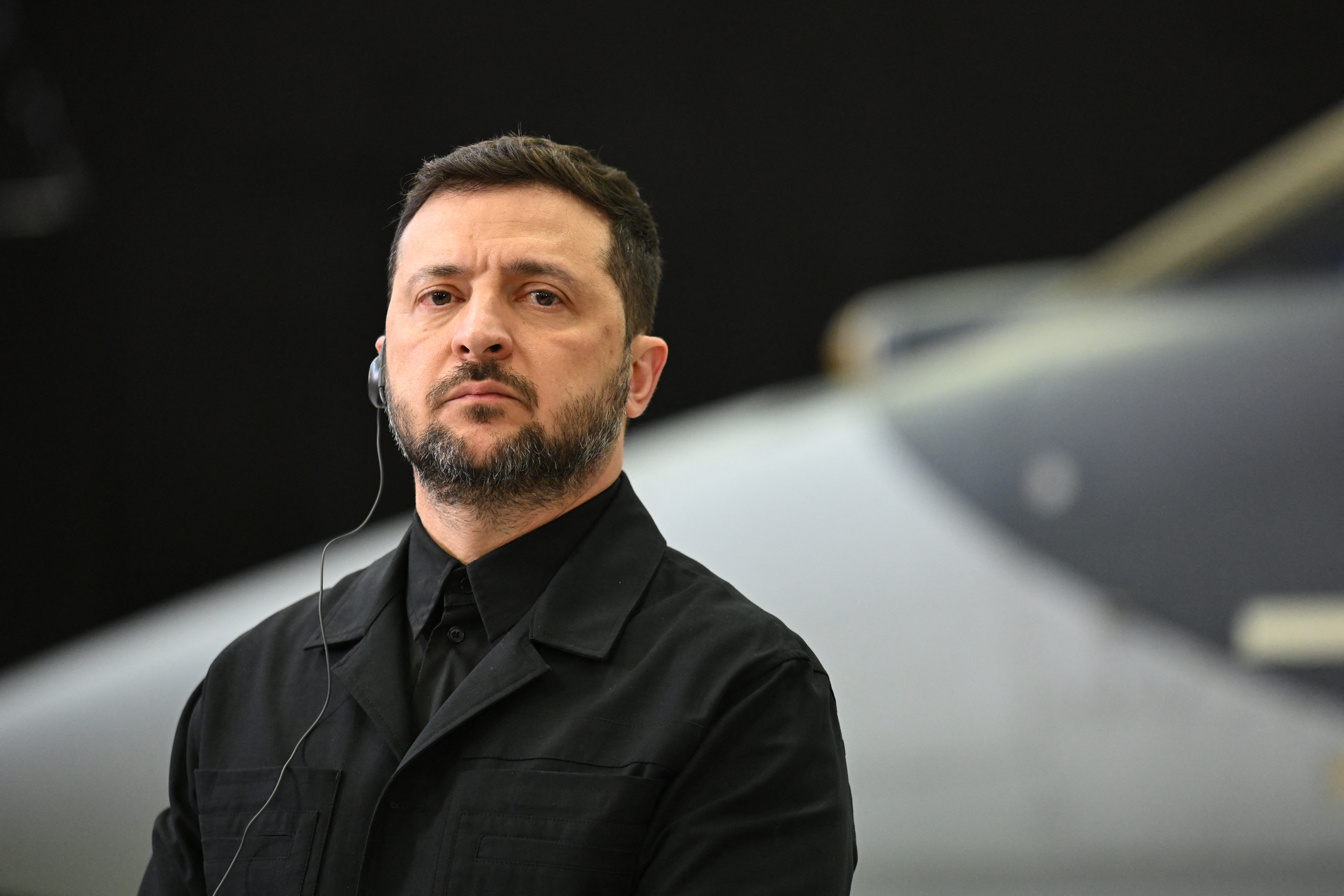
US and Iranian forces pause attacks for a second day amid ceasefire efforts. — Source: gdelt
Broader Interconnections Between Conflicts
A Ukrainian strike in the Caspian Sea on Saturday has ignited sharp diplomatic tensions, killing a sailor aboard an Iranian commercial vessel and laying bare the growing intersection of the wars in Ukraine and the Middle East. [3] Iranian Foreign Minister Abbas Araghchi warned Sunday in an X post that the attack "cannot go unanswered," while Iranian officials summoned Ukraine’s chargé d'affaires to protest the incident. [3] Ukrainian President Volodymyr Zelensky, whose country has been locked in a war that Russia launched in February 2022, defended the operation, stating that Kyiv had successfully targeted vessels involved in military cargo shipments linked to Iran, alongside a Russian warship. [3] The operation underscores Kyiv's growing capability to project force hundreds of miles away from traditional battlefields. [3] Zelensky alleged Saturday that Russia has provided Iran with satellite imagery to assist in planning and assessing Middle East attacks, including surveillance of Gulf states and U.S. military facilities. [3] "There is a clear correlation between Russia’s satellite imagery of these sites and Iranian strikes," Zelensky said in his evening address, adding that Russian satellites observed airbases in Bahrain, Jordan, and Kuwait between July 19 and July 20. [3] In a Truth Social post on Friday, President Donald Trump wrote that Chinese President Xi Jingping and Russian President Vladimir Putin told him that they would not sell weapons to Iran. [3] Iran quickly elevated the incident to a diplomatic priority as Araghchi discussed it with European Union foreign policy chief Kaja Kallas and Russian Foreign Minister Sergei Lavrov. [3]
Potential Implications and Next Steps
A senior Iranian source told Reuters that Tehran would suspend its regional military operations as long as Washington also refrained from further attacks. [2] For Tehran, the geographic location of the strike carries profound economic implications. [3] As international pressure mounts on Iran's southern maritime routes, the Caspian Sea has evolved into a vital trade corridor linking Iran with Russia, Central Asia, and broader markets toward China. [3] Iranian officials maintained that the targeted ship was strictly commercial, framing the attack as a direct threat to a crucial economic artery. [3] The incident comes as Iran and the United States have temporarily paused direct military operations following 13 consecutive nights of attacks. [2] Whether Iran ultimately retaliates remains unclear. [3]
What to watch next: The incident could mark a significant escalation in tensions between Iran and Ukraine, extending the wider conflict into the Caspian Sea and highlighting the increasingly interconnected military relationships involving Iran, Russia and Ukraine. [2]