
US and Iran Agree to End All Military Operations and Negotiate Final Nuclear Deal
The United States and Iran have signed a Memorandum of Understanding declaring the immediate and permanent termination of military operations on all fronts, including in Lebanon, and committing to negotiate a final deal within 60 days that includes sanctions relief, reopening of the Strait of Hormuz, and at least $300 billion in reconstruction funding for Iran. [3]
US and Iran Sign Ceasefire Memorandum
The US and Iran have signed a deal to halt the war between the two countries. [3] The document declares the immediate and permanent termination of military operations on all fronts, including in Lebanon. [3] The war started on 28 February when the US and Israel launched attacks on Iran. [3] Iran retaliated by targeting American interests in the Gulf States. [3] Hezbollah joined the war on Iran’s behalf, targeting Israel, which led to Israeli attacks on Lebanon. [3] Although intense fighting ended in April when a ceasefire was agreed, the warring parties continued to attack each other until the new agreement. [3] The deal signed on Thursday calls for a 60-day window during which a final deal will be agreed. [3] A senior US official read out the 14-point Memorandum of Understanding to journalists, including the BBC. [3]
Key Provisions of the 14-Point Agreement
Point 1 of the MOU states that the United States of America and the Islamic Republic of Iran and their allies declare the immediate and permanent termination of military operations on all fronts, including in Lebanon, and undertake from now on not to initiate any war or any military operation against each other. [3] Point 4 states that immediately upon the signing of this MOU, the United States of America will begin the removal of its naval blockade and will fully end the naval blockade within 30 days. [3] Point 5 commits the Islamic Republic of Iran to make arrangements using its best efforts for the safe passage of commercial vessels with no charge for 60 days, only from the Persian Gulf to the Sea of Oman and vice versa. [3] Point 6 states that the United States of America undertakes with regional partners to develop a definitive, mutually agreed plan with at least $300 billion for the reconstruction and economic development of the Islamic Republic of Iran. [3] Point 7 commits the United States of America to terminate all types of sanctions against the Islamic Republic of Iran, including the United Nations Security Council resolutions and all unilateral U.S. sanctions, in an agreed upon schedule. [3] Point 8 states that the Islamic Republic of Iran reaffirms that it shall not procure or develop nuclear weapons and that the parties agreed to resolve the disposition of stockpiled enriched material under IAEA supervision. [3] Point 10 states that the United States of America undertakes that immediately upon the signing of this MOU the U.S. Department of Treasury will issue waivers for the export of Iranian crude oil, petroleum products and derivatives. [3] Point 11 states that the United States of America undertakes to make fully available for use the frozen or restricted funds and assets of the Islamic Republic of Iran upon the implementation of the MOU. [3]
Reactions in Tehran and Washington
Both sides have sold the deal to their public as a win. [4] For Iran, the deal with the US offers something just as important as a ceasefire: a way to claim that it has not just survived the war without surrendering but has emerged from it stronger. [4] The MOU allows Iran to say it has achieved its core objective of coming out of the conflict with the Islamic Republic intact. [4] Iranian Supreme Leader Mojtaba Khamenei authorized the MOU but distanced himself by noting it was accepted on the responsibility of President Masoud Pezeshkian and the Supreme National Security Council. [4] Mohammad Bagher Ghalibaf, the speaker of parliament and head of Iran's negotiating team, has tried to frame the talks in defiant terms, saying on state TV that he knows well how to make America understand. [4] In Washington, US President Donald Trump has hailed the agreement as a "major win" for the United States that ultimately accomplishes his overarching war aim of preventing Iran from acquiring a nuclear weapon. [4] Domestic critics on both sides argue that too many concessions were made. [4]
Impact on Global Oil Flows and Economy
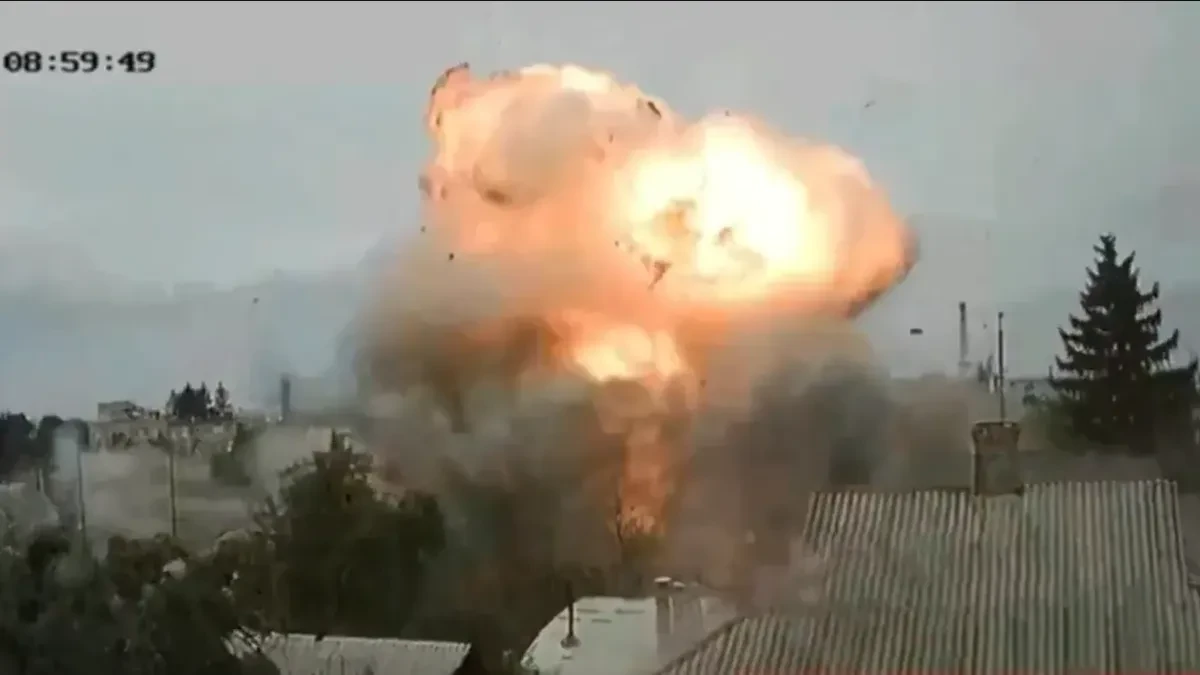
The war led to a global increase in the price of oil and its derivatives due to the closure of the Strait of Hormuz, through which about 20 per cent of the world’s oil passes. [3] The reopening of the Strait is one of the contents of the deal. [3] The MOU confirms the reopening of the Strait of Hormuz. [4] In the near term, a much more immediate victory is the re-opening of the global economy as a result of the Strait of Hormuz opening. [4] As the conflict wore on and the Strait of Hormuz remained essentially closed, polls consistently suggested that the American public was growing exasperated with the high price of petrol. [4]
Challenges Ahead for Final Deal
The most difficult issues have been deferred, not resolved. [4] The future of Iran's highly enriched uranium, the scale of its enrichment industry and the rebuilding of damaged nuclear facilities will now be negotiated under intense pressure. [4] The MoU gives the leadership enough to present the deal as a victory, but that silence is unlikely to last. [4] State media, the Revolutionary Guards, parliament and hardline figures have spent weeks telling their base that Iran defeated the US and Israel. [4] Any compromise over enriched uranium or nuclear infrastructure could be portrayed by critics as a concession made after victory had already been declared. [4] The comparison with the 2015 nuclear agreement is unavoidable. [4] In Tehran the danger is that hardliners may accuse the government and negotiating team of repeating what they saw as the betrayal of 2015. [4] The risk for Tehran is that the next 60 days expose the gap between the image of victory sold at home and the compromises required to keep the war from returning. [4]
What to watch next: The two parties will start negotiations regarding the final deal exclusively after the beginning of the implementation of key paragraphs of the MOU, with the final deal to be endorsed by a binding United Nations Security Council resolution. [3]