Iran War Expands as Saudi Arabia Urges Trump to De-escalate
Trump is receiving conflicting advice from Saudi Arabia and Israel on how to end the expanding US-Iran war, as efforts to reopen the Strait of Hormuz through diplomacy stall and the conflict draws in more regional actors.
Conflicting Regional Advice to Trump
Just past 10 a.m. on Wednesday, a delegation of Saudi officials arrived at the West Wing carrying a message for the White House. [1] Defense Minister Khalid bin Salman, on an unannounced visit to Washington, conveyed word to both President Donald Trump and Vice President JD Vance from his brother, the kingdom’s powerful crown prince, that Saudi Arabia wants the Iran war to deescalate — and that prolonging the conflict carries major risks, according to people familiar with the conversations. [1] A day earlier, another emissary had arrived through the same door with a different message. [1] Israeli Prime Minister Benjamin Netanyahu, sitting with Trump in the Oval Office, voiced skepticism that diplomacy with Iran would prove fruitful, according to Israeli officials. [1] Instead, the two discussed options for pressuring Iran, including renewing a full-scale war, those officials said. [1] The back-to-back meetings this week were scheduled coincidentally. [1] But they nonetheless underscore the crosscurrents facing Trump as he seeks an exit ramp to a conflict that has extended well past his deadline. [1]
Expansion Across Multiple Fronts
Analysts say the U.S.-Iran war is at a critical point with the potential for further escalation, as the pattern of back-and-forth strikes resumes and hopes for a quick end to the five-month conflict fade. [4] Jordan said Thursday it intercepted Iranian missiles for the second consecutive day, while Kuwait said a strike in the northern part of the country killed one person. [4] Also this week, drones caused fires on ships at an Egyptian port, and Saudi Arabia said it came under fire from Iran-backed militias in Iraq. [4] The confrontation between the USA and the Iran has the entire region around the Arabian Peninsula transformed into a war with ever new fronts. [5] The fighting ranges from Iraq across the strategically important Strait of Hormuz to the Red Sea. [5] Pro-Iranian militias in Iraq have targeted US and Saudi sites. [5] Houthi rebels in Yemen have denied they were behind the attack on vessels at Egypt’s Damietta port. [4] Iran sent signals that the war is going to be expanded. [4]
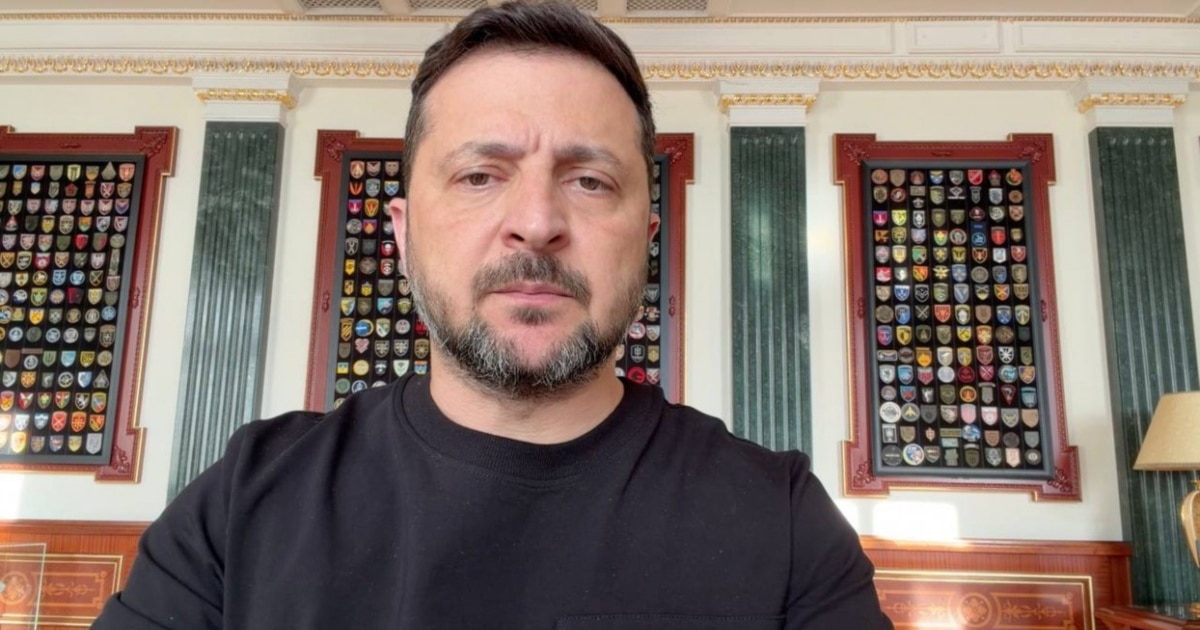
Zelenskyy speaks to Fox News about links between the Iran conflict and Russia's war in Ukraine. — Source: gdelt
Diplomatic Stalemate and Strait of Hormuz Focus
Efforts at diplomacy are halting at best; a senior US official said resuming direct diplomacy with Iran does not appear imminent. [1] Despite Trump’s claims Iran is “begging” for a deal to end the violence, some US officials fear regime figures appear more committed than ever to wielding leverage over the Strait of Hormuz and firing missiles toward American troops. [1] At this point, diplomatic discussions among regional players revolve around a short-term agreement focused on reopening the Strait of Hormuz, according to people familiar with the discussions, that would allow Trump to claim a win. [1] The waterway has become the center of the conflict after the US and Iran came away with very different interpretations of how the issue was addressed in last month’s memorandum of understanding. [1] While mediators including Qatar and Pakistan are hurriedly working to revive diplomatic talks, there are few signs of any active negotiations. [1] Instead, officials now fear Iran’s powerful revolutionary guards are firmly in control of the decision making, leaving the political figures the US has been talking with as figureheads. [1] Complicating matters are the internal dynamics of the IRGC itself, where a handful of senior commanders are all jockeying for control. [1] That dynamic is a leading reason why US officials and regional partners fear the conflict is likely to drag on. [1]
Trump Administration's Military and Political Challenges
Trump has grown frustrated at Tehran’s unwillingness to bend to his demands, leading to angry meetings behind the scenes and expletive-laced phone calls to his allies, according to US officials. [1] He convened his Cabinet on Friday at Camp David, perhaps hoping to seize inspiration from the retreat’s past role in successful Middle East diplomacy. [1] “I think we just want to win,” the president said when asked how he planned to revive the stalled diplomatic efforts, offering few clues of how he intends to proceed. [1] “They’ll get weaker. They’ll get a little stronger maybe now. Then they’ll get weaker. And then they’ll peter out.” [1] Options for escalating the conflict have been presented to Trump and debated at length, and more military assets flowed to the region in anticipation of a go-ahead from the president. [1] One plan conceived by Central Command would involve heavy bombardment over the course of one or two weeks to take out Iran’s missile capabilities, US officials said. [1] During a hearing on Capitol Hill last week, Chairman of the Joint Chiefs of Staff Gen. Dan Caine acknowledged that it is unlikely Trump can accomplish all his previously stated objectives for the war with air bombing alone. [1] “Air power has its limits,” Caine told lawmakers at the time. [1] And Trump has so far held off, in part after hearing concerns from Caine about dwindling supplies of air defense interceptors. [1] Other officials have also raised worries about the risks of high civilian casualties if Trump followed through on threats to strike infrastructure sites like bridges and water desalination plants. [1] “Who am I hurting there? I’m hurting the people, so I’m not looking to do that,” the president said during a Fox News interview this week. [1] Many of Trump’s allies are now worried the Iran war is threatening to engulf his presidency entirely, and with it, Republicans’ chances in upcoming midterm elections, according to some GOP operatives. [1] A CNN survey this week found only 28% of Americans approved of his handling of the war. [1]
Saudi officials meet with Trump at the White House to urge de-escalation of the Iran war. — Source: newsmax
International Linkages and Ukrainian Perspective
President of Ukraine Volodymyr Zelensky stated that Russia’s war against Ukraine is closely linked to the US conflict with Iran, adding that Moscow is “very glad” to see Washington’s attention switch from the war in Ukraine to the Middle East. [2] “Russia provided Iran with drones,” Zelensky said in an interview with Fox News published July 31, adding that Tehran used weapons supplied by Moscow to attack countries in the Middle East. [2] “(Fragments) on the destroyed drones are Russian... Everyone saw this,” he said. [2] Ukraine’s president emphasized that he is “absolutely” convinced that Moscow provided Iran with satellite images of American military bases throughout the Middle East. [2] “Russia is very glad that there is no end to the war, a real end to the war in the Middle East... Because they understand that since the United States is involved in this war, they cannot help Ukraine at the same level as before,” Zelensky said. [2] The war — which in its early days President Donald Trump said would last four to five weeks, although he warned it could take longer — has caused the price of fuel to spike and roiled the global economy. [4]
Prospects for Resolution
The White House said Iran would “continue to pay” until they come to the table in a way Trump accepts. [1] “The United States signed an MOU with Iran and they broke it, shot at commercial ships, and killed American soldiers. President Trump is not going to stand by and allow this terrorist behavior to occur. Iran will continue to pay until they come to the table in, what President Trump deems, a meaningful way,” press secretary Karoline Leavitt said in a statement. [1] Republicans, who have largely supported Trump over the course of the conflict but are increasingly concerned higher gas prices could hurt their party in the midterms, have conveyed in private conversations the importance of getting the conduit reopened, the GOP operatives said. [1] “Obviously, we want success there. We think that we’ve achieved a high level of military success there,” Senate Majority Leader John Thune said this week. [1] “The question on the Strait of Hormuz is something that obviously the president and his team are trying to continue to negotiate, and hopefully they’ll land an outcome or a solution there in the near future.” [1] During Trump’s meeting with Netanyahu this week — attended by Witkoff and other senior officials — the prime minister appeared skeptical that diplomacy with Iran would work, and told Trump as much, according to Israeli officials familiar with the meeting. [1] Instead, the men discussed various options for ramping up pressure on Iran, including intensifying military strikes and economic measures. [1] Netanyahu assured Trump in the meeting that the US president was the final decision maker, one of the officials said, seeking to rebut suggestions Israel is attempting to sway Trump toward a resumption of war. [1]
What to watch next: Mediators including Qatar and Pakistan continue working to revive diplomatic talks while regional players discuss a short-term agreement focused on reopening the Strait of Hormuz.