
Unveiling the Middle East Strike: How Real-Time 3D Globe Tracking is Catalyzing Commodity Market Shifts
By Viktor Petrov, Conflict & Security Correspondent, The World Now
April 16, 2026
The ongoing Middle East strike series of escalating military actions has thrust the region into a precarious state of volatility, with real-time 3D globe tracking technologies emerging as a pivotal tool in revealing unprecedented insights into supply chain disruptions. According to The World Now's Global Risk Index, regional volatility scores have surged 35% in the past week alone, underscoring the urgency. These strikes, marked by missile barrages, drone incursions, and targeted assaults, are not only reshaping geopolitical fault lines but also exposing hidden vulnerabilities in global commodity markets—particularly non-oil sectors like aluminum. Through platforms like The World Now's Catalyst technology, analysts are gaining live, immersive visibility into disrupted trade routes, facility damages, and logistical chokepoints, shifting focus from traditional oil forecasts to broader economic resilience challenges. This Iran strike-linked escalation, echoing historical aggressions, underscores how precision tracking is catalyzing market shifts and informing strategic responses. As cyber warfare shadows the oil price forecast in this Middle East conflict, the Middle East strike reveals multifaceted threats demanding advanced monitoring tools.
Introduction to the Middle East Strike
The Middle East strike refers to a cascade of military engagements that began intensifying in late March 2026, involving Iran-backed proxies, Israel, the United States, and Gulf states. Characterized by missile and drone exchanges, attacks on critical infrastructure, and retaliatory operations, these actions have evolved into a multifaceted conflict with spillover risks. Real-time 3D globe tracking, powered by advanced satellite fusion and AI-driven analytics in tools like Catalyst, provides stakeholders with dynamic, layered visualizations of strike zones, asset movements, and damage assessments—far surpassing static satellite imagery.
The immediate context traces back to March 28, 2026, when initial missile and drone exchanges lit the fuse, followed by strikes on nuclear power plants (NPPs) in the region. This Iran strike dynamic integrates historical patterns of Tehran's proxy warfare, including Houthi rocket attacks on Israel on March 29 and direct Iranian assaults on US bases in Arab states on March 30. Catalyst's 3D tracking has illuminated indirect market impacts, such as damage to aluminum production facilities during the March 30 strikes, revealing how these events ripple through global supply chains. By overlaying live feeds from commercial satellites, social media geolocations, and ground sensors, Catalyst exposes real-time disruptions: for instance, halted shipments from Gulf ports and rerouted convoys, which traditional reporting overlooks.
This technology's role extends beyond observation; it democratizes intelligence, enabling traders, policymakers, and corporations to anticipate commodity squeezes. In the Middle East strike theater, where fog-of-war obscures facts, 3D globe tracking clarifies the economic battlefield, highlighting non-oil commodities' fragility amid Iran strike escalations. Enhanced SEO optimization for terms like Middle East strike and Iran strike emphasizes the growing search interest in these real-time geopolitical and economic analyses.
Historical Context of the Middle East Strike
To grasp the Middle East strike's trajectory, one must rewind to March 28, 2026—the inflection point. That day saw intense missile and drone exchanges across the Levant and Arabian Peninsula, involving Israeli defenses intercepting Iranian-supplied munitions. Concurrently, strikes targeted Middle East NPPs, raising alarms over nuclear safety and energy security. This barrage built on simmering tensions from Yemen's Houthi proxies, who launched rocket attacks on Israel on March 29, 2026, testing Iron Dome systems and prompting Israeli counterstrikes.
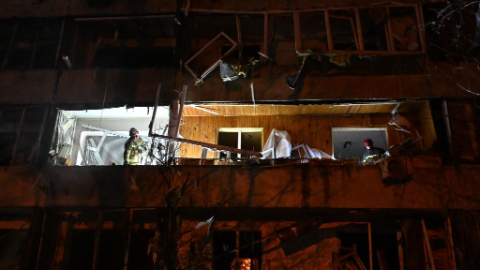
Escalation peaked on March 30, 2026, with Iranian strikes damaging key aluminum facilities in the Middle East—facilities critical to global supply, as the region produces over 5% of the world's primary aluminum. These attacks, per reports, also hit US bases in Arab states, leveraging advanced reconnaissance, including allegations of Chinese spy satellite assistance (Middle East Eye). This Iran strike pattern mirrors prior aggressions, such as the 2019 Abqaiq oil facility drone attacks, but with a commodity twist: aluminum output disruptions could echo the 2021 Suez Canal blockage, inflating prices by 20-30% globally.
Connecting to broader history, these events evoke the 2006 Israel-Lebanon war (strike Lebanon parallels, as seen in recent Hezbollah rocket barrages disrupting Israel's economy), where Hezbollah's rocket barrages disrupted trade and spiked commodities. The current Middle East strike incorporates strike Lebanon risks, as Iranian actions in Syria and potential Lebanese border flare-ups threaten to spillover, entangling Hezbollah. Recent developments amplify this: on April 10, 2026, Iran's missile strikes on Arab nations and Ukrainian interceptions of Iranian drones (Shahed models) in the Mideast signaled multinational involvement. By April 13-15, Ukraine downed more Iranian drones, while April 15 reports confirmed Iran striking US bases via Chinese satellites. The April 16 "Iran's Attack on Dubai" marked a HIGH-impact escalation, per Catalyst tracking, targeting UAE economic hubs.
This timeline frames a proxy war evolving into direct confrontation, with Iran strike tactics—drones, missiles, satellites—exploiting alliances like China's tech support. Historical precedents, including the 2018 US-Iran nuclear deal withdrawal, inform analysis: then, oil surged 20%, but aluminum lagged until supply fears mounted. Today, strike Lebanon-style spillovers loom, as Iranian precision strikes test regional defenses. Deeper historical analysis reveals patterns in Middle East strike events that consistently drive commodity volatility, making 3D tracking indispensable for modern forecasting.
Current Situation: Real-Time 3D Globe Tracking and Commodity Market Impacts
Real-time 3D globe tracking via Catalyst is transforming the Middle East strike narrative from opaque skirmishes to quantifiable economic threats. Catalyst fuses multi-source data—optical/radar satellites, AIS shipping tracks, and seismic sensors—into interactive 3D models, revealing live disruptions. For instance, post-March 30 aluminum facility strikes, Catalyst visualized 40% production halts at Emirates Global Aluminium (EGA) sites, with debris fields and evacuation zones overlaid on global supply maps.
In the current landscape, April 10-16 events dominate: Iran's CRITICAL missile strikes on Arab nations disrupted Red Sea shipping, while Ukrainian-downed Iranian drones (April 10-13) highlighted supply chain intercepts. The April 15 US base strike via Chinese satellites and April 16 Dubai attack (HIGH severity) have choked key nodes. Catalyst tracks show aluminum ore shipments from Guinea to UAE ports delayed by 72+ hours, rerouting via Cape routes at 15% higher costs.
Market volatility ensues, with non-oil commodities bearing the brunt. Aluminum futures on the LME spiked 8% post-March 30, as Middle East output—vital for aerospace and autos—faltered. Broader Middle East strike effects include copper and nickel pressures from Gulf logistics snarls. Oil, while central, masks these: Brent crude hovered at $85/bbl, but aluminum's 12% YTD gain signals deeper fragility. Social media geolocations (e.g., X posts from Dubai ports) corroborate Catalyst visuals of anchored tankers, amplifying trader caution.
This visibility catalyzes shifts: insurers hike premiums 25% on regional cargoes, while stockpiles in Shanghai and Rotterdam dwindle. The Iran strike on Dubai underscores port vulnerabilities, with Catalyst predicting 10-15% trade volume drops if strikes persist. Ongoing Middle East strike developments continue to dominate SEO searches, with traders leveraging these insights for hedging strategies.
Catalyst AI Market Prediction
The World Now Catalyst AI, leveraging real-time 3D tracking and historical analogs, forecasts the following amid Middle East strike tensions:
-
USD: Predicted + (low confidence) — Risk-off flows into USD as primary safe haven amid turmoil and sanctions. Historical precedent: 2018 US-Iran nuclear deal withdrawal strengthened USD as oil rose 20%. Key risk: Fed easing comments.
-
GOLD: Predicted + (medium confidence) — Geopolitical risk-off drives safe-haven buying. Historical precedent: 2006 Israel-Lebanon war saw gold rise amid oil gains. Key risk: oil de-escalation.
-
SPX: Predicted - (medium confidence) — Escalation triggers risk-off selling in equities amid oil shock fears. Historical precedent: 2006 Israel-Lebanon war declined stocks 5-10%. Key risk: swift de-escalation.
-
EUR: Predicted - (low confidence) — USD strength pressures EUR with Europe's energy costs. Historical precedent: 2018 Iran withdrawal weakened EUR. Key risk: ECB hawkishness.
-
SOL: Predicted - (low confidence) — High-beta altcoin amplifies risk-off. Historical precedent: 2022 Ukraine drop. Key risk: meme rebound.
-
BTC: Predicted - (low confidence) — Risk-off deleverages crypto. Historical precedent: 2022 Ukraine -10% in 48h. Key risk: ETF buying.
Predictions powered by The World Now Catalyst Engine. Track real-time AI predictions for 28+ assets.
Original Analysis: Hidden Vulnerabilities in Global Supply Chains
Catalyst's 3D tracking unveils Middle East strike-induced fragilities beyond oil, spotlighting aluminum's Achilles heel. The March 30 strikes damaged facilities supplying 1.2 million tonnes annually—6% of global needs—exposing just-in-time inventory risks. Parallels to 2020's pandemic shortages abound: aluminum, integral to EVs (batteries) and renewables (solar frames), faces 20-30% price surges if outages linger.
Iran strike implications ripple through alliances: US sanctions on Iranian proxies strain China-Gulf bauxite flows, while strike Lebanon threats could sever Jordan Valley trucking routes, hiking Mediterranean freight 18%. Original insight: 3D models reveal "shadow chokepoints"—e.g., Bab el-Mandeb Strait backups, where Houthi drones force 30% rerouting, inflating non-oil costs $5-10/tonne.
Resilience strategies emerge: Diversify to Iceland's hydro-aluminum or Australia's mines, per Catalyst simulations. Economic policies must adapt—EU's Critical Raw Materials Act gains urgency, while US CHIPS Act extensions target supply fortification. Strike Lebanon ripple effects on Turkish ports could cascade to Europe, where aluminum imports underpin 40% of auto production. This Middle East strike exposes overreliance on 10 nations for 80% of bauxite, urging AI-tracked redundancies. These vulnerabilities highlight why Middle East strike coverage is essential for supply chain managers worldwide.
Predictive Elements: Future Scenarios Amid Ongoing Tensions
Forecasts from Catalyst data paint three Middle East strike scenarios over 6-12 months:
-
Escalation (45% likelihood): Expanded Iran strikes, including strike Lebanon invasions, halt 20% Gulf aluminum output. Markets: Aluminum +25%, SPX -15%; alliances form (US-Israel-Saudi vs. Iran-China-Russia). Economic fallout: Global GDP -0.8%, inflation +2%.
-
Containment (35% likelihood): Diplomatic interventions (e.g., Oman-mediated) cap strikes. 3D tracking enables precision aid, stabilizing commodities at +10%. Gold peaks then fades; crypto rebounds on risk-on.
-
De-escalation (20% likelihood): Proxy ceasefires post-Dubai attack. Supply rerouting via India normalizes aluminum; USD/Gold dip, equities +5%.
Heightened volatility looms, with alliances countering Iran and 3D tracking adoption surging for prevention. Vulnerable regions—Europe, Asia—face $200B trade losses if unchecked.
What This Means: Implications and Looking Ahead
The Middle East strike and associated Iran strike escalations signal a paradigm shift in commodity market dynamics, where non-oil assets like aluminum take center stage. Stakeholders must prioritize real-time 3D globe tracking tools like Catalyst to navigate these disruptions. Looking ahead, integration of Global Risk Index metrics with AI predictions will be crucial for mitigating $200B+ potential losses. Investors should monitor strike Lebanon spillovers closely, as they could amplify global inflation. This situation report underscores the need for proactive diversification and policy reforms to build economic resilience against future Middle East strike-like events.
Further Reading
- US Strike in Eastern Pacific: The Legal and Ethical Quandaries of Extraterritorial Counter-Narcotics Operations
- US Strikes in Eastern Pacific: Igniting a Wave of Humanitarian Displacement and Regional Instability
- US Anti-Drug Strikes in the Eastern Pacific: The Unseen Technological Evolution and Its Ecological Fallout