Conflict Lebanon deepens as Israeli forces cross the Litani River
Israeli forces have advanced deeper into Lebanon by crossing the Litani River and issued expulsion orders for residents of 13 villages, despite security talks underway in the ongoing conflict lebanon. These developments come amid a nominal truce that has failed to stop weeks of clashes between Israeli troops and Hezbollah militants.
Israeli Advance Across the Litani River
Israeli Prime Minister Benjamin Netanyahu stated that troops had pushed beyond the Litani River, a key limit of the UN-monitored security zone. Reports confirm that Israeli forces have advanced further north, crossing this important reference line in southern Lebanon. The move represents a significant extension of operations into areas previously associated with the boundaries of the monitored zone. Netanyahu’s announcement highlighted the military push as troops pressed deeper into the country even as other diplomatic channels remained active. [1] [4]
The advance builds on earlier operations and places Israeli positions north of the river, altering the immediate tactical landscape. Sources describe the crossing as part of a broader effort to extend control while clashes continue. Netanyahu’s remarks came one day before new administrative orders were issued to residents in the affected region. The military action occurs against the backdrop of sustained rocket fire from Hezbollah positions targeting northern Israel. [5]
Further details indicate that the push past the Litani River took place under conditions where a nominal truce was already in place. This truce has not prevented continued fighting, allowing both sides to maintain pressure through ground movements and indirect fire. The Israeli military’s decision to cross the river underscores the intensity of the current phase of operations in conflict lebanon. Observers note that the river line has long served as a geographic marker in security arrangements, making the reported crossing a notable development in the sequence of events.
New Expulsion Orders in Southern Lebanon
Israel’s military issued three expulsion orders covering 13 villages in southern Lebanon on Saturday. The orders were released one day after Netanyahu confirmed the deeper advance by Israeli troops. Residents in the designated villages received instructions to leave, adding to the displacement already affecting communities in the south. [2]
The timing of the expulsion orders aligns directly with the reported crossing of the Litani River. Three separate orders were issued on the same day, collectively targeting the 13 villages. This administrative step followed the military’s movement north of the river and occurred while delegations from both Lebanon and Israel were engaged in talks abroad. [3]
Local reporting describes the orders as part of the ongoing military campaign that has seen forces press further into Lebanese territory. The villages affected lie within the southern region where clashes have been concentrated for weeks. The simultaneous release of multiple orders suggests a coordinated effort to clear areas ahead of or alongside troop movements. These measures were announced publicly on Saturday, reinforcing the pace of operations on the ground.

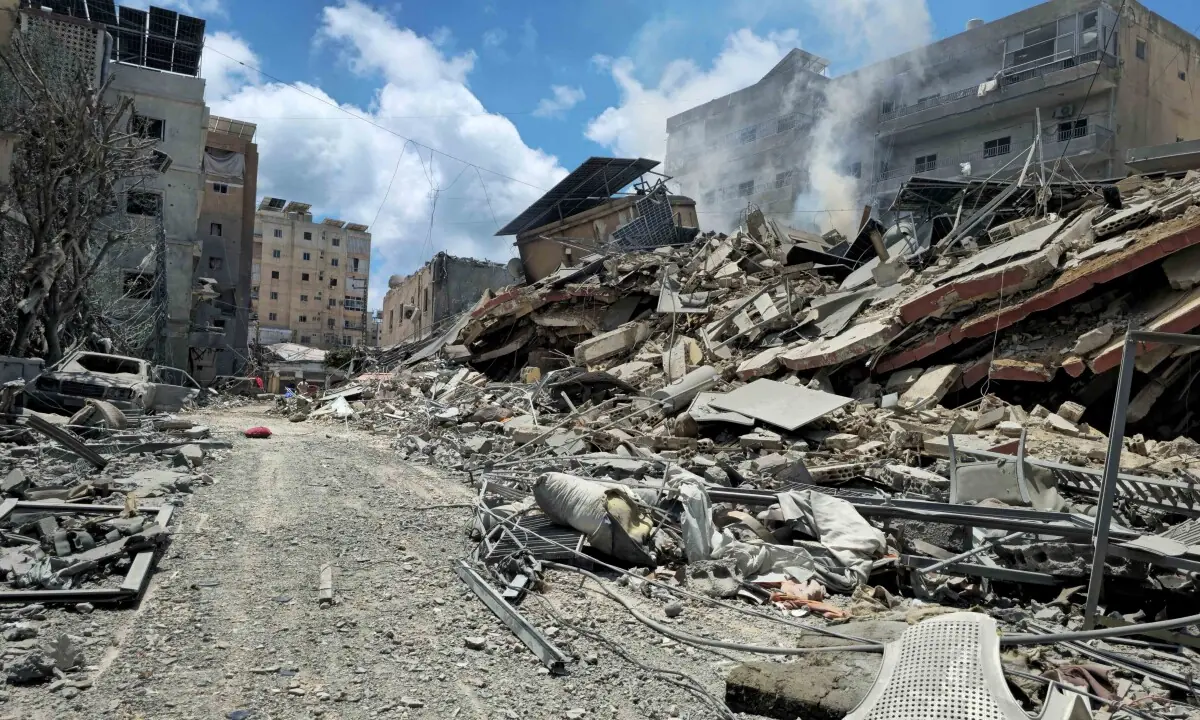
Destroyed vehicles sit at the site of an Israeli strike in Tyre, southern Lebanon. — Source: middleeasteye
Ongoing Clashes and Rocket Fire
Hezbollah has continued firing rockets at northern Israel while Israeli troops advance. The exchanges have persisted for weeks even though a nominal truce is in effect. Rocket attacks from Hezbollah positions have targeted Israeli communities in the north, prompting continued military responses from Israel. [3]
The pattern of fire and counter-fire has not been interrupted by the nominal truce. Israeli forces have maintained their advance while Hezbollah sustains its rocket campaign. This combination of ground movement and aerial bombardment defines the current phase of hostilities in conflict lebanon. Reports confirm that both sides have kept up operations without pause despite the declared pause in major fighting. [5]
The persistence of these clashes illustrates the limited reach of the truce agreement. Hezbollah’s rocket launches have remained a regular feature of the conflict, occurring alongside Israeli ground operations. The dual dynamic of advancing troops and returning fire has produced a steady rhythm of incidents that shows no immediate sign of abating. Military sources on both sides continue to report activity in the border region.
Diplomatic Talks in Washington
Lebanese and Israeli military delegations held talks at the Pentagon on Friday ahead of US-brokered negotiations. The meetings took place one day before the expulsion orders were issued and around the time Netanyahu announced the river crossing. The discussions mark the fourth round of such contacts and are scheduled to lead into formal negotiations early the following week. [2]
The Pentagon sessions focused on security matters between the two sides. US officials hosted the delegations as part of efforts to manage the ongoing situation in southern Lebanon. These talks occurred while Israeli forces were already operating north of the Litani River and while Hezbollah continued its rocket attacks. The timing highlights the parallel tracks of military action and diplomatic engagement. [5]
Upcoming negotiations are expected to build on the Friday meetings. Both delegations arrived in Washington for consultations that precede the next phase of US-mediated discussions. The process continues even as ground developments, including the advance across the river and the new expulsion orders, unfold in Lebanon. The diplomatic channel remains active alongside the military operations.
Israeli forces cross the Litani River during their advance into Lebanon. — Source: dawn
Significance of the Litani River Line
The Litani River is seen as one of the most important reference lines in southern Lebanon. It marks the northern limit of a UN-monitored security zone established under previous agreements. Netanyahu’s statement that troops had crossed this line therefore carries particular weight in the context of existing security arrangements. [4]
The river has functioned as a geographic boundary in multiple past understandings between the parties. Israeli forces moving beyond it represent a departure from the limits observed during earlier phases of the conflict. The crossing was announced publicly by the prime minister and reported widely as a key development in the current campaign. [5]
Because the Litani has long defined the outer edge of the monitored zone, any movement past it immediately raises questions about the future of security understandings. The river line remains a central point of reference in discussions about de-escalation and monitoring arrangements. Its significance stems directly from its role in delineating the area under UN observation.
The Nominal Truce and Its Limitations
A nominal truce has been in place for some time, yet it has not halted the weeks of clashes between Israeli forces and Hezbollah. The truce has allowed both the Israeli advance across the Litani River and continued Hezbollah rocket fire to proceed without interruption. This gap between the declared pause and actual events on the ground defines the present stage of conflict lebanon. [5]
The truce’s limited effect is evident in the simultaneous occurrence of troop movements, expulsion orders, and rocket attacks. While diplomatic talks proceed in Washington, military activity continues in southern Lebanon. The arrangement has therefore served more as a framework for ongoing engagement than as a complete cessation of hostilities.
What to watch next
US-brokered negotiations are due to begin early next week following the Pentagon meetings, while Israeli forces remain positioned beyond the Litani River and Hezbollah maintains rocket fire.